377810582353282


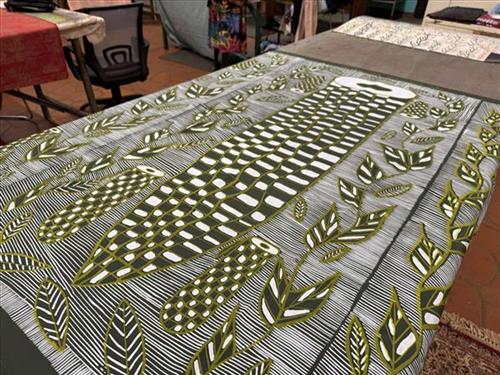
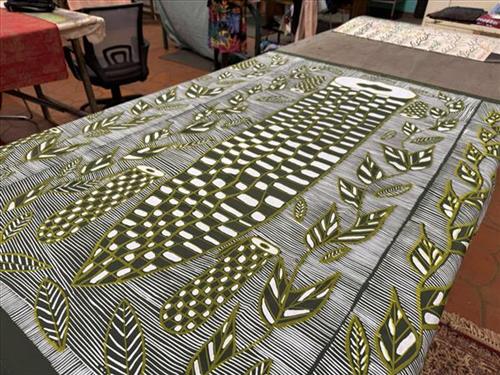
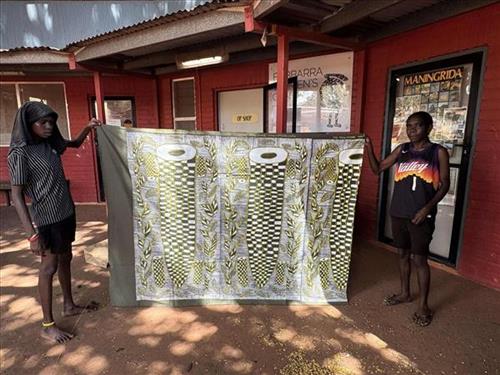
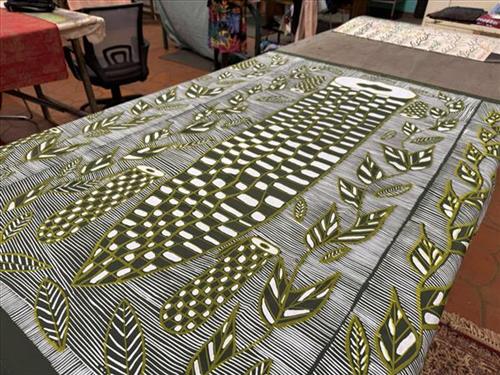
Kunbowinjku (Fresh Water) 2022

Kunbowinjku (fresh water)

A new design made in 2022 featuring a mandjabu (fish trap), kunmadj (dilly bag) and fresh water weed.


‘This design is kunbowinjku – which is fresh water, kunronj. This is a mandjabu – fish trap which is floating in a creek. Fish will go in like yabby, long neck turtle and barramundi. This is a Kuninjku style of fish trap used for hunting. My father is from my Kuninjku side and he used this kind of trap. My mum is from my Kunibidji – Ndjebenna language side. This mandjabu is made from manylik grass.’

Raylene Bonson

220182353626


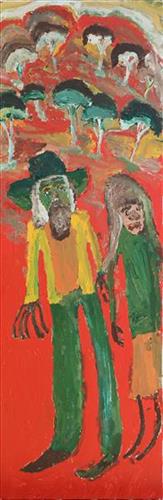
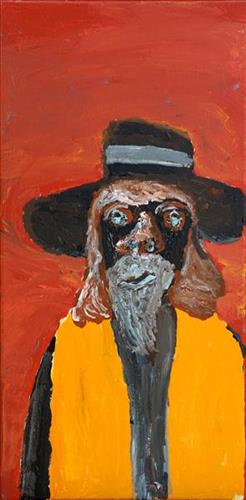
Family in Yalpirakinu

Yalpirakinu is Adrian’s mother’s country. Adrian’s mother is the late Eunice Napangardi, a well known painter herself. His artworks consistently refer to the desert mountains, ridges and trees which are part of Yalpirakinu. Using a restricted colour palette, Adrian’s brushwork is loaded with energy, drama and memories. In this painting Adrian has drawn from his memory to portray his family in Yalpirakinu.

377810582353281


Kunbowinjku (Fresh Water) 2022

Kunbowinjku (fresh water)

A new design made in 2022 featuring a mandjabu (fish trap), kunmadj (dilly bag) and fresh water weed.


‘This design is kunbowinjku – which is fresh water, kunronj. This is a mandjabu – fish trap which is floating in a creek. Fish will go in like yabby, long neck turtle and barramundi. This is a Kuninjku style of fish trap used for hunting. My father is from my Kuninjku side and he used this kind of trap. My mum is from my Kunibidji – Ndjebenna language side. This mandjabu is made from manylik grass.’

Raylene Bonson

377810582353280


Kunbowinjku (Fresh Water) 2022

Kunbowinjku (fresh water)

A new design made in 2022 featuring a mandjabu (fish trap), kunmadj (dilly bag) and fresh water weed.


‘This design is kunbowinjku – which is fresh water, kunronj. This is a mandjabu – fish trap which is floating in a creek. Fish will go in like yabby, long neck turtle and barramundi. This is a Kuninjku style of fish trap used for hunting. My father is from my Kuninjku side and he used this kind of trap. My mum is from my Kunibidji – Ndjebenna language side. This mandjabu is made from manylik grass.’

Raylene Bonson

377810582353279


Kunbowinjku (Fresh Water) 2022

Kunbowinjku (fresh water)

A new design made in 2022 featuring a mandjabu (fish trap), kunmadj (dilly bag) and fresh water weed.


‘This design is kunbowinjku – which is fresh water, kunronj. This is a mandjabu – fish trap which is floating in a creek. Fish will go in like yabby, long neck turtle and barramundi. This is a Kuninjku style of fish trap used for hunting. My father is from my Kuninjku side and he used this kind of trap. My mum is from my Kunibidji – Ndjebenna language side. This mandjabu is made from manylik grass.’

Raylene Bonson

221282353245


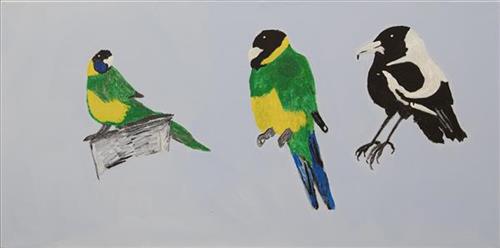
Jeffrey’s Birds

Jeffrey paints his favourite birds that live in the country around Ernabella. These include the kuparu (magpie), partilpa (Port Lincoln ringed neck parrot), kayarkiyarpa (galah), tjintir-tjintirpa (willy wag-tail), piil-piilpa (yellow throated minor) and kuurkuurpa (owls).


.

221282353234


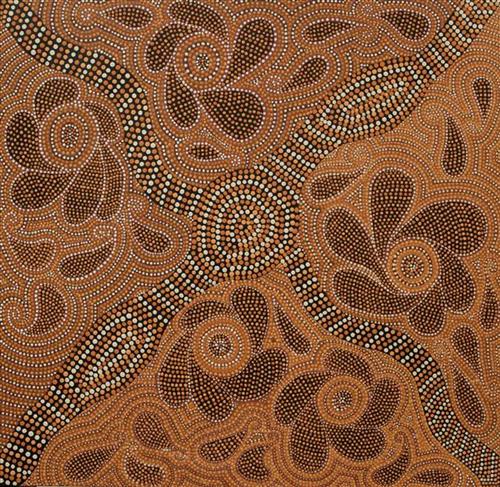
Putipulawa Putitja – Wildflowers

This design is based on the many native flowers that grow locally in Pukatja and through the Musgrave Ranges. When we go out to the bush, we see all the different colours from many plants growing.  Flowers are important to the women and the health of the land, and much excitement is felt as they burst into life.

221282353233


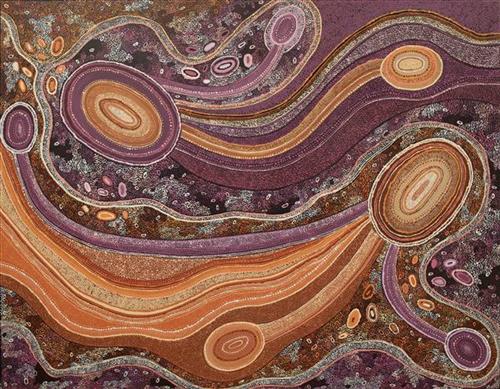
Michelle’s Tjala Dreaming (Honey Ant)

Michelle’s father’s country is tjala tjukurpa (honey ant dreaming). Michelle and her family still visit this country where she pays special attention to the natural elements on the land which are then represented in her paintings:

I am painting the landscape from above, as you might see it from an airplane or as a bird looking down. It is beautiful country both from on the ground and up above.

In Michelle’s work she creates how the tjala (honey ants) tunnel though the sandy soil. She also depicts the waterholes, the assemblages of trees and shrubs and the country that is ‘quiet’.

Tjala or honey ants live in nests about a metre underground beneath mulga trees, and they are a highly favoured food source. The tjala tunnels that lead down to the ants’ nests are called nyinantu, and the larvae are called ipilyka-ipilyka. After the rain when the ground is soft the women go digging for tjala by looking for the drill holes under the trees. They then use shovels and crowbars to dig down following the tunnels to find the tjala inside. Anangu suck the delicious rich honey-like liquid from the distended abdomen of the tjala. The story of the tjala is told across the Northern Territory into South Australia and is an important link between Anangu mythology and inter-dependence on the environment.

221282323277


Ngayuku Walka / My Design

Walka means design or pattern. Artists use this title to describe artworks that are pattern based rather than descriptive or telling a story.