225482333997


Boab Nut

Ngarinyin, Woddorda  (Worrorra) and Wunambal are the three main languages of the North Kimberley language families. The Boab Tree is known by Wurnambal people as Jungurri, in  Woddorda as Jungurim and in Ngarinyin as Jungulan jirri, Larrgari jirri and Malawudi jirri.

Boab or Larrgardi Trees (lt.: Adansonia Gregorii) – is an Australian native species only found in the Kimberley region of Western Australia. They are very recognisable due to their unusual shape – reminding one of a full-bodied bottle. Some trees are more then 1500 years old and can hold more than 100,000 litres of water in their trunks.

Every part of the tree is used either as a food-resource, as medicine or otherwise. Almost every part of the tree is edible from the young leaves and tubers to the internal fruit pods and seeds.

The tree produces beautiful large fragrant yellow flowers. Inside the fruit pod the fruit is naturally dried on the tree itself. This is the only fruit in the world that does this.

Indigenous artists carve designs into shell of the boab nut or paint it with different designs and children use it as a rattle. The designs on the nuts vary from Wandjina’s to different animals, like the Brolga, turtles, and fish to people’s faces and landscapes.

“Boab nut Carving was a way of expressing ones artistic skills. Aboriginal people across the Kimberley Region of Western Australia was carving along time ago it started with our ancestors.”
225482333989


Boab nut

Ngarinyin, Woddorda  (Worrorra) and Wunambal are the three main languages of the North Kimberley language families. The Boab Tree is known by Wurnambal people as Jungurri, in  Woddorda as Jungurim and in Ngarinyin as Jungulan jirri, Larrgari jirri and Malawudi jirri.

Boab or Larrgardi Trees (lt.: Adansonia Gregorii) – is an Australian native species only found in the Kimberley region of Western Australia. They are very recognisable due to their unusual shape – reminding one of a full-bodied bottle. Some trees are more then 1500 years old and can hold more than 100,000 litres of water in their trunks.

Every part of the tree is used either as a food-resource, as medicine or otherwise. Almost every part of the tree is edible from the young leaves and tubers to the internal fruit pods and seeds.

The tree produces beautiful large fragrant yellow flowers. Inside the fruit pod the fruit is naturally dried on the tree itself. This is the only fruit in the world that does this.

Indigenous artists carve designs into shell of the boab nut or paint it with different designs and children use it as a rattle. The designs on the nuts vary from Wandjina’s to different animals, like the Brolga, turtles, and fish to people’s faces and landscapes.

“Boab nut Carving was a way of expressing ones artistic skills. Aboriginal people across the Kimberley Region of Western Australia was carving along time ago it started with our ancestors.”
220982348962


Bush Medicine Plants

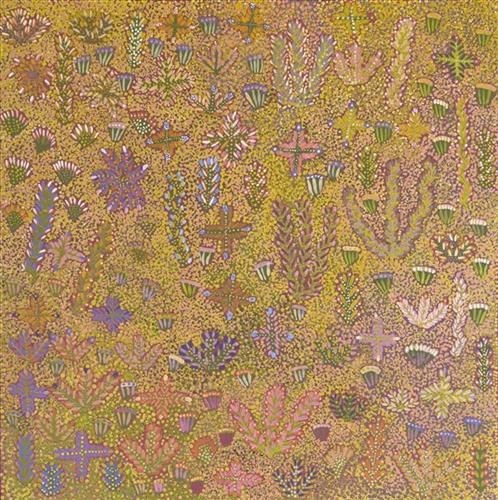
“Bush medicine plants are used for healing on the body and for drinking. We make this by grinding the plants with a rock, we use the juice and the fibre of the plant.

We collect bush medicine plants when we are out hunting. Different kinds of plants grow during different seasons.

There are lots of different medicines, we know what their stories are, we learnt them from our parents and we teach these stories to our children.”

Bush medicine knowledge is still strong in Ampilatwatja, it continues to be passed down to the younger generations and is widely used.


When the women go hunting they often gather bush medicine. The plants depicted here are found in the country around Ampilatwatja, they are used for soothing skin infections and to make a drink to help with colds and coughs.


Painting bush medicine stories is important because it helps to maintain a strong knowledge and culture for the community.

115682354885


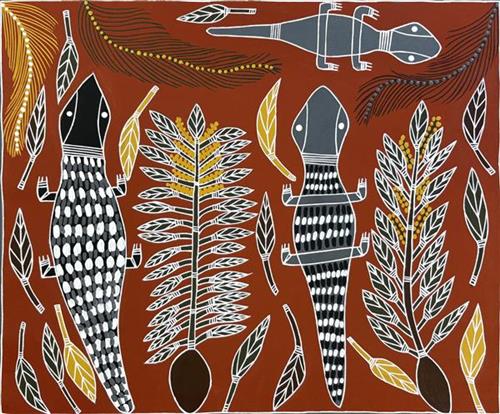
Northern Marbled Velvet Gecko (Oedura marmorata)

Aboriginal art in Ramingining, Central Arnhem Land is commonly illustrated through designs and images of animals, plants, and landscape. These motifs commonly reflect the artists ancestral inheritance and their dreamings and are referred to as totems.

For this painting, the artist has painted Northern Marbled Velvet Gecko (Oedura marmorata)

22124007402


Status: Stock


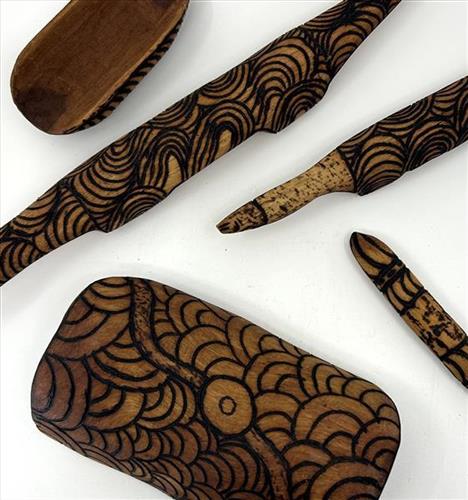
Punu (wood carving)

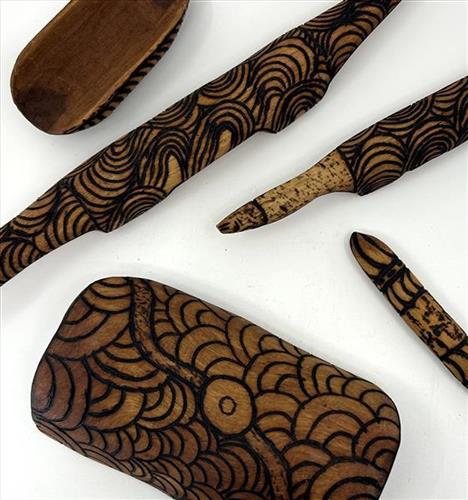
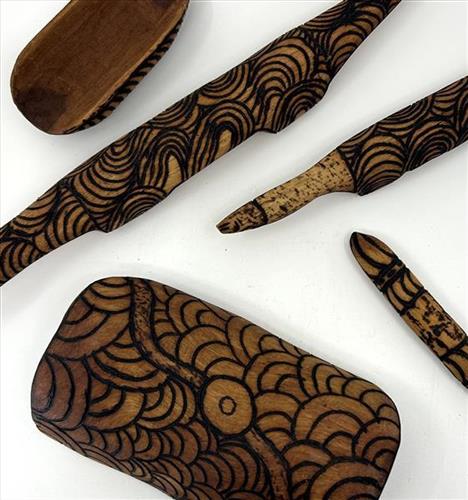
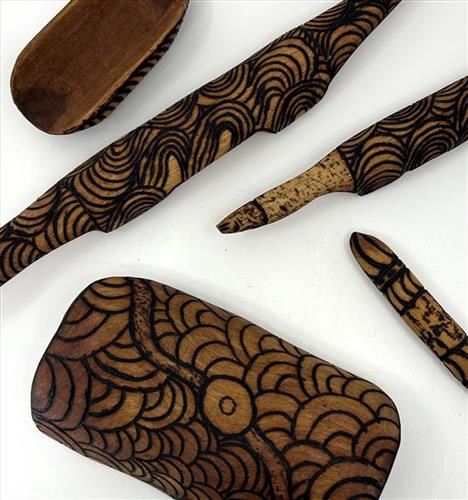
Punu are wood carvings by Anangu, they are hand carved and decorated with walka, patterns burnt into the wood with heated wire.

22124007380


Status: Stock


Punu (wood carving)

Punu are wood carvings by Anangu, they are hand carved and decorated with walka, patterns burnt into the wood with heated wire.

22124007377


Status: Stock


Punu (wood carving)

Punu are wood carvings by Anangu (Central and Western Desert Aboriginal people), they are hand carved and decorated with walka, patterns burnt into the wood with heated wire.

22124006741


Status: Stock


Punu (wood carving)

Punu are wood carvings by Anangu, they are hand carved and decorated with walka, patterns burnt into the wood with heated wire.

225481838939


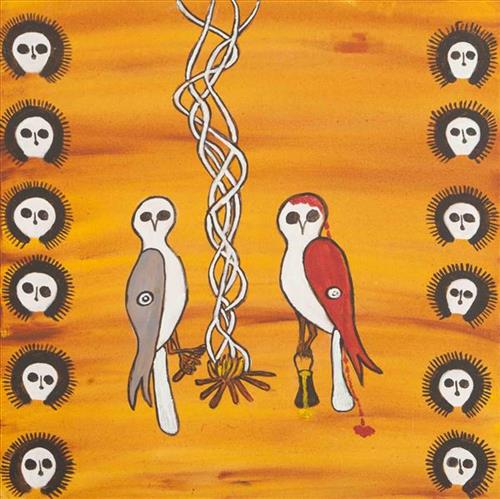
Wodoi & Djingun (spotted nightjar & owlet nightjar)

Wodoi and Djingun are two birds which represent the two skin types (clans or moieties) to which all Wandjina people belong. Woody and Djingun were fighting over sugar bags (bush honey). Djingun hit Wodoi and the blood from Wodoi flowed crimson, to represent red ochre. Wodoi then retaliated and struck Djingun, whose blood was much paler. This represents white ochre. Both birds then realised that their fighting was pointless and shared the honey. All the while the Wandjinas were watching and passed this story on to the people to show that different tribes can get on together. Today at Mowanjum the law of Wodoi and Djingun is still very strong. A Wodoi person must always marry someone from the Djingun moiety and vice-versa. In this way the people believe that the bloodlines will stay strong and help keep the spirit of the Wandjina alive.

225481846658


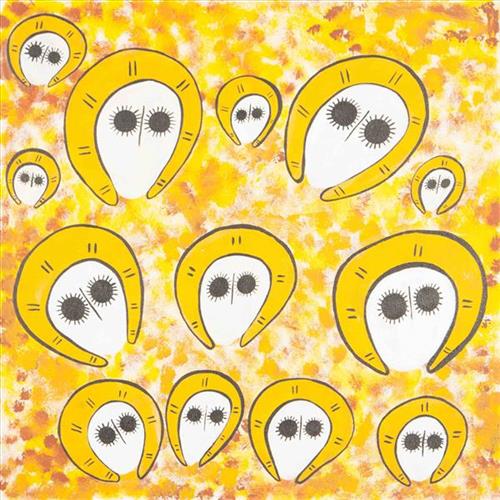
Wandjinas (cloud and rain spirits)

Where you see a lot of Wandjinas they represent the laws of trees, rivers, rocks, bush fruit, animals and all of creation. The Wandjinas give the law on how we have to treat and use these creations. These customs are carried on today. The Wandjina spirits are highly respected by the Worrora, Ngarinyin and Wunumbul people who live at Mowanjum and up the Gibb River Road to Kalumburru in the North West Kimberley region of Western Australia.