22544006576


Status: Stock


Boab Nut

Ngarinyin, Woddorda  (Worrorra) and Wunambal are the three main languages of the North Kimberley language families. The Boab Tree is known by Wurnambal people as Jungurri, in  Woddorda as Jungurim and in Ngarinyin as Jungulan jirri, Larrgari jirri and Malawudi jirri.

Boab or Larrgardi Trees (lt.: Adansonia Gregorii) – is an Australian native species only found in the Kimberley region of Western Australia. They are very recognisable due to their unusual shape – reminding one of a full-bodied bottle. Some trees are more then 1500 years old and can hold more than 100,000 litres of water in their trunks.

Every part of the tree is used either as a food-resource, as medicine or otherwise. Almost every part of the tree is edible from the young leaves and tubers to the internal fruit pods and seeds.

The tree produces beautiful large fragrant yellow flowers. Inside the fruit pod the fruit is naturally dried on the tree itself. This is the only fruit in the world that does this.

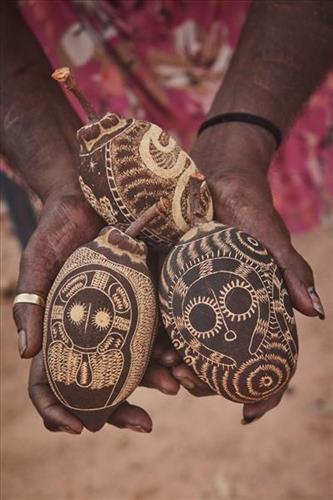
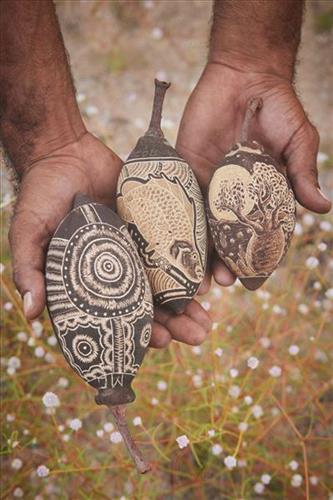
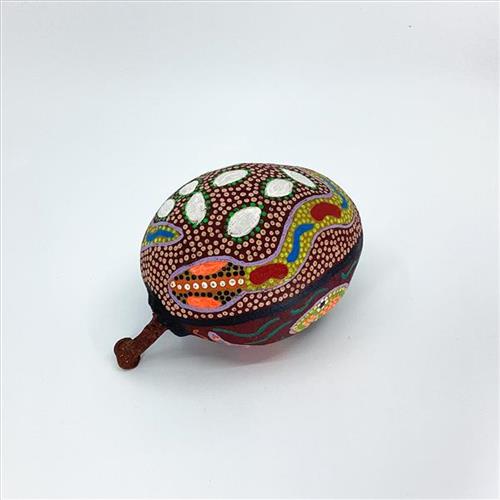
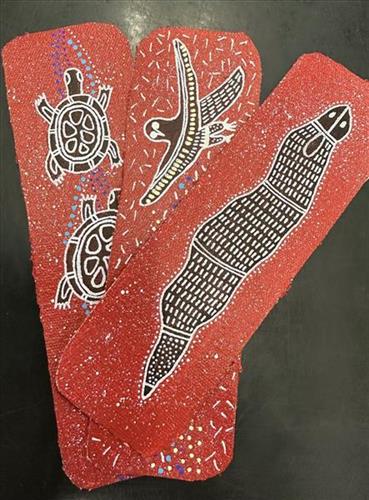
Indigenous artists carve designs into shell of the boab nut or paint it with different designs and children use it as a rattle. The designs on the nuts vary from Wandjina’s to different animals, like the Brolga, turtles, and fish to people’s faces and landscapes.

“Boab nut Carving was a way of expressing ones artistic skills. Aboriginal people across the Kimberley Region of Western Australia was carving along time ago it started with our ancestors.”

22544003623


Status: Stock


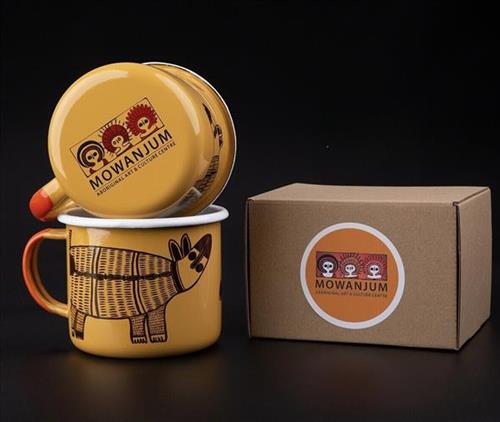
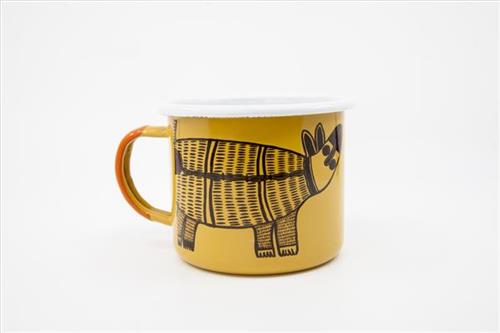
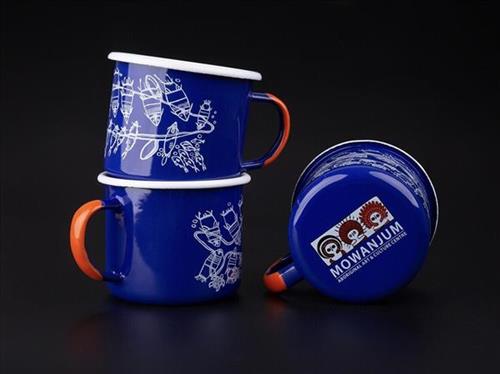
Enamel Mug. Two Dingo Dreaming by Cecilia Umbagai

This story is from both the Woddorda and Ngarinyin tribes. It tells the story of the men who went out hunting and told the children not to play or talk to the dingos while they were away.  One of the children kept talking to the dingos and demanding that the dingos speak back.  Finally, the dingos spoke back and suddenly the ground opened and the children and remaining community members disappeared forever into the ground, along with the dingos.

22544003622


Status: Stock


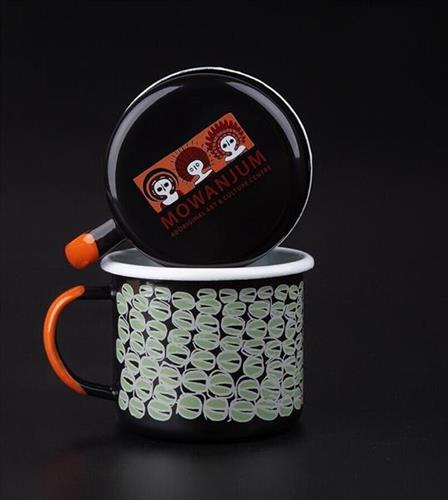
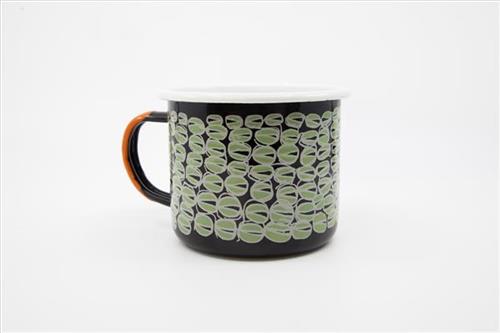
Enamel Mug, Crocodile Scales by Maitland Ngerdu

 The crocodile is very important to the Woddorda people. When the boys become men, they are given traditional skin markings that are called Brilgee.  The crocodile is a totemic symbol and represents traditional dreamtime stories and dance in rock art.

The enamel mug is based on a woodblock print designed by Maitland Ngerdu.

22544003621


Status: Stock


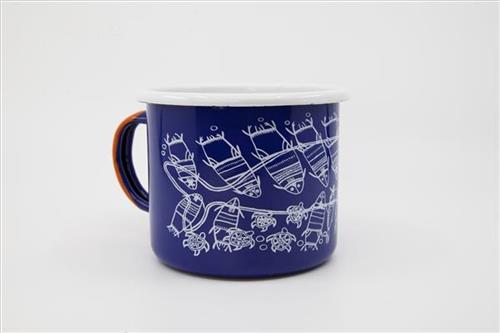
Enamel Mug. Jiyaa by Leah Umbagai


The three tribes are the Worrora, Wunumbul and Ngarinyin. The three tribes represent the Wandjina who made them what they are today. They’re from the North West Kimberley region of Western Australia. Wandjina is the creator for all the food on the land and in the sea. He’s the one who gave us fish (Jaiya).

22544003101


Status: Stock


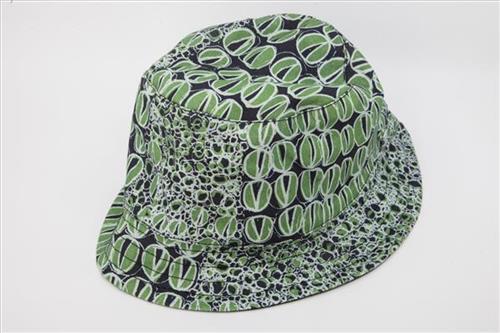
Crocodile Scales by Maitland Ngerdu, Bucket Hat

small (58cm), medium and large artist print hat by Maitland Ngerdu dreaming- crocodile scales

The Crocodile is very important to our people because when the boys become men they are given traditional skin markings that we call Brilgee. The Crocodile is a totemic symbol and represents in rock art, traditional dreamtime stories and dance.

22544002940


Status: Stock


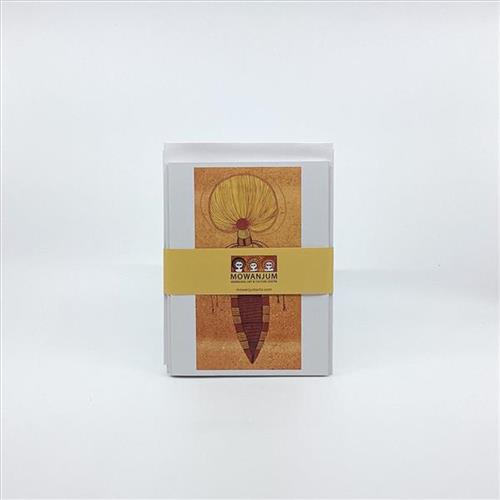
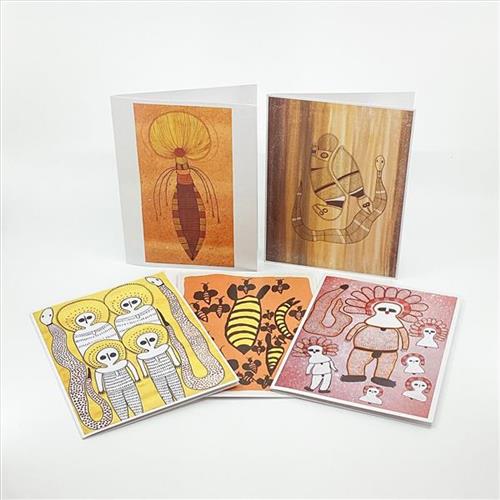
Set of 5 Greeting Cards – Various artists

Leah Umbagai Ungud (snake)

The Ungud Snake story is about two young boys who didn’t listen to their elders or believe in them. There is a big waterhole an in it lies a large Ungud Snake. The old people told the kids not to go near that waterhole, but these boys thought the elders were tricking them so they wanted to find out for themselves. So they went to the waterhole and built a hideout from branches with small holes so that they can see ( just in case the elders told the truth) they looked at the billabong and it was calm. They banged two sticks together to make clapping noise and then they saw all the lilypads starting to move apart on the water and large logs came up from out of the water, then came bubbles and after a huge head coming out of the water to have a look around for who had been making all the noise. He hadn’t seen annone so he went back down and the lilypads went flat and the water went calm. Those two boys ran back to the camp and told the elders that they were right , there was a snake and the elders told them that they should have listened in the first place. The Ungud Snake also was the chosen animal in helping with the creation of mother earth, creating rivers, gorges, stream’s and helped with the formation of the earth. Still today it lives in these dark deep water hole’s in our country which doesn’t want to be disturbed.

Kallum Mungulu Wandjina & Ungud

The Wandjina is the creator spirit that belongs to us (the Wororra, Ngarinyin and Wunumbul people). He is the one that created everything, he also gave us our culture, law and songs and even the dreaming of each child before they are born.

The Ungud Snake story is about two young boys who didn’t listen to their elders or believe in them. There is a big waterhole an in it lies a large Ungud Snake. The old people told the kids not to go near that waterhole, but these boys thought the elders were tricking them so they wanted to find out for themselves. So they went to the waterhole and built a hideout from branches with small holes so that they can see ( just in case the elders told the truth) they looked at the billabong and it was calm. They banged two sticks together to make clapping noise and then they saw all the lilypads starting to move apart on the water and large logs came up from out of the water, then came bubbles and after a huge head coming out of the water to have a look around for who had been making all the noise. He hadn’t seen annone so he went back down and the lilypads went flat and the water went calm. Those two boys ran back to the camp and told the elders that they were right , there was a snake and the elders told them that they should have listened in the first place. The Ungud Snake also was the chosen animal in helping with the creation of mother earth, creating rivers, gorges, stream’s and helped with the formation of the earth. Still today it lives in these dark deep water hole’s in our country which doesn’t want to be disturbed.

Gordon Barunga Rimmijbudda & Ungud (rain and cloud spirit & totem)

Rimijbudda is a powerful Wandjina from the Wanumbul country. Gordon Barunga says: “He’s from my mother’s side – Wanumbul, Hunter River, on the sea side from Kalumburu. He’s a thief, steals shells and any sorts of things. Rimij means ‘robs’.” Rimijbudda’s exploits as a thief are part of his identity: he used to take from the other Wandjinas when they were hunting or fishing. He would then run away with their wives. Jugalimurra (another Wanumbul Wandjina) works for Rimijmurra by the sea. As in nearly all depictions of Wandjinas, Jagulimarra and Rimijmurra lack mouths. Pudja (Gordon’s mother) explains that when the Wandjinas send rain, they make the sound of thunder through their nostrils, but they lack mouths so that it won’t rain too hard. The Ungud snake is the one that made the rivers and holds water. If they are disturbed then they will kill whoever disturbs them.

 Gudu Mungulu Waanungga (sugar bag)

Gudu Mungulu often paints Waanugga, which is a word that describes various forms of bush honey. The hives in which honey is stored are called ‘Sugarbag’, and can be found in trees and in termite mounds. The Wandjinas keep the countryside fresh and healthy which allows the native bees to produce high quality honey in Gudu’s homeland. Gudu’s name ‘Guduwolla’ is Ngarinyin for a particular tree which is favoured by Kimberley honey-flies. It’s white pollen is conspicuous from August until September, and is the main source of bush sugar in The Kimberley.

Cecilia Umbagai Didnyjinygee (Dragonfly)

“This painting represents the Dragonfly, it shows us and tells where freshwater can be.”


Product Details:

Card dimensions: 14cm x 19cm

Comes with envelopes
22544002255


Status: Stock


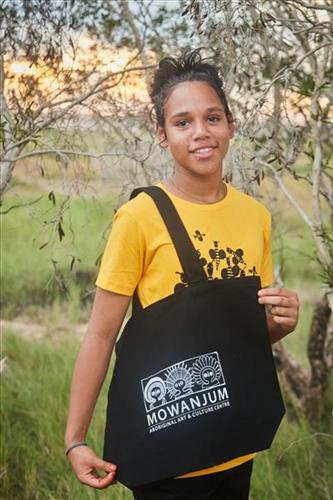
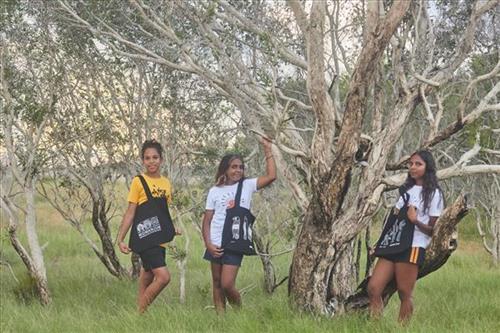
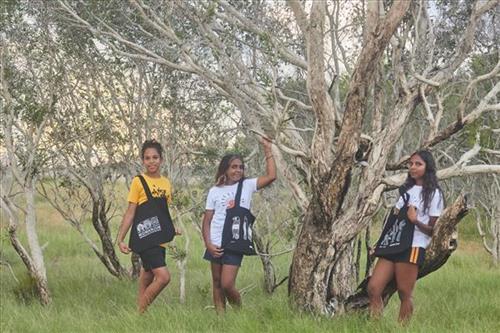
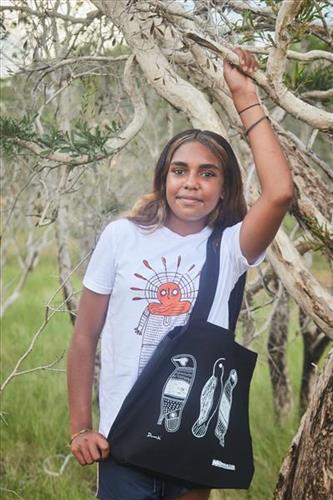
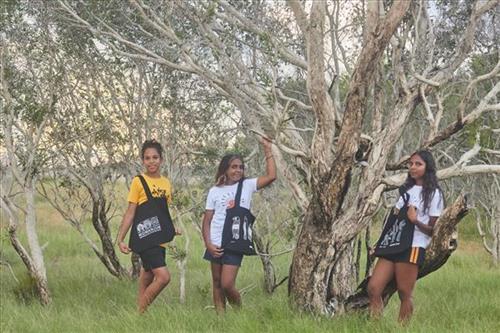
Mowanjum Tote Bag

The Mowanjum Aboriginal Art and Culture Centre is a creative hub for the Worrorra, Ngarinyin and Wunumbal tribes, who make up the Mowanjum community outside Derby, Western Australia.

These three language groups are united by their belief in the Wandjina as a sacred spiritual force and the creators of the land. They are the custodians of Wandjina law and iconography.


Product Description:

100% Cotton

W: 45cm x 36cm 

22544002254


Status: Stock


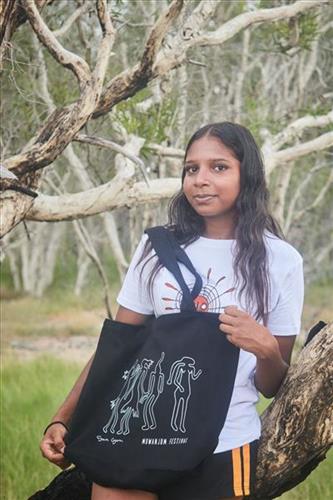
Gyorn Gyorn by Shontae Charles, Tote Bag

The Wandjina created the earth and all life upon it, then he created the first human beings: the Gyorn Gyorn people. He then told them to work the land and do well. The Gyorn Gyorns were confused and didn’t understand what the Wandjina wanted from them. The Wandjina was annoyed couldn’t control the Gyorn Gyorn so he travelled back to Wallungunda (Milky Way) to where Idjair was and asked if he could help with the creation. More Wandjinas came back and helped him in all areas of creation. The Gyorn Gyorns became hunters and gathers. They also show the traditional dancing amongst our tribes.


Product Description:

100% Cotton

W: 45cm x 36cm 

22544002253


Status: Stock


Dumbi by Leah Umbagi, Tote Bag

Dumbi is an owl which resides in Ngarinyin country. Two boys teased Dumbi after they found his tree knocked over by the wind. Dumbi could not fly away because he was Mayanki oni (cold) and the Wilmi (dew) was sticking his feathers together. The boys plucked out his feathers and threw him in the air three times. Dumbi flew to the Wandjina named Wonarlirri who said he would create a large Ngarlu mindi (flood) to punish the tribe where the boys came from. At a place called Djunbai mindi, the Wandjina gathered a large flock of Karroongkarli/ Kurranda Nyindi (brolgas) who stomped on a huge Nyalgoorro (black soil plain) to create quicksand. The Ngarlu Mindi came and drowned many people and those who tried to escape were lost in the quicksand. The boys were safe because they were on high ground. They were taken there by Mangarra Djirri (Ungud kangaroo) and they traveled on the kangaroo’s tail. Margurrigurri (tata lizard) warned the Wandjina that the boys had escaped. The rain and lightning started to chase the boys and they ran to a hollowed out Latcurry (boab tree). Once they were in the tree, the Wandjina closed it up and they were lost forever. In another version of the story the children are a boy and girl who survive the flood and mate to produce a new tribe.


Product Description:

100% Cotton

W: 45cm x 36cm