Ngayuku Walka / My Design
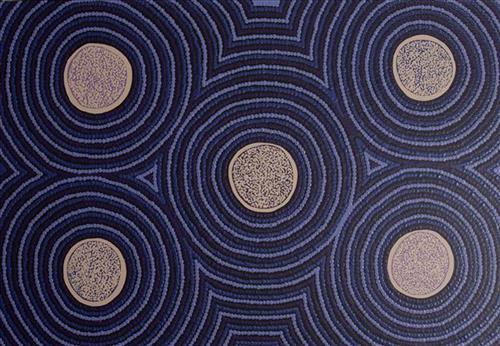
Walka means design or pattern. Artists use this title to describe artworks that are pattern based rather than descriptive or telling a story.
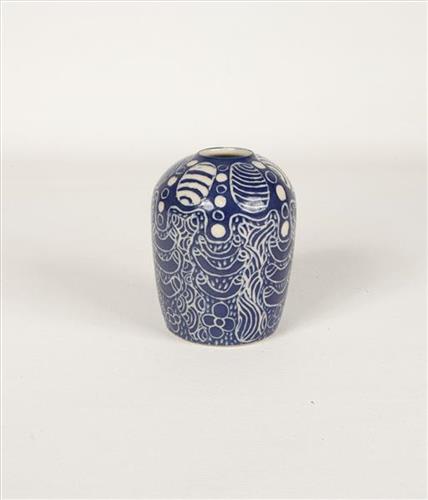
Walka means design or pattern. Artists use this title to describe artworks that are pattern based rather than descriptive or telling a story.
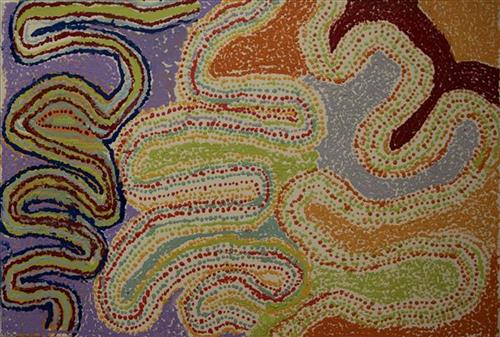
Before ration times, our life was from Tjukurpa. We ate all the mai putitja (bush foods) and we were happy. Later, petrol came, marijuana came and there was no work. People left their Country, they are going everywhere and they are lost. The Government tries to take our lives, our Manta (Country) and our Tjukurpa. They can’t. This is our place and we have lots of Tjukurpa and our Country and our story is really big. They can’t take it away. We Anangu are strong for our Country and Tjukurpa.
Our Land has been here for a long time, our grandmothers and grandfathers taught us, their grandmothers and grandfathers taught them, not just here, but all over.
This is all still here and it is still strong.
I don’t want to lose my story, I will not lose the Tjukurpa given to me.
Artists use this title when they are depicting their Country. It might be a representation of a particular place or of different aspects of that area. The artist uses a combination of colour and design to indicate variations in the landscape. Inspiration is drawn from all elements of Country and might include bush tucker, water holes, meeting places, rock formation, birds or animals.
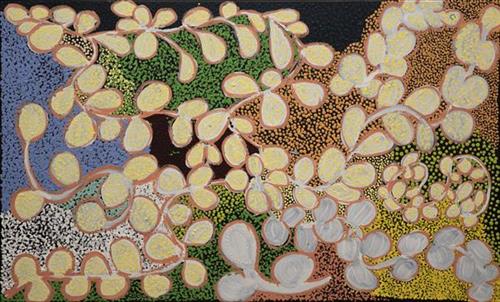
Stories are told of the Kaliny-kaliny or Honey Grevillea flower which is a favourite bush food of the Anangu Pitjantjatjara (people). Ultukunpa grows in the sandy soils on the plains. The flowers can be picked and placed in a billycan of water to create ‘honeywater’ (cordial) or they can be sucked for their sweet honey dew.
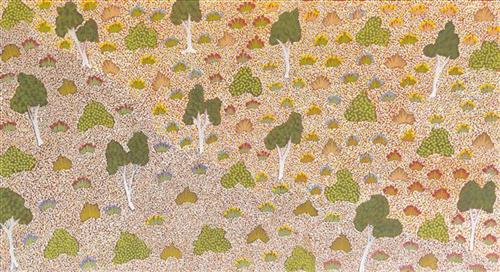
The community of Ampilatwatja made a conscious decision not to paint ‘altyerr’ dreaming stories, the artists paint their country where those stories sit.
Sevenia was born in Soakage Bore, Utopia and started to paint when she was teenager. She learnt the way to paint landscape and bush medicine from her grandmother Eileen Bonney, a former health worker and artist. Sevenia finds painting soothing and enjoys to share this activity with her kids so they can learn as she did with her grandmother.
Knowing your country is an important part of living in a remote community like Ampilatwatja. Knowing when and where to go hunting and gathering, knowing where there is ‘soakage’ (where you can dig for water), travelling with family for ceremonies, and maintaining a connection with the land.
“This is my country, my view of country.”
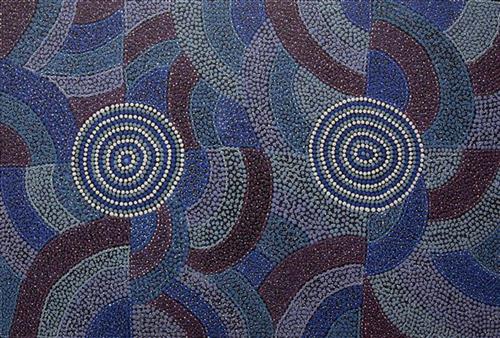
This design depicts a minymaku (women’s) warku (rock hole). In some places women are the custodians of rock holes and other landforms. This means they are responsible for looking after them and keeping them clean.
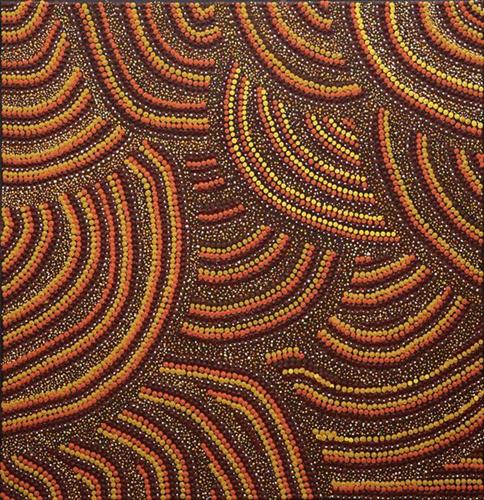
This design is inspired by the red sand dunes that are found throughout the central desert. There is a large red sand dune near Ernabella named Wamikata which is a popular place for looking for maku (witchetty grubs) and for teaching Milpatjunanyi (telling stories in the sand) to children.
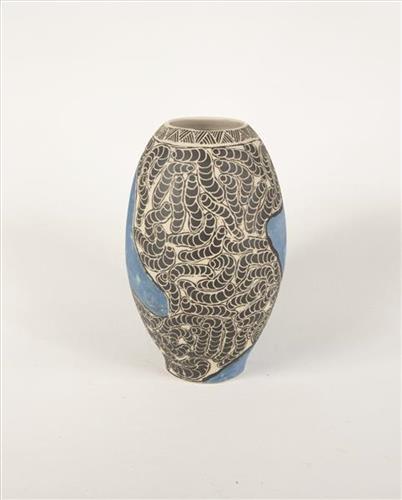
Favourite bush foods of Anangu on the APY Lands include maku (witchetty grubs). Until relatively recently bush foods were the primary sustenance for Anangu. Many bush foods are still gathered regularly almost exclusively by women, and they feature strongly in women’s mark making. Women learn the art of gathering each of the foods from a young age and much inma (ceremony) relates to these practices and the maintenance of supply.
Anangu say that eating maku is good for the brain and mental health.
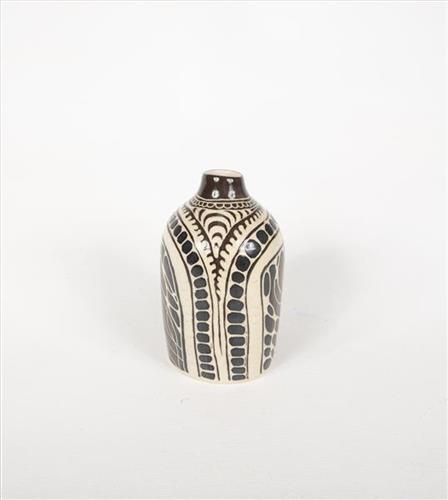
Walka means design or pattern. Artists use this title to describe artworks that are pattern based rather than descriptive or telling a story.
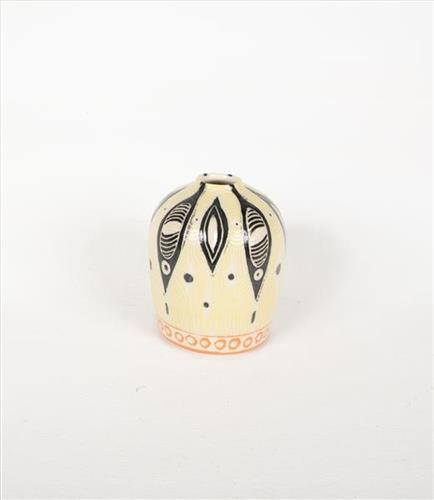
Walka means design or pattern. Artists use this title to describe artworks that are pattern based rather than descriptive or telling a story.