114582357570


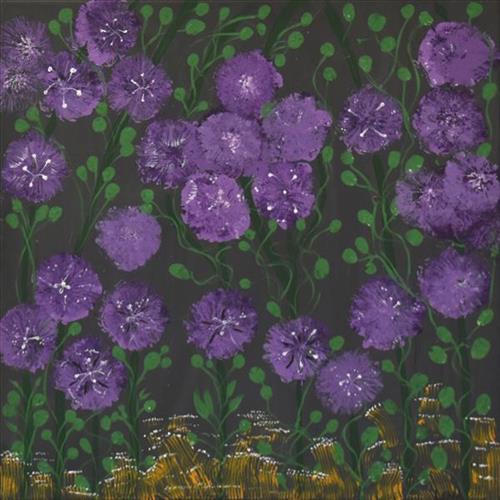
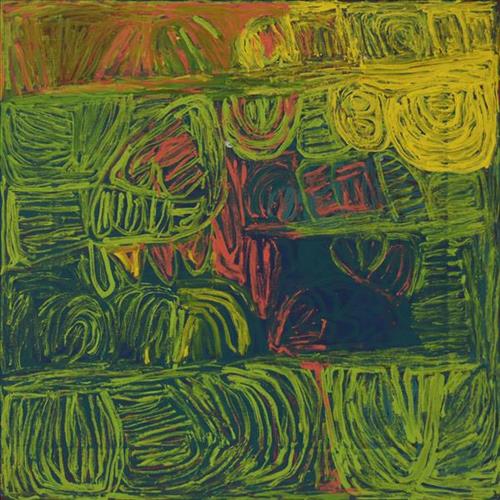
Martuwarra

Sonia was born by a billabong at Noonkanbah community. Her parents were Walmajarri whose movements led them to live by the Fitzroy River. Sonia has lived most her life at Noonkanbah. A compulsive artist, Sonia for a long time was a teacher’s aid at the local school where she facilitated art making with the children. Illustrative of her attachment to the country where she grew up, an intimate life with the river, Sonia’s art is a saturation of river country motifs, be it parlka (barramundi), brim, tortoise, stingray, pandanus trees or the water itself. “Martuwarra is my river country; this painting is all about the Fitzroy River which flows down through Noonkanbah where I live. All kinds of fish live in the water, we catch big mob of fish here. I like Parlka (barramundi). We catch catfish and brim here too. Nganku (shark), Wirritunany (sawfish) and Stingray also live here. These fish live in these waters long after the flood has gone. Also this painting is about barramundi swimming on the surface of the water, you can also see the Wakiri (pandanus tree) and rocks all around. When the barramundi get tired they go back into the rock holes. These rock holes hold all the Parlka (barramundi) that live in the river. Kalpurtu (creator serpent-type being) also live in these rock holes and swim all around the Palma (creeks) and all around the Wakiri that grows in the river.”
220982353478


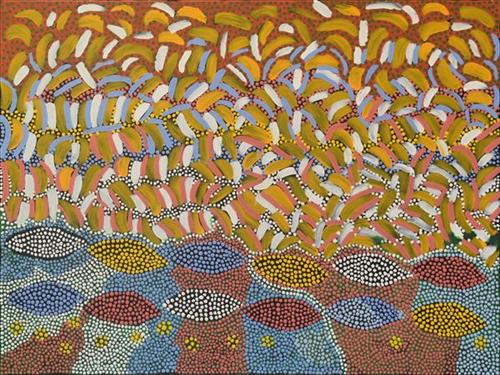
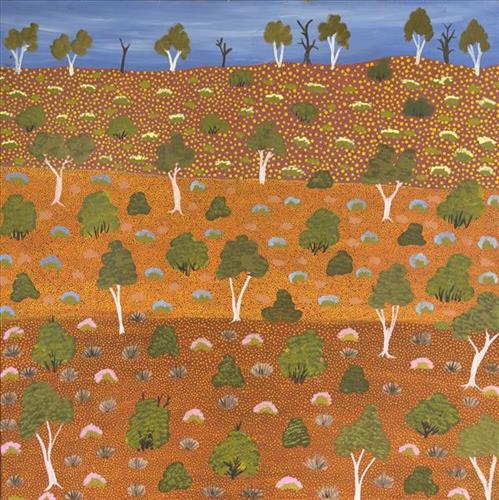
Alec Pula Lewis – View of Country

Alec was born at McDonald Downs Station. He grew up there with his family living traditionally on the land.  Alec did not attend school, he moved between different communities with his family. 

Knowing your country is an important part of living in a remote community like Ampilatwatja. Knowing when and where to go hunting and gathering, knowing where there is ‘soakage’ (where you can dig for water), travelling with family for ceremonies, and maintaining a connection with the land.

“This is my country, my view of country.”

The artists of Ampilatwatja made a conscious decision not to paint altyerr (dreaming stories). The artists paint their country where those stories sit.

220982353473


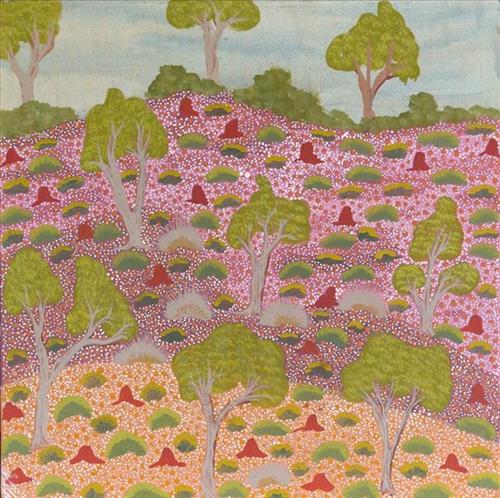
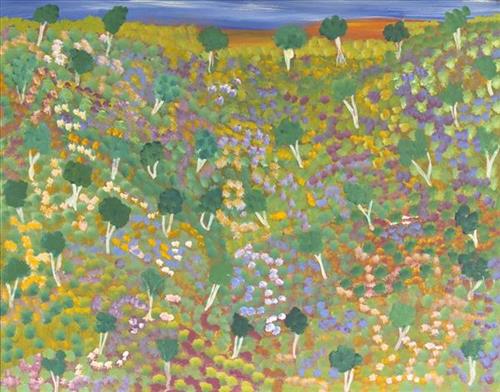
Gunderson Kemarre Lewis – Great Grandmothers Country

I paint my Great Grandmothers country around Canteen Creek. Long time ago she hunted around this soakage in this country. When I paint, I paint that country, the soakage the bushflowers the sandhills and the distant mountains.

I hunt this country now.

220982357421


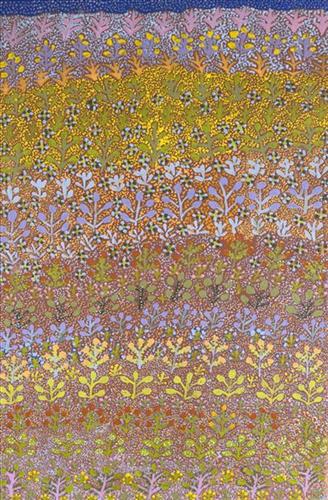
Rosie Kemarre Morton – My Father’s Country and Bush Medicine

Rosie has painted her Father’s country, where she can always find bush tucker and bush medicine. She is very happy when out bush hunting and gathering, as it brings back memories of her childhood when she used to live traditionally off of the land with her family.


Rosie uses these hunting trips as her inspiration for her artworks, each one reflecting the layered landscape and various colours as she has seen them. They are always changing, with the light of day and the seasons of the year.


Rosie enjoys and understands the importance of painting bush medicine plants. They help in the healing of her people and it keeps the tradition and knowledge strong. These particular plants are very plentiful after rain and can be used for numerous conditions, such as skin irritations, flu, coughs and infections.


Rosie’s dreaming is the Araluta or kangaroo plant. This bush is a rich source of food for the kangaroos and keeps them fat and healthy and good for hunting.

The community of Ampilatwatja made a conscious decision not to paint altyerr (dreaming stories). The artists paint their country where those stories sit.

220982358024


Ada Pula Beasley – My Country

I paint so my kids will learn about their country. I like painting because it reminds me of my country and where the bush medicine and bush tucker grow and where we go hunting.

The artists of Ampilatwatja made a conscious decision not to paint altyerr (dreaming stories). The artists paint their country where those stories sit.

359709482358339


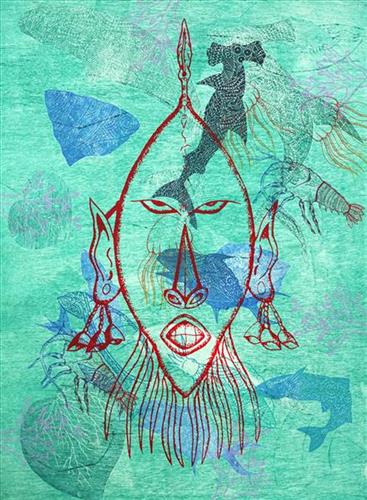
Malu Thumayawaik

The mask in the artwork represents the profound concerns of my ancestors regarding the exploitation of our marine environment, driven by climate change and pollution. For centuries since creation, Indigenous peoples have possessed a rich tradition of sustainable marine conservation, emphasising responsible harvesting to ensure that resources endure for generations. Coral reefs, mangroves, and seagrasses are not merely ecosystems but essential components of biodiversity, food security, and cultural identity. Protecting these invaluable ecosystems is not just an environmental obligation but a cultural imperative. We must unite globally to protect our oceans, ensuring their health and abundance for future generations.

359709482358337


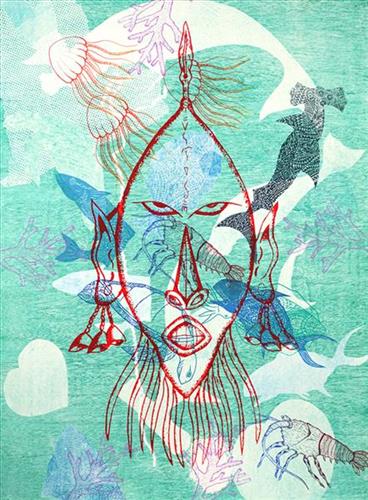
Malu Thumayawaik

The mask in the artwork represents the profound concerns of my ancestors regarding the exploitation of our marine environment, driven by climate change and pollution. For centuries since creation, Indigenous peoples have possessed a rich tradition of sustainable marine conservation, emphasising responsible harvesting to ensure that resources endure for generations. Coral reefs, mangroves, and seagrasses are not merely ecosystems but essential components of biodiversity, food security, and cultural identity. Protecting these invaluable ecosystems is not just an environmental obligation but a cultural imperative. We must unite globally to protect our oceans, ensuring their health and abundance for future generations.


Art Centre notes:

This artwork is a unique state, monotype screen print on BFK Rives paper (100% cotton rag paper with strong archival properties. 

Paper size: 106 x 78cm

Printed at 

Print Assistant: Basil