22024005092


Status: Stock


Mitjili Napurrula Watiya Tjuta Wrap Top, Black on White

In this design Mitjili Napurrula depicts her fathers Tjukurrpa, the ceremonial spear straightening in Uwalkari country (Gibson desert region). The Watiya Tjuta (Acacia Trees) are the trees that are used to make these spears. Uwalkari country is abundant with Watiya Tjuta, as well as sand hills and other plants. Mitjili paints the motif of the Watiya Tjuta, carrying on the recurring motif as her mother used to draw in the sand. Her mother passed on this Dreaming to her.

22024004933


Status: Stock


Mitjili Napurrula, Watiya Tjuta (Black on White), Flared Skirt

In this design Mitjili Napurrula depicts her fathers Tjukurrpa, the ceremonial spear straightening in Uwalkari country (Gibson desert region). The Watiya Tjuta (Acacia Trees) are the trees that are used to make these spears. Uwalkari country is abundant with Watiya Tjuta, as well as sand hills and other plants. Mitjili paints the motif of the Watiya Tjuta, carrying on the recurring motif as her mother used to draw in the sand. Her mother passed on this Dreaming to her.

22024004932


Status: Stock


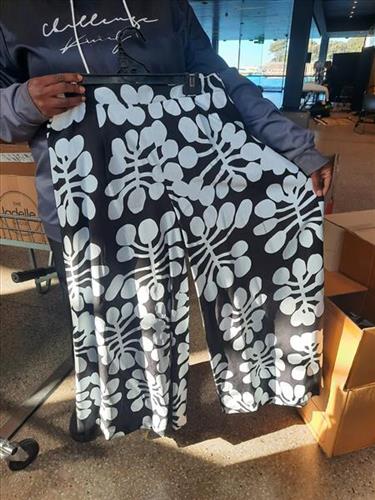
Palazzo Pants in Mitjili Napurrual Watiya Tjuta Design (Black on White)

In this design Mitjili Napurrula depicts her fathers Tjukurrpa, the ceremonial spear straightening in Uwalkari country (Gibson desert region). The Watiya Tjuta (Acacia Trees) are the trees that are used to make these spears. Uwalkari country is abundant with Watiya Tjuta, as well as sand hills and other plants. Mitjili paints the motif of the Watiya Tjuta, carrying on the recurring motif as her mother used to draw in the sand. Her mother passed on this Dreaming to her.

22024004931


Status: Stock


Palazzo Pants in Mitjili Napurrual Watiya Tjuta Design (White on Black)

In this design Mitjili Napurrula depicts her fathers Tjukurrpa, the ceremonial spear straightening in Uwalkari country (Gibson desert region). The Watiya Tjuta (Acacia Trees) are the trees that are used to make these spears. Uwalkari country is abundant with Watiya Tjuta, as well as sand hills and other plants. Mitjili paints the motif of the Watiya Tjuta, carrying on the recurring motif as her mother used to draw in the sand. Her mother passed on this Dreaming to her.

111582361382


May Chapman Doing A Painting

Most often explored in Doreen’s works are the motifs of her everyday modern Aboriginal community life; the animals hunted and plants gathered for bush tucker, the cars and aeroplanes used to travel to the cities and remote communities she regularly moves between, and depictions of the Country itself. 

Collectively this imagery, depicted with Doreen’s trademark wild palettes, painterly brushstrokes, and stark compositions, builds a layered representation of her Country. Doreen’s intimately known ngurra (home Country, camp) is viewed from multiple spatial perspectives, and in stylistic modes ranging from pure abstraction to images incorporating realist and traditional elements.

Doreen’s ngurra encompasses the Country between Western Desert communities and towns; Warralong, Strelley, Marble Bar, Port Hedland, and Jigalong, her birthplace. People identify with their ngurra in terms of specific rights and responsibilities, and the possession of intimate knowledge of the physical and cultural properties of one’s Country. Painting ngurra, and in so doing sharing the Jukurrpa (Dreaming) stories and physical characteristics of that place, has today become an important means of cultural maintenance.
225182361172


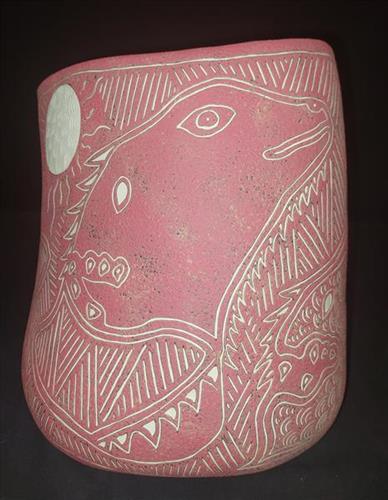
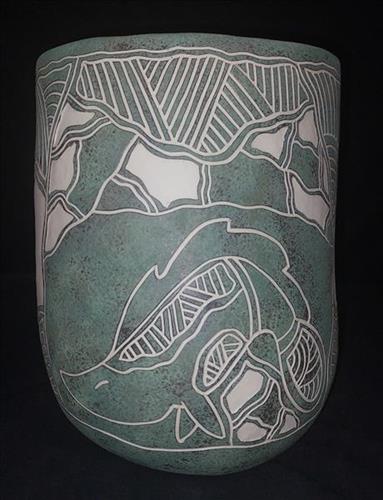
Jalbil (Boyd’s Rainforest Dragon)

Jalbil, the rainforest dragon, is a small and gentle lizard that feeds on insects. It is very hard to see in the rainforest because it takes on the colour and patterns of the environment. The male dragons are very colourful. Jalbil are spiritual messenger for Kuku Yalanji that bring us and our families good luck. We also use Jalbil as mascot for our local football team.

225182361170


Kirbaji (Dugong)

Kirbaji (Dugong) is an Ancestral Spirit Being (Totem) that I inherited it from my mother’s side.  It is my Totem. The dugong was also an important food source for my ancestors. Only men were allowed to hunt them, and only men had the right to cook and distribute the meat to all the families. My uncles and cousins showed me how to hunt dugongs and they passed down to me the cultural knowledge about them.

My ancestors used to wrap the dugong meat in ginger leaves for flavour, close the wraps with a vine and cook them in the ground oven. Dugongs were only hunted on special occasions such as births, weddings and funerals to provide food for large family gatherings.Dugong fat was also melted to make oil which was used as a medicine for skin and hair ailments or as ointment to treat an upset stomach.

225182361168


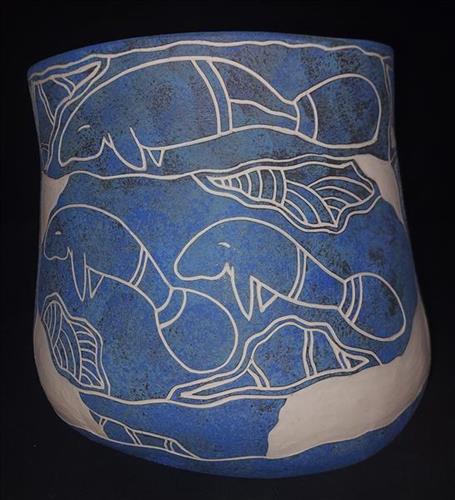
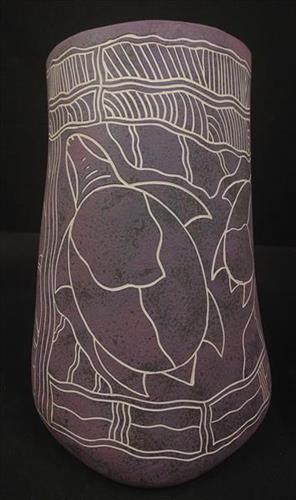
Kirbaji (Dugong) and Ngawiya (Sea Turtle)

Kirbaji (Dugong) and Ngawiya (Sea Turtle) are two ancestral spirit beings (Totems) that I inherited from my mother’s side. As a young boy my uncles and cousins took me out to sea teaching me how to hunt, cut and cook dugong and sea turtle. Only men were allowed to hunt them for very special occasions when lots of extended family members had to be fed during wedding, birth and funeral celebrations.  They wrapped the meat in ginger leaves to get flavours and enclose them using a vine before cooking the meat it in a ground oven. Parts of the meat, fat and blood can also be boiled in the turtle shell to make a nourishing soup. The fat of the turtle was also melted to make a body oil.