114182357457


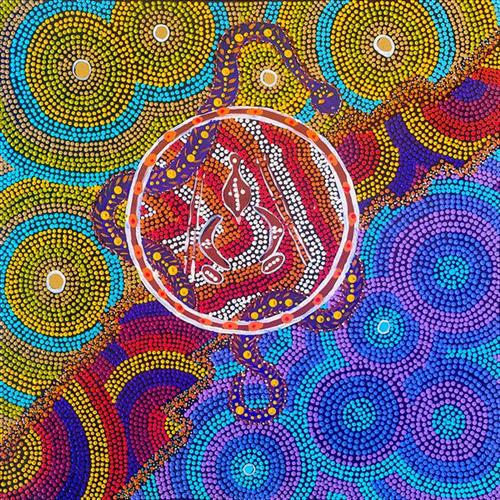
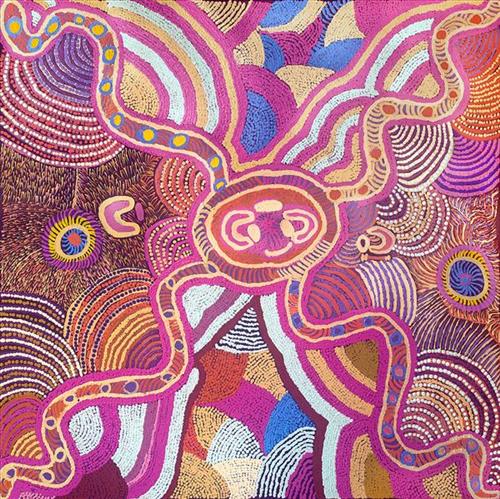
Minyma Kutjarra – (Two Sisters)

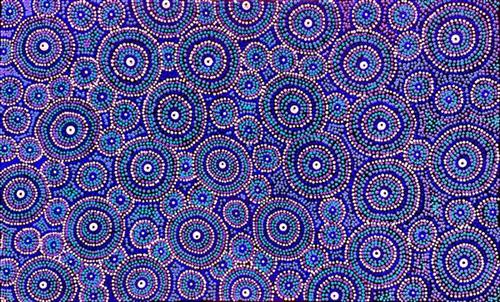
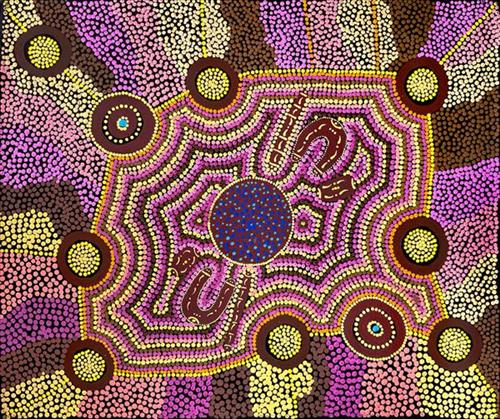
‘Minyma Kutjara’ (Two Ladies), is a popularly depicted story by women from the Ngaanyatjarra Lands. The painting has different chapters depending on where the artist is from and the inherited story of their ancestors.  we see the ladies sitting together at their camp situated among the sand hills. They are surrounded by an abundance of desert flowers and fruits. The painting is a reflection on the lush nature of the land that was so many years ago. When there is rain coming to the lands it makes everyone so pleased as it indicates good foraging and hunting.

114182357782


Minyma Kutjarra – (Two Sisters)

‘Minyma Kutjara’ (Two Ladies), is a popularly depicted story by women from the Ngaanyatjarra Lands. The painting has different chapters depending on where the artist is from and the inherited story of their ancestors.  we see the ladies sitting together at their camp situated among the sand hills. They are surrounded by an abundance of desert flowers and fruits. The painting is a reflection on the lush nature of the land that was so many years ago. When there is rain coming to the lands it makes everyone so pleased as it indicates good foraging and hunting.

114182357780


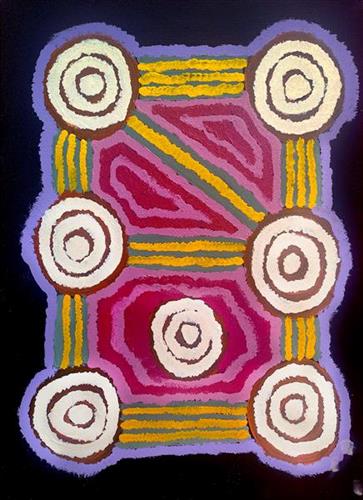
Kungkarrangkalpa (Seven Sisters)

‘Kungkarrangkalpa’ (The Seven Sisters or Pleaides) is significant Tjukurrpa (dreamtime). Its origins you may be familiar with in astronomy and its connection to ‘Wati Nyiru’ (Magic Man or Orion).  The roots of this dreaming stems across indigenous groups around the world. The Australian Aboriginal songline is one part to the whole dreaming which can be traced all around the world. The ladies of the Ngaanyatjarra Lands depict their significant chapter and understanding of the journey of the sisters. The different versions of this story depend on where you live and the significance’s of local Tjukurrpa places.

Nyiru fell in love with the sisters but he was of the wrong skin group to marry, but he still pursued them on their journey. The sisters travel across the land to escape Nyiru’s unwanted attentions, but he is persistent and always finds them. There are significant land forms which can be sited today that evidence this dreaming. As Nyiru is chasing the sisters he tries to catch them by using magic to turn into the most tempting kampurarrpa (bush tomato) and the most beautiful Yirli (wild fig tree), for them to eat and camp under. However, the sisters are knowledgeable of his magic and too clever for Nyiru who they outwit again and again. They go hungry and run through the night rather than be caught by him. As the journey continues, Nyiru gets so frustrated at the wit of the sisters that he uses his magic to make the oldest sister sick to try and get closer to her. The other sisters rescue the big sister and nurse her back to health. It is said he also captures the youngest sister, but with the help of the oldest sister, she escapes back to her sisters who are waiting for her. Eventually, the sisters fly into the sky to escape Nyiru, forming the constellation. Nyiru felt lonely, longing for the sisters who were so far away. Nyiru used his magic to go to the sky, forever in pursuit.

220982358412


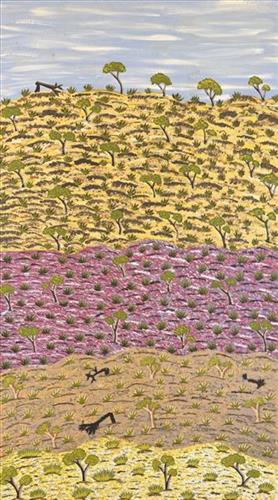
Heather Pitjara Corbett – Bush Medicine Country

I paint landscapes because it connects me to my country by the waters, hills, trees and skies, the seasoning of this country. My work comes from my heart, we remember through our grandparents, through inspiration from our past.

My country is where we search for bush medicine and bush tucker, which are different with every changing season, it feels like I connect with my elders, it connects me back to our country

220982359115


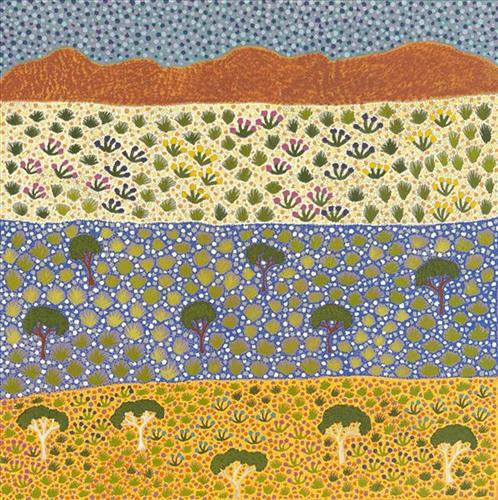
Diane Kemarre Ross – My Country

This is my country, it’s the country around Irrultja. This is where we like to go after big rain. After big rain there, we can go swimming. There is always good hunting on my country. It is good for me to paint my country and it makes me feel good.

The artists of Ampilatwatja made a conscious decision not to paint altyerr (dreaming stories). The artists paint their country where those stories sit.

114182359051


Tjitji kutjarra – Two boys

This is the story of the two boys, though some say it was two brothers or a brother and sister, living around Mantamaru (Jameson). One day they saw the track of a big snake, they followed and eventually caught and ate. Unbeknownst, the brothers they had eaten a spirit or magical snake.

The next day the brothers felt unwell. Any task became hard and their walking slowed down. Gradually they became slower and slower until they reach the top of a hill where no longer able to move they turned to stone.  

Driving east from Jameson (on your left) you can see two lonely up-right rocks, one smaller than the other on the top of a hill which are called Tjitji (child) Kutjarra (two).

114182359046


Kungkarrangkalpa (Seven Sisters)

‘Kungkarrangkalpa’ (The Seven Sisters or Pleaides) is significant Tjukurrpa (dreamtime). Its origins you may be familiar with in astronomy and its connection to ‘Wati Nyiru’ (Magic Man or Orion).  The roots of this dreaming stems across indigenous groups around the world. The Australian Aboriginal songline is one part to the whole dreaming which can be traced all around the world. The ladies of the Ngaanyatjarra Lands depict their significant chapter and understanding of the journey of the sisters. The different versions of this story depend on where you live and the significance’s of local Tjukurrpa places.

Nyiru fell in love with the sisters but he was of the wrong skin group to marry, but he still pursued them on their journey. The sisters travel across the land to escape Nyiru’s unwanted attentions, but he is persistent and always finds them. There are significant land forms which can be sited today that evidence this dreaming. As Nyiru is chasing the sisters he tries to catch them by using magic to turn into the most tempting kampurarrpa (bush tomato) and the most beautiful Yirli (wild fig tree), for them to eat and camp under. However, the sisters are knowledgeable of his magic and too clever for Nyiru who they outwit again and again. They go hungry and run through the night rather than be caught by him. As the journey continues, Nyiru gets so frustrated at the wit of the sisters that he uses his magic to make the oldest sister sick to try and get closer to her. The other sisters rescue the big sister and nurse her back to health. It is said he also captures the youngest sister, but with the help of the oldest sister, she escapes back to her sisters who are waiting for her. Eventually, the sisters fly into the sky to escape Nyiru, forming the constellation. Nyiru felt lonely, longing for the sisters who were so far away. Nyiru used his magic to go to the sky, forever in pursuit.

359709482359409


Malu Thumayawaik

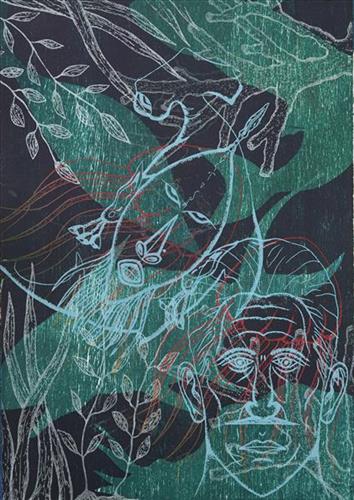
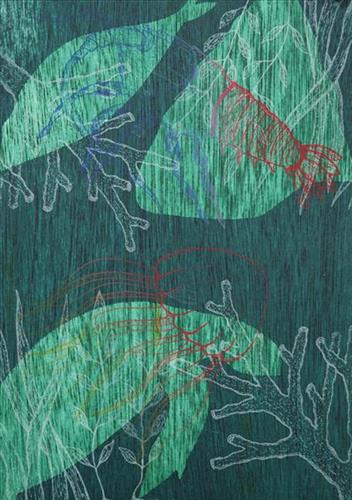
The mask in the artwork represents the profound concerns of my ancestors regarding the exploitation of our marine environment, driven by climate change and pollution. For centuries since creation, Indigenous peoples have possessed a rich tradition of sustainable marine conservation, emphasising responsible harvesting to ensure that resources endure for generations. Coral reefs, mangroves, and seagrasses are not merely ecosystems but essential components of biodiversity, food security, and cultural identity. Protecting these invaluable ecosystems is not just an environmental obligation but a cultural imperative. We must unite globally to protect our oceans, ensuring their health and abundance for future generations.


Art Centre notes:

This artwork is a unique state, monotype screen print on BFK Rives paper (100% cotton rag paper with strong archival properties. 

Paper size; 39 x 28cm

Printed at Canberra, Feb 2025

Print Assistant: BasilHall.

359709482359408


Malu Thumayawaik

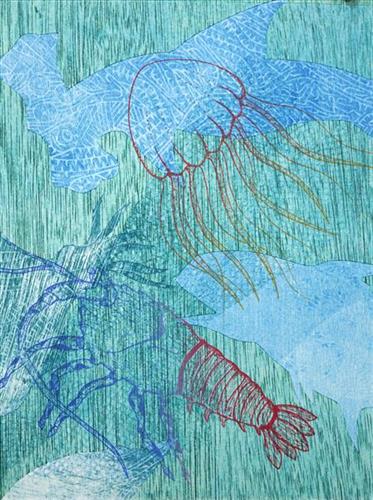
The mask in the artwork represents the profound concerns of my ancestors regarding the exploitation of our marine environment, driven by climate change and pollution. For centuries since creation, Indigenous peoples have possessed a rich tradition of sustainable marine conservation, emphasising responsible harvesting to ensure that resources endure for generations. Coral reefs, mangroves, and seagrasses are not merely ecosystems but essential components of biodiversity, food security, and cultural identity. Protecting these invaluable ecosystems is not just an environmental obligation but a cultural imperative. We must unite globally to protect our oceans, ensuring their health and abundance for future generations.


Art Centre notes:

This artwork is a unique state, monotype screen print on BFK Rives paper (100% cotton rag paper with strong archival properties. 

Paper size; 39 x 28cm

Printed at Canberra, Feb 2025

Print Assistant: Basil Hall.

359709482359407


Malu Thumayawaik

The mask in the artwork represents the profound concerns of my ancestors regarding the exploitation of our marine environment, driven by climate change and pollution. For centuries since creation, Indigenous peoples have possessed a rich tradition of sustainable marine conservation, emphasising responsible harvesting to ensure that resources endure for generations. Coral reefs, mangroves, and seagrasses are not merely ecosystems but essential components of biodiversity, food security, and cultural identity. Protecting these invaluable ecosystems is not just an environmental obligation but a cultural imperative. We must unite globally to protect our oceans, ensuring their health and abundance for future generations.


Art Centre notes:

This artwork is a unique state, monotype screen print on BFK Rives paper (100% cotton rag paper with strong archival properties. 

Paper size; 39 x 28cm

Printed at Canberra, Feb 2025

Print Assistant: Basil Hall.