111982367820


Kunkurra (The Spiralling Wind)

‘Kunkurra’, the spiralling wind is associated with several sites in the Kardbam clan estate. On one level, this painting can be interpreted as a depiction of the kinds of mini-cyclones common during the wet season in Arnhem Land, where the artist lives. In this painting, Kunkurra also relates specifically to a site called Bilwoyinj, near Mankorlod.

At this site, two of the most important Kuninjku creation beings, a father and son known as na-korrkko, are believed to have hunted and eaten a goanna. They left some of the goanna fat behind at the site, which turned into the rock that still stands there today. The word Bilwoyinj, which is the name of this site, also refers to the fat of the goanna. Bilwoyinj site is also a ceremonial ground for a ceremony called Yabbaduruwa, a major ceremony owned by the Yirridja patrimoiety. The Yabbaduruwa ceremony is primarily concerned with initiation, land ownership and promoting the cyclical regeneration of the human and natural worlds.
225182367817


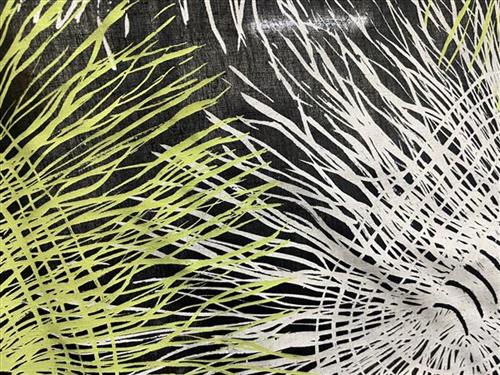
Kakan (Black Palm) Basket Weaving

This design shows how the bottom part of a black palm basket is woven. My grandmothers and aunties used to make them. They cut off the young palm leaves in the centre, stripped and scrapped them. Then they would put the strips in freshwater to make them soft and keep them straight for weaving.

22514008149


Status: Stock


Ngangkin (Echidna) on Brown by Karen Shuan

The Echidna is a very significant Totem for Kuku Yalanji Bama. It is sung and danced in ceremonies and has many secret meanings for us. Echidnas are very smart.  They only come out in the cold season.  Our old people used to make medicine out of certain parts of the animal to heal asthma and other lung illnesses. They made medicinal soups and they made oil out of the fat which they rubbed all over the body.

In the past, Echidna were also an important and delicious food source for Kuku Yalanji Bama. They relied on them for survival. Our fathers and grandfathers used the spikes of the Echidna to make a variety of weapons and body adornments.

22514008147


Status: Stock


Kakan (Black Palm) Basket Weaving on Brown

This design shows how the bottom part of a black palm basket is woven. My grandmothers and aunties used to make them. They cut off the young palm leaves in the centre, stripped and scrapped them. Then they would put the strips in freshwater to make them soft and keep them straight for weaving.

22514008145


Status: Stock


Kurranji (Cassowary) by Karen Shuan.

The cassowary is one of the major totems (Ancestral Spirit Beings) for our Kuku Yalanji people. He is a big, dangerous bird that rules the rainforest. The cassowwary can attack people but at the same time he helps growing many of the plants we used to collect for food, medicine and tool making.

I inherited the Cassowary Totem and all the cultural stories relating to it from my mother’s side. When I was four years old, my mum taught me how to dance the story of the female cassowary, who is protecting the chicks and the eggs from the carpet snake and goanna.

As a young women, I took on the role of my mum and began teaching our cultural dances to the younger generation at the Mossman Gorge community as well as children that live in Mossman town. I still do this today.

22544008144


Status: Stock


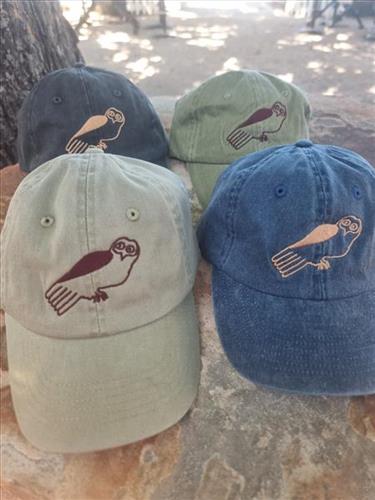
Dumbi Mama (sacred owl)

Dumbi is an owl which resides in Ngarinyin country. Two boys teased Dumbi after they found his tree knocked over by the wind. Dumbi could not fly away because he was Mayanki oni (cold) and the Wilmi (dew) was sticking his feathers together. The boys plucked out his feathers and threw him in the air three times. Dumbi flew to the Wandjina named Wanalirri who said he would create a large Ngarlu mindi (flood) to punish the tribe where the boys came from. At a place called Djunbai mindi, the Wandjina gathered a large flock of Karroongkarli/ Kurranda Nyindi (brolgas) who stomped on a huge Nyalgoorro (black soil plain) to create quicksand. The Ngarlu Mindi came and drowned many people and those who tried to escape were lost in the quicksand. The boys were safe because they were on high ground. They were taken there by Mangarra Djirri (Ungud kangaroo) and they traveled on the kangaroo’s tail. Margurrigurri (tata lizard) warned the Wandjina that the boys had escaped. The rain and lightning started to chase the boys and they ran to a hollowed out Latcurry (boab tree). Once they were in the tree, the Wandjina closed it up and they were lost forever. In another version of the story the children are a boy and girl who survive the flood and mate to produce a new tribe.

114581997800


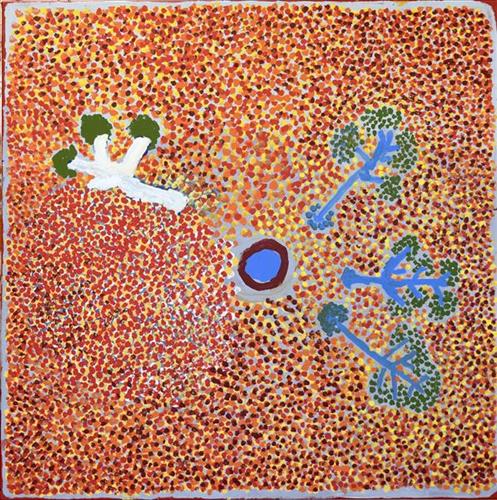
Tutujarti Trees (Desert Walnut)

Tutujarti trees all around the two waterhole called Nyijil Nyijil, that way out in the desert; That’s my family country, my family comes from the desert. It has a nut called ‘ngarlka ” which is good to eat.

220982364594


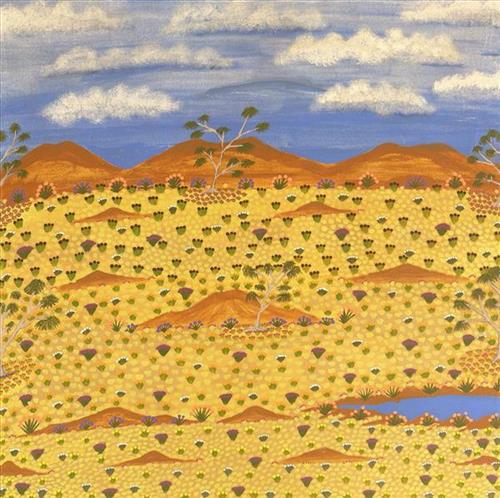
Valerie Kemarre Lewis – My Mothers Country

My mothers country is flowers, trees and mountains. I love to paint them. We see springs, the water from the springs is like rainwater, fresh and clean. We hunt goanna and turkeys, we roast them in the fire and the flesh is strong and sweet.

When we hunt we sleep at night next to the fire, the skies are big and the stars are beautiful, it makes me feel good.