111582367664


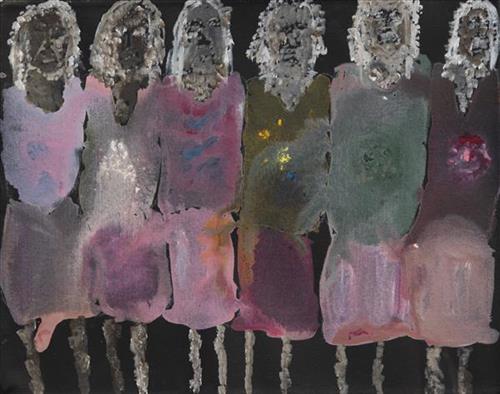
Wantili Yuu

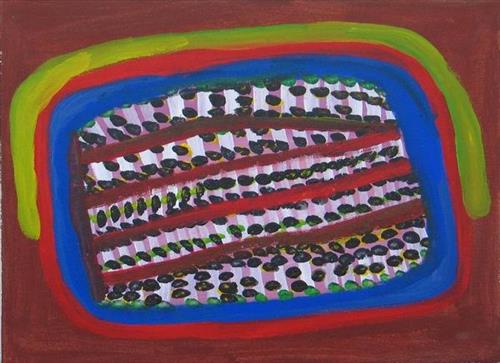
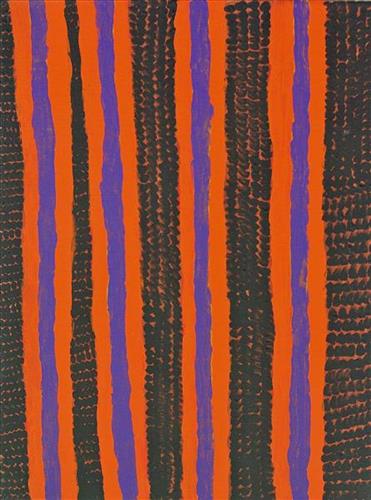
How did you get to this style of painting? “Do you mean, what have I done with my life? (chuckles to herself) To me these paintings are a sense of energy. So if I see someone and they’re happy, I paint a happy vibe. Cos their spirit is happy. And sometimes it’s hard because on the outside they’re real happy but on the inside they’re real sad. Sometimes you do stuff (like a painting) and it adds up later on. But I still don’t know what it means and don’t know where my style comes from because it’s both the path I walk on and the cracks in the dirt. It’s like looking at a landscape but I haven’t been there yet. Maybe I’ll get there one day. I believe things happen for a reason.” – Sylvia Wilson
115682367618


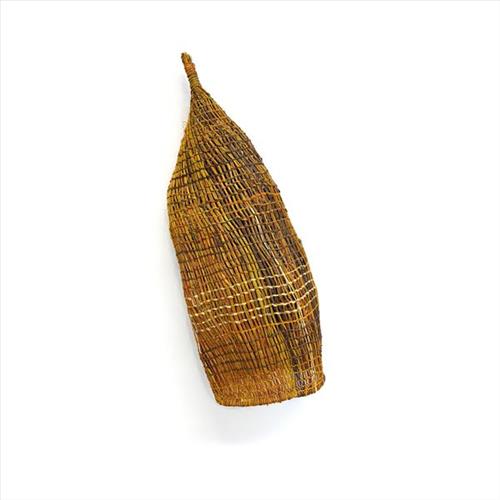
Dhawurr or Batjbarra (Fish Trap)

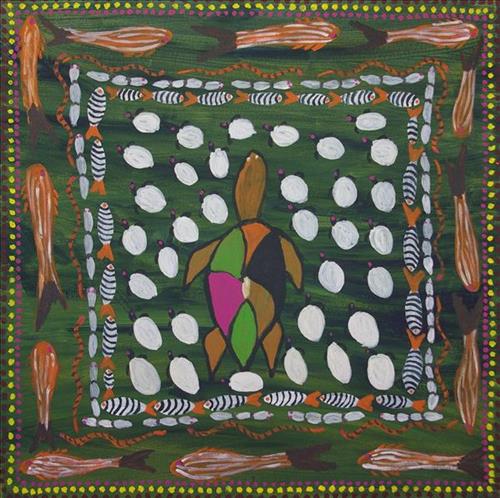
Dhawurr, or Batjbarra, is a traditional fishing method used by Indigenous people in the Arafura Swamp and surrounding wetlands of Arnhem Land. Yolŋu now prefer the modern fishing methods of reels and bait, however, weavers continue to make Batjbarra for cultural conservation and to be sold as decorative pieces.

When used for practical purposes, the Batjbarra was placed into the river with the opening facing oncoming fish. The woven tunnel trapped the fish with the weave tight enough to prevent escape but loose enough to allow water to freely flow through. The traps tapered so that when they were submerged, the water pressure wedged them into place.

The primary material used in this piece is the young, green leaves of the Pandanus spiralis tree, that were harvested using a long wooden hook. The leaves are stripped of their prickles, with the smaller fibres being dried to produce a strong, resilient material. These fibres are then twisted, coiled, or combined using various techniques to create the fish trap.

Bula’bula weavers exclusively use natural dyes, derived from locally sourced roots, leaves and grasses. These pigments are extracted and infused into pandanus fibres by boiling over an open fire, producing the rich, vibrant colours characteristic of contemporary Yolŋu weavings.

11452953457


Bush Onion (Jurnta)

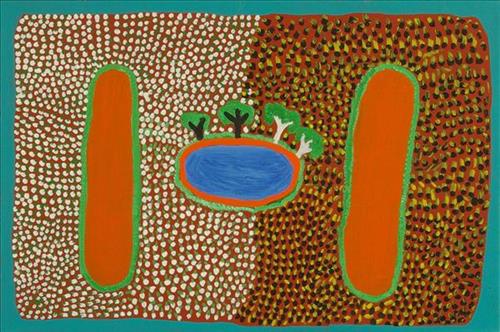
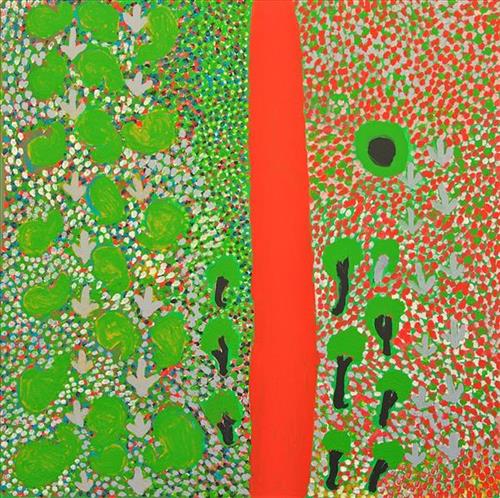
This country Booloowatu. My community grows bush onions. During the dry season jurnta goes black. This means they are ripe (cooked) and ready to dig up and cook on the coals. The left side shows jurnta green (raw). These ones will be ready for digging up next year.

11452962310


Milyarn yirnta (permanent waterhole)

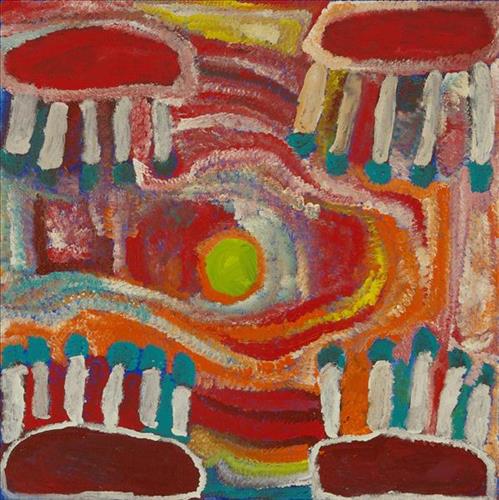
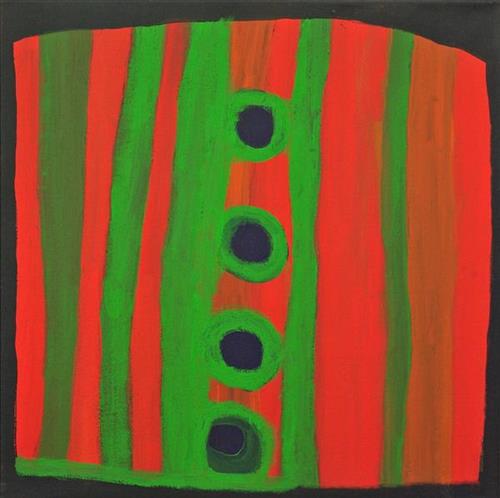
“Milyarn waterhole got a big mob of trees all around, we call them parrkaparrka (Desert Oak), good for shade and honey this one” (edible nectar from flowers). “This one got Jilji “(sandhills) all around represented by the four ovoid shapes in corners.

11452960128


This is a big waterhole. Rain runs into the waterhole. This is good water. My people and my family lives in the desert for many years when rain season comes the waterholes use to be full by rain.And the jila waterholes nerver runs dry.And trees get green for the people sit under the green represent grass.And the blue represent the jila is full of water

11452994716


Paparta Jila

That snake at Paparta left from here, he went a long way, travelling around,  and then he came back again.  While the snack was travelling, he created waterholes along the way.

114573316831


tarpu living waterhole

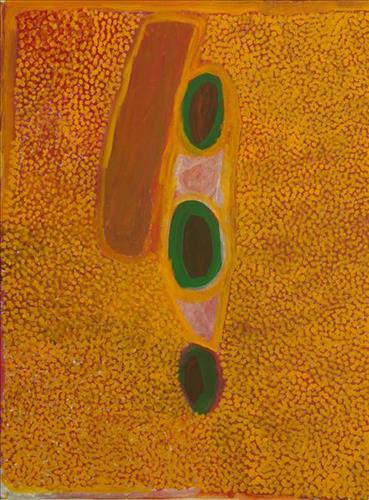
Tarpu is a big jila (waterhole, spring) in the Great Sandy Desert. Thats turtujarti country (desert walnut), them trees little ones turtujarti and the big ones turtujarti, them they’re yarun (bloodwood, trees with lighter trunks)”.