22514004695


Status: Stock


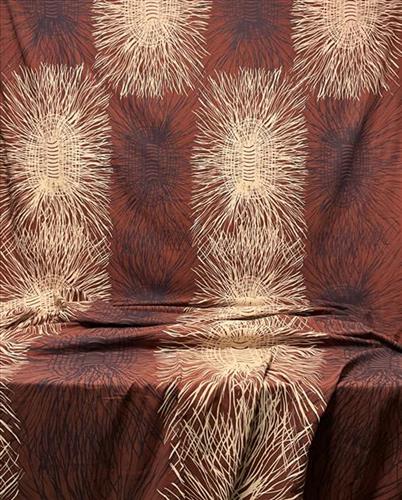
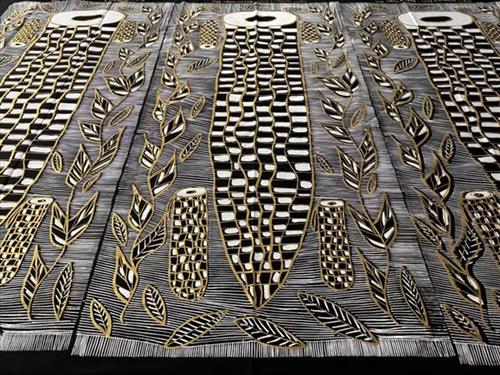
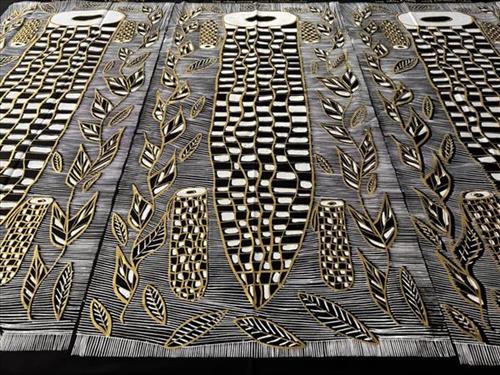
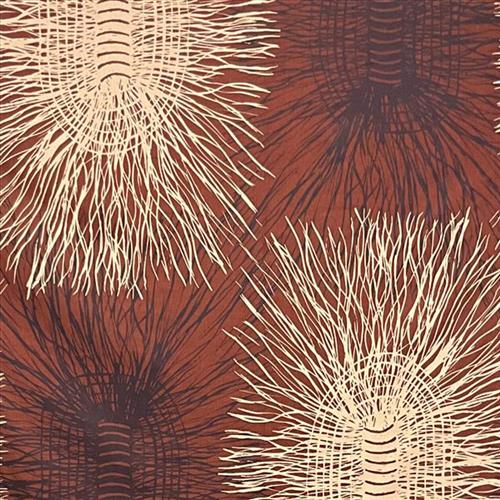
Vanessa Cannon, Kakan (Black Palm) Basket Weaving

This design shows how the bottom part of a black palm basket is woven. My grandmothers and aunties used to make them. They cut off the young palm leaves in the centre, stripped and scrapped them. Then they would put the strips in freshwater to make them soft and keep them straight for weaving.

Screen printed by hand in Sydney, by master printers. Sold by the metre in 145 cm width.


Care Instructions: Gentle machine or hand wash only in cool water, using mild detergent.

Do Not Soak, Bleach, Rub, Wring, Tumble. Line Dry Only in Shade. 

Warm Iron on Reverse. Do Not Dry Clean.


116482366647


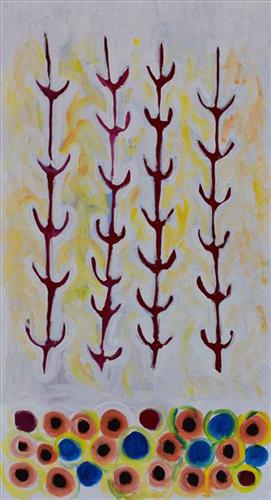
Coral Reef

When the tide goes out it leaves all the weeds among the rockholes mixed with all the colourful coral from the ocean.

116482366621


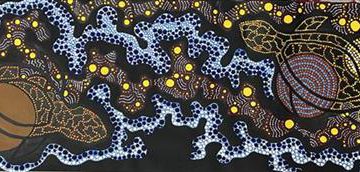
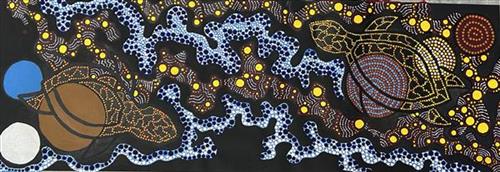
Sea Turtle

Turtles drifting to sea but when it comes to winter that’s when it’s hatching season, lots of them… lay their eggs as they beach wherever the best spot without danger abouts…

111582366572


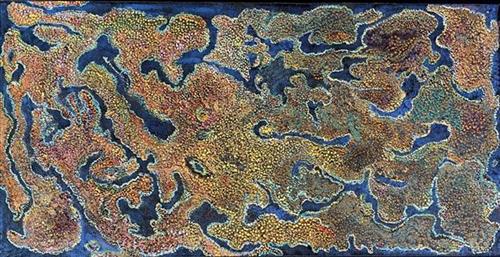
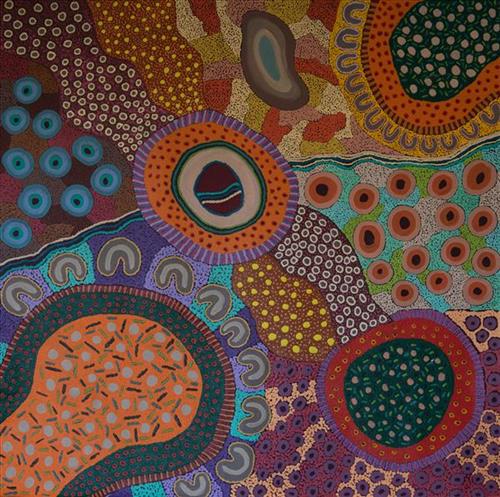
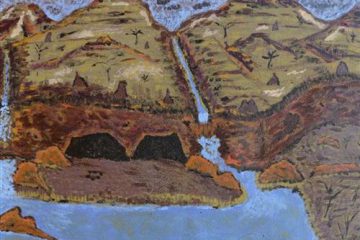
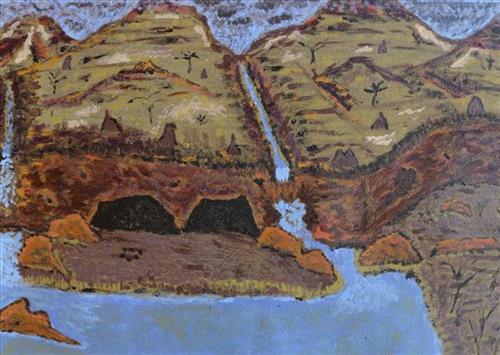
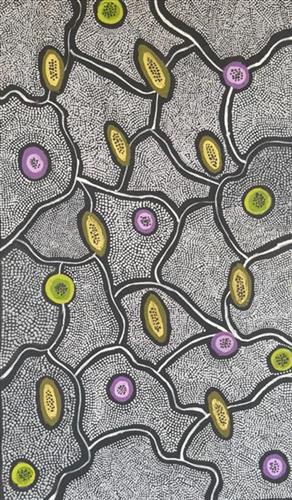
Mungili Waterhole

“No one goes there and sees that landscape. Only two, Mr and Mrs [refers to footsteps in painting]. They was walking to see if the water was in there. Walking on the creek sand, they see the colours and walk down to the water hole and dig where the waters been left. Dig the creek sand where there is still water. Little huts where they sit; move when it dries out. Leave remembrance behind. When the water fills up again; come back.

When the creek sand is still moist you can see the colours. You can see many colours – lovely colours come out. I do that in my mind [when painting], go and think about the rock colours there.

Different plants, water runs, and different plants are growing, different seeds. When it rains, all year round, when its overflowing. It’s all connected. The orange sand connects to one waterhole full of water, then flowing through the creek sand. This side down [pointing to one rock hole]; and it’s a bit up [pointing to another rock hole].

I was swimming there. Yeah, we go visit them a long time [ago]. We drink it, rainwater from the rain. Big waterhole. It’s a fresh water, when the rain comes, fills it up. One for swimming and another rock hole for drinking. 3 rock holes; another is special.”

– Marlene Anderson

In this work Marlene depicts a waterhole and rock hole located in Mungili, the small outstation community located just off the Eagle Highway in Western Australia, approximately 430 kilometres northeast of Wiluna and 250 kilometres north of Warburton. Marlene grew up in Mungili, and as such it forms a significant part of her ‘ngurra’ (home Country, camp). Typically Marlene depicts this site with a central large circular form that represents the main waterhole, surrounded by smaller circular forms representing satellite water bodies.

During the pujiman (traditional, desert dwelling) period, knowledge of water sources was critical for survival, and today Martu Country is still defined in terms of the location and type of water. Each of the hundreds of claypans, rockholes, waterholes, soaks and springs found in the Martu desert homelands is known through real life experience and the recounting of Jukurrpa (Dreaming) narratives by name, location, quality and seasonal availability. This encyclopedic knowledge extends even to the nature and movement of arterial waterways, and sustained Martu as they travelled across their Country, hunting and gathering, visiting family, and fulfilling ceremonial obligations. They would traverse very large distances annually, visiting specific areas in the dry and wet season depending on the availability of water and the corresponding cycles of plant and animal life on which hunting and gathering bush tucker was reliant.
377810582366538


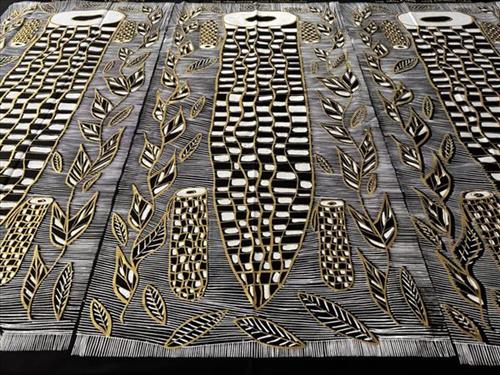
Kunbowinjku (Fresh Water) 2022

Kunbowinjku (fresh water)

A new design made in 2022 featuring a mandjabu (fish trap), kunmadj (dilly bag) and fresh water. 

‘This design is kunbowinjku – which is fresh water, kunronj. This is a mandjabu – fish trap which is floating in a creek. Fish will go in like yabby, long neck turtle and barramundi. This is a Kuninjku style of fish trap used for hunting. My father is from my Kuninjku side and he used this kind of trap. My mum is from my Kunibidji – Ndjebenna language side. This mandjabu is made from manylik grass.’

Raylene Bonson

377810582366536


Kunbowinjku (Fresh Water) 2022

Kunbowinjku (fresh water)

A new design made in 2022 featuring a mandjabu (fish trap), kunmadj (dilly bag) and fresh water. 

‘This design is kunbowinjku – which is fresh water, kunronj. This is a mandjabu – fish trap which is floating in a creek. Fish will go in like yabby, long neck turtle and barramundi. This is a Kuninjku style of fish trap used for hunting. My father is from my Kuninjku side and he used this kind of trap. My mum is from my Kunibidji – Ndjebenna language side. This mandjabu is made from manylik grass.’

Raylene Bonson

377810582366533


Kunbowinjku (Fresh Water) 2022

Kunbowinjku (fresh water)

A new design made in 2022 featuring a mandjabu (fish trap), kunmadj (dilly bag) and fresh water. 

‘This design is kunbowinjku – which is fresh water, kunronj. This is a mandjabu – fish trap which is floating in a creek. Fish will go in like yabby, long neck turtle and barramundi. This is a Kuninjku style of fish trap used for hunting. My father is from my Kuninjku side and he used this kind of trap. My mum is from my Kunibidji – Ndjebenna language side. This mandjabu is made from manylik grass.’

Raylene Bonson

112482109946


Bush Potato Dreaming – Yarla Jukurrpa

This dreaming tells about bush yams or potatoes. The trees are green all year round. When the flowers are on the tree the women know that the potatoes are ready to dig for. The women look for long, thin cracks along the ground, made from the vines of the potato plant. The women dig where the cracks are. The potatoes are deep in the ground, sometimes more than one meter deep. The women gather them in wooden dishes, called parraja in Warlpiri. Bush potatoes are cooked on the coals, and have a sweet taste.

220982296567


Ntang (Edible Seeds)

Ntang are edible native seeds. The seeds are collected under trees by laying a tarp on the ground and hitting the tree continuously until most of the seeds have fallen. Once the seeds are collected they are then ground with a mortar and grinding stone.

A number of these grinding stones have been in families for generations. Once seeds are ground, water is added and mixed until a damper-like substance is formed and placed under the coals until cooked.