116482364837


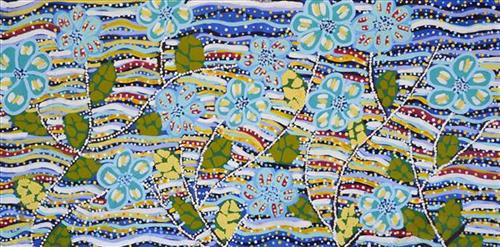
After the Big Rain

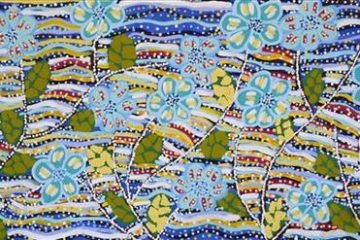
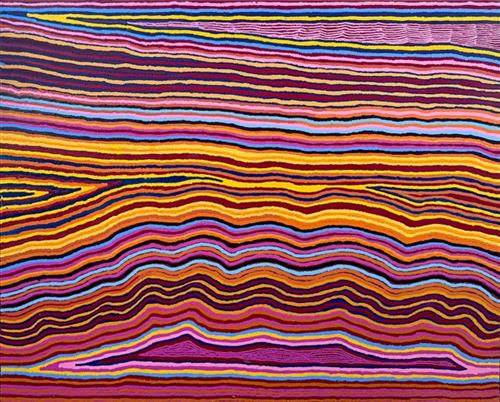
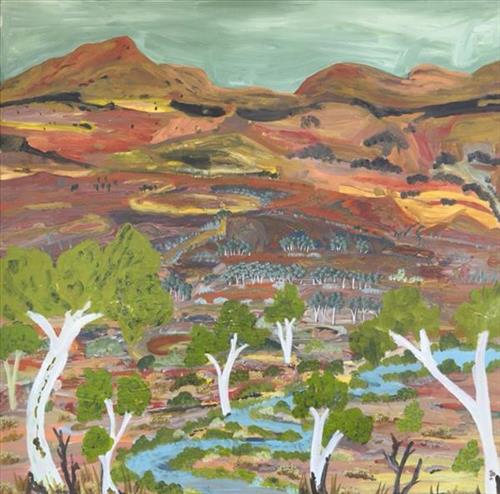
After the rain the rivers and creeks in our country come alive with a new growth of plants. The country is filled with beautiful colours. We rejoice looking at our rivers and creeks full of water, so that we can go fishing, kids can go swimming and we can picnic with our families and friends.

116482364834


Pilbara flowers (blue bells)

Blue bells are common in the pilbara.It grows to a certain height in the bush and grows amongst the other flowers such as sturt pea and mulla mulla flowers.This flower has a prickly stem and every year grows wild in our country.

221282364739


Ngayuku Walka / My Design

Walka means design or pattern. Artists use this title to describe artworks that are pattern based rather than descriptive or telling a story.

221282364738


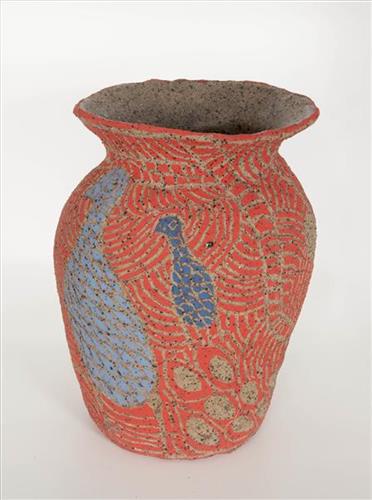
Tjulpu Kulunypa – Baby Birds

This is an artwork about birds and their chicks. Carlene often paints birds, as tjulpu tjukurpa (bird dreaming) is related to her family’s country which is near Kanypi in the Western APY Lands. As a mother of several children, family themes are common in Carlene’s work. People call her Tjulpu Thompson, and she says ‘like I did with my children, I now raise chicks every day on canvas and in clay in my work’.

.

221282364736


Piltati – Elizabeth Dunn’s story

Piltati is Elizabeth’s great-grandfather’s country and her dreaming story. Two brothers were married to two sisters and they all lived together. One day the two men go out hunting, looking for malu (kangaroo). They travel everywhere and find nothing. They start to worry – what are we going to do, there is no meat on this land. One brother says, maybe we should turn into something. They start to think about what they should turn into. Maybe firewood? No, the firewood burns. Maybe emu or a bird? No, people eat them.

They do a lot of talking and decide they should turn into wanampi (rainbow serpents). A lot of smoke starts to come out of the ground, it is very scary and then the men become wanampi. They travel into the land, towards a rockhole. 

Meanwhile, the two women are waiting for their husbands to return from their hunting trip. They wait a very long time. They keep going on with their lives, collecting bush tucker, waiting…but the men never come back. So they decide to set out to find their husbands. One day they come across a hole in the ground. They start digging. Digging, digging, digging they follow the tunnel inside the ground. They are so frantically digging they accidently hit one of the wanampi in the back. The wanampi chase the ladies and eat one of them and one woman gets away. 

Now the wanampi still live in the waterhole called Piltati. The wanampi live there today and provide rain for the bush tucker to grow and provide meat on the land.

114182365585


Kampukuta: The older sister.

Mrs Angilyiya Mitchell is a Traditional Owner for Kuru Ala, a sacred place for women’s business and the Kungkarrangkalpa /Seven sister tjukurpa/story. In this painting, the Kungkarrangkalpa are travelling through Wanarn country while being chased by Wati Nyiru. Wati Nyiru, wrong skin man, is interested in Kampukuta, the older sister. All the sisters were running and hiding from Wati Nyiru, but Wati Nyiru is interested in the sisters and keeps chasing them. Eventually, Wati Nyiru catches Kampukuta by breaking her leg. Kampukuta gets away, and all the sisters travel to Kuru Ala where they rest. The sisters gathered likara, a traditional bark bush medicine used for healing broken bones. Stripping the soft, moist underside of likara, the sisters clean and wrap Kampukuta’s broken leg. Once her leg had healed, the sisters kept traveling, heading towards Walinynga/Cave Hill. At  Walinynga, Wati Nyriu is sitting, waiting for the sisters, and he has a miru/spear thrower. The sisters make themselves invisible and tease Wati Nyriu, which makes him angry. He tries again to grab the sisters, but they finally take off, flying from the cave into the sky, turning themselves into night stars. 


221382365365


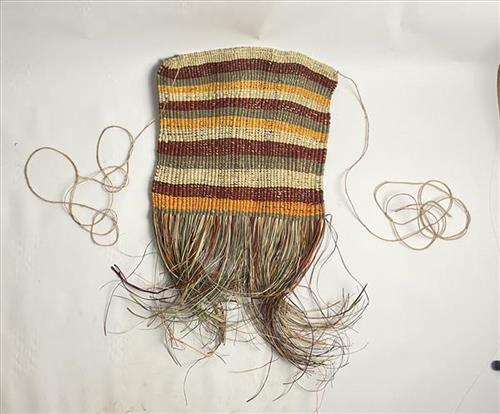
Wearable Mat

Fibre Art is an ancient Aboriginal women’s craft that is still made today using the same techniques as their ancestors. Making fibre art is labour intensive and much care and fine needlework is required to ensure the finished object is both functional and beautiful. Fibre art from Ghunmarn Culture Centre includes dilly bags, floor mats, bush fans, woven creatures found in the landscape, plants such as yams (bush potato), baskets, place mats, and spirit figures such as mermaids and Mukuys. Natural pandanus fibre (Mukarra), is used to make much of the fibre art produced by the artists of Djilpin Arts. Women collect the pandanus by pulling from the top of the pandanus tree, then stripping and drying the leaves before they are dyed with natural bush colour collected from the Beswick surrounds.

221382365364


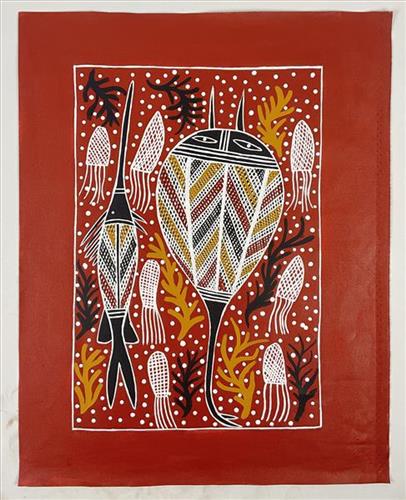
We Are One

This is a picture of a stingray, sword fish, jelly fish, their food and the dots represent bubbles. Ashley mob, me and my brother Harry are one Saltwater people – my grandfather from Elcho Island has Saltwater totem.

Djilpin Arts is a not for profit Aboriginal Corporation that promotes the maintenance, development and transmission of traditional cultural knowledge systems.

Djilpin Arts specialises in art, live cultural performance, digital media, and produced the popular performance event – the Walking With Spirits Festival as well as Concerts on Country.

Djilpin Arts operates the Ghunmarn Culture Centre – home of the Blanasi Collection and offers fine arts & crafts for sale. Djilpin Arts operates an outlet in Katherine – Shed 5, where all works are sourced from Ghunmarn Culture Centre. Ghunmarn Culture Centre is in the Wugularr (Beswick) community of South East Arnhem Land.

All artworks are made by local artists living in the community. Artwork reflects the traditional songs and stories that have been passed down through the generations with a contemporary edge.  Fibre art is a special feature of Djilpin Arts as is its Gapu Series of fine art prints.
221382365363


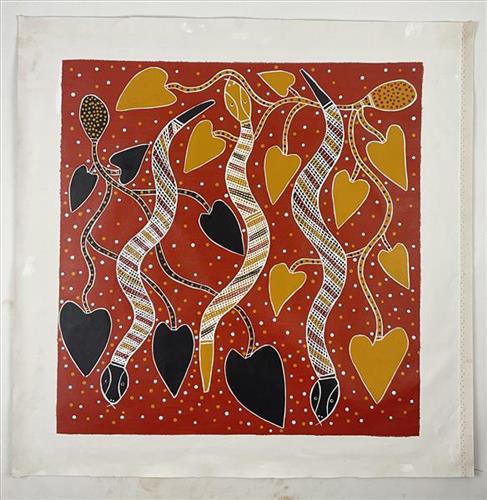
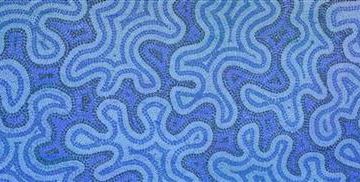
Brother’s Story

This is the totem for me, my brother, “Totem for me, my brother, father and grandfather, we belong to story for swamp. In it there is file snake and waterlily.

Djilpin Arts is a not for profit Aboriginal Corporation that promotes the maintenance, development and transmission of traditional cultural knowledge systems.

Djilpin Arts specialises in art, live cultural performance, digital media, and produced the popular performance event – the Walking With Spirits Festival as well as Concerts on Country.

Djilpin Arts operates the Ghunmarn Culture Centre – home of the Blanasi Collection and offers fine arts & crafts for sale. Djilpin Arts operates an outlet in Katherine – Shed 5, where all works are sourced from Ghunmarn Culture Centre. Ghunmarn Culture Centre is in the Wugularr (Beswick) community of South East Arnhem Land.

All artworks are made by local artists living in the community. Artwork reflects the traditional songs and stories that have been passed down through the generations with a contemporary edge.  Fibre art is a special feature of Djilpin Arts as is its Gapu Series of fine art prints.
220982365253


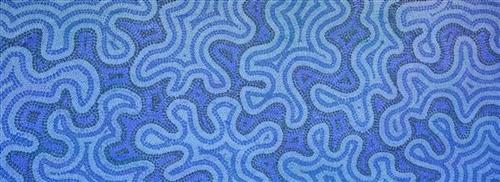
Elizabeth Ngwarraye Bonney – My Grandmothers Country

I still hunt my Grand Mothers country for goanna, bush medicine and yams.

I hunt all year round, hunting and walking through the country makes me happy.  When I look at the distant hills I can feel my grandmother.  Bush flowers are everywhere.

Painting and printing my grandmother’s country reminds about those times.