111982367911


Birlmu or Namarnkorl (Barramundi)

It is well known that Aboriginal art often depicts images of sacred totems or dreamings of Aboriginal culture. However, the world of the non-sacred also provides a rich source of subject matter for Aboriginal art. Much of the rock art of western Arnhem Land for example features secular topics such as common food animals and plants, depicted because of their economic importance but also merely because of their existence in the environment. The artist has painted ‘birlmu’ or ‘namarnkorl’ (Barramundi [Lates calcarifer]). During the dry season the barramundi is an important food source for inland Aboriginal people. These fish are caught throughout the artist’s clan estate, either in fishtraps woven from pandanus or sedge grass, or else hunted with spears and fishing lines in billabongs and streams where they shelter from the sun under fallen logs or amongst the leaves of water plants.
111982367910


Dilly Bag

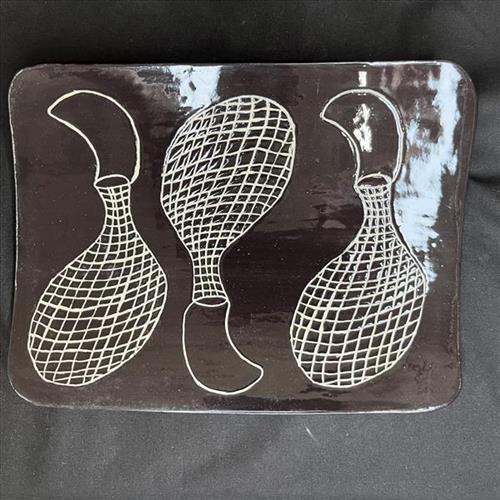
Kun-madj, or dilly bag, is a large woven collecting basket. These large bags are often made from the vine Malasia scandens, a strong pliable plant which grows along the floor and into the canopy of monsoon vine thickets. The bags are used to collect any kind of large numbers of heavy foods such as fish caught in conical fish traps or large collections of yams.

They can also be made from Pandanus spiralis, a plant which grows in many areas of Arnhem Land. These dilly bags are a tightly woven collecting basket, very finely made. These dilly bags are often used to collect sugarbag, the native honey

As well as being of practical use, dilly bags are also of religious significance to Arnhem Land people. Dilly bags are said to be totemic objects and associated with particular sites in the landscape

225182367894


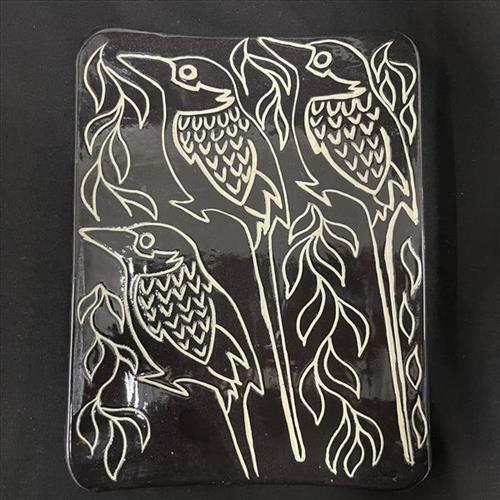
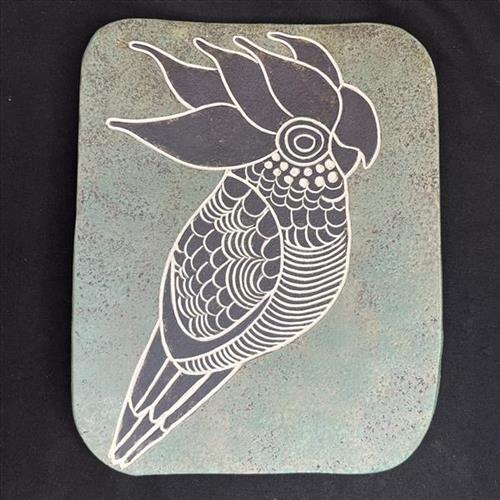
Yindili (Kingfisher)

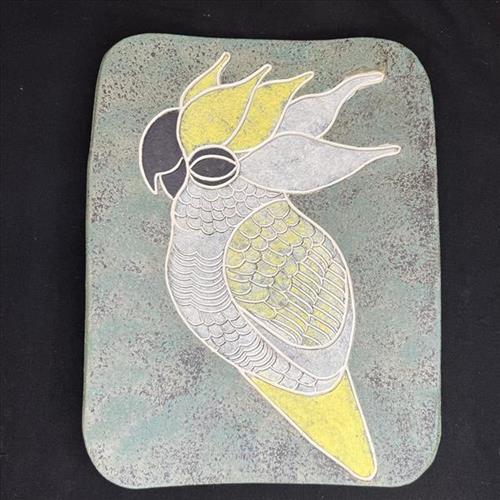
The Kingfisher, known as Yindili in Kuku Yalanji language, is according to our culture one of the significant messenger birds.  The Kingfisher will let us know when to expect a visit from families living in another community, And when we see a Kingfisher close by, we know that something good will soon happen in our personal life.

225182367892


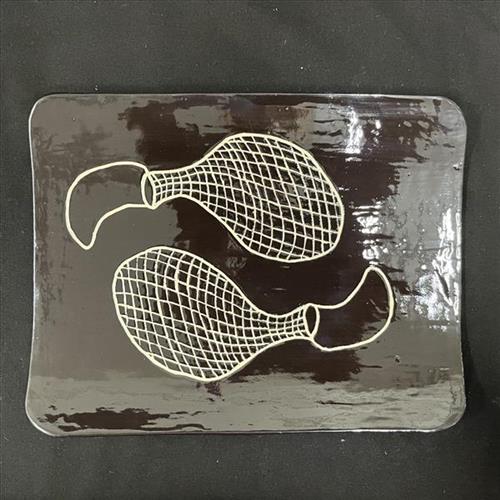
Kakan (Black Palm) Dillybag.

Our ancestors used Kakan (Black Palm) dilly bags to carry food when out hunting and gathering or soak bitter yams in creeks before cooking them. They were also used to hold personal items.

When I was a young girl my grandmother would teach me how to make Black Palm dillybags. We used to set up camp with other Kuku Yalanji women at a creek near Helenvale. It is very hard work. The men would help us cutting down the palm trees and separate the crownshaft from the trunk and the leaves. Then the women used to peel away the outer leaves until they felt strong threads they could pull out. They cleaned these threads from pulp with a mussel shell. When we moved away from Helenvale I forgot how to make them. Luckily years later I asked a relative of mine, Wilma Walker, who is great weaver, if she could refresh my memories. From then on I kept making dillybags as long as my health allowed it. I really enjoyed making them.

225182367890


Kakan (Black Palm) Dillybag.

Our ancestors used Kakan (Black Palm) dilly bags to carry food when out hunting and gathering or soak bitter yams in creeks before cooking them. They were also used to hold personal items.

When I was a young girl my grandmother would teach me how to make Black Palm dillybags. We used to set up camp with other Kuku Yalanji women at a creek near Helenvale. It is very hard work. The men would help us cutting down the palm trees and separate the crownshaft from the trunk and the leaves. Then the women used to peel away the outer leaves until they felt strong threads they could pull out. They cleaned these threads from pulp with a mussel shell. When we moved away from Helenvale I forgot how to make them. Luckily years later I asked a relative of mine, Wilma Walker, who is great weaver, if she could refresh my memories. From then on I kept making dillybags as long as my health allowed it. I really enjoyed making them.

111982367863


Mat

Works in fibre from the Maningrida region are widely recognised as some of the finest in Australia. Artists confidently push the boundaries of fibre craft and cultural expression, adapting traditional techniques and forms to produce strikingly inventive and aesthetically exquisite artworks.

Commonly used fibres include the leaves of pandanus (Pandanus spiralis), and palms (Livistonus), mírlírl (burney or jungle vine, Malaisia scandens), and the inner bark of kurrajong and stringybark eucalyptus trees. Weaving is physically hard work, now done only by women. Artists commonly use a mix of naturally dyed and undyed fibre to create a striking variation of coloured bands. They colour the pandanus using natural dyes made from the roots, leaves or flowers of plants within the weaver’s clan estate. Some artists also incorporate different types of looping to produce different patterns and textured finishes. Each type of mat, fibre bag, basket and dilly bag has its own name in the various languages spoken in the Maningrida region.

Artists weave many different kinds of mats. Conical mats were traditionally used to shield babies from mosquitoes. Long flat mats were used for blocking creeks so that fish would be diverted into fish traps. A small triangular mat made of pandanus fibre used to be worn by women during ceremonial gatherings, tied around their back and covering them at the front. Mats are also used for wrapping and rinsing food in water.

Artists usually use ngarakáya, pandanus spiralis, to weave fragrant, decorative round or oblong mats, as well as the less common triangular and conical shapes. The radial woven patterns of the finest round mats appear to vibrate with colour, sometimes regarded as an aesthetic manifestation of deep cultural meaning, as there is a significant spiritual dimension to pandanus mats.


111982367859


Dilly Bag

Kun-madj, or dilly bag, is a large woven collecting basket. These large bags are often made from the vine Malasia scandens, a strong pliable plant which grows along the floor and into the canopy of monsoon vine thickets. The bags are used to collect any kind of large numbers of heavy foods such as fish caught in conical fish traps or large collections of yams.

They can also be made from Pandanus spiralis, a plant which grows in many areas of Arnhem Land. These dilly bags are a tightly woven collecting basket, very finely made. These dilly bags are often used to collect sugarbag, the native honey

As well as being of practical use, dilly bags are also of religious significance to Arnhem Land people. Dilly bags are said to be totemic objects and associated with particular sites in the landscape

111982367858


Nawarlah – Brown River Stingray

We hunt the Nawarlah (Brown River Stingray) during the wet season.  There is a plant with a yellow flower that tells us that it is the right time.  We know it will be fat. 

It is well known that Aboriginal art often depicts images of sacred totems or dreamings of Aboriginal culture. However, the world of the non-sacred also provides a rich source of subject matter for Aboriginal art. Much of the rock art of western Arnhem Land for example features secular topics such as common food animals and plants, depicted because of their economic importance but also merely because of their existence in the environment.