Status: Stock
DBAG PDAV
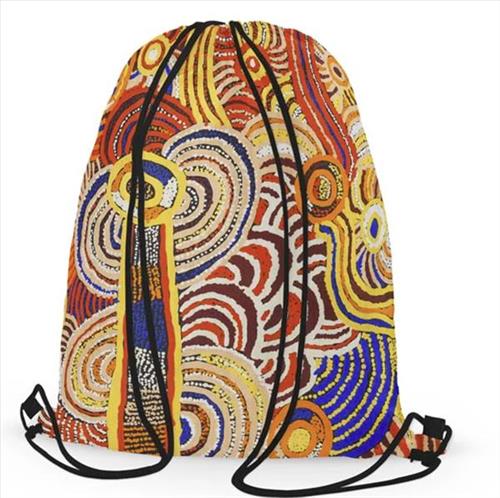
Cotton Drawstring Bag
All over Print.
30cm x 45cm
Status: Stock
Cotton Drawstring Bag
All over Print.
30cm x 45cm
Status: Stock
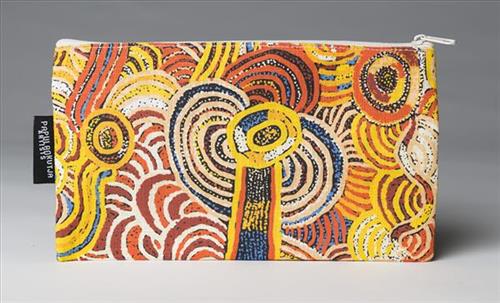
Cotton Zip Bag
Dimensions: 21cm x 12cm
Based on the artwork by Nora Davidson.
Includes information about the artist and artwork.
Status: Stock
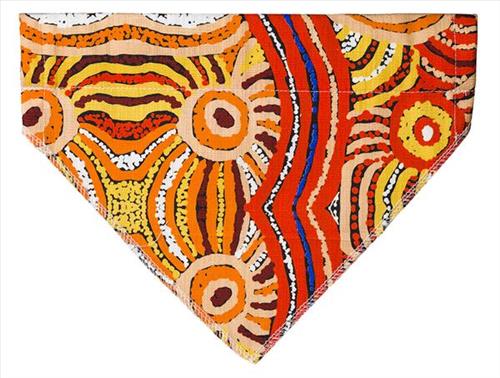
If your pet wears a collar then they can wear one of our 100% Cotton Pet Bandanas. Made in Australia, pet bandanas feature incredible artworks reproduced under license from Papulankutja Artists in Western Australia. These pet bandanas are worn on the collar rather than the neck so one size fits most!
Status: Stock
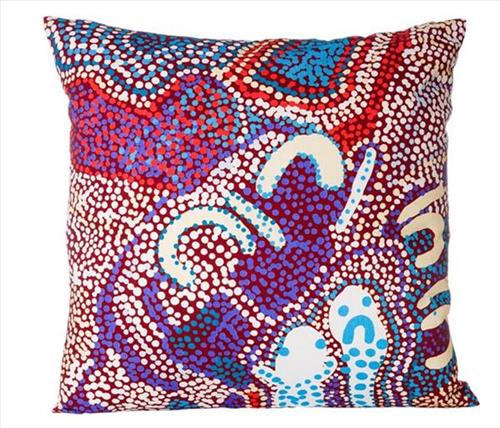
Australian Made Cotton Cushion Cover featuring licensed artwork by by Elaine Lane from Papulankutja Artists located at Blackstone, Western Australia.
Dimensions (approx): 45cm x 45cm
Zip Closure.
Print on both sides of the cushion.
Please note that artwork/placement varies between cushions so each panel/cushion is a little bit different.
Status: Stock
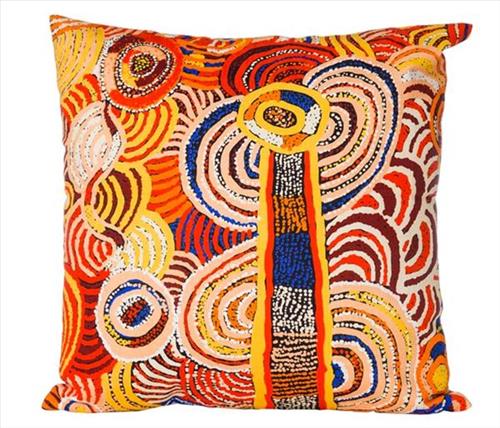
Australian Made Cotton Cushion Cover featuring licensed artwork by by Nora Davidson from Papulankutja Artists located at Blackstone, Western Australia.
Dimensions (approx): 45cm x 45cm
Zip Closure.
Print on both sides of the cushion.
Please note that artwork/placement varies between cushions so each panel/cushion is a little bit different.
Status: Stock
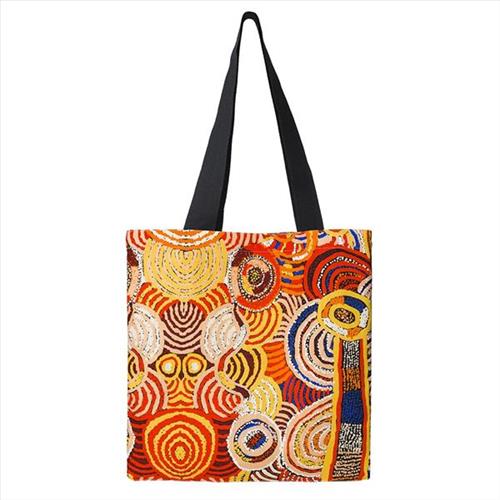
Cotton Tote Bag
All over Print.
Print placement will vary between bags and from image shown.
Made in Australia
Dimensions (Approx):
Bag: 40cm x 40cm.
Base Gusset: 16cm
Handles: 60cm
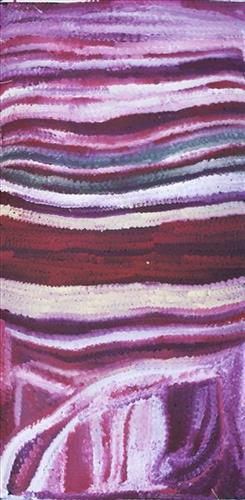
“This is daddy’s ngurra (home Country, camp), mummy’s ngurra. I used to go to Punmu to visit people there.”
– Bugai Whyoulter
Punmu refers to a region and an Aboriginal community within its vicinity, located 670km North-East of Newman. Created during the return to Country movement of the 1980s, with the recognition of Martu land rights and native title, the community was named after a nearby Jukurrpa (Dreaming) story. Punmu community sits on the edge of a large salt lake known as Nyayartakujarra, or Lake Dora. The lake runs south into Karlamilyi River (Rudall River). Surrounding Punmu are numerous fresh water soaks and the red tali (sandhills) typical of the area. The most frequently visited yinta (permanent springs) around Punmu include Wirlarra, Rawa, Yilyara, Jila-jila and Tuu-tuu.
Bugai grew up in and travelled through this Country during the pujiman (traditional, desert-dwelling) era. At Punmu, Bugai and her family would collect minyarra (bush onions) and hunt jipuku (rabbit). Bugai recalls a specific time when she travelled here with her mama (father) as a juri (beautiful, good) time. She paints the Country around Punmu, paying special attention to the many yinta and tuwa (sandhills), and to the pastel palette characteristic to the expansive white plains of Nyayartakujarra.
The Country around Punmu features in several Jukurrpa (Dreaming) stories. Of particular importance is the story of the Jila Kujarra (Two Snakes), one of the key Jukurrpa narratives for the Martu. Though the story belongs to Warnman people, it is shared across the Western Desert with several other language groups. The narrative centres on the travels of two snakes as they are pursued by the Niminjarra, spiritual ancestors of the Warnman people.
Before transforming themselves into snakes, the Jila Kujarra were young brothers. As snakes, they began travelling home to their mother, but were intercepted by the Niminjarra, who tracked the Jila Kujarra to Paji, east of Nyayartakujarra (Lake Dora). Though the Jila Kujarra eluded their pursuers here by escaping under the lake at Paji, they were soon after speared and injured by two Pukurti (initiates with bundled hair) at Nyayartakujarra, who returned with the Niminjarra to cook the snakes at the site of Kumpupirntily (Kumpupintily, Lake Disappointment). As the Niminjarra cut down the length of the Jila Kujarra, the snake’s bladders were pierced, causing an explosion of scalding hot urine in which the Niminjarra all perished and became black rocks at the site. The spirits of the Jila Kujarra returned to their mother at Nyayartakujarra, where the mother and her sons entered the ground below Nyayartakujarra and remain to this day.
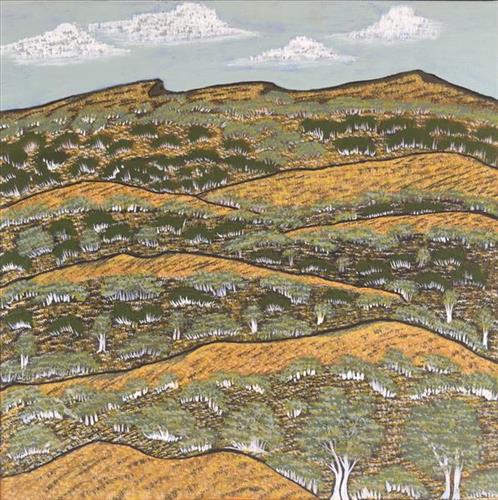
“This is country after we’ve had apangw (big rain). The new grasses are coming up and the water is flowing.”
Kwatcha (water) is a valuable and a much revered resource when living out in the desert. The earth responds with vibrant joyful greens after just one downpour. All life out here celebrates to the music of rain.
The community of Ampilatwatja made a conscious decision not to paint altyerr (dreaming stories). The artists paint their country where those stories sit.
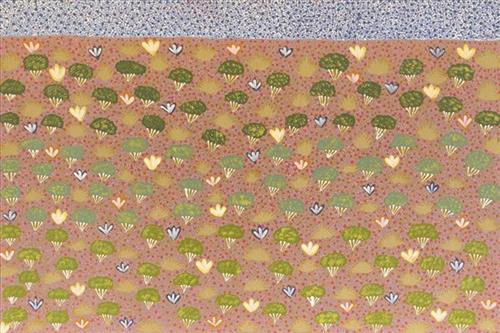
This shows the layered landscape of Alyawarr, Central Australia. Knowing your country is an important part of living in a remote community like Ampilatwatja.
Knowing when and where to go hunting and gathering, knowing where there is ‘soakage’ (where you can dig for water), travelling with family for ceremonies, and maintaining a connection with the land.
“This is my country, my view of country.”
The community of Ampilatwatja made a conscious decision not to paint altyerr (dreaming stories). The artists paint their country where those stories sit.
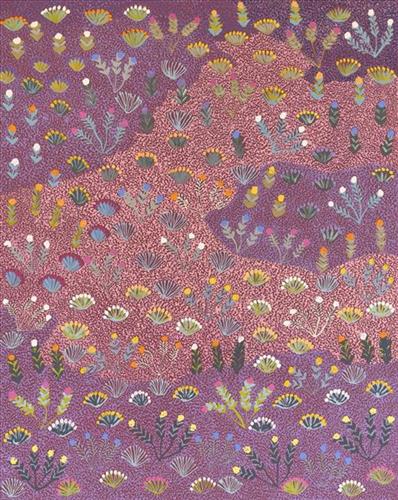
When I go out hunting I always like to see the colour in the trees, the light, the dark and the bush medicine plants growing on the sand hills. The colours change at sunrise and sunset. I like hunting and seeing my country.
I love to paint since childhood. My paintings show my deep love for my country and the beauty I see.
The community of Ampilatwatja made a conscious decision not to paint altyerr (dreaming stories). The artists paint their country where those stories sit.