377815582362850
Untitled
377815582362849
Untitled
377815582362848
Untitled
377815582362847
Untitled
221282362827
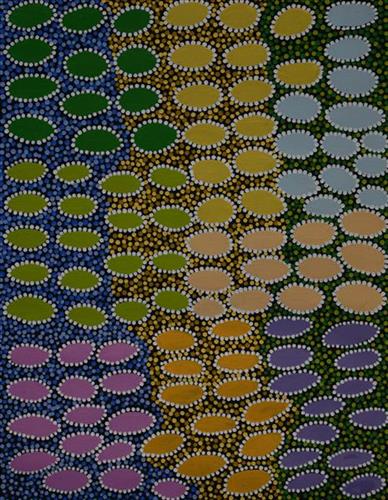
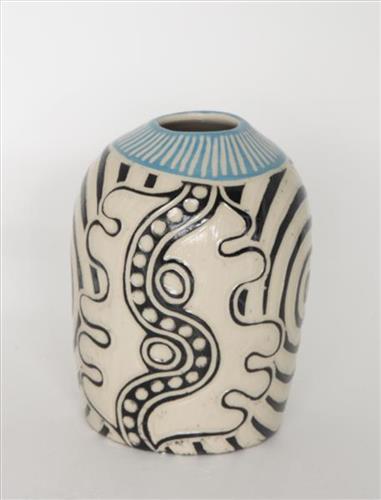
Anapalaku Walka – Ernabella Design
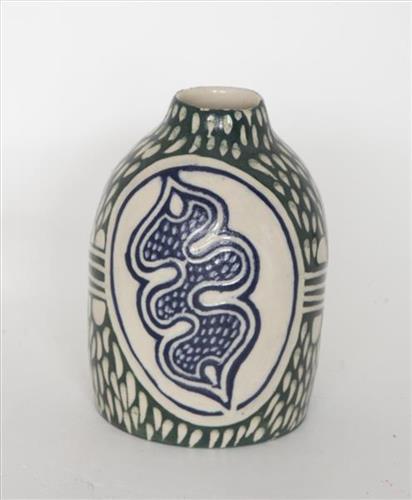
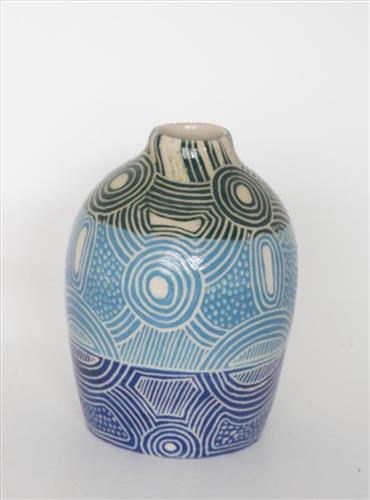
The well-known Anapalaku Walka evolved out of the very first drawings that children made in the Ernabella mission school in 1940. At the time, the schoolteacher asked the children to draw whatever they liked, trying to avoid imposing a style or idea onto the children. The children would often come to the Ernabella craft room (the precursor to today’s art centre) in the afternoon or during school holidays, making their doodles and designs that were copied by older women and transferred to various craft media. The designs are based on flowers and leaves and the rich colourful arid landscape of the APY Lands. The young girls grew older and many of them joined the art centre where they developed these designs into a distinctive artistic style. The Anapalaku Walka has been used by Ernabella artists for more than 75 years on floor rugs, batik, paintings and ceramics.
221282362825
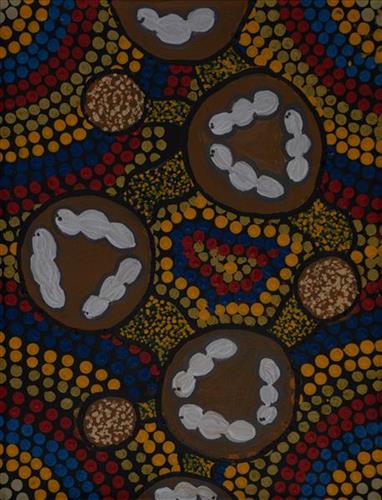
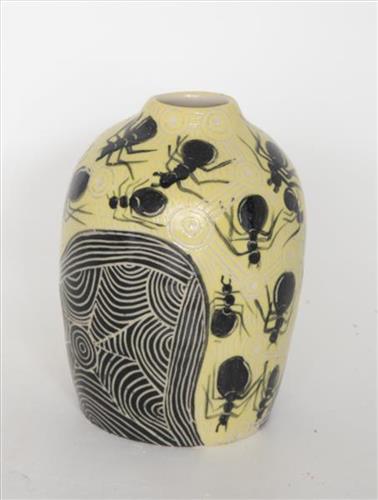
Tjala / Honey Ants
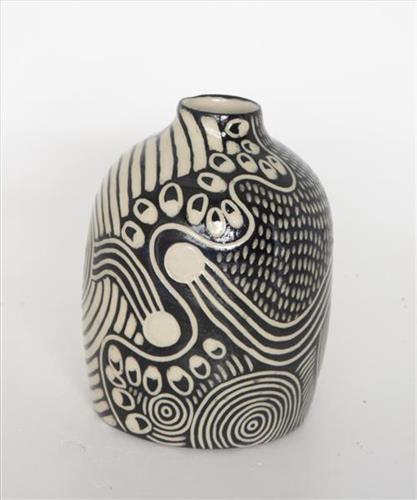
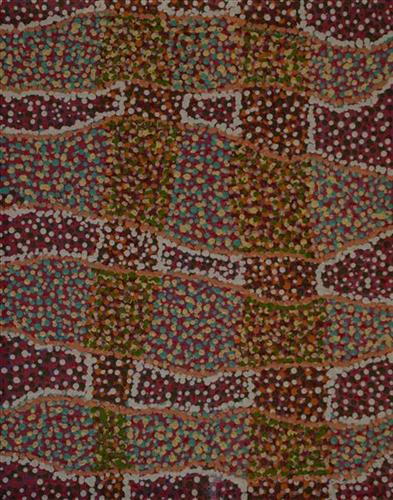
Tjala or honey ants live in nests about a metre underground beneath mulga trees, and they are a highly favoured food source. The tjala tunnels that lead down to the ants’ nests are called nyinantu, and the larvae are called ipilyka-ipilyka. After the rain when the ground is soft the women go digging for tjala by looking for the drill holes under the trees. They then use shovels and crowbars to dig down following the tunnels to find the tjala inside. Anangu suck the delicious rich honey-like liquid from the distended abdomen of the tjala. The story of the tjala is told across the Northern Territory into South Australia and is an important link between Anangu mythology and inter-dependence on the environment.
221282362823
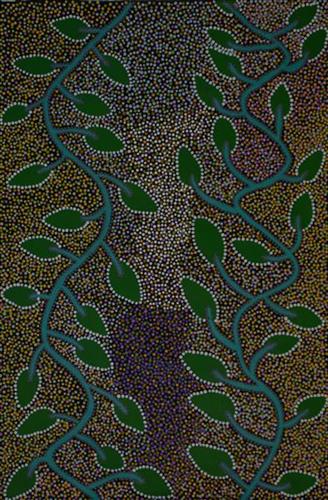
Anapalaku Walka – Ernabella Design
The well-known Anapalaku Walka evolved out of the very first drawings that children made in the Ernabella mission school in 1940. At the time, the schoolteacher asked the children to draw whatever they liked, trying to avoid imposing a style or idea onto the children. The children would often come to the Ernabella craft room (the precursor to today’s art centre) in the afternoon or during school holidays, making their doodles and designs that were copied by older women and transferred to various craft media. The designs are based on flowers and leaves and the rich colourful arid landscape of the APY Lands. The young girls grew older and many of them joined the art centre where they developed these designs into a distinctive artistic style. The Anapalaku Walka has been used by Ernabella artists for more than 75 years on floor rugs, batik, paintings and ceramics.
221282362822
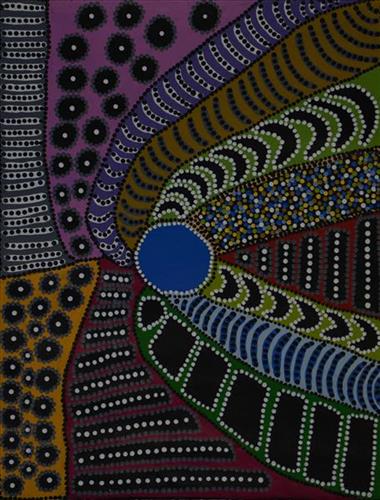
Kungkarangkalpa / Seven Sisters
Kungkarangkalpa means the Seven Sisters. This is an extensive creation story that relates to the Pleiades constellation in the southern hemisphere. The story traverses Australia taking on different forms, however local women are privy to the part of the story which takes place in the country near Ernabella. For this part of the story, the man called Nyiru is chasing the sisters as he wants to sleep with the oldest sister. All the younger sisters are deeply afraid of him. As Nyiru is chasing the sisters, he tries to catch them by using magic to turn himself into the most tempting bush tomatoes for the sisters to eat and the most beautiful ili (fig) tree for the sisters to camp under. However, the sisters are aware of his magic and go hungry and run through the night rather than be caught by Nyiru. Eventually, to escape Nyiru, the sisters fly into the sky where they turn into stars and form the constellation.