225182374415


Kirbaji (Dugong)

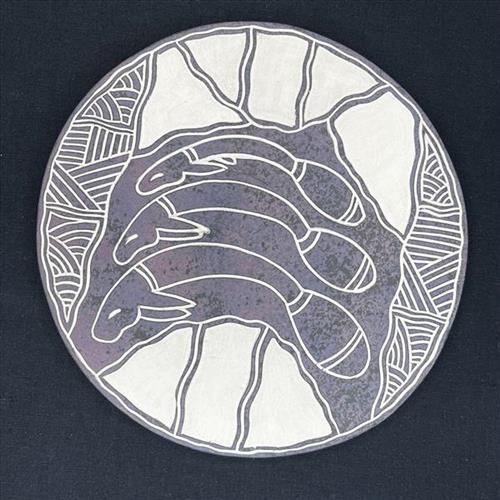
Kirbaji (Dugong) is an Ancestral Spirit Being (Totem) that I inherited it from my mother’s side.  It is my Totem. The dugong was also an important food source for my ancestors. Only men were allowed to hunt them, and only men had the right to cook and distribute the meat to all the families. My uncles and cousins showed me how to hunt dugongs and they passed down to me the cultural knowledge about them.

My ancestors used to wrap the dugong meat in ginger leaves for flavour, close the wraps with a vine and cook them in the ground oven. Dugongs were only hunted on special occasions such as births, weddings and funerals to provide food for large family gatherings.Dugong fat was also melted to make oil which was used as a medicine for skin and hair ailments or as ointment to treat an upset stomach.

225182374412


Kirbaji (Dugong)

Kirbaji (Dugong) is an Ancestral Spirit Being (Totem) that I inherited it from my mother’s side.  It is my Totem. The dugong was also an important food source for my ancestors. Only men were allowed to hunt them, and only men had the right to cook and distribute the meat to all the families. My uncles and cousins showed me how to hunt dugongs and they passed down to me the cultural knowledge about them.

My ancestors used to wrap the dugong meat in ginger leaves for flavour, close the wraps with a vine and cook them in the ground oven. Dugongs were only hunted on special occasions such as births, weddings and funerals to provide food for large family gatherings.Dugong fat was also melted to make oil which was used as a medicine for skin and hair ailments or as ointment to treat an upset stomach.

225182374411


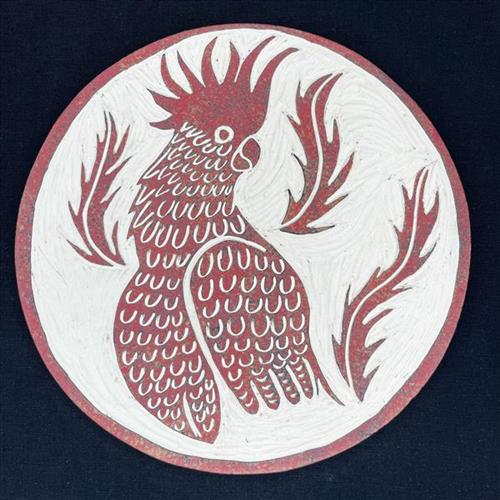
Kurranji (Cassowary)

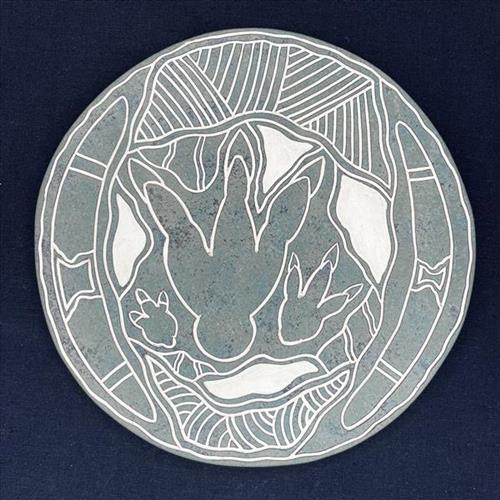
The cassowary is my totem. My mother’s sister handed it down to me when I was a young boy. I perform the cassowary dance in public ceremonies. As a young men, I was part of the Yalanji Dance group and was invited to Hong Kong to perform our traditional dance cycles including the cassowary dance.


377810582374410


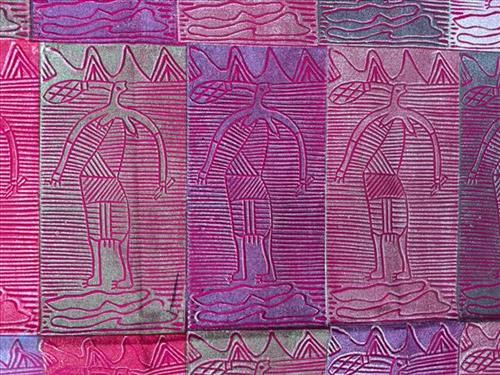
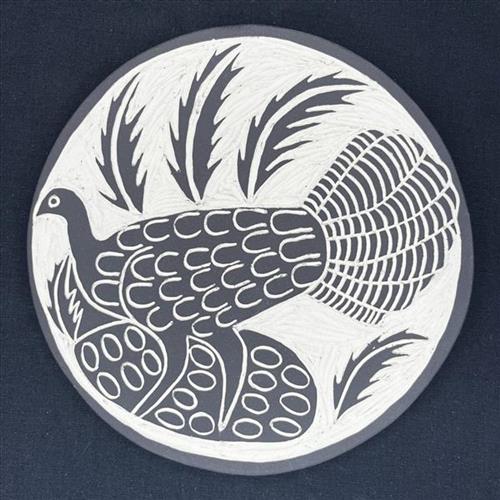
Babbarra Mimih

Bábbarra Women’s Centre is named after a billabong.

This design references the Bábbarra logo that shows a female mimih (spirit being).

This fabric was created using the linocut printing technique. The lino tile has been carved by the artist in Maningrida, and has been printed by hand using a variety of colours and layers. The linocut technique ensures each textile piece is a one-off, limited edition piece. Bábbarra Women’s Centre supports the economic independence of Indigenous women in the Arnhem Land community of Maningrida, Northern Territory, Australia. Designs created by the women at Bábbarra reflect strong cultural knowledge, which is passed down to younger generations through their textile design practice.

225182374406


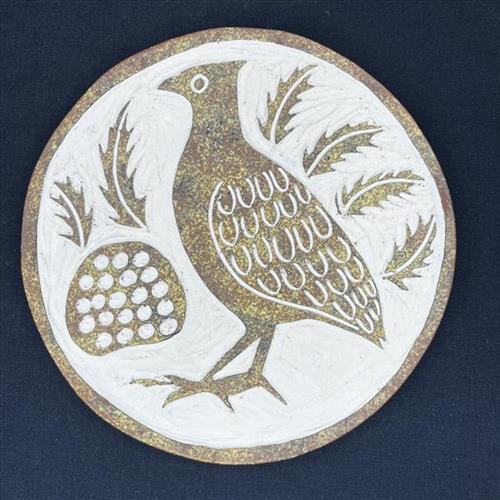
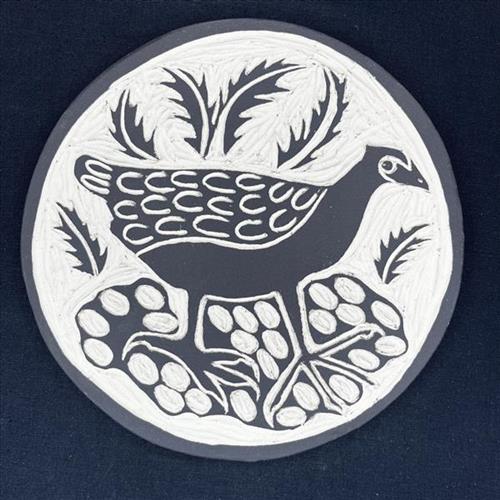
Diwan (Scrub Turkey)

Diwan are bush food – an important source of meat. We also eat the eggs. They are a delicacy. The male bird looks after the nest and will not go far, as he has to protect the nest from bush goanna’s. If they come around, he will send out an alarm call to other Diwan to alert therm. The nesting time for Diwan is September to December. The bush goanna knows when the eggs will be ready to hatch. When the goannas start hanging around, this is a good sign that the eggs are ready. We dig for eggs with digging sticks or by hand. The nest is very deep and when you can feel the warmth with your hands, you know that the eggs are close-by. The eggs are very good for health and make you strong.

111582374405


Jartuti

“Jartuti water place east of Parnngurr. In pujiman (traditional, desert dwelling) days old people walked and hunted there, we went there recently with KJ (Kanyirninpa Jukurrpa) ranger mob, lovely place.” 

 – Beverley Rogers

Jartuti is a water source located close to Parnngurr Aboriginal Community (otherwise known as Cotton Creek), and is part of Beverley’s father’s ngurra (home Country, camp). The site is near to the home of the jangara (cannibal devil), spiritual beings from the Jukurrpa (Dreaming) era.

111582374404


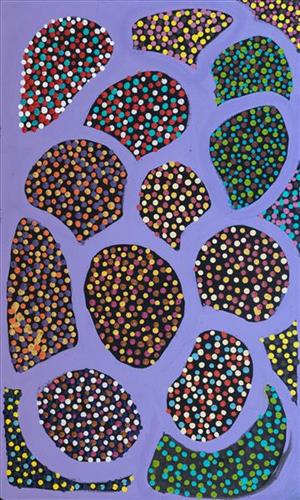
Linyji

“This linyji (claypan) story, it’s about when the old people used to be living in the desert, a long, long time ago- thousands of years ago. They used to make a hole in the linyjii for the wilyki (seed), using the wind to separate the seed [from the husk; winnowing]. Also, when we used to be sick, old people used to wet the parna (sand/soil/earth) with the kapi (water), [then] mix it and use on burns. For headaches, they put it on the kata (head). Like a Band-Aid, or Panadol – pujiman (traditional, desert dwelling) way!“

– Kuru Gladys Bidu

This work depicts a linyji (claypan) within the artists’ ngurra (home Country, camp), typically represented with circular forms. Claypans were visited more often during the wet seasons as they filled with water. As Kuru here describes, besides being a valuable water source, claypans were also ingeniously utilized for the removal of husks from seeds before consumption. Additionally, the clay itself was applied topically for its healing properties, aiding in the treatment of burns and soothing headaches.

During the pujiman (traditional, desert dwelling) period, knowledge of water sources was critical for survival, and today Martu Country is still defined in terms of the location and type of water. Each of the hundreds of claypans, rockholes, waterholes, soaks and springs found in the Martu desert homelands is known through real life experience and the recounting of Jukurrpa (Dreaming) narratives by name, location, quality and seasonal availability. This encyclopedic knowledge extends even to the nature and movement of arterial waterways, and sustained Martu as they travelled across their Country, hunting and gathering, visiting family, and fulfilling ceremonial obligations. They would traverse very large distances annually, visiting specific areas in the dry and wet season depending on the availability of water and the corresponding cycles of plant and animal life on which hunting and gathering bush tucker was reliant.
225182374403


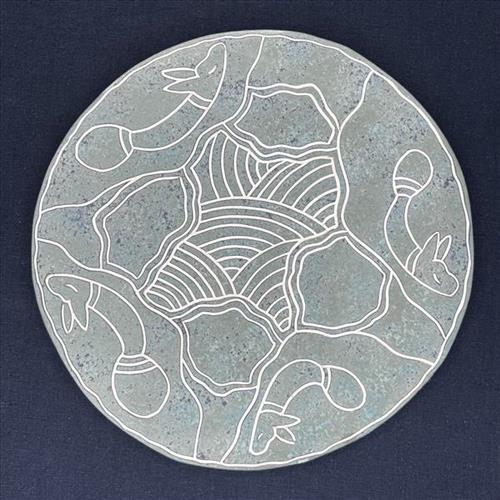
Birmba (White Cockatoo)

Birmba (White Cockatoo) is my family totem. It has been passed down from generation to generation. They always remind me of my grandfather, my sister and other family members who have passed on. White Cockatoos are like protective spirits for me and my family. They will give you signs. Good signs and signs of danger. They will let you know when to move on.
When I’m out with my grandchildren and there is a white cockatoo, I might say, “that is your grandmother, my sister who is watching us”.

At other times, the spirits of other family members visit us in form of white cockatoos. The White Cockatoo keeps our living and past family connected to each other and to our country. When I’m alone, I know they are around. I speak to their spirit and they give me strength.