111582374113


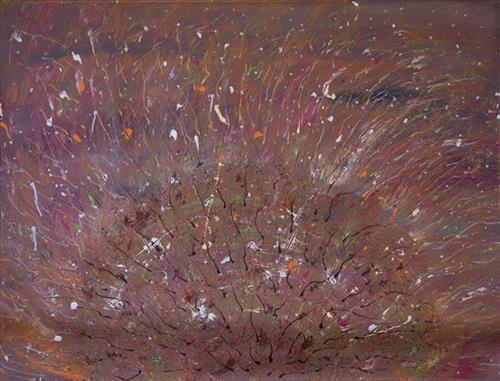
Spinifex

“When I went back to County, I thought how beautiful the spinifex was. How the sun glazed against the spinifex. The County that I speak of is Jilukurru, my grandfather’s country.”

– Kathleen Maree Sorenson

Martu Country is dominated by striking permanent tali (sandhills) covered with spinifex, gums, and other trees and shrubs. Spinifex is a pale green, spiky grass that grows in clumps throughout the Central and Western Deserts of Australia. Some varieties yield edible seeds and another contains a resin. 

225182374112


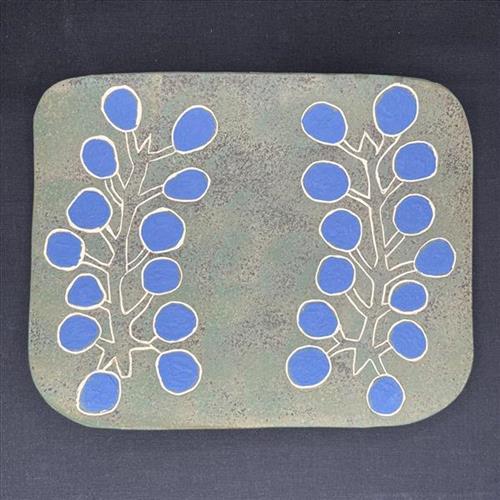
Janbal (Quandong)

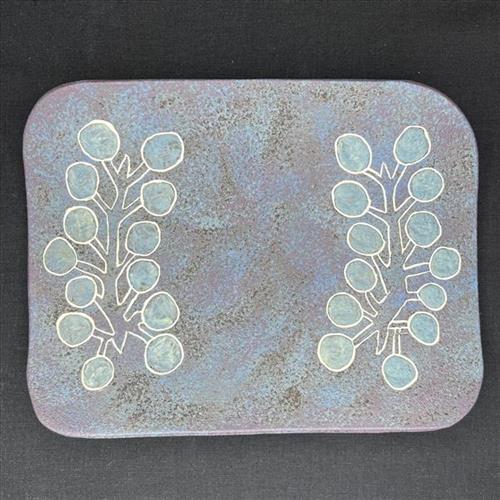
Janbal (Quandong) is good bush tucker. We gather the fruit from August to January when they are sweet and soft. The kernel of the fruit is very pretty and we often use it to make body adornments such as necklaces and earrings.

111582374111


Jilji

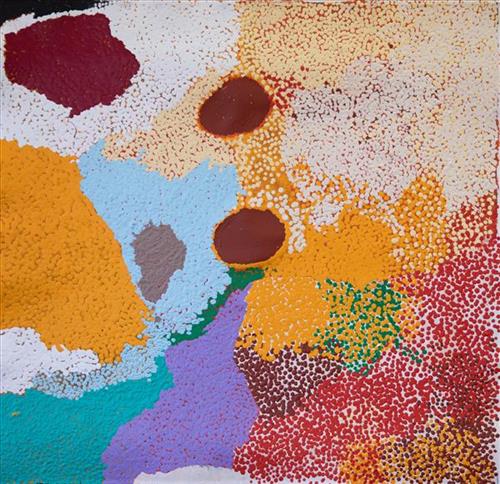
“This one near my countryside. It’s kayili (north) of my Country. Big one Jilji. Lots of tuwa (sandhills). My nana mili (denotes ownership) Country, mama mili, daddy mili Country. They walk around there, get kuwiyi (meat). The old people would cook ’em up! This a pujiman (traditional, desert dwelling) place. I was a young girl with my nana and mama, walking around there. I been loose them. They finished.” 

– Yikartu Bumba

Jilji is a water source north of Wirnpa and in Juwaliny Country- Yikartu’s ngurra (home Country, camp). Her ngurra lies at the northern boundary of Martu Country, around the Percival Lakes region and further northward. Jilji is one of the water sources Yikartu would stop and camp at as a young woman. 

As described in her account, Yikartu moved around this area seasonally with her family, walking between water sources, and hunting and gathering bush tucker as they went. At this time knowledge of water sources was critical for survival, and today Martu Country is still defined in terms of the location and type of water. Each of the hundreds of claypans, rockholes, waterholes, soaks and springs found in the Martu desert homelands is known by name, location, quality and seasonal availability through real life experience and the recounting of Jukurrpa (Dreaming) narratives.

225182374109


Janbal (Quandong)

Janbal (Quandong) is good bush tucker. We gather the fruit from August to January when they are sweet and soft. The kernel of the fruit is very pretty and we often use it to make body adornments such as necklaces and earrings.

225182374108


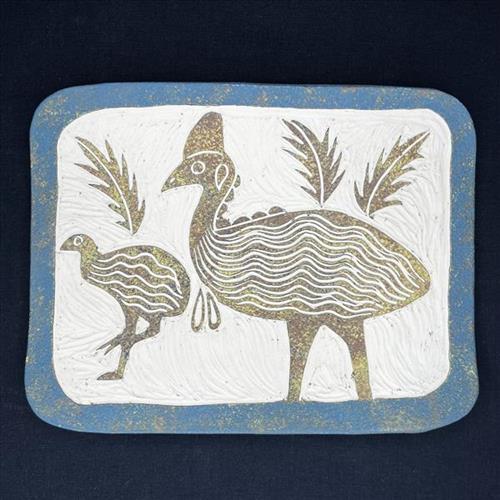
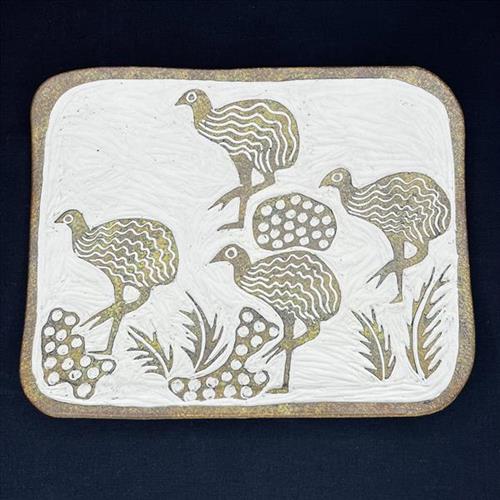
Kurranji (Cassowary)

The cassowary is one of the most important animals for our Kuku Yalanji people. The cassowary is the boss of the rainforest. He is dangerous but he also helps grow many of the plants we used to collect for food, medicine and tool making.

How does he do this? He eats many different fruits, digests them in his stomach, and then drops his dung mixed with the leftover seeds onto the ground. This way seeds grow into new plants wherever he walks. This helped us Kuku Yalanji in the past to survive.

The cassowary is a spirit bird and celebrated to this day in public ceremonies with song and dance. You must be very careful of them because they can attack. Never feed them. You must always be alert when walking in the rainforest.

225182374107


Kurranji (Cassowary)

The cassowary is one of the most important animals for our Kuku Yalanji people. The cassowary is the boss of the rainforest. He is dangerous but he also helps grow many of the plants we used to collect for food, medicine and tool making.

How does he do this? He eats many different fruits, digests them in his stomach, and then drops his dung mixed with the leftover seeds onto the ground. This way seeds grow into new plants wherever he walks. This helped us Kuku Yalanji in the past to survive.

The cassowary is a spirit bird and celebrated to this day in public ceremonies with song and dance. You must be very careful of them because they can attack. Never feed them. You must always be alert when walking in the rainforest.

111582374099


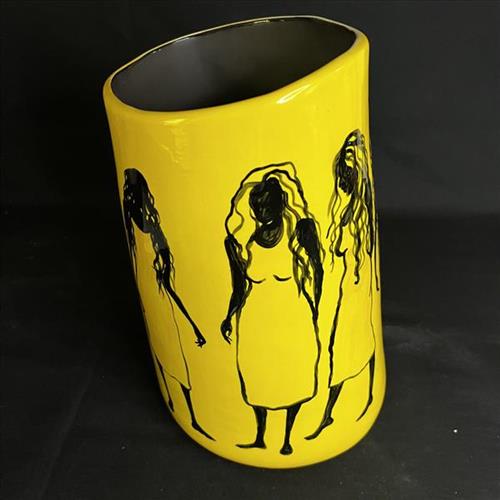
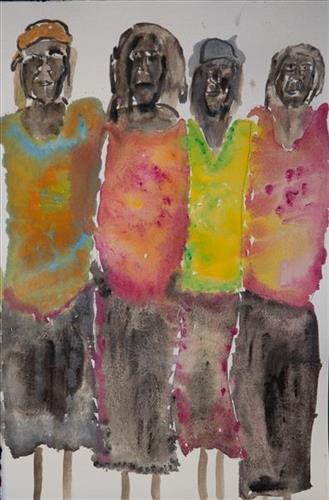
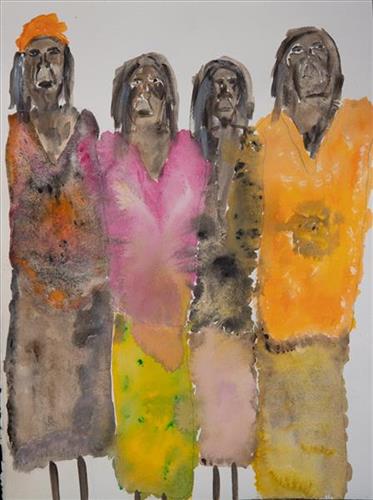
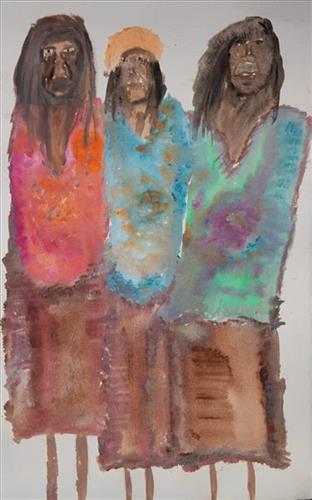
Mum, The Boss, My Daughter and the Wanti (Woman, Girl)- Sylvia Wilson

“It’s pretty much the line of thought of my family. So that’s my daughter and then my granny- ‘Nan Nan’ they call her- and then my mum, SW. And that’s my nanna Lorna. It’s pretty much the line of where I’m from. That connection and family tree.”

– Sylvia Wilson

This work is one of a series by Sylvia Wilson entitled ‘Mum, The Boss, My Daughter and the Wanti (Woman, Girl).’ As Sylvia explains, the work is both a depiction of, and attribute to, the women in her family heritage.

The Martu term for family, walytja, encapsulates a broader idea of relatedness that permeates every aspect of life. The Martu four-section kinship system determines a person as belonging to either the Purungu, Milangka, Panaka or Karrimarra skin group, and was created by the Jukurrpa (Dreaming) ancestors.

This system not only defines relationships, it also establishes a framework for expectations and obligations, and extends the importance of family far beyond mere blood or marriage ties. Family is not limited to blood connections; it encompasses all relationships within the entire community, forming a network of relationships that was crucial to survival during the pujiman (traditional, desert dwelling) era, and that remains fundamental to Martu life today. The kinship system allows everyone to know what expectations one person can have in relation to another, and means that familial terms and relationships are present between any two individuals, whether or not they are related by blood.
111582374097


Mum, The Boss, My Daughter and the Wanti (Woman, Girl)- Sylvia Wilson

“It’s pretty much the line of thought of my family. So that’s my daughter and then my granny- ‘Nan Nan’ they call her- and then my mum, SW. And that’s my nanna Lorna. It’s pretty much the line of where I’m from. That connection and family tree.”

– Sylvia Wilson

This work is one of a series by Sylvia Wilson entitled ‘Mum, The Boss, My Daughter and the Wanti (Woman, Girl).’ As Sylvia explains, the work is both a depiction of, and attribute to, the women in her family heritage.

The Martu term for family, walytja, encapsulates a broader idea of relatedness that permeates every aspect of life. The Martu four-section kinship system determines a person as belonging to either the Purungu, Milangka, Panaka or Karrimarra skin group, and was created by the Jukurrpa (Dreaming) ancestors.

This system not only defines relationships, it also establishes a framework for expectations and obligations, and extends the importance of family far beyond mere blood or marriage ties. Family is not limited to blood connections; it encompasses all relationships within the entire community, forming a network of relationships that was crucial to survival during the pujiman (traditional, desert dwelling) era, and that remains fundamental to Martu life today. The kinship system allows everyone to know what expectations one person can have in relation to another, and means that familial terms and relationships are present between any two individuals, whether or not they are related by blood.
111582374096


Mum, The Boss, My Daughter and the Wanti (Woman, Girl)- Sylvia Wilson

“It’s pretty much the line of thought of my family. So that’s my daughter and then my granny- ‘Nan Nan’ they call her- and then my mum, SW. And that’s my nanna Lorna. It’s pretty much the line of where I’m from. That connection and family tree.”

– Sylvia Wilson

This work is one of a series by Sylvia Wilson entitled ‘Mum, The Boss, My Daughter and the Wanti (Woman, Girl).’ As Sylvia explains, the work is both a depiction of, and attribute to, the women in her family heritage.

The Martu term for family, walytja, encapsulates a broader idea of relatedness that permeates every aspect of life. The Martu four-section kinship system determines a person as belonging to either the Purungu, Milangka, Panaka or Karrimarra skin group, and was created by the Jukurrpa (Dreaming) ancestors.

This system not only defines relationships, it also establishes a framework for expectations and obligations, and extends the importance of family far beyond mere blood or marriage ties. Family is not limited to blood connections; it encompasses all relationships within the entire community, forming a network of relationships that was crucial to survival during the pujiman (traditional, desert dwelling) era, and that remains fundamental to Martu life today. The kinship system allows everyone to know what expectations one person can have in relation to another, and means that familial terms and relationships are present between any two individuals, whether or not they are related by blood.