377815582383504
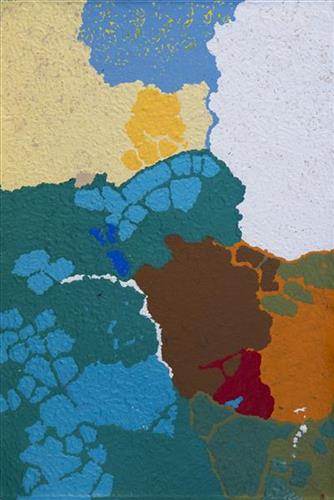
Untitled
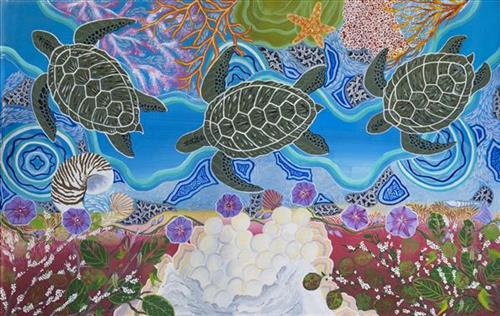
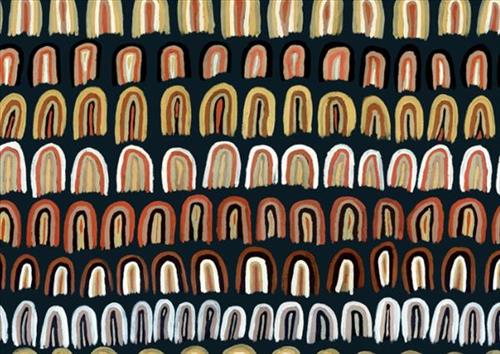
This artwork showcases the artist’s skillful use of colour, texture, and technique, reflecting a deep connection to their environment and culture. Each detail embodies the unique identity of Bidyadanga Artists, where the original five language groups—Nyangumarta, Mangala, Yulparija, Juwaliny, and Karrajarri—come together to create art that speaks to the heart of Country. Over time, the community and Art Centre has grown to include people from other Kimberley tribes, fostering a space where diverse cultural knowledge and practices come together. Situated where the desert meets the sea, artists draw inspiration from their ancestral Country and personal journeys. The artist captures the vibrant beauty of both desert and coastal landscapes, blending earthy reds, deep blues, and intricate patterns distinctive to their cultural heritage. The themes and composition invite viewers into the artist’s world, offering a glimpse of the rich, intertwined histories and the enduring connection to land and spirit that define the Bidyadanga community.
377815582383503
Feeding Season
377810582383480
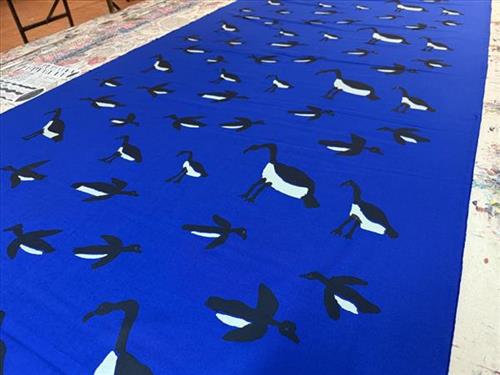
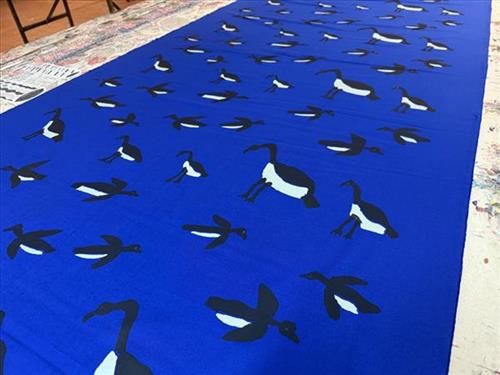
Murnubbarr Karrolkan (Flying Magpie Geese)
Murnubbarr (magpie geese) are a waterbird found in abundance in the wetland areas of Kakadu and western Arnhem Land. Murnubbarr are a sustainably hunted and enjoyed manme (bush food). They are known to fly long distances, particularly in the wet season.
377810582383477
Murnubbarr Karrolkan (Flying Magpie Geese)
Murnubbarr (magpie geese) are a waterbird found in abundance in the wetland areas of Kakadu and western Arnhem Land. Murnubbarr are a sustainably hunted and enjoyed manme (bush food). They are known to fly long distances, particularly in the wet season.
377810582383475
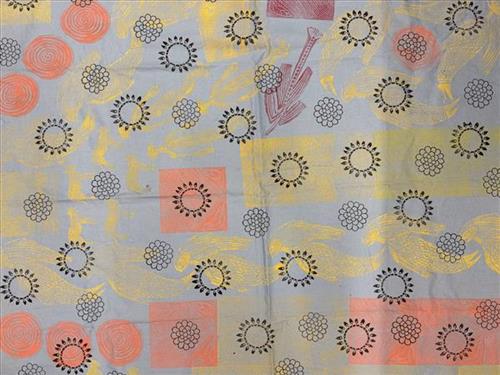
Yawkyawk and woodblock
220182383445
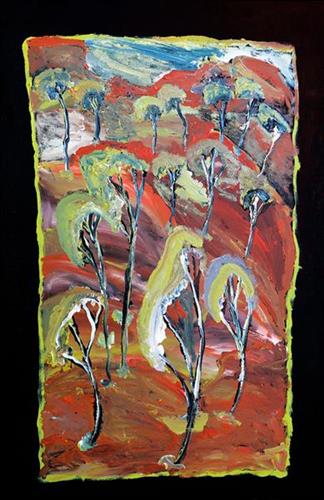
Yalpirakinu
Yalpirakinu is Adrian’s mother’s country. Adrian’s mother is the late Eunice Napangardi, a well known painter herself. His artworks consistently refer to the desert mountains, ridges and trees which are part of Yalpirakinu. Using a restricted colour palette, Adrian’s brushwork is loaded with energy, drama and memories. He is a deliberate and thoughtful painter; reworking, pushing and pulling the image to completion.
22174008587
Status: Stock
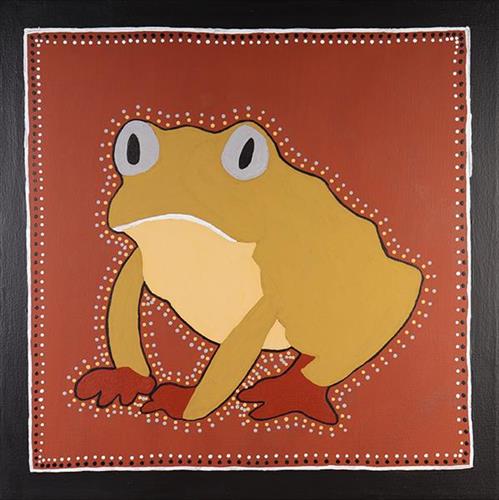
Two Little Sisters
A rainbow snake travelled from Gimoorl country and created a river going towards Woombanji country (Jamanjoong). There he met up with two sisters and asked the old man if one of the sister was his promised wife, but he refused. He kept both the sisters as his wives he than held them down in the water and then he sunbathe them. He saw a honey sucker and asked him for tucker for us but he didn’t listen he flew away (the honeysucker) the honeysucker dived in the water and had his own food. The old man asked him again but ignored them. He then saw two brolgas and asked them to empty the river with the coolamans They did that then the honey sucker came back he dived straight in the river but there was no water and he hit the bottom. He wondered where all the water had gone, But the two brolgas took all the water from the river and flying around on top in two coolaman the honeysucker then saw a frog in the dry creek bed. He told the frog the brolgas took all the water away from the river in both coolamans he then made a spear and speared both. The coolaman and the waters both poured down and filled the riverbed with water again. There was a small bat hanging around he the old man there with his two wives he followed them back to Gimoorl where they stayed in a cave. As the old man and his wives where asleep the bat made a spear and speared the old man and the two wives fled back upstream and formed into two hills the hills stand there today.

37781464008586
Status: Stock
Munda Hills (Olive) – Judith Coppin
Based on an original artwork by Judith Coppin called Yindjibarndi Munda Hills, a painting that depicts the natural ochres and hills found on Yindjibarndi Country. Digitally printed in China onto 100% Linen (the very soft and floaty type). Fabric width is 135cm (printed area), cut into a 2m length.
Care instructions: Cold wash. Warm iron on reverse side. Dry cleaning is not recommended.Fabric has not been washed since printing and there will be a less than 1% shrinkage on the first wash.
22174008585
Status: Stock
History Beneath the Beauty
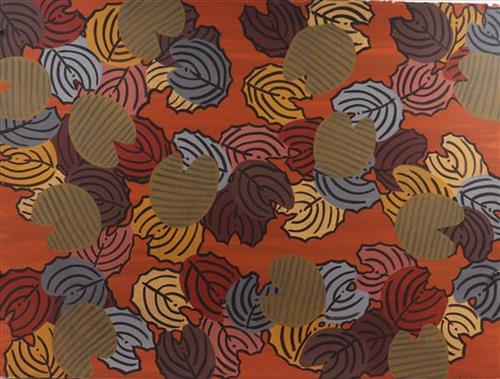
Woorrilbem holds a history. A blast from my grandmother’s past as a child she went to this billabong to collect the lily flowers, its bulb, mussels and other edible bush food to take back to her family. One particular day on a usual walk she saw two strange men way off in the distance. A manager on horse back and a black tracker leading a donkey with a sack on its back. They were tracking Aboriginal, Miriwoong people to work for the manager at the station. As the men came closer, my grandmother slipped into the billabong to hide until the men were out of sight. My grandmother then got out and started running as fast as she could back to her family, but it was too late as the strange men were already approaching the camp. With mixed emotions my grandmother spoke and pointed at the same time to the strange men, but the black tracker spoke in Miriwoong language and said they were friendly people looking for workers to work at the station for sugar, tea and tobacco as rations and brought flour to make bread as a peace offering, Some Miriwoong people did go to work for the strange manager man. My grandmother and her family stayed on country. If we don’t carry this story and tell our children the history of Woorrilbem and its beauty will take over and my grandmother’s Country will be lost and forgotten forever. The different coloured lily pads are my grandmothers emotions flowering through the billabong. The green lily pads are the original colours covering the history of my grandmother’s story. The straight lines represents the calm relaxing billabong before my grandmother entered the water.