111982380755


Djenj (Fish)

Works in fibre from the Maningrida region are widely recognised as some of the finest in Australia. Artists confidently push the boundaries of fibre craft and cultural expression, adapting traditional techniques and forms to produce strikingly inventive and aesthetically exquisite artworks.

In 2003, Kuninjku artist Marina Murdilnga brought a revolutionary new form of pandanus weaving to Maningrida Arts & Culture: a flat yawkyawk made from knotted pandanus on a jungle-vine frame, painted with natural pigments. She next explored using dyed pandanus and feathers in this way. Murdilnga’s innovation inspired many other weavers, who are producing an array of beautifully resolved flat figurative works (stingray, butterflies, spiderwebs) and spiritual figures and Ancestral beings. Alongside Murdilnga, leading artists of this form of fibre art are Anniebell Marnngamarnnga, Frewa Bardaluna and Rembarrnga artists Vera Cameron and Maisie Cameron. Lulu Larandjbi has woven interpretations of the rock pools at Kobumi where Ngalyod (the Rainbow Serpent) entered and died.

Commonly used fibres include the leaves of pandanus (Pandanus spiralis), and palms (Livistonus), mírlírl (burney or jungle vine, Malaisia scandens), and the inner bark of kurrajong and stringybark eucalyptus trees. Weaving is physically hard work, now done only by women. They colour the pandanus using natural dyes made from the roots, leaves or flowers of plants within the weaver’s clan estate. The same dye bath is often used to dye a number of batches of fibre, with variations in the colours depending on the time spent in the dye bath and the potency of the bath. The women skilfully use salt and wood ash as mordants and colour enhancers.
 

111982380754


Djenj (Fish)

Works in fibre from the Maningrida region are widely recognised as some of the finest in Australia. Artists confidently push the boundaries of fibre craft and cultural expression, adapting traditional techniques and forms to produce strikingly inventive and aesthetically exquisite artworks.

In 2003, Kuninjku artist Marina Murdilnga brought a revolutionary new form of pandanus weaving to Maningrida Arts & Culture: a flat yawkyawk made from knotted pandanus on a jungle-vine frame, painted with natural pigments. She next explored using dyed pandanus and feathers in this way. Murdilnga’s innovation inspired many other weavers, who are producing an array of beautifully resolved flat figurative works (stingray, butterflies, spiderwebs) and spiritual figures and Ancestral beings. Alongside Murdilnga, leading artists of this form of fibre art are Anniebell Marnngamarnnga, Frewa Bardaluna and Rembarrnga artists Vera Cameron and Maisie Cameron. Lulu Larandjbi has woven interpretations of the rock pools at Kobumi where Ngalyod (the Rainbow Serpent) entered and died.

Commonly used fibres include the leaves of pandanus (Pandanus spiralis), and palms (Livistonus), mírlírl (burney or jungle vine, Malaisia scandens), and the inner bark of kurrajong and stringybark eucalyptus trees. Weaving is physically hard work, now done only by women. They colour the pandanus using natural dyes made from the roots, leaves or flowers of plants within the weaver’s clan estate. The same dye bath is often used to dye a number of batches of fibre, with variations in the colours depending on the time spent in the dye bath and the potency of the bath. The women skilfully use salt and wood ash as mordants and colour enhancers.
 

111982380753


Djenj (Fish)

Works in fibre from the Maningrida region are widely recognised as some of the finest in Australia. Artists confidently push the boundaries of fibre craft and cultural expression, adapting traditional techniques and forms to produce strikingly inventive and aesthetically exquisite artworks.

In 2003, Kuninjku artist Marina Murdilnga brought a revolutionary new form of pandanus weaving to Maningrida Arts & Culture: a flat yawkyawk made from knotted pandanus on a jungle-vine frame, painted with natural pigments. She next explored using dyed pandanus and feathers in this way. Murdilnga’s innovation inspired many other weavers, who are producing an array of beautifully resolved flat figurative works (stingray, butterflies, spiderwebs) and spiritual figures and Ancestral beings. Alongside Murdilnga, leading artists of this form of fibre art are Anniebell Marnngamarnnga, Frewa Bardaluna and Rembarrnga artists Vera Cameron and Maisie Cameron. Lulu Larandjbi has woven interpretations of the rock pools at Kobumi where Ngalyod (the Rainbow Serpent) entered and died.

Commonly used fibres include the leaves of pandanus (Pandanus spiralis), and palms (Livistonus), mírlírl (burney or jungle vine, Malaisia scandens), and the inner bark of kurrajong and stringybark eucalyptus trees. Weaving is physically hard work, now done only by women. They colour the pandanus using natural dyes made from the roots, leaves or flowers of plants within the weaver’s clan estate. The same dye bath is often used to dye a number of batches of fibre, with variations in the colours depending on the time spent in the dye bath and the potency of the bath. The women skilfully use salt and wood ash as mordants and colour enhancers.
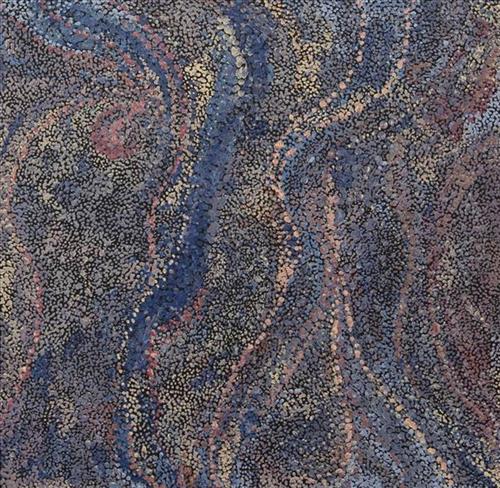
 

221282380690


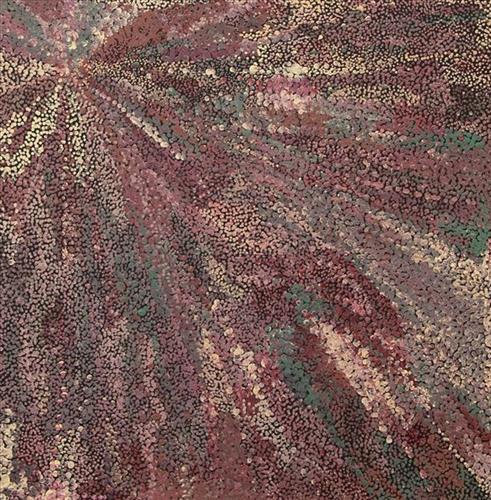
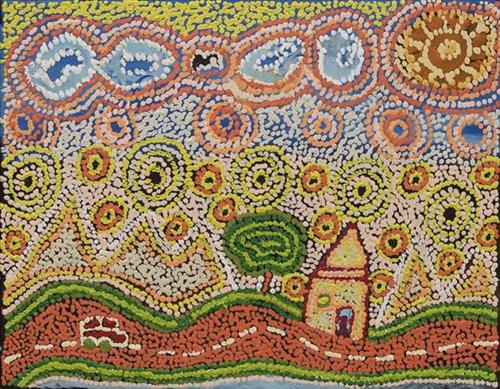
Dust Storm

Rachael comes from the third generation of Lionel women painting at Ernabella Arts. Rachael draws inspiration for her paintings from the stories and messages she receives through her dreams. This painting is a dream she has about a dust storm. She was out in the desert and could see the dust storm rolling towards her.

221282380689


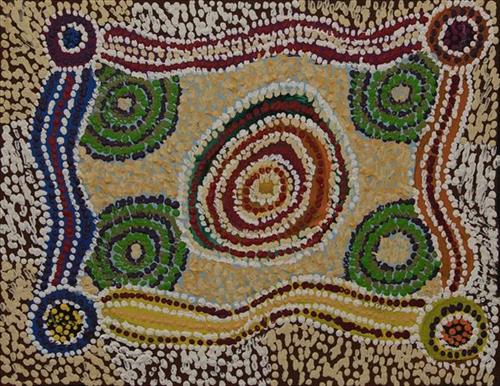
Dust Storm

Rachael comes from the third generation of Lionel women painting at Ernabella Arts. Rachael draws inspiration for her paintings from the stories and messages she receives through her dreams. This painting is a dream she has about a dust storm. She was out in the desert and could see the dust storm rolling towards her.

221282380687


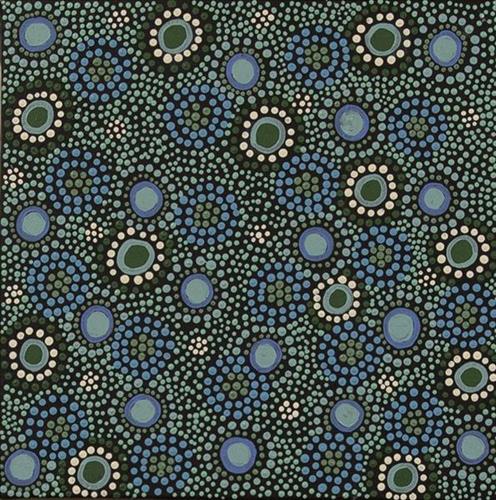
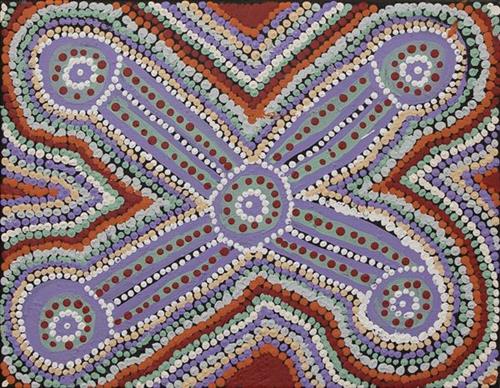
Ngayuku Walka / My Design

Walka means design or pattern. Artists use this title to describe artworks that are pattern based rather than descriptive or telling a story.

221282380673


Ngayuku Walka / My Design

Walka means design or pattern. Artists use this title to describe artworks that are pattern based rather than descriptive or telling a story.

221282380670


Ngayuku Walka / My Design

Walka means design or pattern. Artists use this title to describe artworks that are pattern based rather than descriptive or telling a story.

221282380645


Ngayuku Walka / My Design

Walka means design or pattern. Artists use this title to describe artworks that are pattern based rather than descriptive or telling a story.

377816082380839


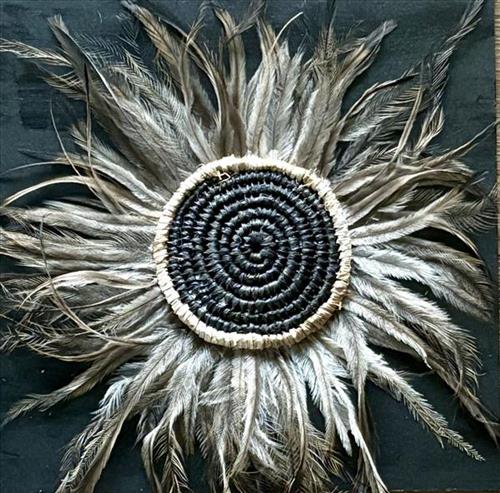
Black centre, Strong Spirit

Black woven centre, symbolising inner strength, resilience and the grounding force of culture. Emu feathers are reaching outwards in all directions, representing spirit, movement and connection to country. A reminder that strength doesn’t always shine- sometimes it sits quietly at the core, holding everything together