220282375739


Wanpanpi – Bush Coconut

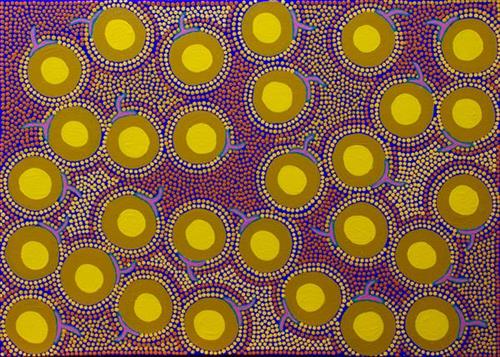
“Wanpanpi, the bush coconut. You can’t just eat it because it has a hard shell. When you get it from the tree you have to hit it with a rock to open it up to see what kind is inside, then you can eat it. When you go hunting you can collect these, it’s in a tree like a gum tree. They use  that tree for Sorry Business. They are in the top of that tree with the gum nuts, its got seeds that you can make into a necklace. When people pass away they use those leaves and branches to walk into the place where the person used to be and give respect, feeling empathy. The tree is important. It’s special because people can use it.” – Joyce Dixon

220282375726


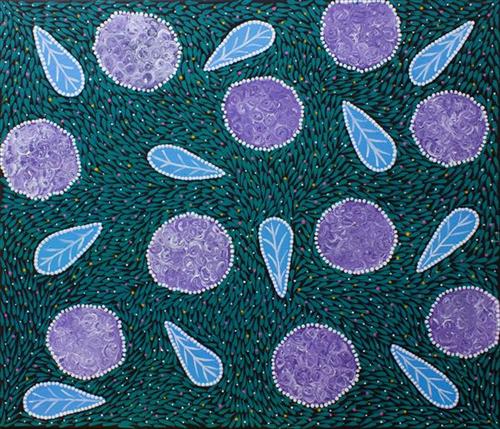
Akatjiri – Bush Sultana

“Akatjiri is not always in season. Only after they make a big bush fire and it rains, afterward there’s more akatjiri plant, people go hunting and collect it. I do akatjiri painting because it is my favourite to eat. When it’s brown and dry it’s like a sultana, when it’s there in a tree it’s yellow and tastes like a cherry tomato. When it’s green you can’t eat it. When you eat lots of akatjiri that means cleaning the stomach, good for the stomach. I done this painting about akatjiri around my Grandmother’s Country in Watiyawanu (Mount Leibig area). Her name was Ngatawina Ruby Nangala.” – Joyce Dixon

377810582375789


Murnun (dugong)

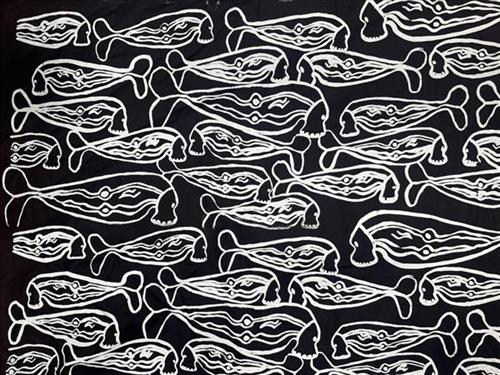
This design is murnun (dugong). Josephine grew up on the coastal area of Maningrida. She is a Kunibidji woman, a Gurgoni and Ndjébbana language speaker. 

‘In the olden times they used to go on canoe to look for murnun (dungong), fish (yokkara) ,turtle (makéddja) and stingray (marnan djupa (sp?)). They used a spear and net during the day and sometimes at night. The fishermen were mostly men. I remember my grandfather used to go hunting, that’s Joy’s (Garlbin)  father. HIs name was Jimmy. We used to go out with him on the boat to kill makéddja (turtle) and murnun (dugong) for yalaba (bush tucker). 


107582376134


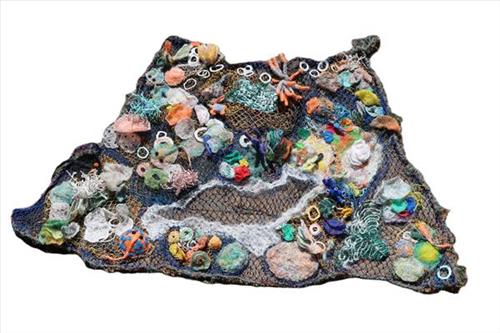
Memories Beneath the Waves: A Ghost Network Story

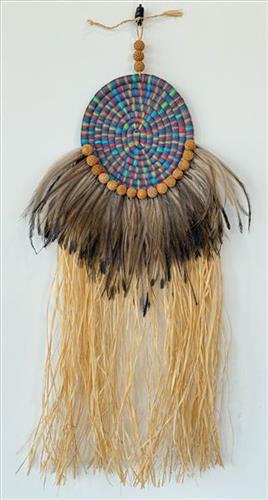
My Ghost Network artwork tells the story of a historically significant area within the sea country of Erub (Darnley Island) in the Eastern Torres Strait, Queensland, Australia. This area is widely known throughout Australia as the “Darnley Deeps,” and it is located near one of the largest reefs southwest of Erub, called “Kaleko (Calico) Reef” in contemporary regional terms. Originally known as “Kareko Norr,” meaning “a protective good anchorage reef,” this was where the pearling lugger boats would anchor for shelter during rough weather when working within the Darnley Deeps area. The “Mai Kes” meaning “The Gold Lip Pearl passage” is a garden of reefs where our divers once walked collecting pearl shells, and it is regarded as a beautiful haven by many divers, like another world beneath the waves. The pearl divers of the mid-last century era dove there for “Mai,” which is what the Erubam People called the “Gold Lip” mother-of-pearl shells. This was also a lucrative industry in the Torres Strait region at that time. My father, the late Opeta Fauid, his younger brother Lawrence Fauid, and other uncles from Poruma also worked as pearl divers and survived the Darnley Deeps. My father spoke of Kaleko Reef often, which made me wonder about this magical place. When I look back in retrospect, I’m so grateful my father survived for me to be here today. As a young girl, I always wanted to see Kaleko Reef and the Darnley Deeps from the stories my dad told our family. When I married my husband Kapua from Erub 38 years ago, he took me and our five children out there many times to see the beautiful Kaleko Reef and Darnley Deeps the historical, sacred sites of his Erubam people. I’ve created this artwork as a memory of my life, to remember the wonderful reef gardens of Kaleko Reef, Mai Kes, and Darnley Deeps where my late father, uncles, and many other divers of different nationalities walked beneath the waves, collecting Gold Lip pearl shells from the beautiful reef gardens. My husband’s late grandfather, Kapua Gutchen Snr, was also a pearl diver who dove the Darnley Deeps. In respect and remembrance, my husband later composed an island dance song titled “Darnley Deeps” in honor of his homeland Erub.

220282376397


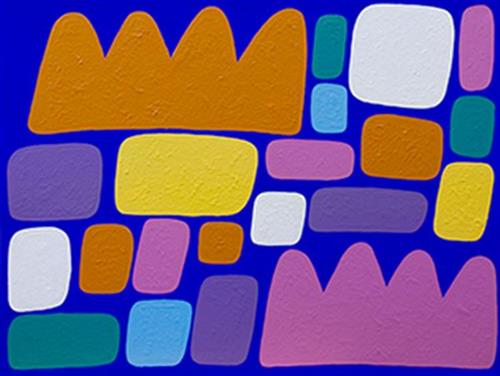
Puli Puli – Rocks

Keturah depicts the puli puli (rocks) at two different sites. She paints the landscapes at Haasts Bluff where she grew up and also at Karrkurrutintja (Lake Mcdonald in Pintupi), located west of Kintore along the Western Australia/Northern Territory border. Karrkurrutintja country is an important site of the Pilkati (snake) Tjukurrpa (dreaming) of Kaniya Kutjarra (two carpet snakes, two brothers, two Tjangalas). This story was passed town to her from her grandmother Narputta Nangala Jugadai, who was born there. Narputta was passed down this story from her father, Talaku Tjampitjinpa. Both Keturah’ss grandmother and mother, Molly Jugadai painted this same country. Narputta was one of the founding members of Ikuntji Artists, and has been painting since the beginning of the desert painting movement in the 1970’s. Keturah’s grandmother and mother have since passed away, with Keturah being the only remaining daughter in this lineage of artist to still be painting this story.

Keturah has been inspired by the painting legacy and tutorage from her grandmother and mother, though has developed a distinctive style over her practice. Keturah uses different colours and hues to depict the ways the puli puli change colours with the weather, especially at sunrise and sunset.

 “The sand hills I paint are my mother’s story and the rocks I paint are my own story. My paintings are about my story and my mother’s… I like to paint; painting helps me forget my troubles. I paint every day. My Grandmother used to say to me when I was younger: “One day you will paint.”