111582378395


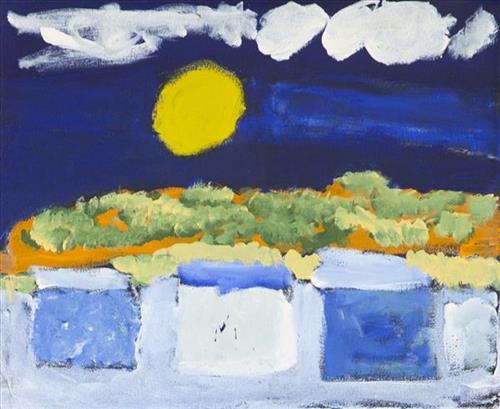
Yilyara

“This is Yilyara, near Punmu, with the houses.”

– Keyarhn Wongawol

Yilyara is one of several frequently visited
yinta (permanent springs) located in the Country immediately surrounding Punmu Aboriginal community. Yilyara is located immediately east of Nyayartakujarra (Lake Dora), a vast and culturally significant salt lake in the north east section of the Karlamilyi River (Rudall River) region. Surrounding the site are the permanent tali (sandhills) typical of the area. 


Yilyara also features as a site in two important Jukurrpa narratives, Jila Kujarra (Two Snakes) and Wirnpa. Jila Kujarra is one of the key Jukurrpa narratives for the Martu. Though the story belongs to Warnman people, it is shared across the Western Desert with several other language groups. The narrative centres on the travels of two snakes as they are pursued by the Niminjarra, spiritual ancestors of the Warnman people. Wirnpa is one of the most powerful of the ancestral jila (snake) men and the last to travel the desert during the Jukurrpa. Wirnpa is a rainmaking jila whose travels are described in the songs and stories of many language groups across the Western Desert, even those far removed from his home site. In his epic travels, Wirnpa created a series of different laws and ceremonies.
111582378397


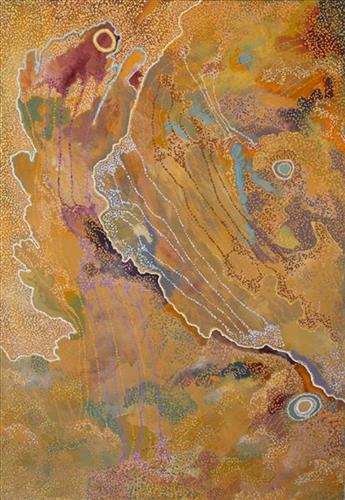
Kulyakartu

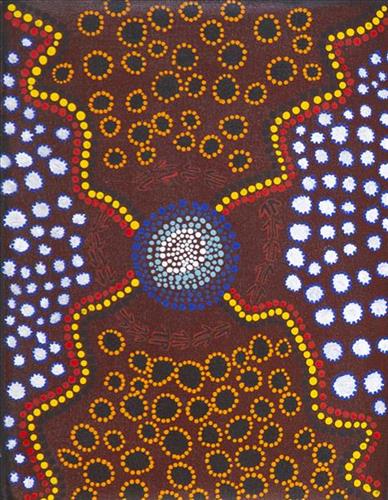
“Long time ago I been there. It is my grandmother’s, grandfather’s, father’s, [and] mother’s country, Kulyakartu.  I am painting this particular place. It keeps me connected, [gives me a] sense of belonging [to] tell my grandmother’s story through my art.  Where she was born, I’m a part of that. 

It makes me feel proud painting.  Most important is telling the story behind the painting so people can understand where I am coming from.  Kulyakartu is our ngurra (home Country, camp).  I will continue telling the story through my art.”

– Derrick Butt

This painting depicts Kulyakartu, Derrick’s ancestral ngurra (home Country, camp). Kulyakartu is a large area in the far north of the Martu homelands, near the Percival Lakes region of Western Australia’s Great Sandy Desert. Kulyakartu is mostly flat grass Country, and is known as a good hunting area. In particular, parnajarrpa (goanna), wild cats, and lunki (witchetty grub) are found in abundance here. In the wantajarra (wet season) the dry lakes in the region fill with water.

111582378393


Untitled

Martumili Artists work with over three hundred artists from remote Martu Aboriginal communities, including Punmu, Parnngurr, Kunawarritji, Jigalong, Irrungadji (Nullagine), and Warralong, as well as from the Parnpajinya (Newman) gallery and studio spaces. Known for their diverse, energetic, and unmediated painting styles, their works reflect the dramatic geography and scale of their homelands. Each artist, however, brings a unique approach to their craft.

Younger Martu artists often start painting alongside their parents, grandparents, and extended family, which fosters an organic learning process. This not only involves mastering painting techniques but also understanding specific locations, family histories, traditional ways of life, bush tucker, and Jukurrpa (Dreaming). Over time, with encouragement from their peers, they develop their own distinct styles and explore unique painting techniques and subject matter. In this work the artist brings a contemporary, evolving perspective to their work.

221382378628


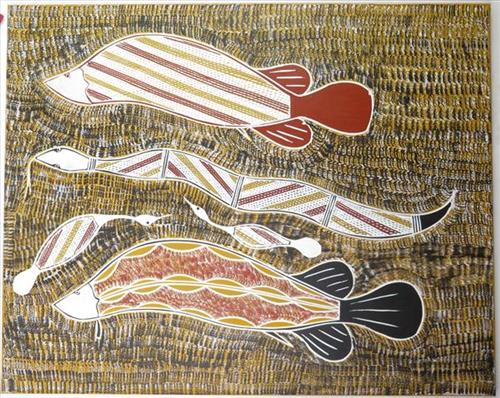
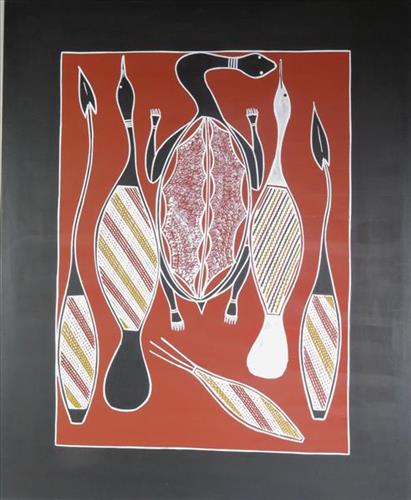
Water Snake, Brim and Diving Duck

Djilpin Arts is a not for profit Aboriginal Corporation that promotes the maintenance, development and transmission of traditional cultural knowledge systems.

Djilpin Arts specialises in art, live cultural performance, digital media, and produced the popular performance event – the Walking With Spirits Festival as well as Concerts on Country.

Djilpin Arts operates the Ghunmarn Culture Centre – home of the Blanasi Collection and offers fine arts & crafts for sale. Djilpin Arts operates an outlet in Katherine – Shed 5, where all works are sourced from Ghunmarn Culture Centre. Ghunmarn Culture Centre is in the Wugularr (Beswick) community of South East Arnhem Land.

All artworks are made by local artists living in the community. Artwork reflects the traditional songs and stories that have been passed down through the generations with a contemporary edge.  Fibre art is a special feature of Djilpin Arts as is its Gapu Series of fine art prints.

221382378624


Billabong

This painting two little diving ducks (bon bon) 1 long neck turtle, 2 waterlily and bush yam

Djilpin Arts is a not for profit Aboriginal Corporation that promotes the maintenance, development and transmission of traditional cultural knowledge systems.

Djilpin Arts specialises in art, live cultural performance, digital media, and produced the popular performance event – the Walking With Spirits Festival as well as Concerts on Country.

Djilpin Arts operates the Ghunmarn Culture Centre – home of the Blanasi Collection and offers fine arts & crafts for sale. Djilpin Arts operates an outlet in Katherine – Shed 5, where all works are sourced from Ghunmarn Culture Centre. Ghunmarn Culture Centre is in the Wugularr (Beswick) community of South East Arnhem Land.

All artworks are made by local artists living in the community. Artwork reflects the traditional songs and stories that have been passed down through the generations with a contemporary edge.  Fibre art is a special feature of Djilpin Arts as is its Gapu Series of fine art prints.

221382378623


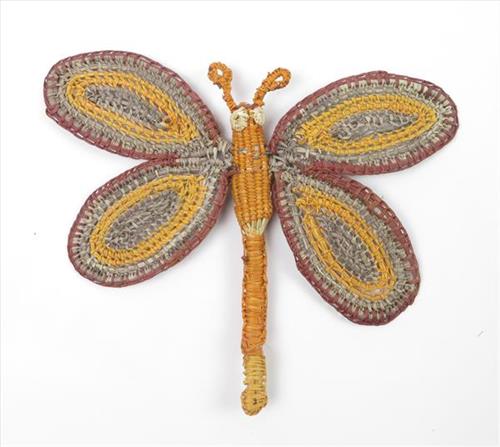
Woven Butterfly

Fibre Art is an ancient Aboriginal women’s craft that is still made today using the same techniques as their ancestors. Making fibre art is labour intensive and much care and fine needlework is required to ensure the finished object is both functional and beautiful. Fibre art from Ghunmarn Culture Centre includes dilly bags, floor mats, bush fans, woven creatures found in the landscape, plants such as yams (bush potato), baskets, place mats, and spirit figures such as mermaids and Mukuys. Natural pandanus fibre (Mukarra), is used to make much of the fibre art produced by the artists of Djilpin Arts. Women collect the pandanus by pulling from the top of the pandanus tree, then stripping and drying the leaves before they are dyed with natural bush colour collected from the Beswick surrounds.

220282378605


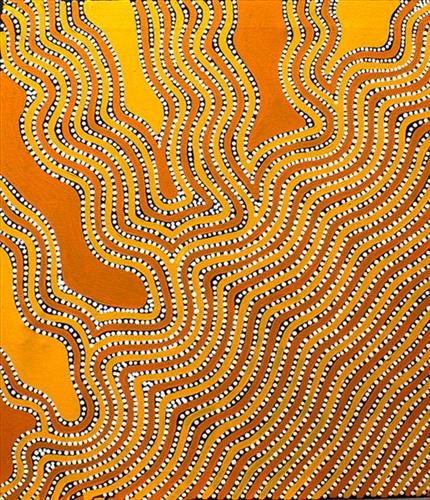
Tali at Kungkayunti

This painting shows the birds eye view of the tali tali (sandhills) at Kungkayunti (Brown’s Bore). This is the country of Joe Tjakamarra Multa, the father of Douglas Multa, Agnes Multa, Lisa Multa, Alison Multa, Rephina Multa, Benita Multa and Patricia Multa and the grandfather to their children. The tali tali are a short walk from where the family lived and the children of Joe grew up.

Lisa remembers walking up the tali tali with her sister, Agnes Multa, who was the same age as her. When Lisa got married she brought her partner to see those tali tali. From the tali tali, a 360-degree view can be seen of the surrounding country. The area is abundant with bush tucker, especially bush tomatoes and bush banana.

Kungkayunti is an important place for the travelling Tjukurrpa of the ancestral Arrernte women who travelled 600 kms from Ntaria (Hermannsburg) to Kintore, past Kulpitarra (Outstation) to attend to women’s business. Kungkayunti is the place where the women first camped. On their long journey, the women stopped at Kunkayunti (Brown’s Bore) to camp, rest, eat and dance. When the women reached their destination, they danced, shared their stories and renewed their law. Those women turned into stone and can be seen today. Annual events continue today to strengthen this Tjukurrpa.

220982378502


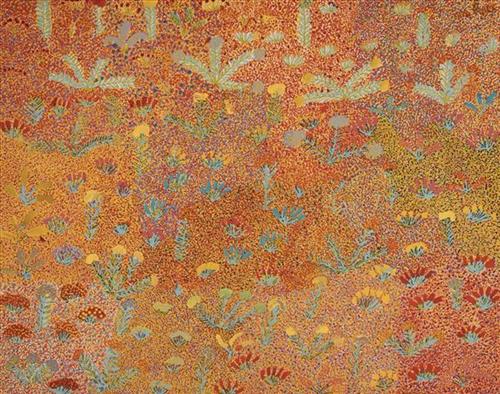
Sandra Pula Teece – Bush Medicine Plants

This is Antarrengeny Country, sandhill country, my fathers country. 

After rain the sandhills are abundant with flowers, grasses and bush medicine plants.

This painting depicts the landscape filled with arrwelth (Parakeelya flowers), alekw (Acacia plants) and aywert (spinifex grass).

107582378633


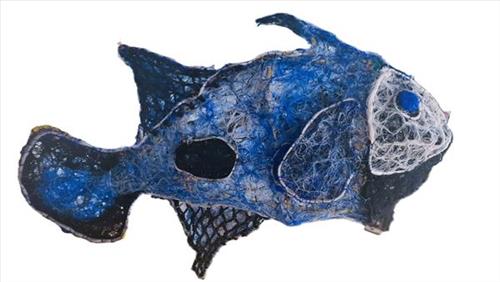
Athe Kusi

The weather so beautiful over the weekend that my husband and I decided to take our grandchildren on the dinghy to Merad. As soon as we arrived, the children played on the beach and went for a swim in the clear waters. While swimming, our grandchildren saw something blue moving in the water. They called out to us; their excitement so contagious that we immediately went to see. Casually swimming in the shallows, was a blue fish. Without a care in the world, this fish showed off all the blue tones of its body while swimming in and out of the shallows. It remained nearby until we were ready to leave Merad to go back to Erub. When we were packing the dinghy, the fish came alongside the dinghy, as if to bid us farewell back to Erub. Upon seeing this, the grandchildren then dubbed the fish “Athe Kusi” because its colour is similar to our dinghy “Athe Kusi”

114182378599


The Ngaanyatjarra Lands

‘The Ngaanyatjarra Lands’, Craig Morrison is predominantly a landscape artist depicting vibrant scenes from across the Ngaanyatjarra Lands. Craig is a self taught landscape painter taking inspiration from the Hermannsburg movement. Craig’s paintings are a celebration of the seasonal changes which bring vast site of sandhills and hills in the summer and lush foliage coming into spring. Craig enjoys exploring the lands, studying the elements of his environment with close detail. He is a great role model for younger male artists in the community.