221282382102


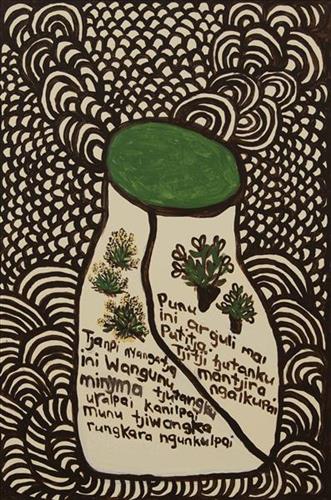
Wanguṉu and Arnguḻi

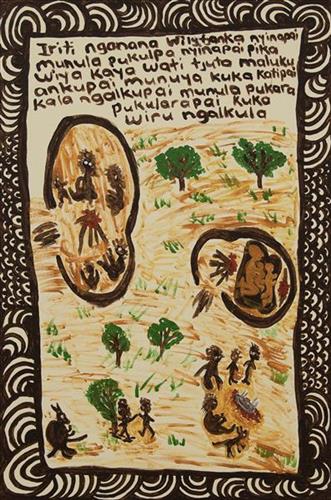
This plant is called wanguṉu (naked woollybutt, an important traditional grain). It is a seed. The women rub it in a bowl to remove the grass and keep the seeds. The women then grind it on a tjiwa (flat stone) with a tjungaṟi (round handheld grinding stone) to make a powder. They mix this powder with water and sometimes tjala (honey ants).

This tree is called arnguḻi (wild plum). Children can reach up and take the food from the tree and eat it.

221282382100


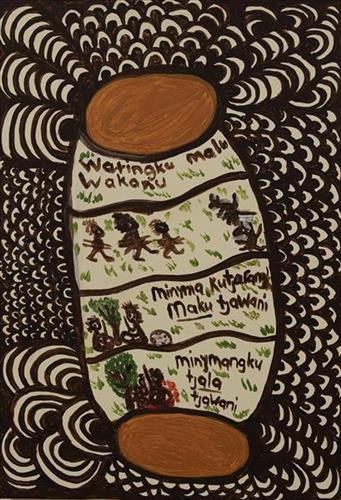
Wiltja and Malu

A long time ago we used to live in wiltjas (shelters made of wood and spinifex). We were happy and had no sicknesses. The men used to go hunting for malu (kangaroos and then bring the kuka (meat) home to the families. When we eat malu we are really happy to eat the good kuka.

377810582382093


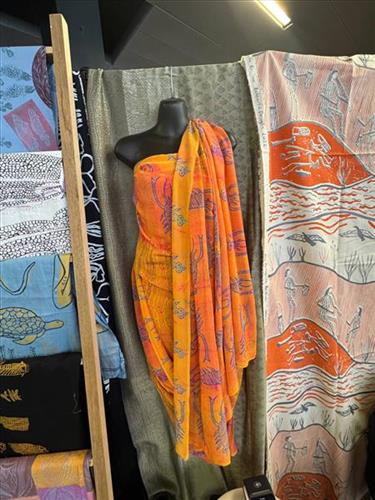
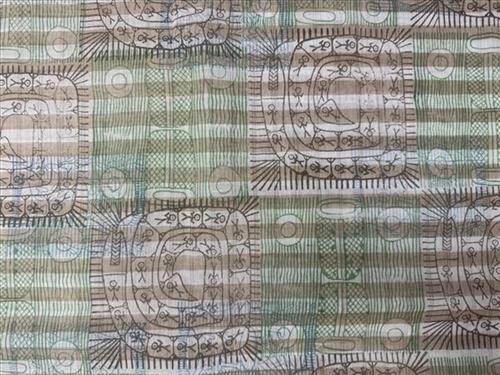
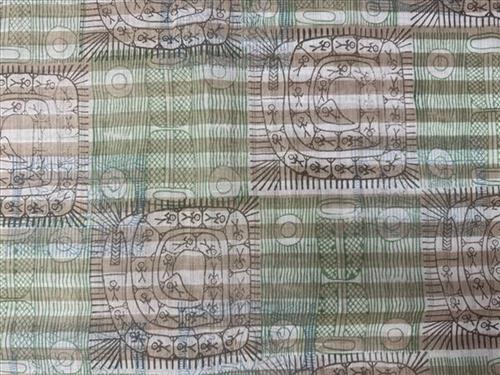
Woodblock Sari by Bábbarra X Tharangini

Woodblock print on handwoven silk, extract print with organic dyes, 100% Silk

Co-created by Bábbarra Women’s Centre, Maningrida and Tharangini Studio, India

Printed by artisans at Tharangini Studio 

Design brief by Bábbarra Women’s Centre Artists

Woodblock carving by Shri C.H. Sreeram and Shri S.K. Rajak

This fabric may feature the following woodblock designs. 

  • KUNRED MANKORLOD (MANKORLOD COUNTRY) by Janet Kalidjan Marawarr 
  • NGALNG (Freshwater Crayfish) by Janet Kalidjan Marawarr 

“I’m excited to see my Lino design made into a woodblock. We are going to spend Saturday printing with Tharangini Studio. We are going to learn woodblock printing. I’ve been working Bábbarra Women’s Centre for 37 years since it started. I’ve been printing Lino on fabric.” Janet Marawarr 2023

‘This is a story from Mankorlod. This is a djang (creation) story. This is the creation story about the freshwater yabby. Starting with the stone, that’s the raw one and the cooked one. The stone rock suddenly turned to ngalng, in a flash. Ngalng started growing and turned into a body. It’s a magic one and it can change from rock to ngalng to human and back to ngalng. Now it’s a ngalng. 

The country is near Mankorlod and Korlobididah. The ngalng is stuck there forever on the rock at Korlobididah.’ 

‘There is also duruk (camp dog) called Djanbokkon. This is a duruk that comes from water and no one has seen it. This is a true duruk, he goes everywhere in the country. His body is striped. He is a secret dog and he has a secret story.’ 

Janet Marawarr 2022


BACKGROUND

Bábbarra Women’s Centre is located in the Djelk area of Arnhem Land, in a town known as Maningrida and was established in 1987. We represent over 50 women artists from 12 languages and operate under the First Nations-owned Bawinanga Homelands Aboriginal Corporation. The artists at Bábbarra Women’s Centre design screen printed and lino print textiles that illustrate the djang or rich cultural narratives, histories and powerful creation stories of West Arnhem Land. The tradition of lino printing began in the mid-1990s as a way for women to become economically empowered.

Tharangini Studio was established in 1977 in Bangalore by artist and textile enthusiast Lakshmi Srivathsa. Today, it is managed by Srivathsa’s daughter, Padmini Govind, whose global corporate career in technology and defence has led to ingenious eco-friendly printing practices within the lush tropical locale. Under Padmini’s leadership, Tharangini is the only artisan studio with a NEST Ethical Seal of Compliance (fair trade). As the last surviving heritage block print studio in Bangalore, Tharangini is home to one of the largest private archives of vintage woodblocks in India

“Karri-djarrk-durrkmirri means “We work together” in the Kuninjku language of West Arnhem Land and it’s more than cultural exchange with India, it is two way learning.

Tharangini’s skilled artisans worked closely with Babbarra in 2023-2025 to hand-carve some of Babbarra’s old linocut designs into woodblocks. This initiative was supported by the Centre for Australia-India Relations, Maitri Cultural Partnerships Fund 2023.

The creative relationship not only serves art but it also informs a practical and critical archival outcome for Babbarra Women’s Centre. The walls of Tharangini Studio were neatly lined with boxes of durable woodblocks and many over 200 years old and still being printed. At Bábbarra, we house cupboards and shelves of historic and vulnerable lino tiles, some 30 years old but no longer able to be printed. Tharangini Studio specialises in woodblocks carved out of teak by master artisans, creating a solid medium for textile printing. For Bábbarra Women’s Centre artists, this had the added benefit of preserving the original lino designs. Many lino sheets are crumbling and decaying, a process hastened by the kudjewk (wet season) and humid kurrung (build up).

Combining the cultural authority to share djang and print-making practices at Bábbarra Women’s Centre with the tradition of woodblock printing in India, the project exchanges many thousands of years of knowledge across the globe. The Bábbarra artists, as custodians of these designs, must receive permission from their djungkays (ritual manager through the maternal line) to share their stories.

This connection will undoubtedly sustain a lasting and significant impact on the legacy and longevity of Bábbarra Women’s Centre. The story doesn’t end here in honour of the generosity shown by Tharangini Studio, Padmini Govind will join Babbarra Women’s Centre artists in Maningrida for a workshop in June 2025.” 

Extract taken from Karri-djarrk-durrkmirri catalogue essay, Jessica Stalenberg 2025
377810582382091


Woodblock Sari by Bábbarra X Tharangini

Woodblock print on handwoven silk, extract print with organic dyes, 100% Silk

Co-created by Bábbarra Women’s Centre, Maningrida and Tharangini Studio, India

Printed by artisans at Tharangini Studio 

Design brief by Bábbarra Women’s Centre Artists

Woodblock carving by Shri C.H. Sreeram and Shri S.K. Rajak

This fabric may feature the following woodblock designs. 

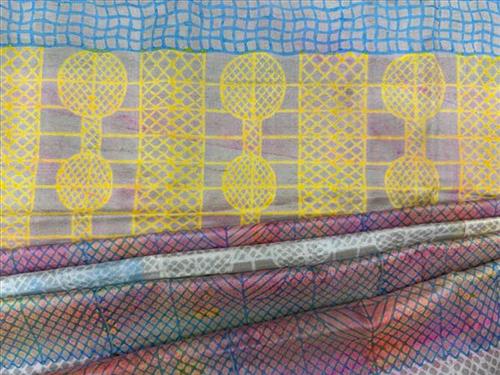
  • RARRK (CROSS HATCH) by Susan Belinj Marawarr
  • WAK WAK (BLACK CROW DREAMING) A Susan Belinj Marawarr
  • WAK WAK (BLACK CROW DREAMING) B Susan Belinj Marawarr

This design depicts a sacred site at Kurrurldul, an outstation south of Maningrida. The original screen print design was made in 2010 but continues to be printed at Babbarra Designs studio. 

The ‘rarrk’, or abstract crosshatching, on this work represents the design for the crow totem ancestor called Djimarr. Today this being exists in the form of a rock, which is permanently submerged at the bottom of Kurrurldul Creek. The Djimarr rock in the stream at Kurrurldul is said to move around and call out in a soft hooting tone at night. Both the stone itself and the area around it are considered sacred.

The imagery represents the Djimarr rock at the bottom of Kurrurldul creek – the final transmutation of the Djimarr ancestor being. It also references the crow design used in the sacred Mardayin ceremony, a large regional patrimony ceremony now rarely conducted in central and eastern Arnhem Land.


BACKGROUND

Bábbarra Women’s Centre is located in the Djelk area of Arnhem Land, in a town known as Maningrida and was established in 1987. We represent over 50 women artists from 12 languages and operate under the First Nations-owned Bawinanga Homelands Aboriginal Corporation. The artists at Bábbarra Women’s Centre design screen printed and lino print textiles that illustrate the djang or rich cultural narratives, histories and powerful creation stories of West Arnhem Land. The tradition of lino printing began in the mid-1990s as a way for women to become economically empowered.

Tharangini Studio was established in 1977 in Bangalore by artist and textile enthusiast Lakshmi Srivathsa. Today, it is managed by Srivathsa’s daughter, Padmini Govind, whose global corporate career in technology and defence has led to ingenious eco-friendly printing practices within the lush tropical locale. Under Padmini’s leadership, Tharangini is the only artisan studio with a NEST Ethical Seal of Compliance (fair trade). As the last surviving heritage block print studio in Bangalore, Tharangini is home to one of the largest private archives of vintage woodblocks in India

“Karri-djarrk-durrkmirri means “We work together” in the Kuninjku language of West Arnhem Land and it’s more than cultural exchange with India, it is two way learning.

Tharangini’s skilled artisans worked closely with Babbarra in 2023-2025 to hand-carve some of Babbarra’s old linocut designs into woodblocks. This initiative was supported by the Centre for Australia-India Relations, Maitri Cultural Partnerships Fund 2023.

The creative relationship not only serves art but it also informs a practical and critical archival outcome for Babbarra Women’s Centre. The walls of Tharangini Studio were neatly lined with boxes of durable woodblocks and many over 200 years old and still being printed. At Bábbarra, we house cupboards and shelves of historic and vulnerable lino tiles, some 30 years old but no longer able to be printed. Tharangini Studio specialises in woodblocks carved out of teak by master artisans, creating a solid medium for textile printing. For Bábbarra Women’s Centre artists, this had the added benefit of preserving the original lino designs. Many lino sheets are crumbling and decaying, a process hastened by the kudjewk (wet season) and humid kurrung (build up).

Combining the cultural authority to share djang and print-making practices at Bábbarra Women’s Centre with the tradition of woodblock printing in India, the project exchanges many thousands of years of knowledge across the globe. The Bábbarra artists, as custodians of these designs, must receive permission from their djungkays (ritual manager through the maternal line) to share their stories.

This connection will undoubtedly sustain a lasting and significant impact on the legacy and longevity of Bábbarra Women’s Centre. The story doesn’t end here in honour of the generosity shown by Tharangini Studio, Padmini Govind will join Babbarra Women’s Centre artists in Maningrida for a workshop in June 2025.” 

Extract taken from Karri-djarrk-durrkmirri catalogue essay, Jessica Stalenberg 2025
221282382081


Ngayuku Walka / My Design

Walka means design or pattern. Artists use this title to describe artworks that are pattern based rather than descriptive or telling a story.

377810582382068


Woodblock Sari by Bábbarra X Tharangini

Woodblock print on handwoven silk, extract print with organic dyes, 100% Silk

Co-created by Bábbarra Women’s Centre, Maningrida and Tharangini Studio, India

Printed by artisans at Tharangini Studio 

Design brief by Bábbarra Women’s Centre Artists

Woodblock carving by Shri C.H. Sreeram and Shri S.K. Rajak

This fabric may feature the following woodblock designs. 

  • LORRKON (Hollow logs) by Raylene Bonson and Joy Garlbin
  • MANDJABU (FISH TRAP) by Raylene Bonson
  • RAINBOW SERPENT AND BAWALIBA by Verity Bangarra

BACKGROUND

Bábbarra Women’s Centre is located in the Djelk area of Arnhem Land, in a town known as Maningrida and was established in 1987. We represent over 50 women artists from 12 languages and operate under the First Nations-owned Bawinanga Homelands Aboriginal Corporation. The artists at Bábbarra Women’s Centre design screen printed and lino print textiles that illustrate the djang or rich cultural narratives, histories and powerful creation stories of West Arnhem Land. The tradition of lino printing began in the mid-1990s as a way for women to become economically empowered.

Tharangini Studio was established in 1977 in Bangalore by artist and textile enthusiast Lakshmi Srivathsa. Today, it is managed by Srivathsa’s daughter, Padmini Govind, whose global corporate career in technology and defence has led to ingenious eco-friendly printing practices within the lush tropical locale. Under Padmini’s leadership, Tharangini is the only artisan studio with a NEST Ethical Seal of Compliance (fair trade). As the last surviving heritage block print studio in Bangalore, Tharangini is home to one of the largest private archives of vintage woodblocks in India

“Karri-djarrk-durrkmirri means “We work together” in the Kuninjku language of West Arnhem Land and it’s more than cultural exchange with India, it is two way learning.

Tharangini’s skilled artisans worked closely with Babbarra in 2023-2025 to hand-carve some of Babbarra’s old linocut designs into woodblocks. This initiative was supported by the Centre for Australia-India Relations, Maitri Cultural Partnerships Fund 2023.

The creative relationship not only serves art but it also informs a practical and critical archival outcome for Babbarra Women’s Centre. The walls of Tharangini Studio were neatly lined with boxes of durable woodblocks and many over 200 years old and still being printed. At Bábbarra, we house cupboards and shelves of historic and vulnerable lino tiles, some 30 years old but no longer able to be printed. Tharangini Studio specialises in woodblocks carved out of teak by master artisans, creating a solid medium for textile printing. For Bábbarra Women’s Centre artists, this had the added benefit of preserving the original lino designs. Many lino sheets are crumbling and decaying, a process hastened by the kudjewk (wet season) and humid kurrung (build up).

Combining the cultural authority to share djang and print-making practices at Bábbarra Women’s Centre with the tradition of woodblock printing in India, the project exchanges many thousands of years of knowledge across the globe. The Bábbarra artists, as custodians of these designs, must receive permission from their djungkays (ritual manager through the maternal line) to share their stories.

This connection will undoubtedly sustain a lasting and significant impact on the legacy and longevity of Bábbarra Women’s Centre. The story doesn’t end here in honour of the generosity shown by Tharangini Studio, Padmini Govind will join Babbarra Women’s Centre artists in Maningrida for a workshop in June 2025.” 

Extract taken from Karri-djarrk-durrkmirri catalogue essay, Jessica Stalenberg 2025
377810582382067


Woodblock Sari by Bábbarra X Tharangini

Woodblock print on handwoven silk, extract print with organic dyes, 100% Silk

Co-created by Bábbarra Women’s Centre, Maningrida and Tharangini Studio, India

Printed by artisans at Tharangini Studio 

Design brief by Bábbarra Women’s Centre Artists

Woodblock carving by Shri C.H. Sreeram and Shri S.K. Rajak

This fabric may feature the following woodblock designs. 

  • LORRKON (Hollow logs) by raylene Bonson and Joy Garlbin
  • MANDJABU (FISH TRAP) by Raylene Bonson
  • RAINBOW SERPENT AND BAWALIBA by Verity Bangarra


BACKGROUND

Bábbarra Women’s Centre is located in the Djelk area of Arnhem Land, in a town known as Maningrida and was established in 1987. We represent over 50 women artists from 12 languages and operate under the First Nations-owned Bawinanga Homelands Aboriginal Corporation. The artists at Bábbarra Women’s Centre design screen printed and lino print textiles that illustrate the djang or rich cultural narratives, histories and powerful creation stories of West Arnhem Land. The tradition of lino printing began in the mid-1990s as a way for women to become economically empowered.

Tharangini Studio was established in 1977 in Bangalore by artist and textile enthusiast Lakshmi Srivathsa. Today, it is managed by Srivathsa’s daughter, Padmini Govind, whose global corporate career in technology and defence has led to ingenious eco-friendly printing practices within the lush tropical locale. Under Padmini’s leadership, Tharangini is the only artisan studio with a NEST Ethical Seal of Compliance (fair trade). As the last surviving heritage block print studio in Bangalore, Tharangini is home to one of the largest private archives of vintage woodblocks in India

“Karri-djarrk-durrkmirri means “We work together” in the Kuninjku language of West Arnhem Land and it’s more than cultural exchange with India, it is two way learning.

Tharangini’s skilled artisans worked closely with Babbarra in 2023-2025 to hand-carve some of Babbarra’s old linocut designs into woodblocks. This initiative was supported by the Centre for Australia-India Relations, Maitri Cultural Partnerships Fund 2023.

The creative relationship not only serves art but it also informs a practical and critical archival outcome for Babbarra Women’s Centre. The walls of Tharangini Studio were neatly lined with boxes of durable woodblocks and many over 200 years old and still being printed. At Bábbarra, we house cupboards and shelves of historic and vulnerable lino tiles, some 30 years old but no longer able to be printed. Tharangini Studio specialises in woodblocks carved out of teak by master artisans, creating a solid medium for textile printing. For Bábbarra Women’s Centre artists, this had the added benefit of preserving the original lino designs. Many lino sheets are crumbling and decaying, a process hastened by the kudjewk (wet season) and humid kurrung (build up).

Combining the cultural authority to share djang and print-making practices at Bábbarra Women’s Centre with the tradition of woodblock printing in India, the project exchanges many thousands of years of knowledge across the globe. The Bábbarra artists, as custodians of these designs, must receive permission from their djungkays (ritual manager through the maternal line) to share their stories.

This connection will undoubtedly sustain a lasting and significant impact on the legacy and longevity of Bábbarra Women’s Centre. The story doesn’t end here in honour of the generosity shown by Tharangini Studio, Padmini Govind will join Babbarra Women’s Centre artists in Maningrida for a workshop in June 2025.” 

Extract taken from Karri-djarrk-durrkmirri catalogue essay, Jessica Stalenberg 2025
221282382058


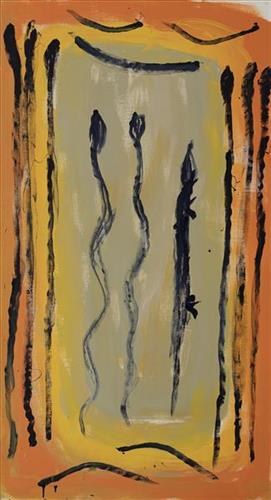
Kulata Tjuta – Kungkarangkalpa Freddy’s Story

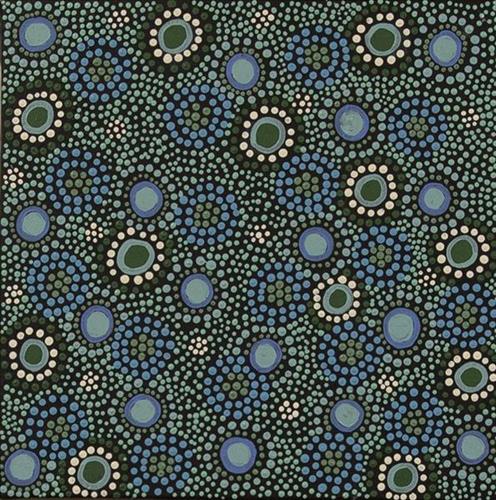
Kungkarangkalpa means the Seven Sisters. This is an extensive creation story that relates to the Pleiades constellation in the southern hemisphere. The story traverses Australia taking on different forms, however Freddy’s part of the story is from his father’s country west of Atila (Mt Connor). For this part of the story a man called Nyiru is chasing the sisters as he wants to sleep with the oldest sister. All the younger sisters are deeply afraid of him. 

Nyiru makes kulata tjuta (many spears) and leaves them leaning up against a tree. When the sisters are travelling they find the spears resting there and realise that the wati kura (bad man) is nearby. They get frightened and run away. Eventually, to escape Nyiru, the sisters fly into the sky where they turn into stars and form the constellation.

111582382363


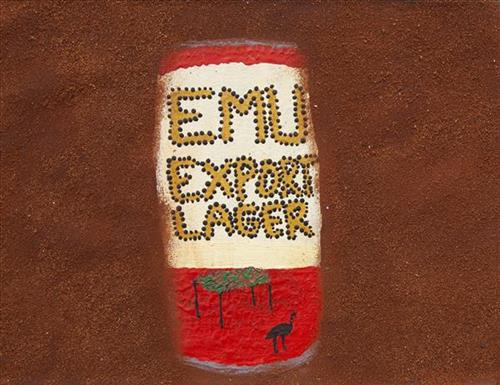
Emu Export Lager

In these reproduction prints of original paintings, Curtis Taylor subverts the concept of ‘Bush Tucker’, in depicting staple pantry items of the Martu diet, alongside familiar Australian food products. In his imagery, Curtis draws inspiration from the iconic Campbell’s Soup prints by Andy Warhol, which have become a recognisable symbol of Pop Art. Curtis’ art takes a unique twist, elevating everyday foods and items into vibrant expressions of contemporary Aboriginal culture, akin to traditional food sources valued by Martu. Curtis explores his relationship with food as a powerful symbol of shared experience, nostalgia, and food sovereignty- particularly when considered within the context of a cost-of-living crisis, which is felt particularly acutely in remote Aboriginal communities.