220182386423
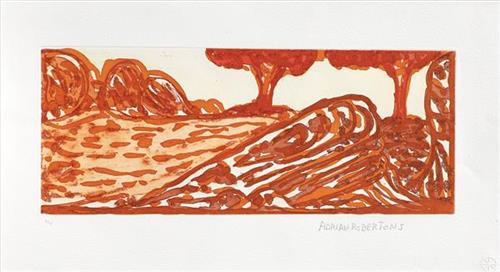
Yalpirakinu
Yalpirakinu is Adrian’s mother’s country. Adrian’s mother is the late Eunice Napangardi, a well known painter herself. His artworks consistently refer to the desert mountains, ridges and trees which are part of Yalpirakinu. Using a restricted colour palette, Adrian’s brushwork is loaded with energy, drama and memories. He is a deliberate and thoughtful painter; reworking, pushing and pulling the image to completion.
220982386267
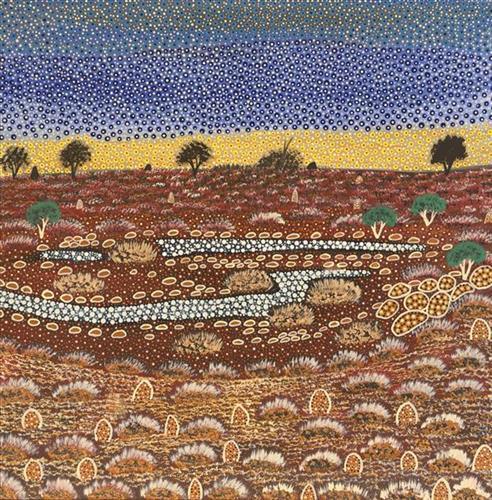
Jacinta Pula Morrison – View of Country
This painting shows the layered landscape of Alyawarr, Central Australia. Knowing your country is an important part of living in a remote community like Ampilatwatja. Knowing when and where to go hunting and gathering, knowing where there is ‘soakage’ (where you can dig for water), travelling with family for ceremonies, and maintaining a connection with the land.
“This is my country, my view of country.”
The community of Ampilatwatja made a conscious decision not to paint altyerr (dreaming stories). The artists paint their country where those stories sit.
220982386255
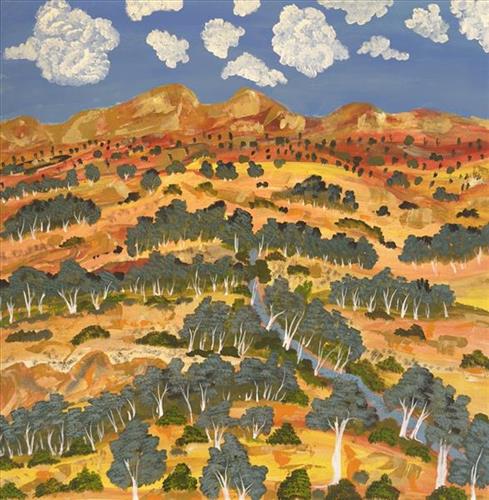
Elizabeth Ngwarraye Bonney – My Grandmothers Country
I still hunt my Grand Mothers country for goanna, bush medicine and yams.
I hunt all year round, hunting and walking through the country makes me happy. When I look at the distant hills I can feel my grandmother. Bush flowers are everywhere.
Painting and printing my grandmother’s country reminds about those times.
116482386392
Pilbara Hills
In our country we have many hills of all different shapes and sizes. When driving through country at different times the colours change and some of the hills look like velvet in the evening and morning light .
116482386390
Dry River Soaks
These are the dry soaks of my country before the rain comes. Even when the country is dry there is still beauty.

377816082386374
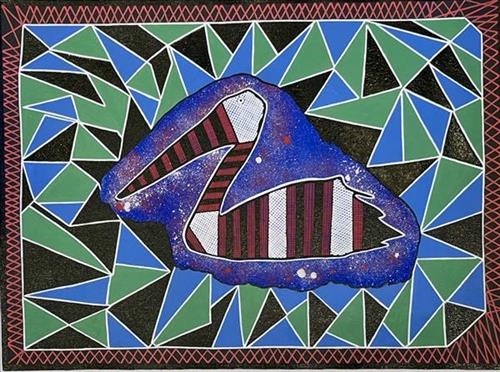
Borun
Borun meand Pelican in GunaiKurnai langauge

377816082386371
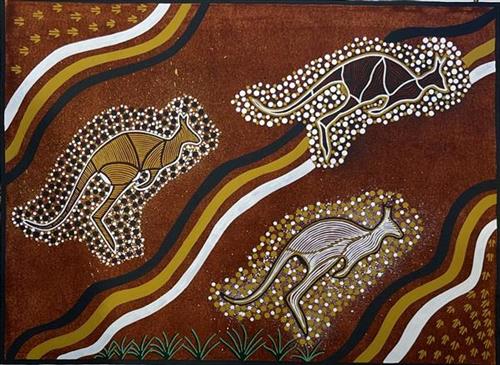
Jirrah’s
Jirrah’s meaning Kangaroo in GunaiKurnai Langauge
111582386311
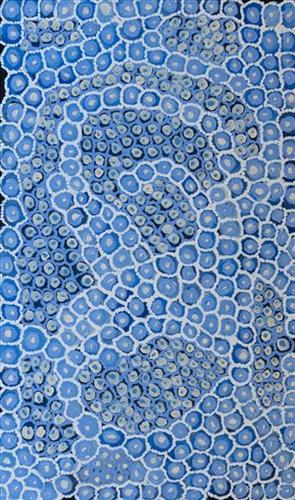
Kapi, Kalyu (Water)
“Martu people know how to find water in the desert, they know the Country looks different where there is water under the ground.”
– Corban Clause Williams
Depicted in this work are sources of kapi (water) within the artists’ ngurra (home Country, camp), typically represented with circular forms. During the pujiman (traditional, desert dwelling) period, knowledge of water sources was critical for survival, and today Martu Country is still defined in terms of the location and type of water. Each of the hundreds of claypans, rockholes, waterholes, soaks and springs found in the Martu desert homelands is known through real life experience and the recounting of Jukurrpa (Dreaming) narratives by name, location, quality and seasonal availability. This encyclopedic knowledge extends even to the nature and movement of arterial waterways, and sustained Martu as they travelled across their Country, hunting and gathering, visiting family, and fulfilling ceremonial obligations. They would traverse very large distances annually, visiting specific areas in the dry and wet season depending on the availability of water and the corresponding cycles of plant and animal life on which hunting and gathering bush tucker was reliant.