220281982583


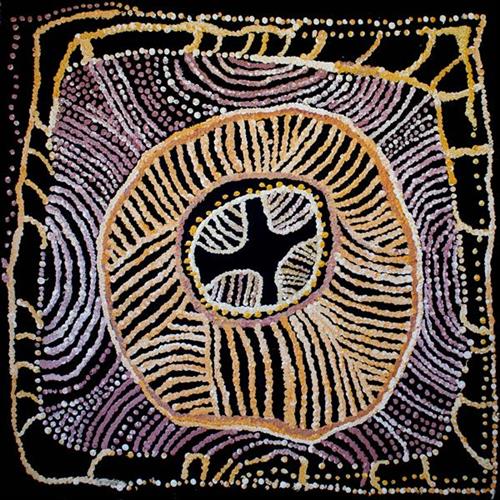
Kuruyultu

In this print Eunice depicts her father’s Tjukurrpa (Dreaming). It shows the country at Kuruyultu, near Tjukurrla in Western Australia.

Eunice Napanangka Jack says about the artwork:

‘This is my country. I can’t remember how it all happened, because it happened before I was born. I have a scar on my back from it. My grandfather speared a wallaby at Kuruyultu. That night he ate that wallaby. At the same time my mother could feel me moving inside her. She was heavily pregnant with me. That next morning, after my grandfather had speared the wallaby, killed it and eaten it, I was born. I was born at Kuruyultu, near the rockhole there. I can’t remember my grandfather or my grandmother. I was still a little baby. We left that place, Kuruyultu. My father, my mother, my big sister and my father’s brother, we all left together and went to Haasts Bluff. I grew up in Haasts Bluff. I have been back to Kuruyultu for visits but I never lived there again in my country. I think about it every day. Only my father knows all the stories for that country and he painted them too… all the men’s stories. I know the story of the wallaby mother and daughter which left me with a birthmark. That’s what I paint: the wallaby mother and daughter.’

 

220282055518


Tjilkamala – Porcupine rockhole

This is the story of Tjilkamala – the porcupine man. He is travelling around Talaalpi, west of Kintore and is looking for ants. He digs for them in the ground and creates holes. Meanwhile tracking behind him are women out hunting, hoping to make the porcupine their tucker for the evening. These holes fill with water after the rain and with the morning dew. Over many years they have become rockholes.
This work is the story of Alice’s personal Tjukurrpa (Dreaming) – the Porcupine. The setting is the rockholes in and around the swamp of Talaalpi in Western Australia.

220282055513


Tjilkamala – Porcupine rockhole

This is the story of Tjilkamala – the porcupine man. He is travelling around Talaalpi, west of Kintore and is looking for ants. He digs for them in the ground and creates holes. Meanwhile tracking behind him are women out hunting, hoping to make the porcupine their tucker for the evening. These holes fill with water after the rain and with the morning dew. Over many years they have become rockholes.
This work is the story of Alice’s personal Tjukurrpa (Dreaming) – the Porcupine. The setting is the rockholes in and around the swamp of Talaalpi in Western Australia.

114182159633


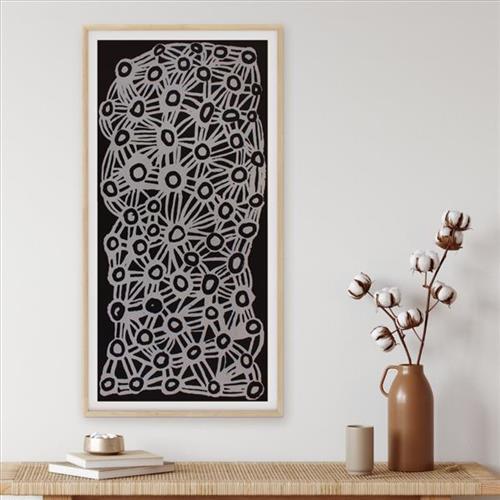
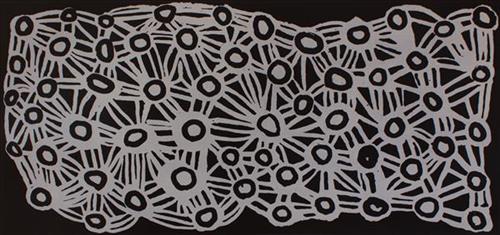
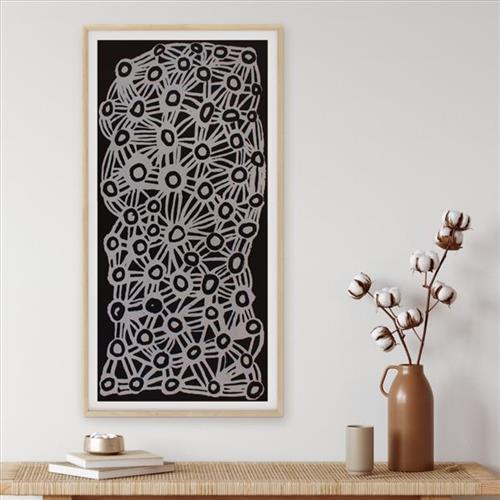
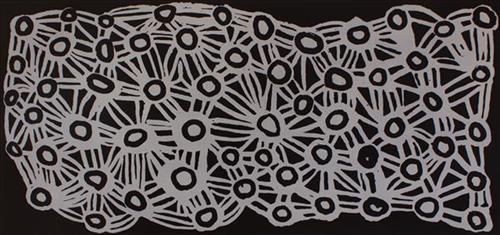
Kapi Tjukurla (Tjukurla Rock holes)

Kapi Tjukurla is a sacred women’s site where the sisters came to drink water from the rock hole. Knowledge of where to find Kapi Tjukurla was handed down through generations as it is a significant source in times of drought.

The kapi across the lands vary in size from as large as a car to as small as a deep kitchen sink. They can be found buried in the flat rock surface on the ground, at the bottom of a waterfall or among the ranges where there is an expanse of flat rock surface. Yarnangu kept these rock holes clear of dirt build up, dead animals and debris so the water can remain drinkable. These rock holes are still only used specifically for drinking and cooking when people go out on country. 

The circles in the painting represent Kapi Tjukurla. The lines connecting the circles are the creeks, streams or paths the water takes when it rains.

220282196561


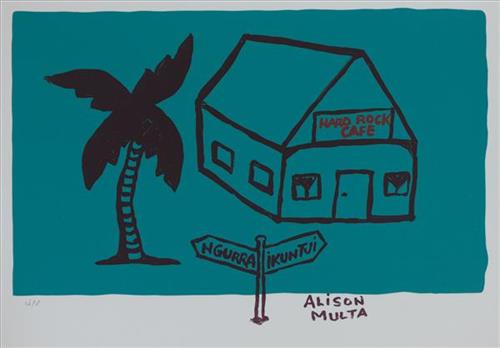
Station House at Ikuntji

This print shows the old station house at Ikuntji with a hard rock cafe hanging over the door. The print reminds everyone of what this historical building looked like in the 1990s.

220282196559


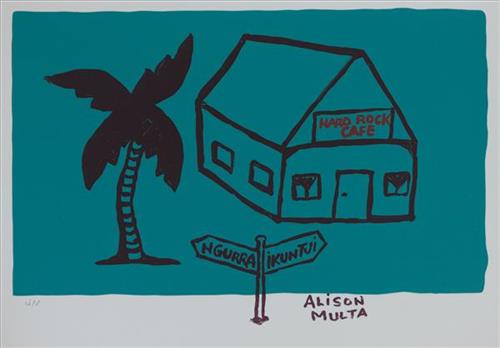
Station House at Ikuntji

This print shows the old station house at Ikuntji with a hard rock cafe hanging over the door. The print reminds everyone of what this historical building looked like in the 1990s.

220282196543


Kungkayunti – Women Dancing

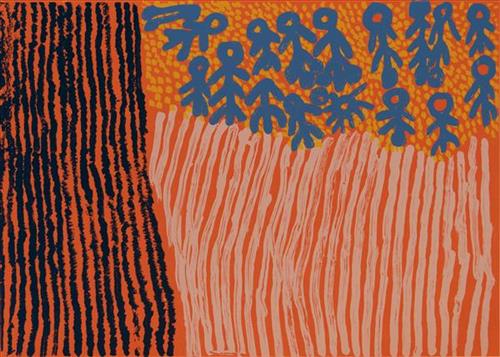
The artist’s birthplace is Edmond Bore, which is near Kungkayunti (Brown’s Bore) south of Ikuntji/Haasts Bluff. This painting shows the artist’s Tjukurrpa (Dreaming), Kungkayunti, the place where all the ancestral Arrernte women come to rest after travelling from Ntaria (Hermannsburg) to Kintore and past Kulpitarra (Outstation). There, they dance, share their stories and renew their law. The women turned into stone, where you still can see them today. Anmanari describes the tracks of all the women. Kungkayunti (women dancing) is the name of the place that the women first camped. They were on a journey, on their way to womens business.

220282196542


Kungkayunti – Women Dancing

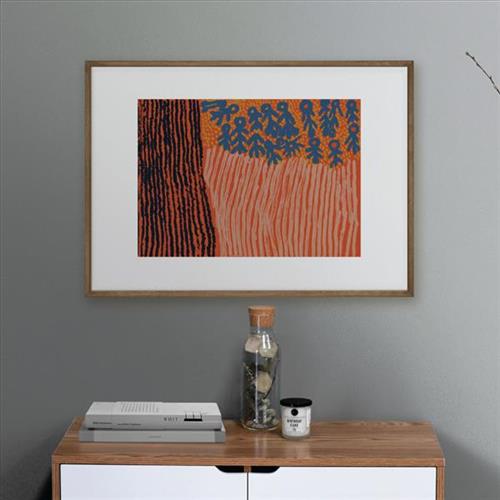
The artist’s birthplace is Edmond Bore, which is near Kungkayunti (Brown’s Bore) south of Ikuntji/Haasts Bluff. This painting shows the artist’s Tjukurrpa (Dreaming), Kungkayunti, the place where all the ancestral Arrernte women come to rest after travelling from Ntaria (Hermannsburg) to Kintore and past Kulpitarra (Outstation). There, they dance, share their stories and renew their law. The women turned into stone, where you still can see them today. Anmanari describes the tracks of all the women. Kungkayunti (women dancing) is the name of the place that the women first camped. They were on a journey, on their way to womens business.

220282196533


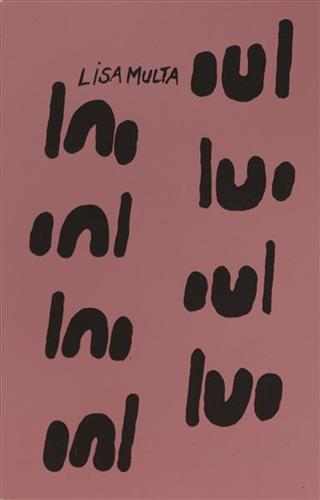
Tali at Kungkayunti

This painting shows the birds eye view of the tali tali (sandhills) at Kungkayunti (Brown’s Bore). This is the country of Joe Tjakamarra Multa, the father of Douglas Multa, Agnes Multa, Lisa Multa, Alison Multa, Rephina Multa, Benita Multa and Patricia Multa and the grandfather to their children. The tali tali are a short walk from where the family lived and the children of Joe grew up.

Lisa remembers walking up the tali tali with her sister, Agnes Multa, who was the same age as her. When Lisa got married she brought her partner to see those tali tali. From the tali tali, a 360-degree view can be seen of the surrounding country. The area is abundant with bush tucker, especially bush tomatoes and bush banana.

Kungkayunti is an important place for the travelling Tjukurrpa of the ancestral Arrernte women who travelled 600 kms from Ntaria (Hermannsburg) to Kintore, past Kulpitarra (Outstation) to attend to women’s business. Kungkayunti is the place where the women first camped. On their long journey, the women stopped at Kunkayunti (Brown’s Bore) to camp, rest, eat and dance. When the women reached their destination, they danced, shared their stories and renewed their law. Those women turned into stone and can be seen today. Annual events continue today to strengthen this Tjukurrpa.

220282196532


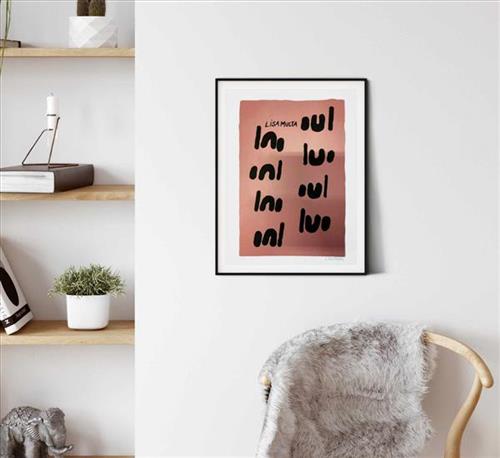
Tali at Kungkayunti

This painting shows the birds eye view of the tali tali (sandhills) at Kungkayunti (Brown’s Bore). This is the country of Joe Tjakamarra Multa, the father of Douglas Multa, Agnes Multa, Lisa Multa, Alison Multa, Rephina Multa, Benita Multa and Patricia Multa and the grandfather to their children. The tali tali are a short walk from where the family lived and the children of Joe grew up.

Lisa remembers walking up the tali tali with her sister, Agnes Multa, who was the same age as her. When Lisa got married she brought her partner to see those tali tali. From the tali tali, a 360-degree view can be seen of the surrounding country. The area is abundant with bush tucker, especially bush tomatoes and bush banana.

Kungkayunti is an important place for the travelling Tjukurrpa of the ancestral Arrernte women who travelled 600 kms from Ntaria (Hermannsburg) to Kintore, past Kulpitarra (Outstation) to attend to women’s business. Kungkayunti is the place where the women first camped. On their long journey, the women stopped at Kunkayunti (Brown’s Bore) to camp, rest, eat and dance. When the women reached their destination, they danced, shared their stories and renewed their law. Those women turned into stone and can be seen today. Annual events continue today to strengthen this Tjukurrpa.