

114182348183
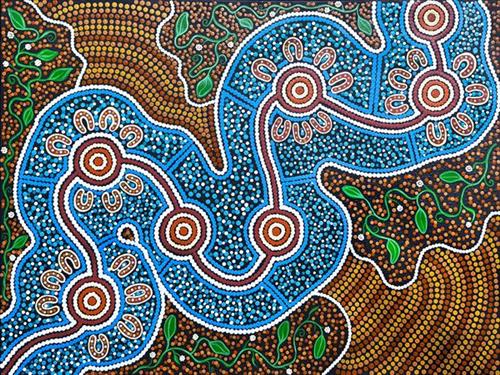
Kungkarrangkalpa (Seven Sisters)
‘Kungkarrangkalpa’ (The Seven Sisters or Pleaides) is significant Tjukurrpa (dreamtime). Its origins you may be familiar with in astronomy and its connection to ‘Wati Nyiru’ (Magic Man or Orion). The roots of this dreaming stems across indigenous groups around the world. The Australian Aboriginal songline is one part to the whole dreaming which can be traced all around the world. The ladies of the Ngaanyatjarra Lands depict their significant chapter and understanding of the journey of the sisters. The different versions of this story depend on where you live and the significance’s of local Tjukurrpa places.
Nyiru fell in love with the sisters but he was of the wrong skin group to marry, but he still pursued them on their journey. The sisters travel across the land to escape Nyiru’s unwanted attentions, but he is persistent and always finds them. There are significant land forms which can be sited today that evidence this dreaming. As Nyiru is chasing the sisters he tries to catch them by using magic to turn into the most tempting kampurarrpa (bush tomato) and the most beautiful Yirli (wild fig tree), for them to eat and camp under. However, the sisters are knowledgeable of his magic and too clever for Nyiru who they outwit again and again. They go hungry and run through the night rather than be caught by him. As the journey continues, Nyiru gets so frustrated at the wit of the sisters that he uses his magic to make the oldest sister sick to try and get closer to her. The other sisters rescue the big sister and nurse her back to health. It is said he also captures the youngest sister, but with the help of the oldest sister, she escapes back to her sisters who are waiting for her. Eventually, the sisters fly into the sky to escape Nyiru, forming the constellation. Nyiru felt lonely, longing for the sisters who were so far away. Nyiru used his magic to go to the sky, forever in pursuit.

114182351408
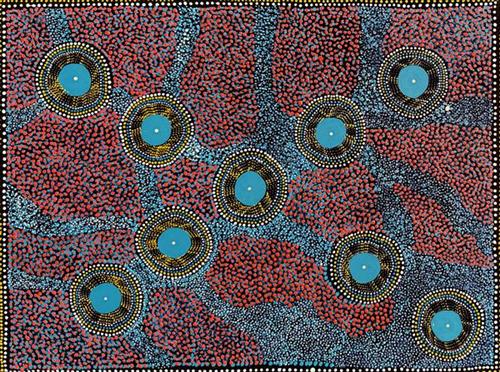
Kapi Tjukurla (Tjukurla Rock holes)
Kapi Tjukurla is a sacred women’s site where the sisters came to drink water from the rock hole. Knowledge of where to find Kapi Tjukurla was handed down through generations as it is a significant source in times of drought.
The kapi across the lands vary in size from as large as a car to as small as a deep kitchen sink. They can be found buried in the flat rock surface on the ground, at the bottom of a waterfall or among the ranges where there is an expanse of flat rock surface. Yarnangu kept these rock holes clear of dirt build up, dead animals and debris so the water can remain drinkable. These rock holes are still only used specifically for drinking and cooking when people go out on country.
The circles in the painting represent Kapi Tjukurla. The lines connecting the circles are the creeks, streams or paths the water takes when it rains.

114182352995
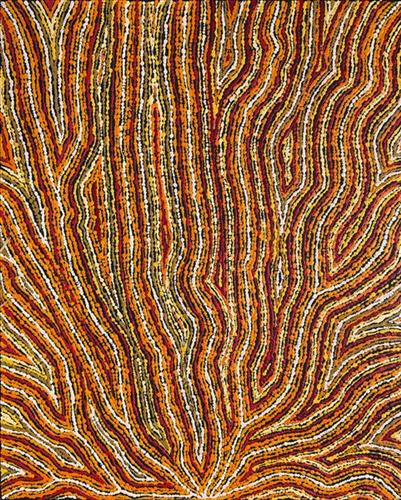
Sharon Doolan – My Grandfather’s Country
This painting depicts Sharon’s Grandfather’s country. This place is in the Witura National Park on the Northern Territory and South Australia border just south of Finke. This area is a beautiful place with plenty of water. There are many trees, lakes and swimming holes.
220982355888
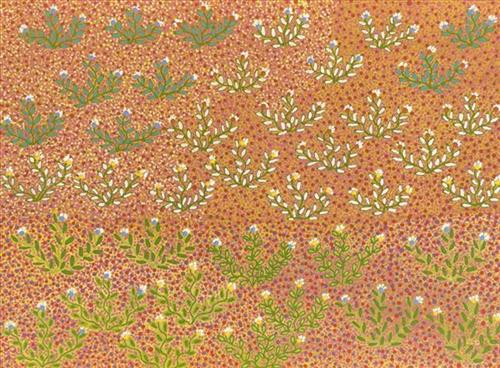
Dakota Ngwarraye Petrick – Bush Flowers
These bush flowers grow seasonly in Alyawarr country, some of which are also used in bush medicine remedies.
My twin sister Lotoya and I have just started painting, our grandmother Elizabeth Ngwarraye Bonney has been teaching us, she tells us all about the bush Flowers and bush medicine.
The artists of Ampilatwatja made a conscious decision not to paint altyerr (dreaming stories). The artists paint their country where those stories sit.

220282356768
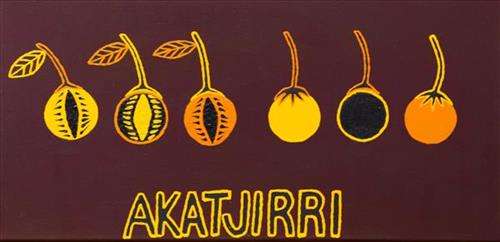
Akatjiri – Bush Sultana
“Akatjiri is not always in season. Only after they make a big bush fire and it rains, afterward there’s more akatjiri plant, people go hunting and collect it. I do akatjiri painting because it is my favourite to eat. When it’s brown and dry it’s like a sultana, when it’s there in a tree it’s yellow and tastes like a cherry tomato. When it’s green you can’t eat it. When you eat lots of akatjiri that means cleaning the stomach, good for the stomach. I done this painting about akatjiri around my Grandmother’s Country in Watiyawanu (Mount Leibig area). Her name was Ngatawina Ruby Nangala.” – Joyce Dixon

377814682360576
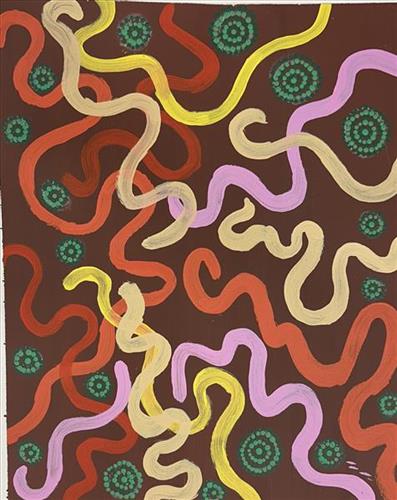
Seven Sisters
By Kaylene Daniels in memory of her mum
220982362718
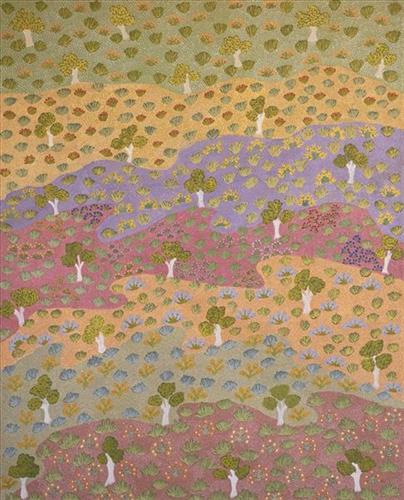
Edie Kemarre Holmes – Antarrengeny
Edie depicts Antarrengeny when there has been no rain and the land shimmers like jewels. It is the open flat country, after a bushfire, when only the young grasses and the trees are growing and where there is good hunting.”
Antarrengeny is Edie’s country and also her Father’s.
Edie has a strong connection to Antarrengeny. She gave birth to two of her daughters out bush on this land. It is her country and she loves it dearly.

377814682365607
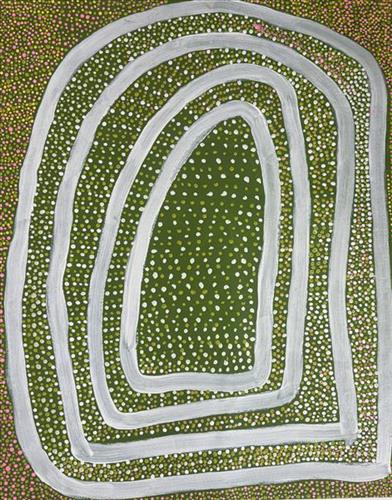
Burndud Ground
The Burndud is the sacred Marrga creation spirits dance ground at Birlinbirlin on the Fortescue River. It is an important story in Yindjibarndi culture which relates to Birdarra Law. Its a dance in our traditions, It’s a unique law and it belongs to the Yindjibarndi people.

377814682365596
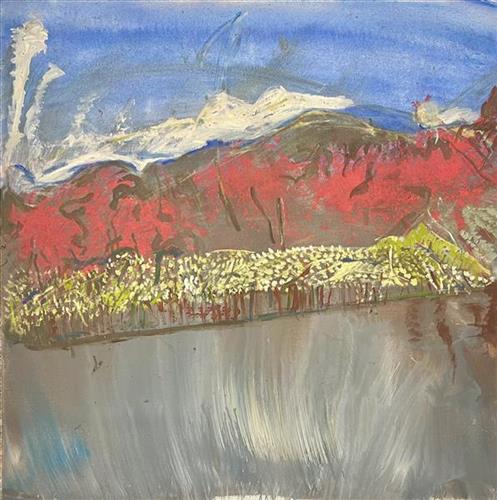
Woodside Smoke
Woodside smoke destroying Murujuga.