115682396223


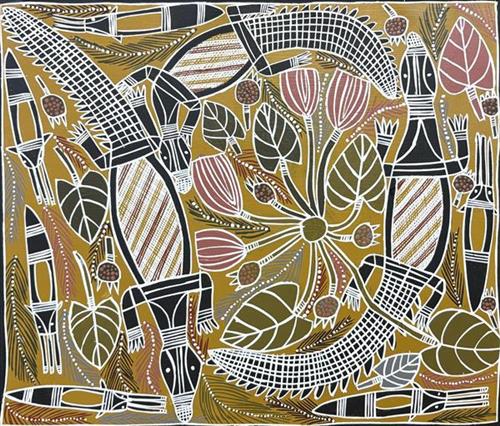
Raypiny Dhawu (Fresh Water Story)

All Aboriginal people originate from a spiritual source, fixed in a particular place in their land or the sea. These ‘spiritual reservoirs’ are often in the form of special waterholes made by Wangarr (creative spirits) that were created long ago close to the beginning of time. These creator beings moved across the countryside, shaping the land and implanting in each tract of country, the spiritual life force for the people who were to own it. These creative spirits took many forms and when they gave the land to each group, they also gave songs, dances, ceremony, the associated laws and language.


The creation story for Ganalbingu people took place near the middle section of the Glyde River where it becomes the Goyder River. Their land, Ngaliyindi, sits astride the Arafura Swamp in Central Arnhem Land. Many Ganalbingu artists paint totemic species significant to their clan. These can include baru (crocodile), banda (long necked turtle), buliya (catfish), yalman (waterlilies), gumang (magpie geese), dakawa (fresh water yabby), ratjuk (barramundi), warrnyu (flying fox) and more.
 

220982396468


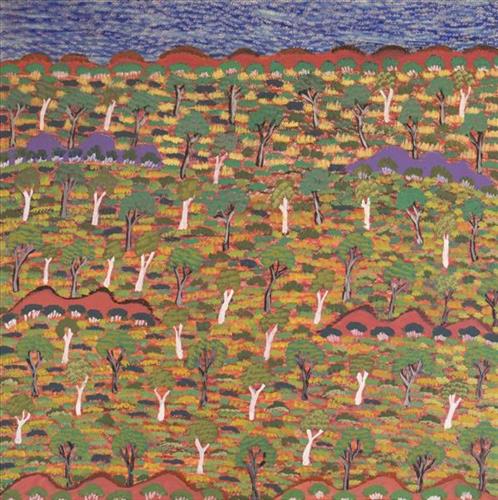
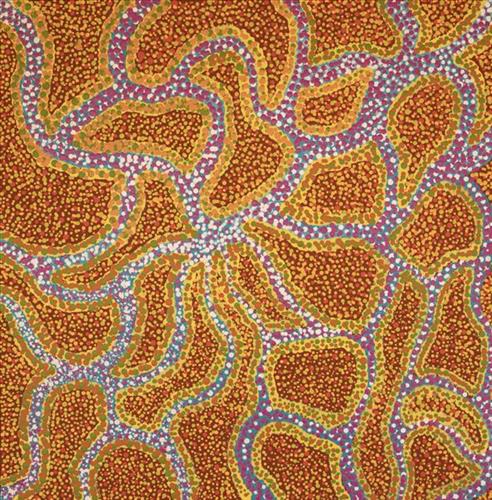
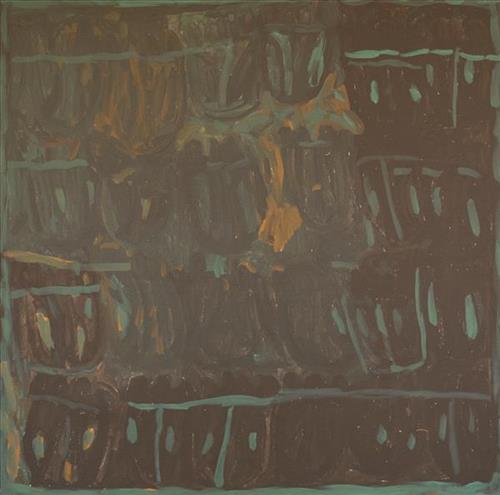
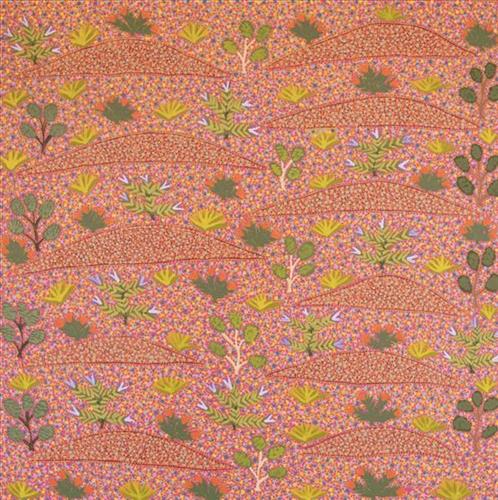
Robina Pitjara Jones – My Country

This is my country out in Utopia an outstation called Soapy Bore it’s  my Father’s country, there’s  big soakage, hills, bush medicine and bush tucker. All my family paint, my grandmother, my mother and aunties. I like to paint, I think about my country, the colours and my family who have gone.

The community of Ampilatwatja made a conscious decision not to paint altyerr (dreaming stories). The artists paint their country where those stories sit.

115682397154


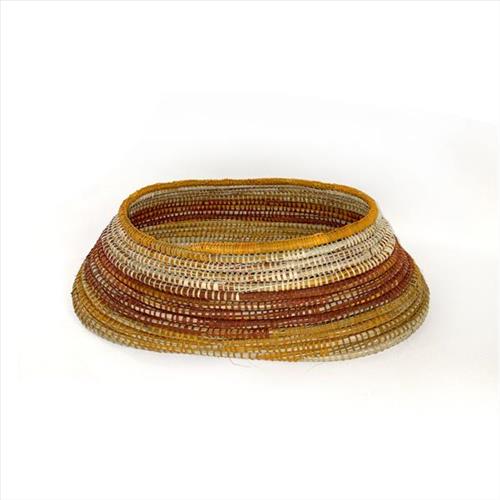
Bathi (Pandanus Basket)

Yolŋu weavers of Arnhem Land create utilitarian, ceremonial, and decorative pieces using naturally sourced materials. This Bathi (Pandanus Basket) is made from young Pandanus spiralis leaves, harvested with a wooden hook, stripped of prickles, and dried to create strong, resilient fibres. These fibres are then twisted, coiled, or woven using various techniques to produce both functional and decorative baskets.

Typically, Bathi are made using a coiling technique which was adapted from techniques used by Indigenous women throughout Southeast Australia. Introduced to Arnhem Land weavers in the 1930’s as Missionaries began commissioning pieces in this style.

Bula’bula weavers exclusively use natural dyes, derived from locally sourced roots, leaves and grasses. These pigments are extracted and infused into pandanus fibres by boiling over an open fire, producing the rich, vibrant colours characteristic of contemporary Yolŋu weavings.

220982397568


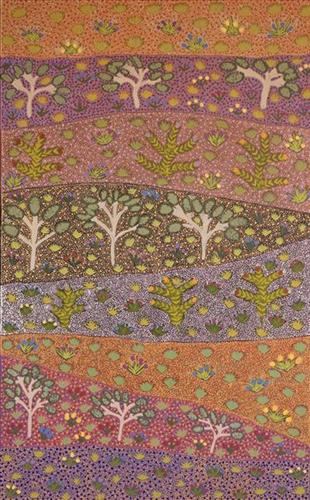
Denise Ngwarraye Bonney – Tijamburra, My Grandmothers Country

This is my Mothers Mothers country, out near Canteen Creek, we go hunting for wild onions, goannas, echidnas and sugar bag honey in the trees. I like to hunt in my country, there is water all year round even if it looks dry, we follow the bird tracks to know where to dig and then we find water.


This painting is after rain, many grasses are out, but the riverbed is still sandy.


220982397992


Rosie Ngwarraye Holmes – Desert View

This is my view of the desert, the colour and the shapes after the wind has blown the sand

220982397979


Beverly Pula Luck – My Mother’s Country

Beverly paints her Mother’s country. When Beverly was a child her mother took her all around her country and showed her the bush medicine and bush tucker.

The knowledge of the bush plants has been handed down through generation to generation and Beverly still spends time hunting and collecting bush medicine plants to use in everyday life.  Taught by her mother and grand mother, Beverly also sings the songs of the bush medicine plants. 

Beverly’s paintings are joyous and full of information regarding bush medicine plants.

The artists of Ampilatwatja made a conscious decision not to paint altyerr (dreaming stories). The artists paint their country where those stories sit.

220982398288


Maisie Petyarre Bundey – Anhelengkw (Emu) Dreaming

Anhelengkw (emu) dreaming is the breast body painting depicting the story of the mother emu who runs away and leaves the father emu to look after the eggs until they hatch, he then raises the chicks.

This story is passed down through Maisie’s family and celebrated in dance.

220982398785


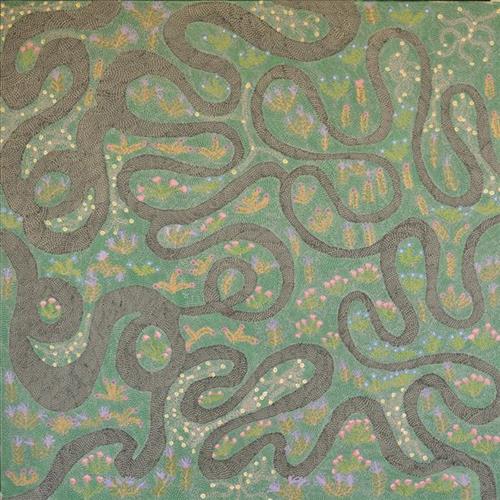
Kathleen Nanima Rambler – Creek Bed Running

When you fly over my country looking down after the rain you can see the river beds running like snakes slithering through the land, everything looks like patches of green with the spinifex and sacred trees, and the beautiful blue of the water refreshing the land and the dry river beds

115682399695


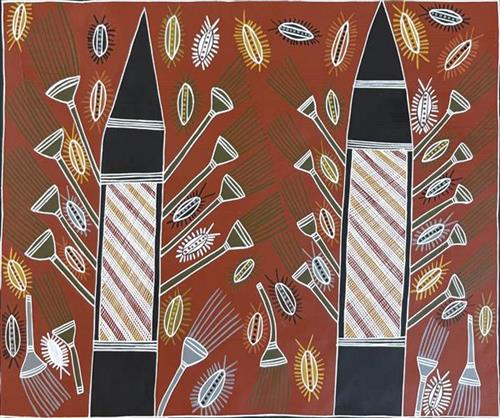
Wurrutjara (Sand Palm)

Seen in and around Ramingining, the sand palm is a small, slender palm, growing to about 7 m tall. It is fire tolerant and usually grows in environments where it is exposed to frequent fires. Aboriginal people use this palm as the fruits are edible and the heart  can be eaten, either raw or roasted. The core of the stem is pounded and made into a drink which was used to treat coughs, colds, chest infections, diarrhoea, and tuberculosis.

115682401039


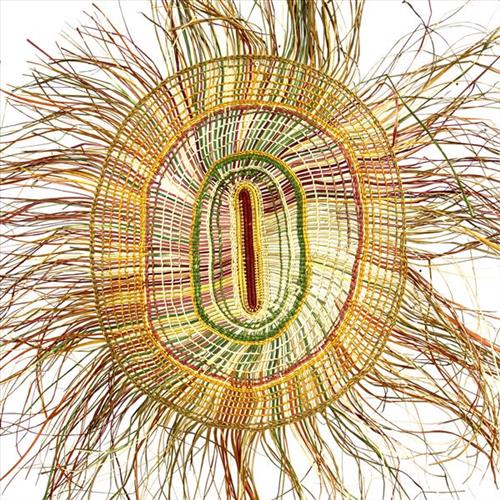
Woven Mat

Yolŋu weavers of Arnhem Land create utilitarian, ceremonial, and decorative pieces using naturally sourced materials. This mat is made from young Pandanus spiralis leaves, harvested with a wooden hook, stripped of prickles, and dried to create strong, resilient fibres. These fibres are then twisted, coiled, or woven using traditional techniques to produce both functional and decorative mats.

Bula’bula weavers exclusively use natural dyes, derived from locally sourced roots, leaves and grasses. These pigments are extracted and infused into pandanus fibres by boiling over an open fire, producing the rich, vibrant colours characteristic of contemporary Yolŋu weavings.

Traditionally, Nganiyal (conical mats) functioned as insect screens when erected and as seating mats when folded, playing an important role in both daily life and ceremonial practices. Today, Yolŋu artists create a variety of shapes, including flat, round, and oblong mats. These non-traditional styles and the use of bright colours became more common after Missionaries began commissioning pieces in this style.