377815582402786


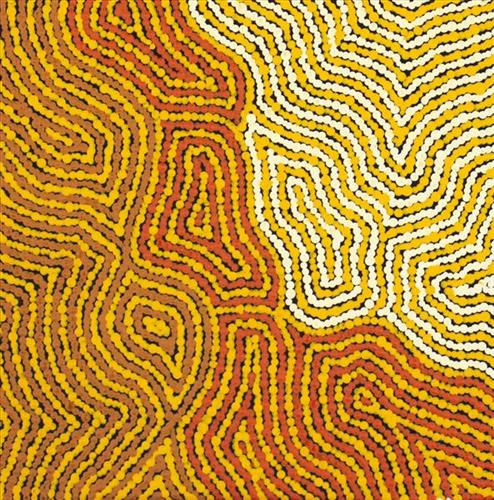
Nyangumarta Warrarn (Country)

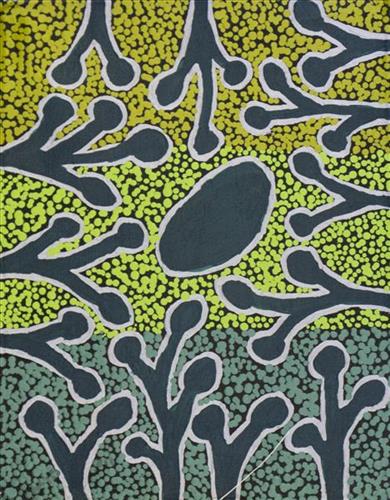
This painting represents the rocky outcrop and all the different areas of claypans, and the dark area represents all the jurnga (sands) in the cool time, warri (translation needed). All the light yellowish colour represents the paru (spinifex).


I like to go out working with the rangers and all the elders, I go out Country with them and they show me all the places, all mapped out with GPS. We mark out all the other places for next time. Sometimes I go out in the rangers vehicle and walk around the country and look around for goanna holes. We try to keep an eye on the animals, [monitoring them,] look out for all the bilby and skinks and everything with the Nyangumarta rangers. I go in my spare time because I’m busy you know, I’m busy with my artwork and council meetings.


In the cool dry time, when it’s a little bit warm, and cool in the morning, that’s when we do the fire patch burning. When we doing it also depends on the wind, the warngal, which way its blowing. We do that because it’s a big part of controlled fired. Wild fires, we don’t want them, they destroy the animals and their living area, destroy the Country. We do it too for the regrowth. When I went back to Country a couple of weeks ago, all the burned up area had a little bit of regrowth after a little bit of rain.
377815582402784


Nyangumarta Warrarn (Country)

This painting represents the rocky outcrop and all the different areas of claypans, and the dark area represents all the jurnga (sands) in the cool time, warri (translation needed). All the light yellowish colour represents the paru (spinifex).


I like to go out working with the rangers and all the elders, I go out Country with them and they show me all the places, all mapped out with GPS. We mark out all the other places for next time. Sometimes I go out in the rangers vehicle and walk around the country and look around for goanna holes. We try to keep an eye on the animals, [monitoring them,] look out for all the bilby and skinks and everything with the Nyangumarta rangers. I go in my spare time because I’m busy you know, I’m busy with my artwork and council meetings.


In the cool dry time, when it’s a little bit warm, and cool in the morning, that’s when we do the fire patch burning. When we doing it also depends on the wind, the warngal, which way its blowing. We do that because it’s a big part of controlled fired. Wild fires, we don’t want them, they destroy the animals and their living area, destroy the Country. We do it too for the regrowth. When I went back to Country a couple of weeks ago, all the burned up area had a little bit of regrowth after a little bit of rain.
377815582402782


Burning Warrarn (country)

This painting is about fire. How to burn the country the right way, not the wrong way. Like old people they used to burn the county right way, so we learn from them and keep country good for us and all the animals comes out of the bush

377815582402781


Nyangumarta Warrarn (Country)

This painting represents the rocky outcrop and all the different areas of claypans, and the dark area represents all the jurnga (sands) in the cool time, warri (translation needed). All the light yellowish colour represents the paru (spinifex).


I like to go out working with the rangers and all the elders, I go out Country with them and they show me all the places, all mapped out with GPS. We mark out all the other places for next time. Sometimes I go out in the rangers vehicle and walk around the country and look around for goanna holes. We try to keep an eye on the animals, [monitoring them,] look out for all the bilby and skinks and everything with the Nyangumarta rangers. I go in my spare time because I’m busy you know, I’m busy with my artwork and council meetings.


In the cool dry time, when it’s a little bit warm, and cool in the morning, that’s when we do the fire patch burning. When we doing it also depends on the wind, the warngal, which way its blowing. We do that because it’s a big part of controlled fired. Wild fires, we don’t want them, they destroy the animals and their living area, destroy the Country. We do it too for the regrowth. When I went back to Country a couple of weeks ago, all the burned up area had a little bit of regrowth after a little bit of rain.

377815582402779


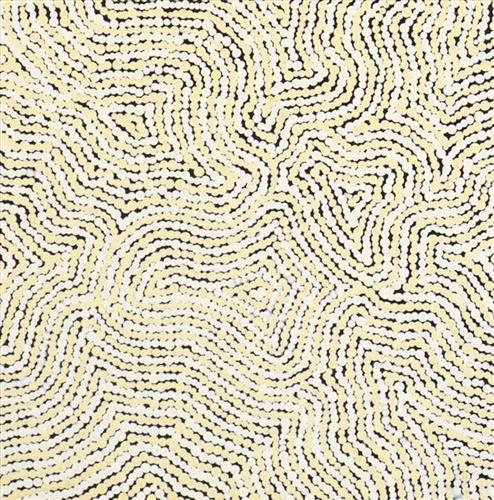
Untitled

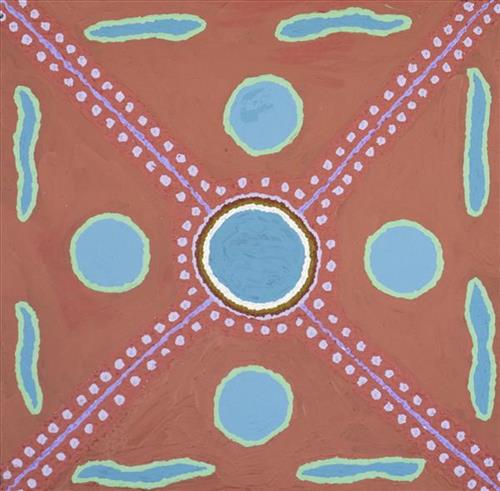
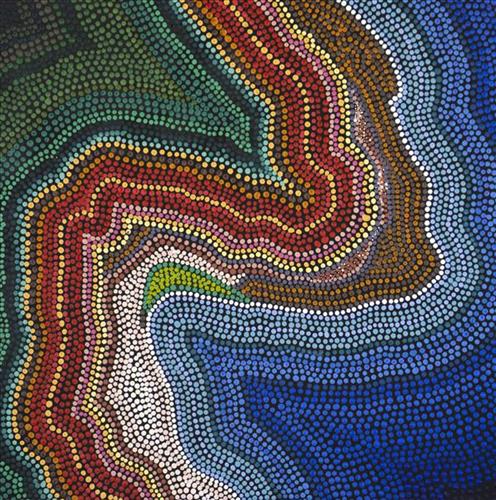
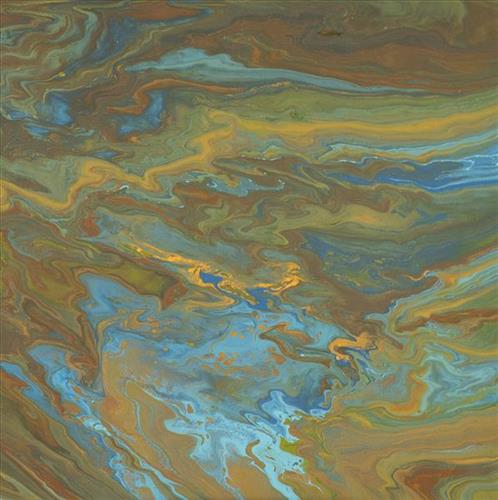
 This artwork showcases the artist’s skillful use of colour, texture, and technique, reflecting a deep connection to their environment and culture. Each detail embodies the unique identity of Bidyadanga Artists, where the original five language groups—Nyangumarta, Mangala, Yulparija, Juwaliny, and Karrajarri—come together to create art that speaks to the heart of Country. Over time, the community and Art Centre has grown to include people from other Kimberley tribes, fostering a space where diverse cultural knowledge and practices come together. Situated where the desert meets the sea, artists draw inspiration from their ancestral Country and personal journeys. The artist captures the vibrant beauty of both desert and coastal landscapes, blending earthy reds, deep blues, and intricate patterns distinctive to their cultural heritage. The themes and composition invite viewers into the artist’s world, offering a glimpse of the rich, intertwined histories and the enduring connection to land and spirit that define the Bidyadanga community.

377815582402778


Untitled

 This artwork showcases the artist’s skillful use of colour, texture, and technique, reflecting a deep connection to their environment and culture. Each detail embodies the unique identity of Bidyadanga Artists, where the original five language groups—Nyangumarta, Mangala, Yulparija, Juwaliny, and Karrajarri—come together to create art that speaks to the heart of Country. Over time, the community and Art Centre has grown to include people from other Kimberley tribes, fostering a space where diverse cultural knowledge and practices come together. Situated where the desert meets the sea, artists draw inspiration from their ancestral Country and personal journeys. The artist captures the vibrant beauty of both desert and coastal landscapes, blending earthy reds, deep blues, and intricate patterns distinctive to their cultural heritage. The themes and composition invite viewers into the artist’s world, offering a glimpse of the rich, intertwined histories and the enduring connection to land and spirit that define the Bidyadanga community.

377815582402777


Untitled

 This artwork showcases the artist’s skillful use of colour, texture, and technique, reflecting a deep connection to their environment and culture. Each detail embodies the unique identity of Bidyadanga Artists, where the original five language groups—Nyangumarta, Mangala, Yulparija, Juwaliny, and Karrajarri—come together to create art that speaks to the heart of Country. Over time, the community and Art Centre has grown to include people from other Kimberley tribes, fostering a space where diverse cultural knowledge and practices come together. Situated where the desert meets the sea, artists draw inspiration from their ancestral Country and personal journeys. The artist captures the vibrant beauty of both desert and coastal landscapes, blending earthy reds, deep blues, and intricate patterns distinctive to their cultural heritage. The themes and composition invite viewers into the artist’s world, offering a glimpse of the rich, intertwined histories and the enduring connection to land and spirit that define the Bidyadanga community.

114182402775


Mountain Devil Lizard Tjukuurpa


Loyd has painted his father’s country surrounding Blackstone. The country is home to the Thorny Mountain Devil lizard which is able to camouflages itself with it’s surroundings. This painting is a depiction of the movement of the lizard across the sands and amongst the spinifex while feeding on ants.

377815582402773


Untitled

 This artwork showcases the artist’s skillful use of colour, texture, and technique, reflecting a deep connection to their environment and culture. Each detail embodies the unique identity of Bidyadanga Artists, where the original five language groups—Nyangumarta, Mangala, Yulparija, Juwaliny, and Karrajarri—come together to create art that speaks to the heart of Country. Over time, the community and Art Centre has grown to include people from other Kimberley tribes, fostering a space where diverse cultural knowledge and practices come together. Situated where the desert meets the sea, artists draw inspiration from their ancestral Country and personal journeys. The artist captures the vibrant beauty of both desert and coastal landscapes, blending earthy reds, deep blues, and intricate patterns distinctive to their cultural heritage. The themes and composition invite viewers into the artist’s world, offering a glimpse of the rich, intertwined histories and the enduring connection to land and spirit that define the Bidyadanga community.

377815582402770


Papilija

Papilija is a yinta soak in Kulyakartu;

My grandmother and her sibling’s country.

They used to go there all the time.

Good kapi for drinking and yukarri (green) all around.

Lots of warta (trees).

Plenty bush tucker.