220982401365


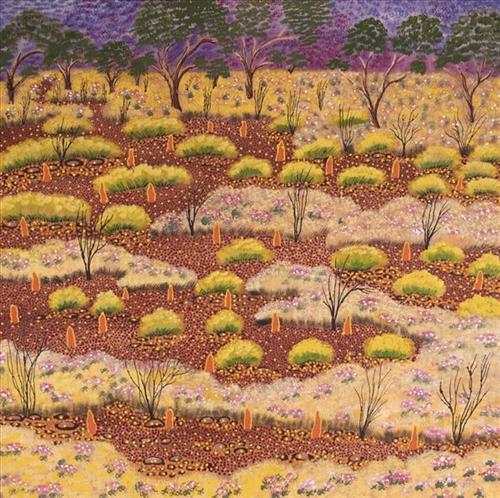
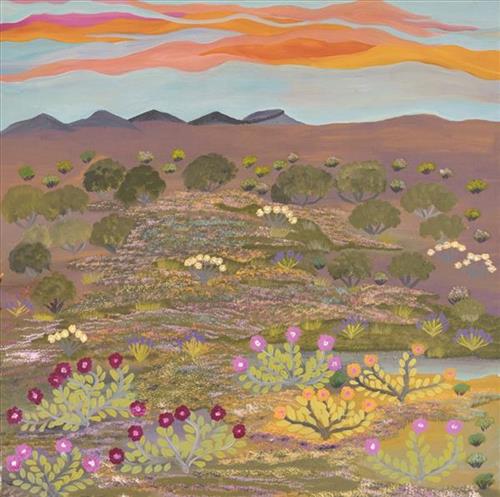
Kathleen Nanima Rambler – Mulangke Aherne (Beautiful Land)

My country. When I go hunting out bush, as we drive along the road towards the hill you can see the beautiful land and the flowers blooming on the side of the road, and near the hills, even the beautiful gum trees.

It makes me proud.

220982401364


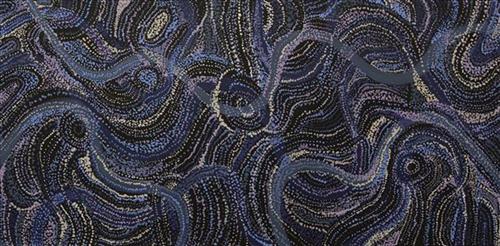
Selina Pula Teece – My Fathers Country

Anterrengeny is my Fathers country.

I paint the country that come from, the beautiful landscapes and the many colours as they change during the season.

221282401594


Ngayuku Ngura – My Country

Artists use this title when they are depicting their Country. It might be a representation of a particular place or of different aspects of that area. The artist uses a combination of colour and design to indicate variations in the landscape. Inspiration is drawn from all elements of Country and might include bush tucker, water holes, meeting places, rock formation, birds or animals.

221282401592


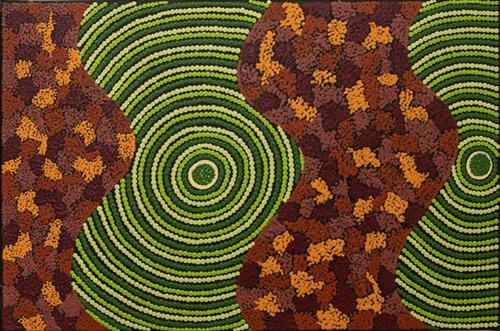
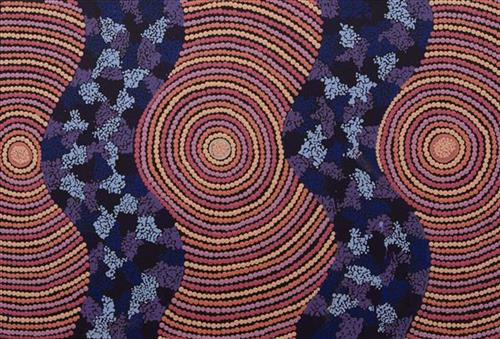
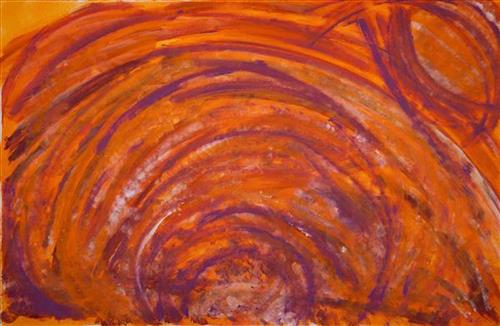
Tali / Sand dune

This design is inspired by the red sand dunes that are found throughout the central desert. There is a large red sand dune near Ernabella named Wamikata which is a popular place for looking for maku (witchetty grubs) and for teaching Milpatjunanyi (telling stories in the sand) to children.

221282401591


Ngayuku Ngura – My Country

Artists use this title when they are depicting their Country. It might be a representation of a particular place or of different aspects of that area. The artist uses a combination of colour and design to indicate variations in the landscape. Inspiration is drawn from all elements of Country and might include bush tucker, water holes, meeting places, rock formation, birds or animals.

115682401490


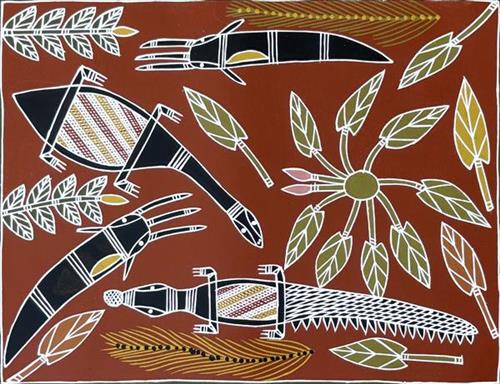
Raypiny Dhawu (Fresh Water Story)

All Aboriginal people originate from a spiritual source, fixed in a particular place in their land or the sea. These ‘spiritual reservoirs’ are often in the form of special waterholes made by Wangarr (creative spirits) that were created long ago close to the beginning of time. These creator beings moved across the countryside, shaping the land and implanting in each tract of country, the spiritual life force for the people who were to own it. These creative spirits took many forms and when they gave the land to each group, they also gave songs, dances, ceremony, the associated laws and language.


The creation story for Ganalbingu people took place near the middle section of the Glyde River where it becomes the Goyder River. Their land, Ngaliyindi, sits astride the Arafura Swamp in Central Arnhem Land. Many Ganalbingu artists paint totemic species significant to their clan. These can include baru (crocodile), banda (long necked turtle), buliya (catfish), yalman (waterlilies), gumang (magpie geese), dakawa (fresh water yabby), ratjuk (barramundi), warrnyu (flying fox) and more.
 

222082401867


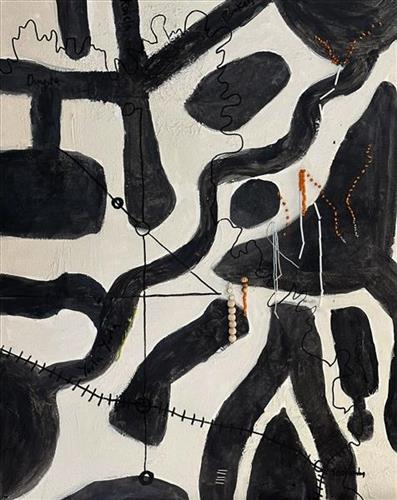
That’s Not Yours

This work, ‘That’s not yours’ reflects on the impacts of resource extraction on Country, memory, and culture. In this work, I combine acrylic with natural mediums, including River clay collected across Yorta Yorta Country, to anchor the painting in the land itself. Hand-stitched glass beads traverse the surface, representing the environmental and cultural damage caused by mining, particularly sand mining, which continues to disrupt the ecosystems, waterways, and cultural sites of my Country. Over this layered surface, I have inscribed an early map, drawn from nineteenth-century texts documenting the villages and land allotments of the Rodney Shire near Tatura and Toolamba, places tied to my family and ancestral connections. By layering historical cartography with natural and symbolic materials, the work situates the contemporary consequences of extractive practices within a broader narrative of colonisation and dispossession. This work is an attempt to confront the histories of settler extraction and the ongoing impacts of mining on our lands. Through materials, mapping, and storytelling, I aim to make visible what has been taken and assert the resilience and sovereignty of my people and our Country. ‘That’s not yours’ positions memory, history, and environment in dialogue, articulating the entangled consequences of colonisation and industrial exploitation on Country.

359709482401748


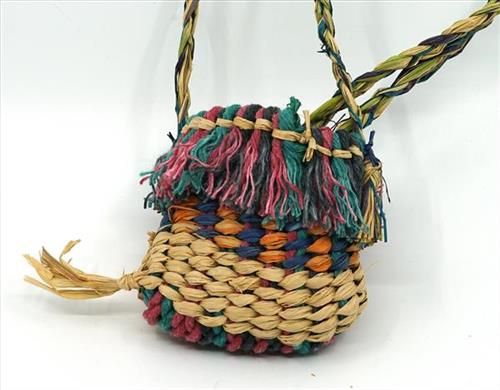
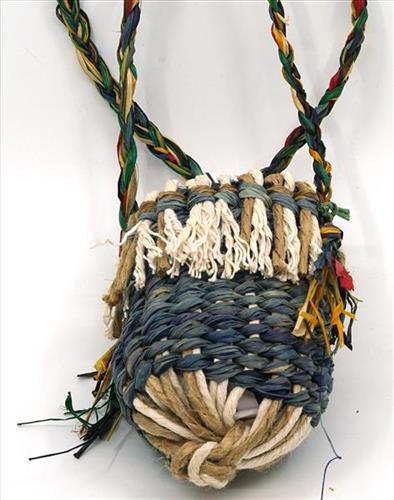
migi bag

Art Centre notes: 

The bag is made of natural raffia and tie-dyed cotton twine.

It is made using a traditional ‘one twist’ method. It has a thick plaited strap. The strap is closed at the end.

The dyes are commercial and colour fast. 

Size of bowl:  10 x 9cm

Length of strap: 30cm

359709482401743


migi bag

Art Centre notes: 

The bag is made of natural raffia, brown jute and tie-dye cotton twine. 

It is made using a traditional ‘one twist’ method. It has a thick plaited strap. The strap is closed at the end.

The dyes are commercial and colour fast. 

Size of bowl:  10 x 10cm

Length of strap: 30cm