111582402271


Untitled

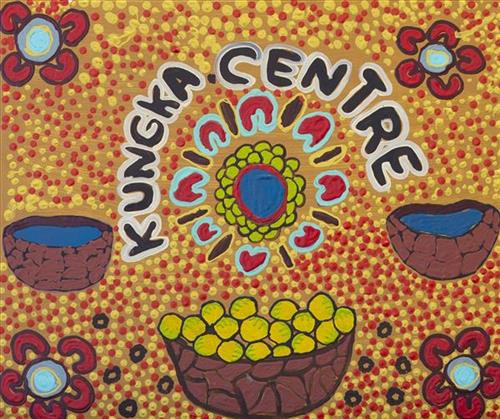
Martumili Artists work with over three hundred artists from remote Martu Aboriginal communities, including Punmu, Parnngurr, Kunawarritji, Jigalong, Irrungadji (Nullagine), and Warralong, as well as from the Parnpajinya (Newman) gallery and studio spaces. Known for their diverse, energetic, and unmediated painting styles, their works reflect the dramatic geography and scale of their homelands. Each artist, however, brings a unique approach to their craft.

Younger Martu artists often start painting alongside their parents, grandparents, and extended family, which fosters an organic learning process. This not only involves mastering painting techniques but also understanding specific locations, family histories, traditional ways of life, bush tucker, and Jukurrpa (Dreaming). Over time, with encouragement from their peers, they develop their own distinct styles and explore unique painting techniques and subject matter. In this work the artist brings a contemporary, evolving perspective to their work.
111582402255


Untitled

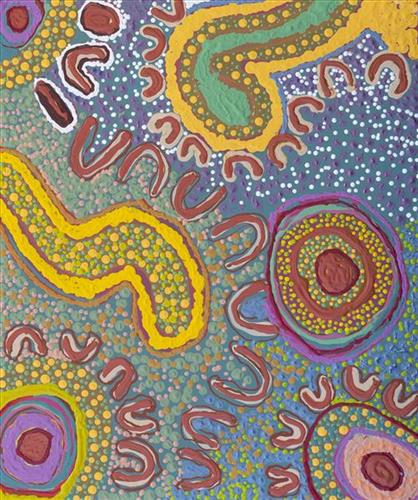
Martumili Artists work with over three hundred artists from remote Martu Aboriginal communities, including Punmu, Parnngurr, Kunawarritji, Jigalong, Irrungadji (Nullagine), and Warralong, as well as from the Parnpajinya (Newman) gallery and studio spaces. Known for their diverse, energetic, and unmediated painting styles, their works reflect the dramatic geography and scale of their homelands. Each artist, however, brings a unique approach to their craft.

Younger Martu artists often start painting alongside their parents, grandparents, and extended family, which fosters an organic learning process. This not only involves mastering painting techniques but also understanding specific locations, family histories, traditional ways of life, bush tucker, and Jukurrpa (Dreaming). Over time, with encouragement from their peers, they develop their own distinct styles and explore unique painting techniques and subject matter. In this work the artist brings a contemporary, evolving perspective to their work.
111582402253


Untitled

The Western Desert term jila is used interchangeably to describe springs considered to be ‘living’ waters and snakes, both of which play a central role in Martu culture and Jukurrpa (Dreaming).

During the pujiman (traditional, desert dwelling) period, knowledge of water sources was critical for survival, and today Martu Country is still defined in terms of the location of water sources. Of the many permanent springs in Martu Country, very few are ‘living waters’; waters inhabited by jila (powerful ancestral beings). Before they became snakes, these beings were men who made rain, formed the land and introduced cultural practices like ceremonies and ritual songs. Some of the men travelled the desert together, visiting one another, but they all ended their journeys at their chosen spring alone, transformed into a snake. These important springs are named after their jila inhabitant, guarding their waters. 

Some of the jila snakes are known by Martu as quiet and benevolent, others as dangerous and ‘cheeky’. Regardless of the nature of the inhabitant snake, jila sites must be entered respectfully; particular rituals are practiced, such as lighting fires, sweeping the ground with branches, approaching in single file, and calling out to the site’s jila to announce one’s arrival and introduce people who are new to the jila. Those who do not follow these guidelines are in danger of becoming sick, or even being killed.

377810582402188


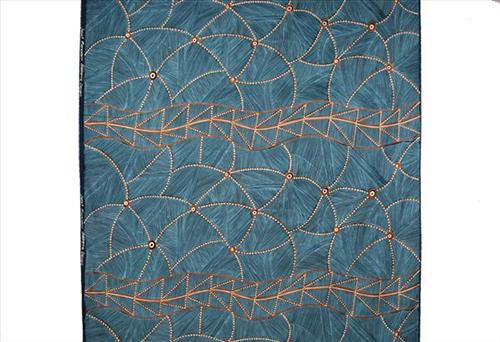
Kunkurra (Spiral Wind)

‘My designs, they are all alive living up in my head’- Janet Marawarr

Janet Marawarr has depicted kunkurra, the spiralling wind associated with several sites in the Kardbam clan. On one level, this design can be interpreted as a depiction of the kinds of mini-cyclones common during the wet season in Arnhem Land, where the artist lives. Kunkurra also relates specifically to a site called Bilwoyinj, near Mankorlod, on the artist’s clan estate.

At this site, two of the most important Kuninjku creation beings, a father and son known as na-korrkko, are believed to have hunted and eaten a goanna. They left some of the goanna fat behind at the site, which turned into the rock that still stands there today.

Bilwoyinj site is also a ceremonial ground for a ceremony called Yabbaduruwa, a major ceremony owned by the Yirridja patrimoiety. The Yabbaduruwa ceremony is primarily concerned with initiation, land ownership and promoting the cyclical regeneration of the human and natural worlds.

377810582402187


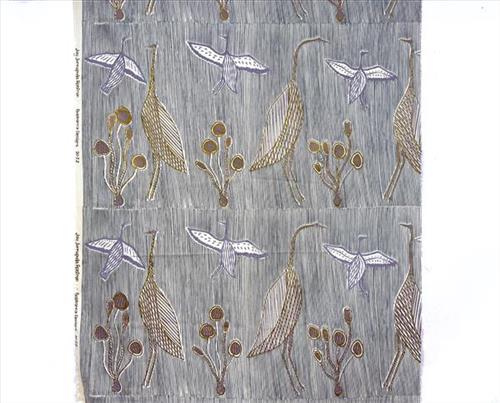
Kabono (River Story)

The freshwater birds are looking for manme (food), they’re down the river at Benembenemdi.The birds in my design are kurrubirlah, mandjangarli, barrak-barrak & ngalkordow. My dad told me about this story, he taught me how to do painting on the rock country and bark painting and hollow log. When I was 12 and 13 I started to paint freshwater birds that I saw at my country. My father painted lots of animals like kangaroo, bolong (rainbow serpent), bird, all kind of animal. He was a really good artist. This animal is from my country, place called Benembenemdi, that place is rock country with lots of sand and river. – Jay Jurrupula Rostron 2024

Freshwater birds showcased in this design:

‘kurrubirlah’ – bush stone-curlew (Burhinus grallarius). Some Kune speakers have a variant pronunciation ‘kurruburlah’

‘mandjangarli’ – darter, (Anhinga melanogaster novaehollandiae).

‘barrak-barrak’ – little pied cormorant (Phalacrocax melanoleucas)

‘ngalkordow’ – brolga (Antigone rubicunda)

Design printed by Publisher Textiles in Sydney NSW

OATMEAL LINEN BASE WITH BLUE, MAUVE AND GOLD PAINT

Thank you to the Bininj Kunwok Language Centre for assisting Babbarra Women’s with correct spelling and definitions of the freshwater birds showcased in Jay’s design. 

222082402337


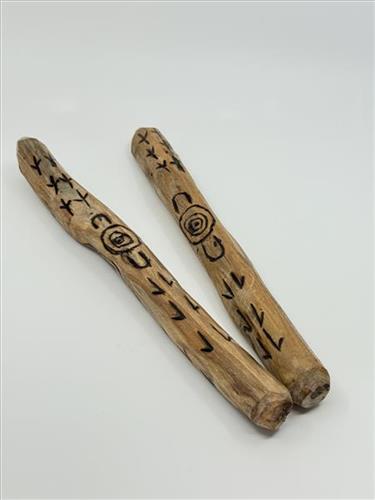
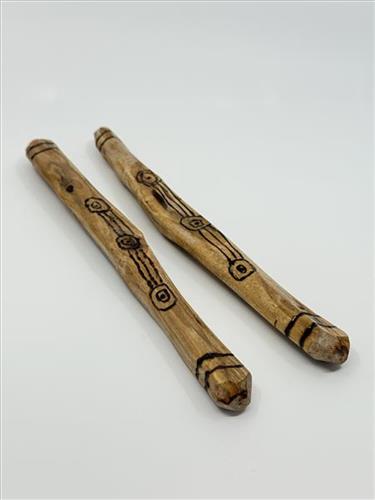
Hand carved Clapsticks #15

These clapsticks have been hand carved out of river red gum collected on Yorta Yorta Country. Traditionally clapsticks have been used as part of our ceremonies and corroborees.

222082402336


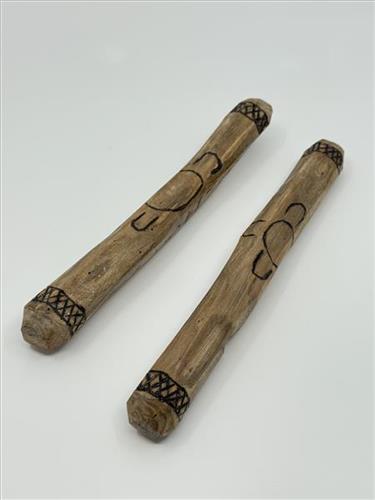
Hand carved Clapsticks #14

These clapsticks have been hand carved out of river red gum collected on Yorta Yorta Country. Traditionally clapsticks have been used as part of our ceremonies and corroborees.

222082402335


Hand carved Clapsticks #13

These clapsticks have been hand carved out of river red gum collected on Yorta Yorta Country. Traditionally clapsticks have been used as part of our ceremonies and corroborees.