377810582388052


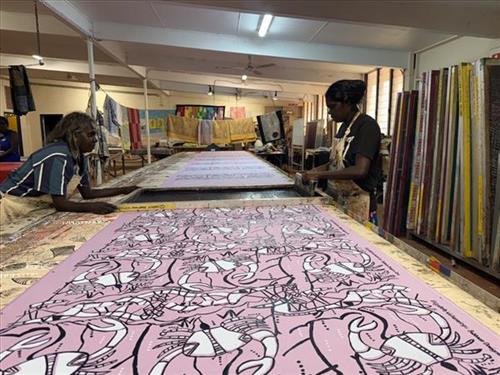
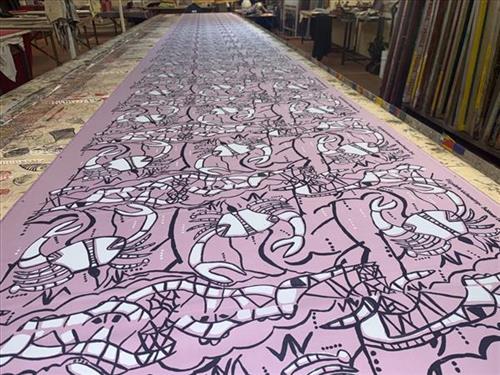
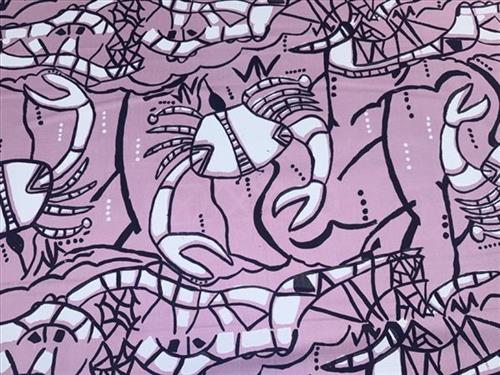
Barnkabarra (Mud Crabs)

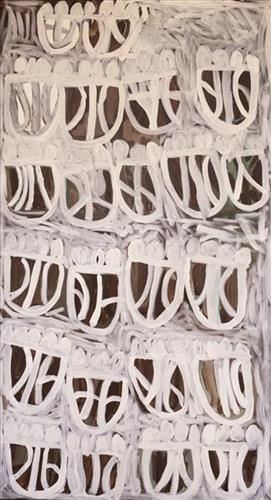
This design tells the story of Elizabeth’s homeland – a dreaming place, a good dreaming place with plenty of Barnkabarra (Mud Crabs). Elizabeth’s homeland lies east of Maningrida, at the mouth of Blyth river. This country is known for a large spiritual mud crab, which lives in the area.

Many families go and collect crabs to eat there with long sticks, or collect directly from the shores. Mud crabs hide in the muddy bottoms of estuaries and mangrove forests in areas surrounding Maningrida. After a king tide, a large cyclical tide which bring the crabs out from the mangroves, it is a good time to find crabs.

Barnkabarra (mud crabs) in Kuninjku language, or Rrugurrgurda (mud crabs) in the Burarra language, are good baladji (bush food in Burarra) and can be caught all year round. They are put on the fire to cook and they are ready when they turn a bright orange colour.
220982396266


Maisie Petyarre Bundey – Anhelengkw (Emu) Dreaming

Anhelengkw (emu) dreaming is the breast body painting depicting the story of the mother emu who runs away and leaves the father emu to look after the eggs until they hatch, he then raises the chicks.

This story is passed down through Maisie’s family and celebrated in dance.

377815382397134


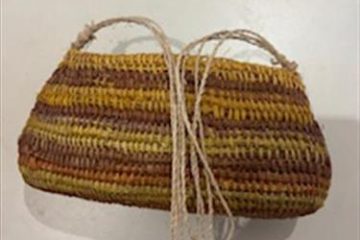
Gunga (Pandanus) Basket

The fibre works of artists from Elcho Island and surrounding homelands are handmade using traditional techniques passed down from generation to generation. They are constructed from the fibre of the Pandanas leaves and Kurrajong plant which is coloured with natural dyes collected from local plant materials such as leaves and roots.  The Pandanus fibre is boiled with these special roots, leaves and seeds to produce an array of colours. Once dried the Pandanus fibre is woven into uniquely designed fibre art.

377810582397823


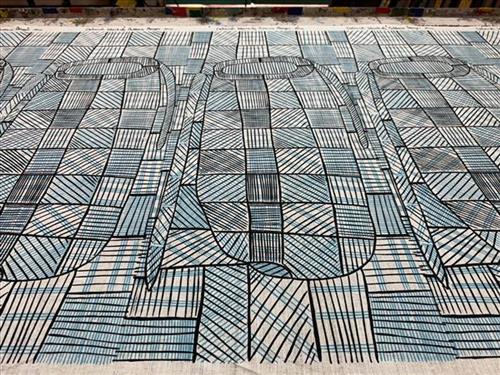
Kunmadj – Deborah Wurrkidj

Deborah has depicted kunmadj (dillybag), which is a large woven collecting basket. These large bags are often made from the burney vine (Trophis scandens), a strong, pliable plant that grows along the ground and into the canopy of monsoon vine thickets. The bags are used to collect heavy foods, such as fish caught in conical fish traps, or yams. They can also be made from kun-dayarr (Pandanus spiralis), a palm that grows in many areas of Arnhem Land. Tightly woven dillybags are used to collect sugarbag, the native honey.

As well as being of practical use, dillybags are of cultural significance to Arnhem Land people. They are totemic objects associated with particular sites in the landscape.

377810582397697


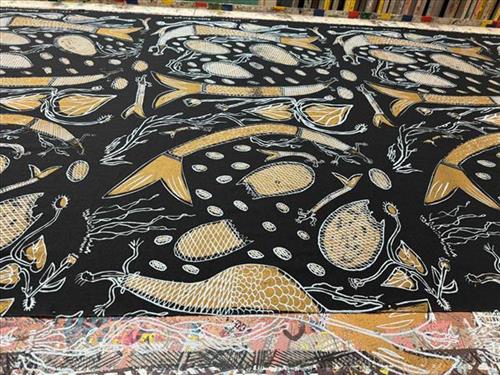
Djomi (Fresh Water Spirit)

This design depicts the story of the artist’s ancestral dreaming, the Djómi (Fresh Water Spirit).

The Djómi figure is a mermaid-like spirit with fish tail that lives in the freshwater stream that flows out to the sea cliff near Maningrida. Djómi is known to be a very powerful fertility symbol.

“If you go there, you can get pregnant easily. Djómi has babies, and they can give other babies too. The Djómi spirit is so powerful, that women can end up with multiple babies at once, twins or sometimes even more. The Djómi spirits lay eggs near the sacred freshwater stream in Maningrida. Inside the eggs are human babies as well as young Djómi. Men do not go near that swamp, because Djomi is so powerful that men might get pregnant there too. So men are too scared of that Djómi. When we visit the Djómi freshwater spring, we can hear young Djómi  crying. They sound like normal babies crying, those Djómi spirits. They are looking for a mother. This Djómi is my dreaming, I got permission from my djungkay (ritual manager) to paint this Djómi design. For me I always ask my djunguy permission to paint, because that is our cultural way. This design also depicts the freshwater lily leaves and seaweed from the base of the sea floor.” Joy Galrbin

225182398314


Kakan (Black Palm) Basket Weaving

This design shows how the bottom part of a black palm basket is woven. My grandmothers and aunties used to make them. They cut off the young palm leaves in the centre, stripped and scrapped them. Then they would put the strips in freshwater to make them soft and keep them straight for weaving.

377816082406159


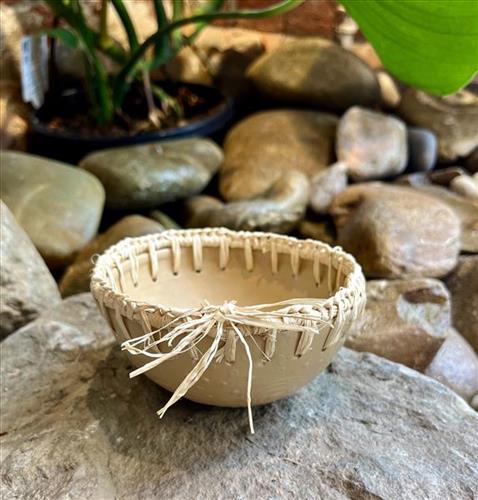
Soft Country bowl

This little bowl holds quiet traces of country- soft Symbols painted and weaving stitched with care. A gentle blend of earth and hands, carrying story in a subtle way

220982408600


Beverly Pula Luck – My Mother’s Country

Beverly paints her Mother’s country. When Beverly was a child her mother took her all around her country and showed her the bush medicine and bush tucker.

The knowledge of the bush plants has been handed down through generation to generation and Beverly still spends time hunting and collecting bush medicine plants to use in everyday life.  Taught by her mother and grand mother, Beverly also sings the songs of the bush medicine plants. 

Beverly’s paintings are joyous and full of information regarding bush medicine plants.

The artists of Ampilatwatja made a conscious decision not to paint altyerr (dreaming stories). The artists paint their country where those stories sit.

220982408977


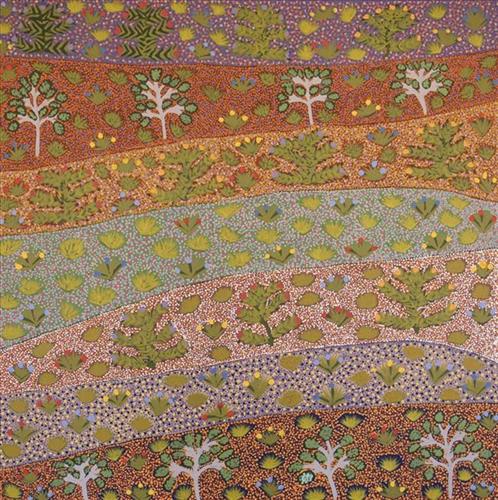
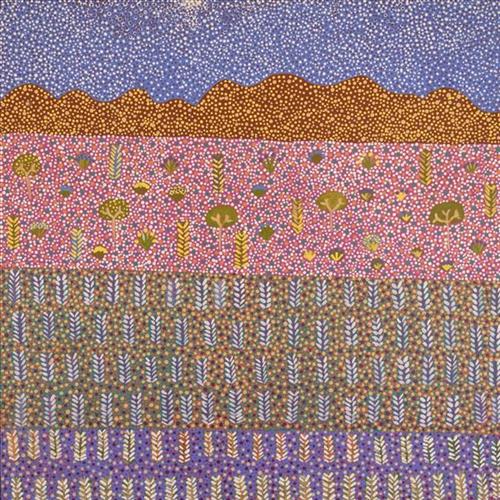
Janella Kemarre Ross – View Of Country

This shows the layered landscape of Alyawarr, Central Australia. Knowing your country is an important part of living in a remote community like Ampilatwatja.

Knowing when and where to go hunting and gathering, knowing where there is ‘soakage’ (where you can dig for water), travelling with family for ceremonies, and maintaining a connection with the land.

“This is my country, my view of country.”

The community of Ampilatwatja made a conscious decision not to paint altyerr (dreaming stories). The artists paint their country where those stories sit.


220982408972


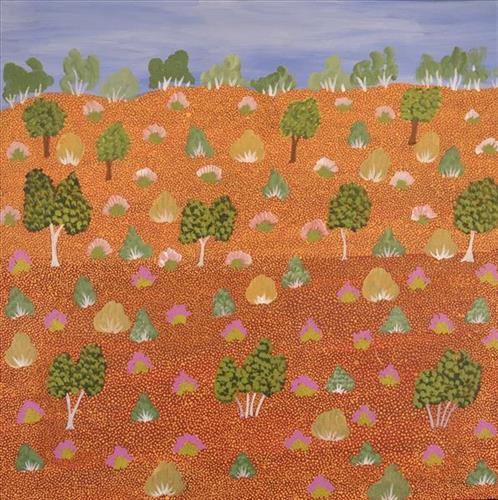
Alec Pula Lewis – View of Country

Alec was born at McDonald Downs Station. He grew up there with his family living traditionally on the land.  Alec did not attend school, he moved between different communities with his family. 

Knowing your country is an important part of living in a remote community like Ampilatwatja. Knowing when and where to go hunting and gathering, knowing where there is ‘soakage’ (where you can dig for water), travelling with family for ceremonies, and maintaining a connection with the land.

“This is my country, my view of country.”

The artists of Ampilatwatja made a conscious decision not to paint altyerr (dreaming stories). The artists paint their country where those stories sit.