114182409605


Kungkarrangkalpa (Seven Sisters)

‘Kungkarrangkalpa’ (The Seven Sisters or Pleaides) is significant Tjukurrpa (dreamtime). Its origins you may be familiar with in astronomy and its connection to ‘Wati Nyiru’ (Magic Man or Orion).  The roots of this dreaming stems across indigenous groups around the world. The Australian Aboriginal songline is one part to the whole dreaming which can be traced all around the world. The ladies of the Ngaanyatjarra Lands depict their significant chapter and understanding of the journey of the sisters. The different versions of this story depend on where you live and the significance’s of local Tjukurrpa places.

Nyiru fell in love with the sisters but he was of the wrong skin group to marry, but he still pursued them on their journey. The sisters travel across the land to escape Nyiru’s unwanted attentions, but he is persistent and always finds them. There are significant land forms which can be sited today that evidence this dreaming. As Nyiru is chasing the sisters he tries to catch them by using magic to turn into the most tempting kampurarrpa (bush tomato) and the most beautiful Yirli (wild fig tree), for them to eat and camp under. However, the sisters are knowledgeable of his magic and too clever for Nyiru who they outwit again and again. They go hungry and run through the night rather than be caught by him. As the journey continues, Nyiru gets so frustrated at the wit of the sisters that he uses his magic to make the oldest sister sick to try and get closer to her. The other sisters rescue the big sister and nurse her back to health. It is said he also captures the youngest sister, but with the help of the oldest sister, she escapes back to her sisters who are waiting for her. Eventually, the sisters fly into the sky to escape Nyiru, forming the constellation. Nyiru felt lonely, longing for the sisters who were so far away. Nyiru used his magic to go to the sky, forever in pursuit.

114182409602


Kungkarrangkalpa (Seven Sisters) – Angilyiya Mitchell

‘Kungkarrangkalpa’ (The Seven Sisters or Pleaides) is significant Tjukurrpa (dreamtime). Its origins you may be familiar with in astronomy and its connection to ‘Wati Nyiru’ (Magic Man or Orion).  The roots of this dreaming stems across indigenous groups around the world. The Australian Aboriginal songline is one part to the whole dreaming which can be traced all around the world. The ladies of the Ngaanyatjarra Lands depict their significant chapter and understanding of the journey of the sisters. The different versions of this story depend on where you live and the significance’s of local Tjukurrpa places.

Nyiru fell in love with the sisters but he was of the wrong skin group to marry, but he still pursued them on their journey. The sisters travel across the land to escape Nyiru’s unwanted attentions, but he is persistent and always finds them. There are significant land forms which can be sited today that evidence this dreaming. As Nyiru is chasing the sisters he tries to catch them by using magic to turn into the most tempting kampurarrpa (bush tomato) and the most beautiful Yirli (wild fig tree), for them to eat and camp under. However, the sisters are knowledgeable of his magic and too clever for Nyiru who they outwit again and again. They go hungry and run through the night rather than be caught by him. As the journey continues, Nyiru gets so frustrated at the wit of the sisters that he uses his magic to make the oldest sister sick to try and get closer to her. The other sisters rescue the big sister and nurse her back to health. It is said he also captures the youngest sister, but with the help of the oldest sister, she escapes back to her sisters who are waiting for her. Eventually, the sisters fly into the sky to escape Nyiru, forming the constellation. Nyiru felt lonely, longing for the sisters who were so far away. Nyiru used his magic to go to the sky, forever in pursuit. 

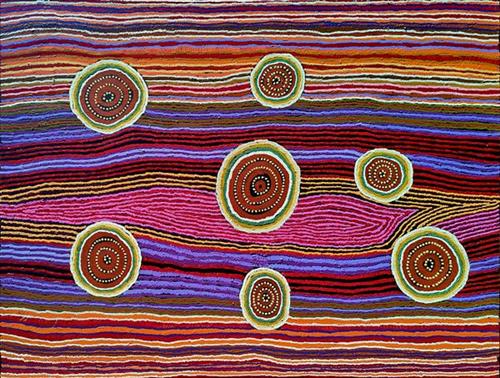
This painting maps the site of ‘Kuru Ala’ (two-eyes), a sacred place for women in Angilyiya’s mother’s country south of Papulankutja (Blackstone). Wati Nyiru was following them, disguising himself as a Quandong tree, a Yirli (wild fig tree), and then a carpet snake, spying on them as they made camp and dug for food. 

“This is the story about my Grandmother’s country, south of Papulankutja. You can see today the circles at the site in the cave from that Dreamtime story. It’s the young girls turning into young women. The bigger circles are those already women. They have been travelling for food and they saw that man had already taken the big sister. So they are taking her to the second cave for resting and getting better. You can see that man sitting; the rock hole down the bottom “Kuru Ala”, they drank that water in the early days. We still drink this water today”.

114182409597


Kungkarrangkalpa (Seven Sisters) – Kuru Ala

Kuru Ala is a important women’s sites associated with the Kungkarrangkalpa (Seven Sisters) Tjukurrpa (Dreaming / story) across the Western and Central Deserts. Located south, west of Papulankutja (Blackstone), the site holds deep cultural, spiritual, and ceremonial significance for women in the Ngaanyatjarra Lands.

In the sky, Wati Nyiru is associated with Orion’s Belt, while the sisters become the star cluster known widely as the Pleiades. Many desert families still track these stars seasonally, tying sky and Country together in the story.

This place marks a key moment in the Seven Sisters story, where the sisters rested, gathered strength, and cared for one another while escaping the persistent pursuit of Wati Nyiru. The surrounding caves, rock formations, and ground features are recognised as physical evidence of the ancestral events that took place here during the Tjukurrpa.

Across many desert communities, the Seven Sisters Tjukurrpa follows the travels of the sisters as they move through Country, constantly evading Nyiru, who uses magic to disguise himself in many forms — bush foods, trees, and even animals — in an attempt to catch them. At Kuru Ala, the sisters stop to protect and heal the eldest sister before continuing their journey eastward.

Today, Kuru Ala remains an active cultural site, cared for and visited by women with ties to this Country. The story is still taught, sung, and remembered. The paintings created by artists of Papulankutja and Mantamaru reflect both the ancestral narrative and the living landscape, mapping the caves, water sources, and pathways the sisters travelled.

377810582409594


Gurrpurdu (Diving Bird)

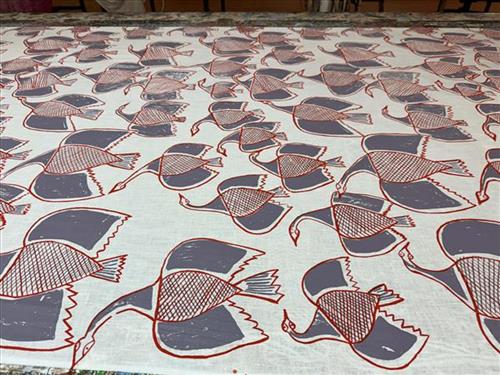
A design by emerging textile designer, Charmaine Pascoe.

‘My Gurrpurdu (diving bird) was white. She flew from Gan Gan to Gapuwiyak and then to Yathalamarra. And then she flew to Gartji.

At Gartji two fresh water seaweed shoots, one long and one short were trying to keep diving bird down. They were saying, “Don’t go away you belong to this country”.  Diving bird said “No! I’m going to travel around to other country”.  She was flapping her wings and then those two seaweed shoots let her go.

Then diving bird flew to make water hole at Gamurra Gu-yurra. She tasted the water but it was salty not fresh water. Then she put her poo like white clay on the ground at Gamurra Gu-yurra. The while clay was used for painting, funerals and ceremonies.

Then she continued to fly to Ji-balbal where she put the white clay again and then from Ji-balbal she dived underwater to Gochan Jiny-jirra. When she got there she got out of the water and was flapping her wings. At the same time she was singing. She was using her wings to dry out so that she could fly to Nangak.’ Charmaine Pascoe 2020

377810582409589


Ngalyod (Rainbow Serpent)

The third part of the story is Ngalyod. Kuninjku people say there are two Rainbow serpents. One is Yingarna, who is said to have been the original creator of all ancestral beings, the ‘first mother’. Yingarna’s first born is Ngaloyd. Yingarna, or her son Ngalyod, are a common subject on contemporary Kuninjku bark paintings. 


Ngalyod is very important in Kuninjku cosmology and is associated with the creation of all sacred sites, djang, in Kuninjku clan lands. For example, ancestral stories relate how creator, or ancestral beings, had travelled across the country and had angered Ngalyod who swallowed them and returned to the earth to create the site. Today, Ngalyod protects these sites, and its power is present in each one. 

Ngalyod has both powers of creation and destruction and is most strongly associated with rain, monsoon seasons and rainbows, which are a manifestation of Ngalyod’s power and presence. Ngalyod is associated with the destructive power of the storms and with the plenty of the wet season, being both a destroyer and a giver of life. Ngalyod’s power controls the fertility of the country and the seasons.

359709482409753


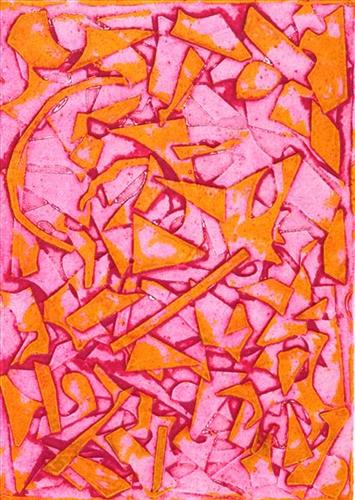
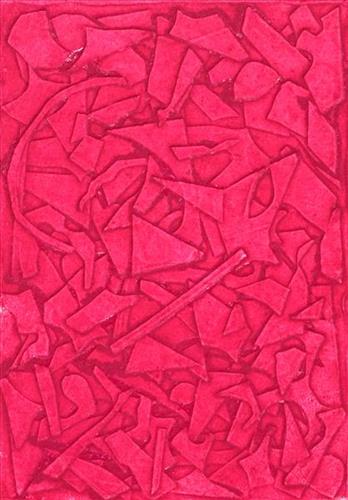
Brainrot vibes

Brainrot vibes mean feeling mentally foggy or exhausted from consuming excessive, low-quality or absurd online content.

Art Centre notes:

Image size: 21 x 15cm

Paper size: 39 x 27cm

The artwork is a collagraph, printed on Hahnamule paper (100% cotton rag with strong archival properties). The textures in the work are drawn from a range of natural fibres, plants and other surfaces.

359709482409750


Skibidi

skibidi is a viral slang term from the skibidi toilet youtube series. meaning something cool, awesome, bad or just nonsensical gibberish.

Art Centre notes:

Image size: 21 x 15cm

Paper size: 39 x 27cm

The artwork is a collagraph, printed on Hahnamule paper (100% cotton rag with strong archival properties). The textures in the work are drawn from a range of natural fibres, plants and other surfaces.

359709482409749


Rizz

Rizz is a brainrot word. rizz is a slang for charm and attractiveness, short for charisma. 

Art Centre notes:

Image size: 21 x 15cm

Paper size: 39 x 27cm

The artwork is a collagraph, printed on Hahnamule paper (100% cotton rag with strong archival properties). The textures in the work are drawn from a range of natural fibres, plants and other surfaces.

359709482409747


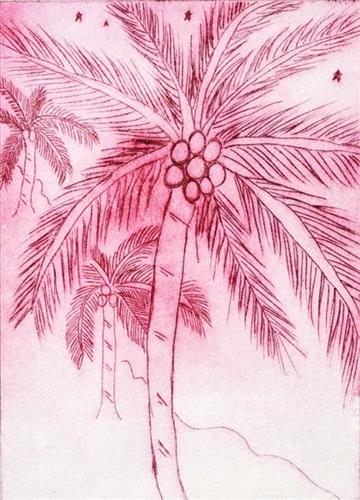
Happy mind, Happy life.

A coconut tree can be a symbol of Life, generosity and resilience.

Art centre notes:

Paper Size: 39 x 27cm

Image Size: 21 x 15cm

The artwork is an Drypoint method printed on Hahnamule paper 100% cotton rag with strong archival properties.

359709482409746


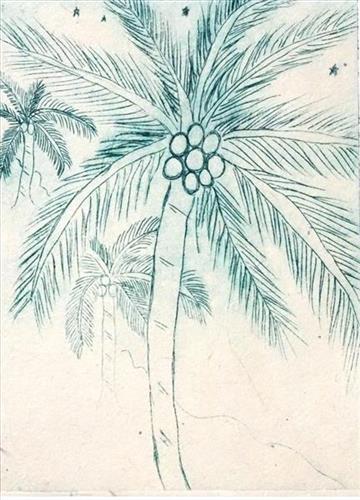
Keep calm and stay strong.

A coconut tree can be a symbol of Life, generosity and resilience.

Art centre notes:

Paper Size: 39 x 27cm

Image Size: 21 x 15cm

The artwork is an Drypoint method printed on Hahnamule paper 100% cotton rag with strong archival properties.