Native Wildlife
Animals from Yindjibarndi Country.
*Damaged at top. Price reflects peeling paint.
This artwork is currently on stretched canvas. We will have to obtain a freight quote if you would like to purchase this work stretched.


Animals from Yindjibarndi Country.
*Damaged at top. Price reflects peeling paint.
This artwork is currently on stretched canvas. We will have to obtain a freight quote if you would like to purchase this work stretched.
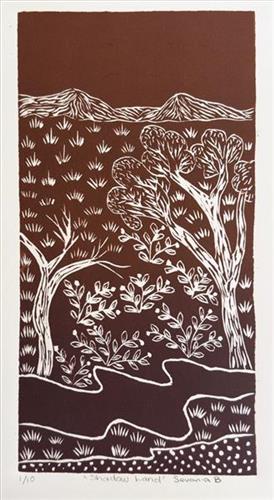
Shadowland
My great Grandmothers Country is where we go hunting. We hunt goanna and bush turkey. We swim in the river. We look for bush banana, bush potato and wild oranges. I am inspired by the beautiful wild flowers that grow there. Being on my Great grandmothers country makes me happy and content.
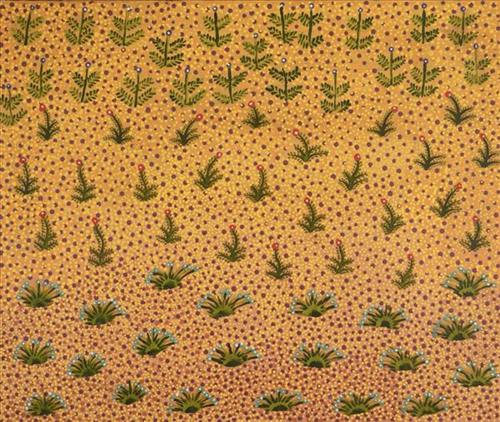
My twin sister Latoya and myself have just started painting bush flowers. Our grandmother Elizabeth Ngwarraye Bonney shows us the good way.
I did the mwanyen (bush tomato) plant because it is sweet tasting fruit that we find in creek beds after the rain.
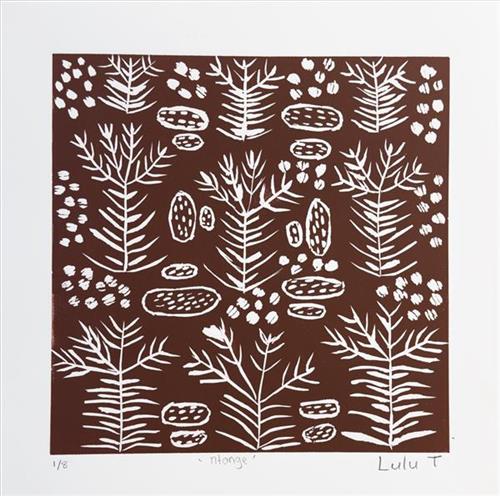
The seeds are collected under a tree by laying a tarp on the ground and hitting the tree continuously until most of the seeds have fallen. Once the seeds are collected they are then ground with a mortar and grinding stone.
A number of these grinding stones have been in families for generations. Once seeds are ground, water is added and mixed until a damper like substance is formed and placed under the coals until cooked.
BIITE
BIITE
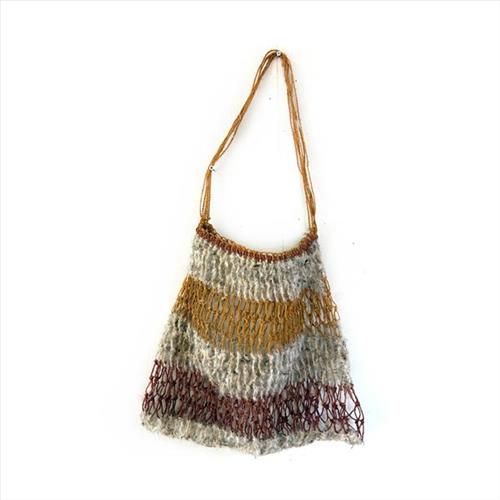
Djerrk (Bush String Bag) is a flexible, open weave bag made from the bark of Balgurr (red-flowered Kurrajong) but can also be made using Banyan Tree or the Cocky Apple Tree.
The bark is harvested by cutting sections of the tree from the trunk. Depending on the size of the tree, this can involve removing small sections or the whole trunk. The inner bark is then softened by being beaten or chewed, then dyed.
Bula’bula weavers exclusively use natural dyes, derived from locally sourced roots, leaves and grasses. These pigments are extracted and infused into dried balgurr fibres by boiling over an open fire, producing the rich, vibrant colours characteristic of contemporary Yolŋu weavings.
Once dyed, the fibre is separated into fine strips the rolled on the thigh to create a rope, otherwise known as bush string. The bush string is woven and knotted to create the Djerrk (String Bag). This bag was used for every day utilitarian purposes, particularly collecting bush foods.

My Great Grandmothers Country is where we go hunting. We hunt arlewatyerr (goanna) and arwengerrp(bush turkey). After the big rains we swim in the river. We look for sweet alkwarrer (bush banana), anaty (bush potato) and akarley (wild oranges).
I am inspired by the beautiful wild flowers that grow there. Being on my great grandmothers country makes me happy and content.
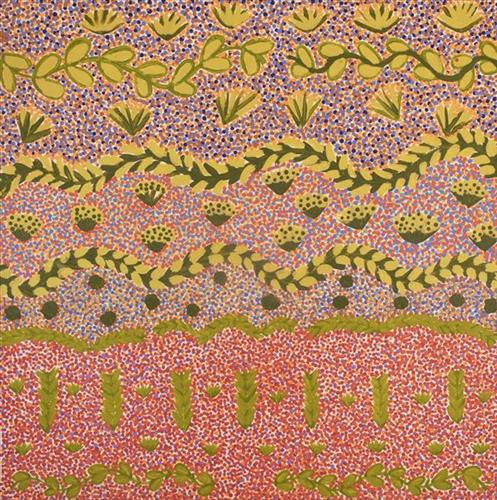
Bush medicine plants are used for healing on the body and for drinking. We make this by grinding the plants with a rock, we use the juice and the fibre of the plant.
We collect bush medicine plants when we are out hunting. Different kinds of plants grow during different seasons.
There are lots of different medicines, we know what their stories are, we learnt them from our parents and we teach these stories to our children.
Bush medicine knowledge is still strong in Ampilatwatja, it continues to be passed down to the younger generations and is widely used.
When the women go hunting they often gather bush medicine. The plants are found in the country around Ampilatwatja, they are used for soothing skin infections and to make a drink to help with colds and coughs.
Painting bush medicine stories is important because it helps to maintain a strong knowledge and culture for the community.
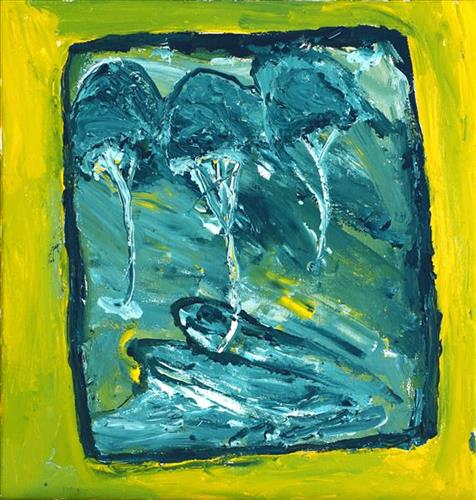
Yalpirakinu is Adrian’s mother’s country. Adrian’s mother is the late Eunice Napangardi, a well known painter herself. His artworks consistently refer to the desert mountains, ridges and trees which are part of Yalpirakinu. Using a restricted colour palette, Adrian’s brushwork is loaded with energy, drama and memories. He is a deliberate and thoughtful painter; reworking, pushing and pulling the image to completion.