221382406650


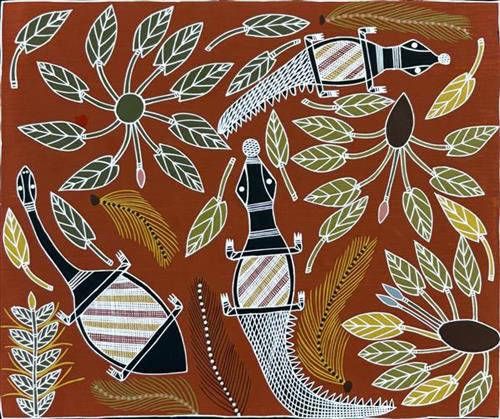
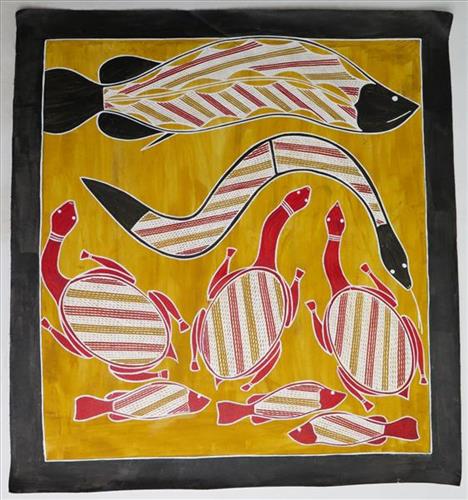
Billabong foods

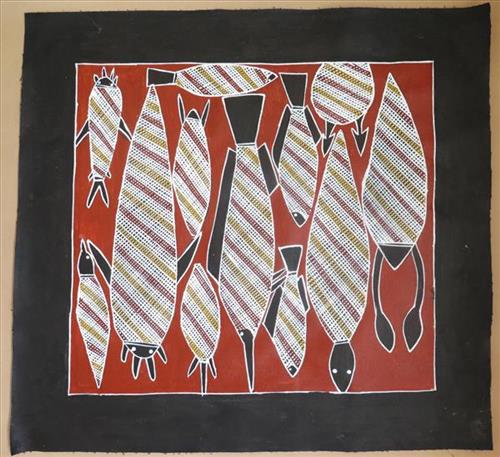
This painting depicts food found at the billabong, including long neck turtle, freshwater snake and young barramundi with mother barramundi. The rarrk represents Yirritja moiety.

Djilpin Arts is a not for profit Aboriginal Corporation that promotes the maintenance, development and transmission of traditional cultural knowledge systems.

For two decades, Djilpin Arts has been working on country with kin and culture, across generations. Our activities are rich in spirit, bringing, healing to the community and linking traditional knowledge with modern enterprise. Our Centre features galleries, museum collection and award winning accommodation for visitors.

Meet local people and artists, learn about traditional life and culture, browse and buy artworks, stay with us and experience seasonal cultural events, tours and immersions.

All artworks are made by local artists living in the community. Artwork reflects the traditional songs and stories that have been passed down through the generations with a contemporary edge: from paintings, prints, fibre art, carvings and dijeridu together to contemporary design prducts and fine woven wire jewellery.
221382406647


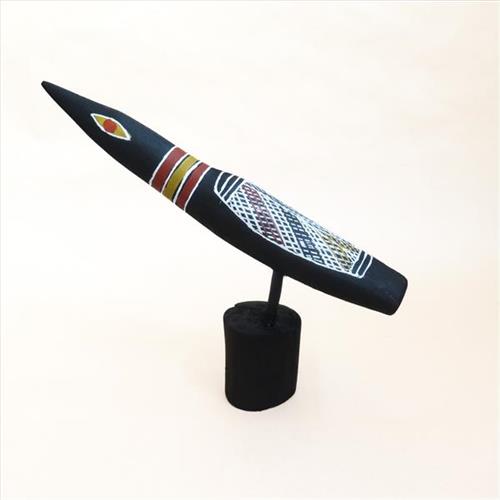
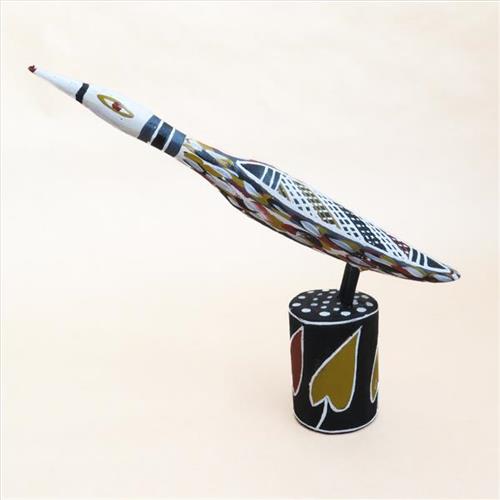
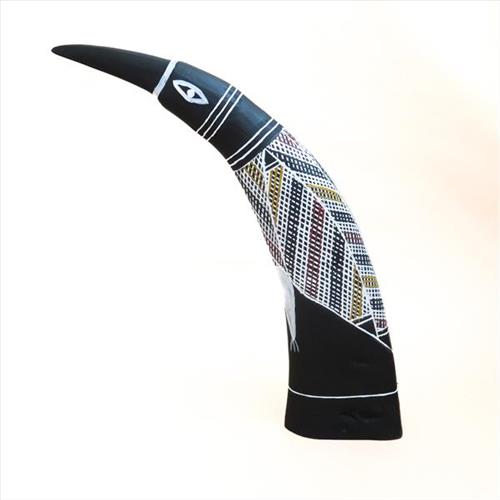
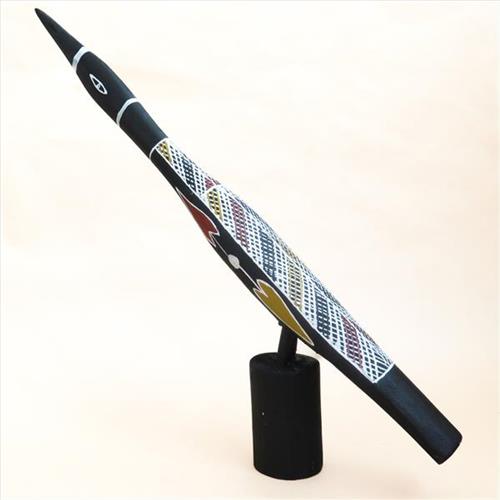
Buffalo horn bird

Djilpin Arts is a not for profit Aboriginal Corporation that promotes the maintenance, development and transmission of traditional cultural knowledge systems.

For two decades, Djilpin Arts has been working on country with kin and culture, across generations. Our activities are rich in spirit, bringing, healing to the community and linking traditional knowledge with modern enterprise. Our Centre features galleries, museum collection and award winning accommodation for visitors.

Meet local people and artists, learn about traditional life and culture, browse and buy artworks, stay with us and experience seasonal cultural events, tours and immersions.

All artworks are made by local artists living in the community. Artwork reflects the traditional songs and stories that have been passed down through the generations with a contemporary edge: from paintings, prints, fibre art, carvings and dijeridu together to contemporary design prducts and fine woven wire jewellery.
221382406645


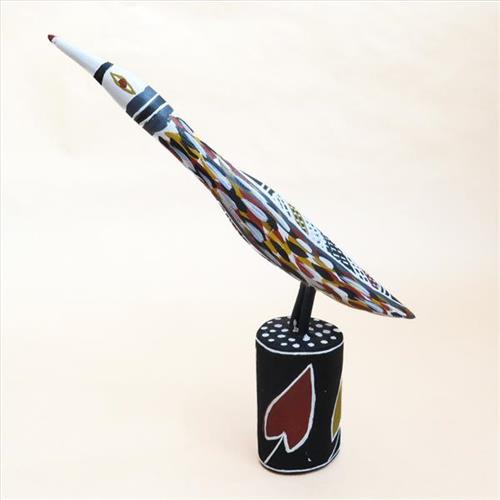
Bird wood carving

Wood carving has always been part of Aboriginal culture and Djilpin artists continue this tradition. Men carved wood for many purposes – tools for hunting or gathering food, axes and knives for building shelters, spears and clubs for protection of their lives and territory, objects for ceremony and to mark sacred sites.

Hunting implements include the boomerang, woomera and spear. The woomera is a lever which helps to increase the speed and distance the spear travels. Clapsticks are used as percussion instruments by the Songmen to accompany dancing along with the didgeridoo (mago).

As well as the more functional carvings, artists portray animals and birds in wood, and these carvings are often painted. Ceremonial carvings include spirit creatures including mukuy (devil devils) and mimi.

Some fine mimi figures have been cast in bronze.

221382406644


Bird wood carving

Wood carving has always been part of Aboriginal culture and Djilpin artists continue this tradition. Men carved wood for many purposes – tools for hunting or gathering food, axes and knives for building shelters, spears and clubs for protection of their lives and territory, objects for ceremony and to mark sacred sites.

Hunting implements include the boomerang, woomera and spear. The woomera is a lever which helps to increase the speed and distance the spear travels. Clapsticks are used as percussion instruments by the Songmen to accompany dancing along with the didgeridoo (mago).

As well as the more functional carvings, artists portray animals and birds in wood, and these carvings are often painted. Ceremonial carvings include spirit creatures including mukuy (devil devils) and mimi.

Some fine mimi figures have been cast in bronze.

221382406643


Bird wood carving

Wood carving has always been part of Aboriginal culture and Djilpin artists continue this tradition. Men carved wood for many purposes – tools for hunting or gathering food, axes and knives for building shelters, spears and clubs for protection of their lives and territory, objects for ceremony and to mark sacred sites.

Hunting implements include the boomerang, woomera and spear. The woomera is a lever which helps to increase the speed and distance the spear travels. Clapsticks are used as percussion instruments by the Songmen to accompany dancing along with the didgeridoo (mago).

As well as the more functional carvings, artists portray animals and birds in wood, and these carvings are often painted. Ceremonial carvings include spirit creatures including mukuy (devil devils) and mimi.

Some fine mimi figures have been cast in bronze.

221382406641


Bird wood carving

Wood carving has always been part of Aboriginal culture and Djilpin artists continue this tradition. Men carved wood for many purposes – tools for hunting or gathering food, axes and knives for building shelters, spears and clubs for protection of their lives and territory, objects for ceremony and to mark sacred sites.

Hunting implements include the boomerang, woomera and spear. The woomera is a lever which helps to increase the speed and distance the spear travels. Clapsticks are used as percussion instruments by the Songmen to accompany dancing along with the didgeridoo (mago).

As well as the more functional carvings, artists portray animals and birds in wood, and these carvings are often painted. Ceremonial carvings include spirit creatures including mukuy (devil devils) and mimi.

Some fine mimi figures have been cast in bronze.

221382406640


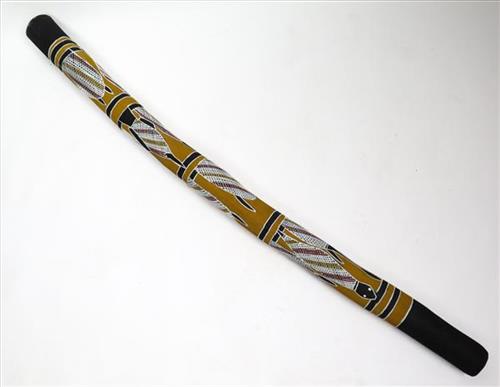
Didjeridu

Didjeridus from this region are made in the West Arnhem style. Called Mago, they’re different and special and follow the tradition made famous by Beswick’s Mago Master, elder David Blanasi.

Ghunmarn didjeridus are sourced on country, and hand cut from Woolybutt trees. Artists travel considerable distances on foot to find the right woolybutt tree naturally hollowed out by termites. Good instruments are hand-cut and taken back to camp to be worked, shaped, sanded, tuned and then finally painted.

These are top quality musical instruments, highly regarded worldwide, and still used in ceremony and performance today. Featuring traditional designs handed painted with a Jarlk grass brush.


Most Ghunamrn didjeridus are high pitch D, low pitch D, F, C or G. The longer the dij the lower the pitch, a shorter didj will give a higher sound.

221382406639


Billabong creatures with waterlillies

This painting depicts creatures found in the billabong including catfish, bream, swordfish. Also depicted are waterlillies.

Djilpin Arts is a not for profit Aboriginal Corporation that promotes the maintenance, development and transmission of traditional cultural knowledge systems.

For two decades, Djilpin Arts has been working on country with kin and culture, across generations. Our activities are rich in spirit, bringing, healing to the community and linking traditional knowledge with modern enterprise. Our Centre features galleries, museum collection and award winning accommodation for visitors.

Meet local people and artists, learn about traditional life and culture, browse and buy artworks, stay with us and experience seasonal cultural events, tours and immersions.

All artworks are made by local artists living in the community. Artwork reflects the traditional songs and stories that have been passed down through the generations with a contemporary edge: from paintings, prints, fibre art, carvings and dijeridu together to contemporary design prducts and fine woven wire jewellery.
115682406608


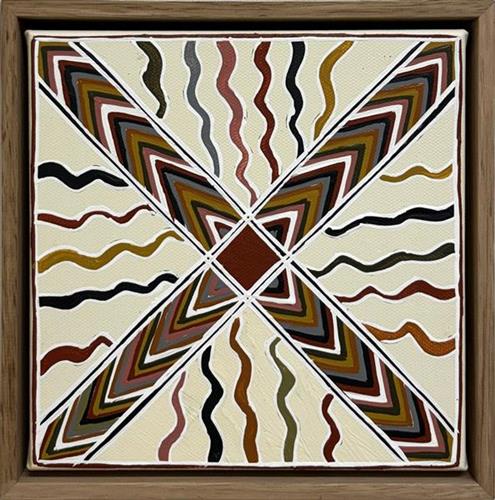
Lungurrma (North-east Wind)

Lungurrma (North-east Wind) heralds the new season when seas are calm and new growth starts. The months for this type of wind are October to December. There are big clouds without thunder or rain. The triangular patterning represents monsoon clouds ‘standing up’ on the northern horizon. The Lunggurrma design belongs to the Yirritja moiety clans linked to this design are known as the ‘line of clouds’ clans

115682406550


Raypiny Dhawu (Fresh Water Story)

All Aboriginal people originate from a spiritual source, fixed in a particular place in their land or the sea. These ‘spiritual reservoirs’ are often in the form of special waterholes made by Wangarr (creative spirits) that were created long ago close to the beginning of time. These creator beings moved across the countryside, shaping the land and implanting in each tract of country, the spiritual life force for the people who were to own it. These creative spirits took many forms and when they gave the land to each group, they also gave songs, dances, ceremony, the associated laws and language.


The creation story for Ganalbingu people took place near the middle section of the Glyde River where it becomes the Goyder River. Their land, Ngaliyindi, sits astride the Arafura Swamp in Central Arnhem Land. Many Ganalbingu artists paint totemic species significant to their clan. These can include baru (crocodile), banda (long necked turtle), buliya (catfish), yalman (waterlilies), gumang (magpie geese), dakawa (fresh water yabby), ratjuk (barramundi), warrnyu (flying fox) and more.