114182406953


Multju – Nora’s family’s country

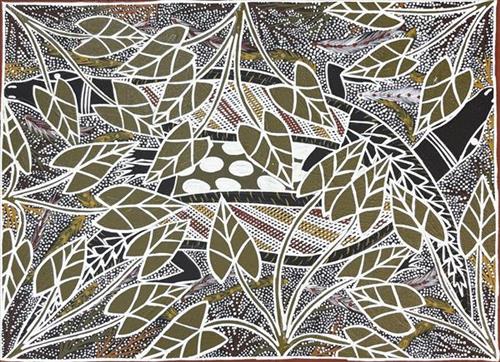
Nora begins her stories with simple lines, drawn on paper, canvas, or etched into the red earth, gradually transforming into rich visual narratives of her homeland, Multju. This area, marked by significant rock-holes. where she was born is  Mulga country and a great place to find Honey Ants. There is a story of a mother and her two children successfully finding these ants, savouring the sweet rewards of their efforts. Through vibrant colours and intricate details, Nora’s art celebrates this story.

221382406878


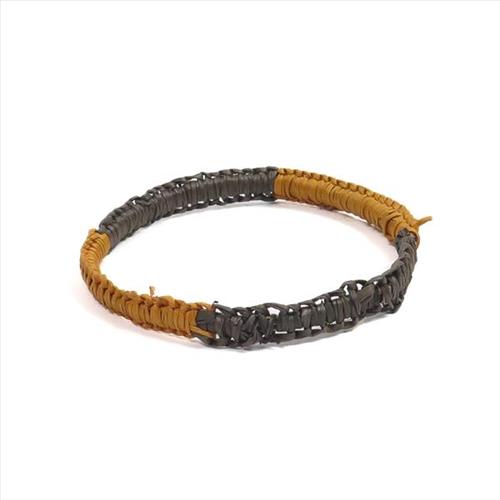
Woven bracelet


Pandanus fibre art is labour intensive requiring a high level of care and fine needlework. Finished works are both functional and beautiful. Women collect pandanus by pulling from the top of a pandanus tree, stripping then dying the leaves using natural bush colour.

115682406863


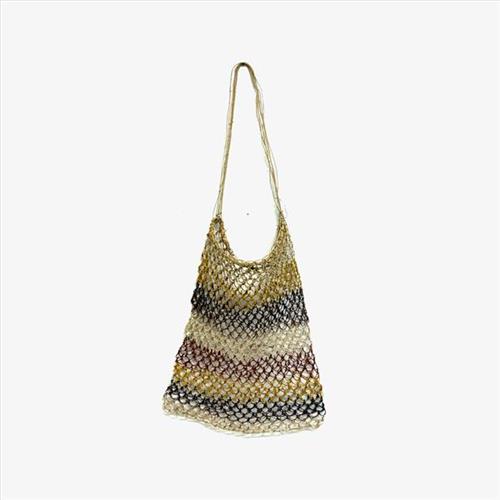
Djerrk (Bush String Bag)

Djerrk (Bush String Bag) is a flexible, open weave bag made from the bark of Balgurr (red-flowered Kurrajong) but can also be made using Banyan Tree or the Cocky Apple Tree.

The bark is harvested by cutting sections of the tree from the trunk. Depending on the size of the tree, this can involve removing small sections or the whole trunk. The inner bark is then softened by being beaten or chewed, then dyed.

Bula’bula weavers exclusively use natural dyes, derived from locally sourced roots, leaves and grasses. These pigments are extracted and infused into dried balgurr fibres by boiling over an open fire, producing the rich, vibrant colours characteristic of contemporary Yolŋu weavings.

Once dyed, the fibre is separated into fine strips the rolled on the thigh to create a rope, otherwise known as bush string. The bush string is woven and knotted to create the Djerrk (String Bag). This bag was used for every day utilitarian purposes, particularly collecting bush foods.

221382406857


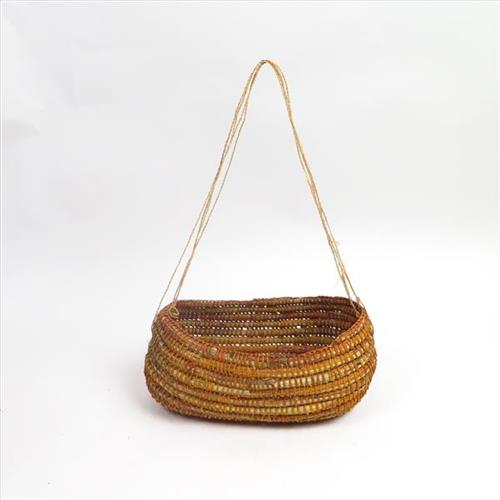
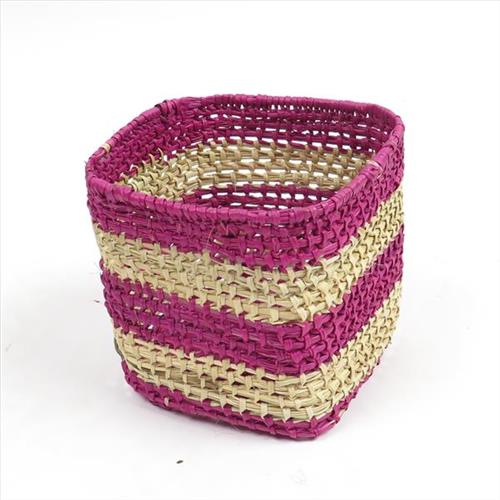
Woven basket


Pandanus fibre art is labour intensive requiring a high level of care and fine needlework. Finished works are both functional and beautiful. Women collect pandanus by pulling from the top of a pandanus tree, stripping then dying the leaves using natural bush colour.

221382406856


Bush Utensil Holder


Pandanus fibre art is labour intensive requiring a high level of care and fine needlework. Finished works are both functional and beautiful. Women collect pandanus by pulling from the top of a pandanus tree, stripping then dying the leaves using natural bush colour.

221382406855


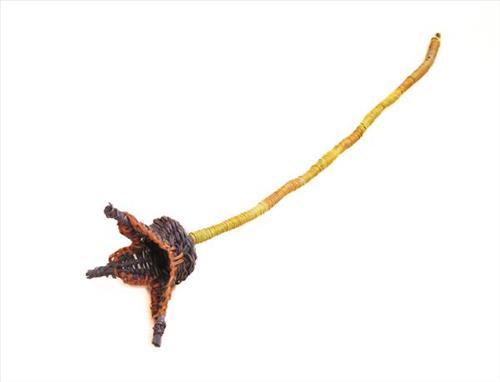
Woven flower


Pandanus fibre art is labour intensive requiring a high level of care and fine needlework. Finished works are both functional and beautiful. Women collect pandanus by pulling from the top of a pandanus tree, stripping then dying the leaves using natural bush colour.

221382406851


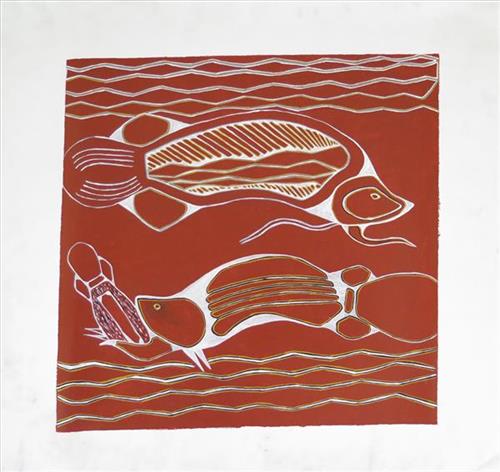
Freshwater barramundi and saltwater barramundi

Djilpin Arts is a not for profit Aboriginal Corporation that promotes the maintenance, development and transmission of traditional cultural knowledge systems.

For two decades, Djilpin Arts has been working on country with kin and culture, across generations. Our activities are rich in spirit, bringing, healing to the community and linking traditional knowledge with modern enterprise. Our Centre features galleries, museum collection and award winning accommodation for visitors.

Meet local people and artists, learn about traditional life and culture, browse and buy artworks, stay with us and experience seasonal cultural events, tours and immersions.

All artworks are made by local artists living in the community. Artwork reflects the traditional songs and stories that have been passed down through the generations with a contemporary edge: from paintings, prints, fibre art, carvings and dijeridu together to contemporary design prducts and fine woven wire jewellery.
221382406848


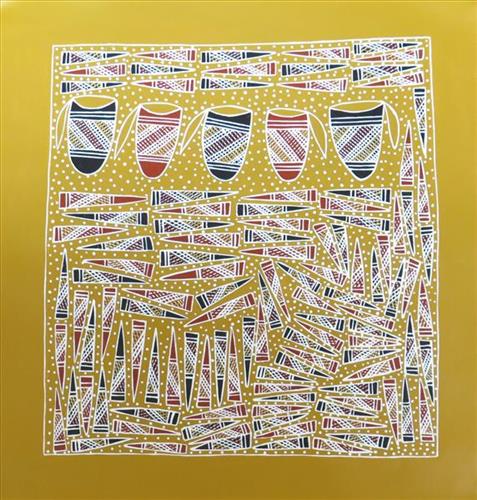
Dimbuka and stone spears

This painting represents five dimbuka dilly bags surrounded by many stone spears. It is a Wägilak story.

Djilpin Arts is a not for profit Aboriginal Corporation that promotes the maintenance, development and transmission of traditional cultural knowledge systems.

For two decades, Djilpin Arts has been working on country with kin and culture, across generations. Our activities are rich in spirit, bringing, healing to the community and linking traditional knowledge with modern enterprise. Our Centre features galleries, museum collection and award winning accommodation for visitors.

Meet local people and artists, learn about traditional life and culture, browse and buy artworks, stay with us and experience seasonal cultural events, tours and immersions.

All artworks are made by local artists living in the community. Artwork reflects the traditional songs and stories that have been passed down through the generations with a contemporary edge: from paintings, prints, fibre art, carvings and dijeridu together to contemporary design prducts and fine woven wire jewellery.

221382406842


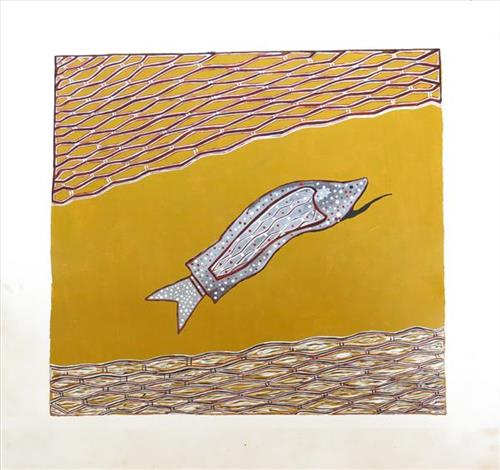
Barramundi between saltwater and reshwater

The painting represents a barramundi in the sand between the rough saltwater at the bottom and the quieter, more clear freshwater at the top. This barramundi travels to the saltwater for food and then returns to the freshwater afterwards.

Djilpin Arts is a not for profit Aboriginal Corporation that promotes the maintenance, development and transmission of traditional cultural knowledge systems.

For two decades, Djilpin Arts has been working on country with kin and culture, across generations. Our activities are rich in spirit, bringing, healing to the community and linking traditional knowledge with modern enterprise. Our Centre features galleries, museum collection and award winning accommodation for visitors.

Meet local people and artists, learn about traditional life and culture, browse and buy artworks, stay with us and experience seasonal cultural events, tours and immersions.

All artworks are made by local artists living in the community. Artwork reflects the traditional songs and stories that have been passed down through the generations with a contemporary edge: from paintings, prints, fibre art, carvings and dijeridu together to contemporary design prducts and fine woven wire jewellery.
This painting represents five dimbuka dilly bags surrounded by many stone spears. It is a Wägilak story.

Djilpin Arts is a not for profit Aboriginal Corporation that promotes the maintenance, development and transmission of traditional cultural knowledge systems.

For two decades, Djilpin Arts has been working on country with kin and culture, across generations. Our activities are rich in spirit, bringing, healing to the community and linking traditional knowledge with modern enterprise. Our Centre features galleries, museum collection and award winning accommodation for visitors.

Meet local people and artists, learn about traditional life and culture, browse and buy artworks, stay with us and experience seasonal cultural events, tours and immersions.

All artworks are made by local artists living in the community. Artwork reflects the traditional songs and stories that have been passed down through the generations with a contemporary edge: from paintings, prints, fibre art, carvings and dijeridu together to contemporary design prducts and fine woven wire jewellery.
115682406824


Bäru Dhäwu (Crocodile Story)

Bäru (the crocodile man), was from the Gumatj clan. People usually call him Gurdu Gurdu or Bäru which means crocodile. He lived his life at a place called Yirrkala. Living near him were other people, and when Bäru didn’t have enough to eat he began to kill and eat these other people. After a while others noticed that some people were missing. When Bäru went to the toilet, the people could smell this strong smell, so they knew that he ate the other people. Some men went to get help and they took message sticks to the other tribes. Some were sending smoke signals. When they came to Bäru’s camp they started to spear him in the left side of his ribs. He dropped into the fire and burnt his left hand and maybe his right hand. He then ran into the bush and yelled to his countrymen – the animals, birds and fish that live on the land and in the sea. He stopped and he named the tribes and clans and also the places until he came to a place called Gamarru/Guyurru. There he took a rest and said to himself “This is where I stop and call this place Gamarru/Guyurru”. Bäru, still in pain from the fire, then jumped into the water and turned himself into a crocodile. The fire left scars on his back. Bäru paintings belong to Gumatj and Warrawarra and also the Marpi clan. This painting is used at death ceremonies or initiations and it normally is painted on the belly, which means the person the design is painted on is part of Gurdu Gurdu (the crocodile people).