377815582407066


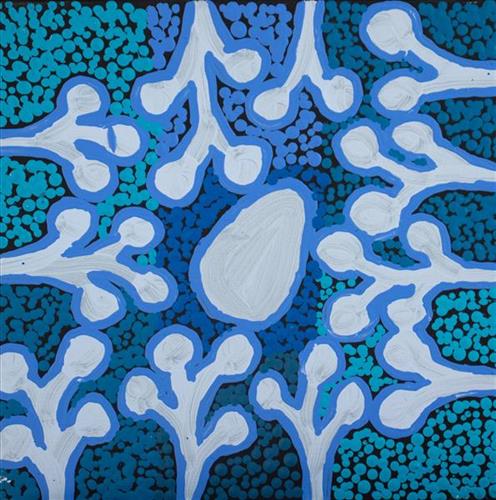
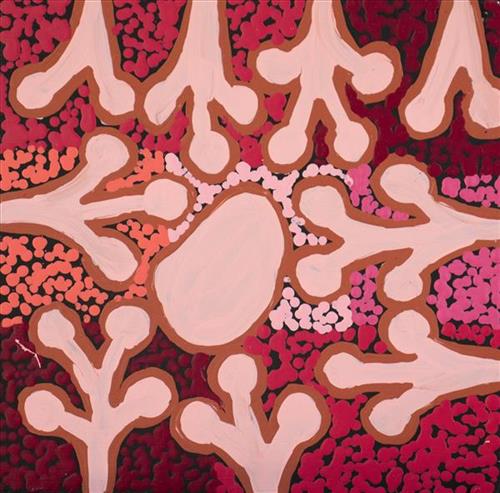
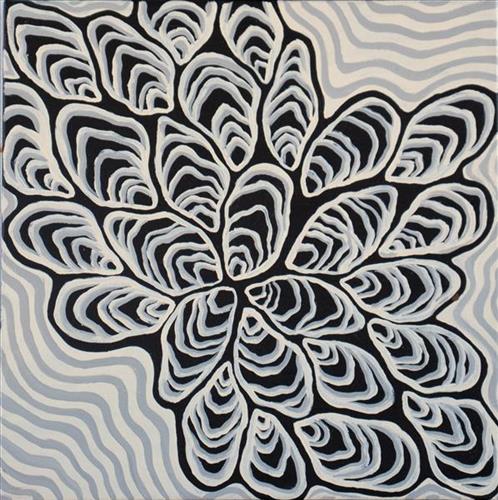
Mangala Country

“Mangala Country is in the Great Sandy Desert area, stretching to the river near and along the Liveringa River, and into the other part of the Martuwarra, near Udialla. The white in the painting represents the sacredness of my Mangala Country. I never met my grandfather, Mr Jadai — my mother’s father — but I’ve heard many stories of him. Even though he’s not with us in the physical, I can feel him and all my Mangala family when I go out on Country and when I paint our Mangala Country.”
 – Nuriah Jadai

This artwork honours Mangala Country and the families who carry its stories — walking, camping, hunting and gathering across desert edges, river systems and claypans. It remembers old people moving between soaks and sandhills, and later travelling to La Grange Mission (now Bidyadanga), keeping language, law and family strong.

Patterns trace tracks of animals and people; dots and lines follow water after rain; maps, camps, soaks and sandhills. The work also reflects the way caring for Country continues today — through ranger work and community leadership that bring together cultural knowledge and science to look after land and water.
377815582407065


Feeding Season

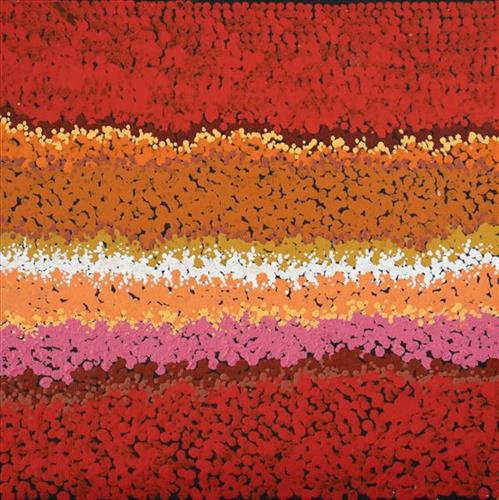
“Bardi people learn to live off the land and the sea. We use certain plants to indicate which animals are good for eating. For example, the wattle flower tells us the mullet are good to eat; their fat and their eggs are best when the wattle is flowering. We need to know which plants create spears and which roots paralyse the fish so we can catch them. We use the land to help us hunt the sea. My paintings are all about how we use the land to hunt the sea. All the colours I use have meaning.”
 – Jaymee-Lee Chaquebor

Jaymee-Lee’s paintings are deeply rooted in Bardi culture, storytelling, and the connection between land and sea. Each artwork reflects knowledge passed down by Elders, showing how Bardi people use Country to guide hunting and fishing practices. Her works feature culturally significant animals and bushfoods — moonga (sugar bag), goordaarlga (white currant), goodoo (mud clam), ambarn (manta ray), big mullet (loongoorl, baitfish), jooloo (Spanish flag), budumbud (blue bone), and stingray — representing survival, hunting, and seasonal knowledge. The colour choices carry meaning: black represents the strength of rocks and sea shadows, while gold reflects sunlight on the water. Pink and earthy tones mirror fish flesh, sand, and tidal pool reflections.

377815582407064


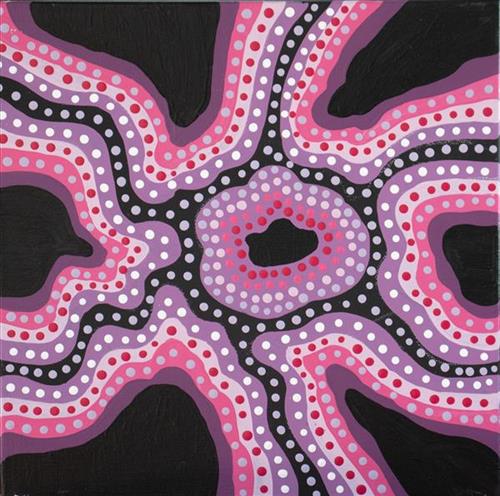
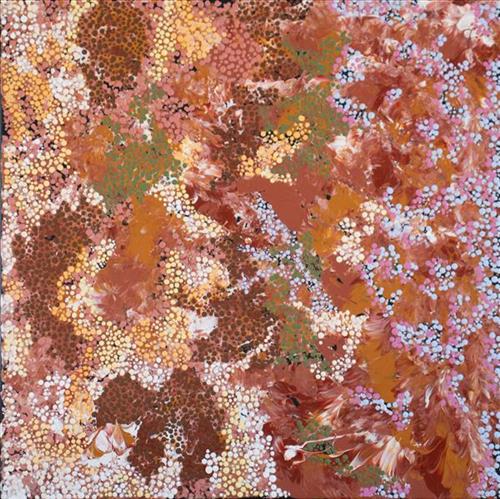
Country

“My mother’s, my great-grandmother’s and my grandfather’s Country. When we go out on Country, you can feel Country — and Country feels you. I feel blessed for such a beautiful Country. It’s emotional, hearing stories about my old people.

I love painting desert colours because that’s where our old people were walking around and were born — hunting and camping. I feel good painting Country. I like hearing the stories and painting about it.”
– Jessica Jadai

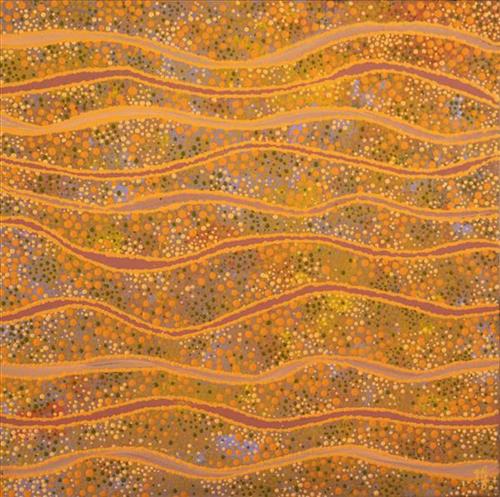
This artwork shares the story of Kulyakartu, a vast and peaceful area north-east of the community, on the edge of Nyangumarta and Martu Country. Kulyakartu is a place of wide open skies, long claypans, sandhills and soft grasses that come alive after rain.

Families remember camping there, visiting waterholes, looking for goanna and bush foods, watching birds, and travelling with old people who knew every dune, track and soak. The painting celebrates the beauty and calm of Kulyakartu, often shown through soft lines and dots that follow the movement of water and sand. It honours the knowledge of where to find water, how to move across Country, and the deep belonging felt when returning to ancestral places.

Through this work, the artist invites viewers to feel that stillness and connection — the strength of Country, memory and family.

This artwork honours Mangala Country and the families who carry its stories — walking, camping, hunting and gathering across desert edges, river systems and claypans. It remembers old people moving between soaks and sandhills, and later travelling to La Grange Mission (now Bidyadanga), keeping language, law and family strong.

Patterns trace tracks of animals and people; dots and lines follow water after rain; maps, camps, soaks and sandhills. The work also reflects the way caring for Country continues today — through ranger work and community leadership that bring together cultural knowledge and science to look after land and water.
377815582407062


Mangala Country

“Mangala Country is in the Great Sandy Desert area, stretching to the river near and along the Liveringa River, and into the other part of the Martuwarra, near Udialla. The white in the painting represents the sacredness of my Mangala Country. I never met my grandfather, Mr Jadai — my mother’s father — but I’ve heard many stories of him. Even though he’s not with us in the physical, I can feel him and all my Mangala family when I go out on Country and when I paint our Mangala Country.”
 – Nuriah Jadai

This artwork honours Mangala Country and the families who carry its stories — walking, camping, hunting and gathering across desert edges, river systems and claypans. It remembers old people moving between soaks and sandhills, and later travelling to La Grange Mission (now Bidyadanga), keeping language, law and family strong.

Patterns trace tracks of animals and people; dots and lines follow water after rain; maps, camps, soaks and sandhills. The work also reflects the way caring for Country continues today — through ranger work and community leadership that bring together cultural knowledge and science to look after land and water.
377815582407061


Nyangumarta Warrarn (Country)

“Nyangumarta Country is home to the Nyangumarta people — from the desert to the seaside. Old people lived and walked on this land, and we as Nyangumarta still look after it today. We go out on Country, hunting and living from the traditional foods of the land.

Nyangumarta people travelled and lived between the desert and the sea. This painting tells a story from the Nyangumarta Dreaming — of a woman who walked with her child along this Country collecting seafood, mayi. They were both on the reef when the tide came in and drowned them. Today, two rocks remain out by the sea, marking their story.

We carry our culture, and most people tell stories through their painting — that’s how it’s always been. Passing knowledge down. Younger people might not see it now, but in the future, they might want to follow in their Elders’ footsteps — carrying on the skills, knowledge, and way of life. It can be anything: painting, hunting, becoming leaders.”
 – Venetta Yanawana

This artwork honours Nyangumarta Country — from the long sweep of Eighty Mile Beach and coastal flats to the rolling sand dunes and salt lakes of the Great Sandy Desert. It holds the movement between saltwater and desert: tides, reefs and mangroves to the west; dunes, claypans and waterholes to the east.

Lines flow like wind across spinifex and waves in the ocean; dots gather where waters sit after rain; colours shift from deep blues to desert reds and whites of saltpan. The painting also reflects the ongoing work of Nyangumarta families and rangers to look after Country — sea and land — guided by community plans and Indigenous Protected Area management.

377815582407060


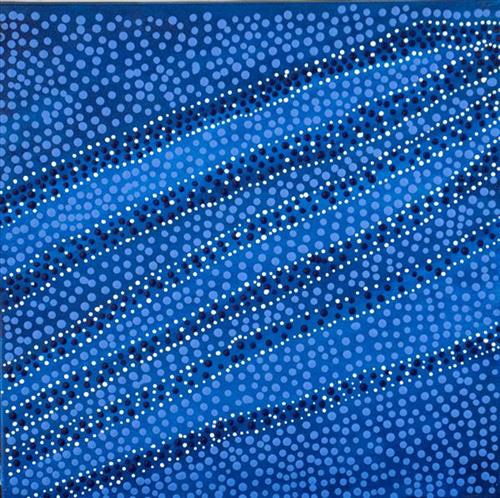
Nyangumarta Country

“The story behind this painting is from when I worked with the Nyangumarta Rangers going out on Country. You look at the landscapes and see the beautiful colours. The green represents the trees and native plants, and the red and orange represent the colours of the sand dunes and the land. You feel peace and at home when on Country.”
 – Tahlia Badal

This artwork honours Nyangumarta Country — from the long sweep of Eighty Mile Beach and coastal flats to the rolling sand dunes and salt lakes of the Great Sandy Desert. It holds the movement between saltwater and desert: tides, reefs and mangroves to the west; dunes, claypans and waterholes to the east.

Lines flow like wind across spinifex and waves in the ocean; dots gather where waters sit after rain; colours shift from deep blues to desert reds and whites of saltpan. The painting also reflects the ongoing work of Nyangumarta families and rangers to look after Country — sea and land — guided by community plans and Indigenous Protected Area management.

377815582407059


Papilija

“Papilija is a yinta (soak) in Kulyakartu. My grandmother and her siblings’ Country. They used to go there all the time. Good kapi (water) for drinking and yukarri (green) all around. Lots of warta (trees). Plenty of bush tucker.”
 – Kiarah Mandijalu-Jadai

This artwork shares the story of Kulyakartu, a vast and peaceful area north-east of the community, on the edge of Nyangumarta and Martu Country. Kulyakartu is a place of wide open skies, long claypans, sandhills and soft grasses that come alive after rain.

Families remember camping there, visiting waterholes, looking for goanna and bush foods, watching birds, and travelling with old people who knew every dune, track and soak. The painting celebrates the beauty and calm of Kulyakartu, often shown through soft lines and dots that follow the movement of water and sand. It honours the knowledge of where to find water, how to move across Country, and the deep belonging felt when returning to ancestral places.

Through this work, the artist invites viewers to feel that stillness and connection — the strength of Country, memory and family.

377815582407058


Papilija

“Papilija is a yinta (soak) in Kulyakartu. My grandmother and her siblings’ Country. They used to go there all the time. Good kapi (water) for drinking and yukarri (green) all around. Lots of warta (trees). Plenty of bush tucker.”
 – Kiarah Mandijalu-Jadai

This artwork shares the story of Kulyakartu, a vast and peaceful area north-east of the community, on the edge of Nyangumarta and Martu Country. Kulyakartu is a place of wide open skies, long claypans, sandhills and soft grasses that come alive after rain.

Families remember camping there, visiting waterholes, looking for goanna and bush foods, watching birds, and travelling with old people who knew every dune, track and soak. The painting celebrates the beauty and calm of Kulyakartu, often shown through soft lines and dots that follow the movement of water and sand. It honours the knowledge of where to find water, how to move across Country, and the deep belonging felt when returning to ancestral places.

Through this work, the artist invites viewers to feel that stillness and connection — the strength of Country, memory and family.

377815582407057


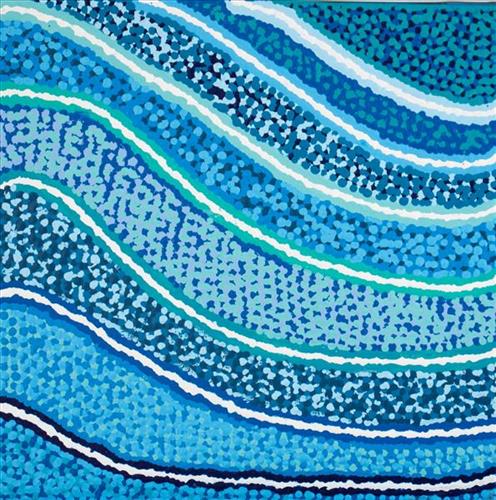
Desert to the Sea

This artwork reflects the artist’s connection to Bidyadanga, a place where the desert meets the sea. Through colour, pattern, and texture, the painting captures important themes that shape the identity of the community and Art Centre.

Bidyadanga sits on Karajarri Country, where desert Country meets saltwater Country. The community is home to Karajarri people and to desert families who travelled from the Great Sandy Desert to La Grange Mission in the 1960s and 70s, during a time when drought and changing conditions dried desert water sources. The first five language groups to build the community together were Nyangumarta, Mangala, Yulparija, Juwaliny and Karajarri. Today, Bidyadanga continues to grow, welcoming families from across the Kimberley, Pilbara and beyond, creating a strong and diverse cultural community.

Artists draw on stories of place, family, movement, and survival — caring for both land and sea, hunting and fishing, and living between two immense environments. Patterns, marks, and flowing forms echo desert dunes, waterholes, tidal flats, reefs, bushfoods, and sea life, honouring the knowledge held across generations.

In this work, the artist celebrates the beauty of Country and community, offering a glimpse into the rich histories, cultural strength, and enduring connection to land, sea, and way of life.

377815582407054


Mangala Country

“I paint Mangala because I love going there. I feel at peace and connected to the old people when I paint this Country. I like painting the flowers, the wet season and the waterholes.

My son is learning to paint. He feels real good and happy when he is painting about Country. I have three little ones and one big son. We went out to Mangala Country and camped with the family — with Jadai mob. The kids love going there. They feel at home, feel safe and at peace.”
 – Marika Jadai

This artwork honours Mangala Country and the families who carry its stories — walking, camping, hunting and gathering across desert edges, river systems and claypans. It remembers old people moving between soaks and sandhills, and later travelling to La Grange Mission (now Bidyadanga), keeping language, law and family strong.

Patterns trace tracks of animals and people; dots and lines follow water after rain; maps, camps, soaks and sandhills. The work also reflects the way caring for Country continues today — through ranger work and community leadership that bring together cultural knowledge and science to look after land and water.