220982408522


Rosie Ngwarraye Holmes – Alkwarre (Bush Banana)

There are four women preparing Alkwarre (Bush Banana) they are cooking the bananas in the coals, as they sit around the campfire. The bananas taste nice, soft and sweet. My grandmother taught me all about bush tucker and how to hunt. My two grandmothers took us out hunting together, they were sisters – Maudie and Georgina Holmes, they taught me all their knowledge, the old knowledge

220982408518


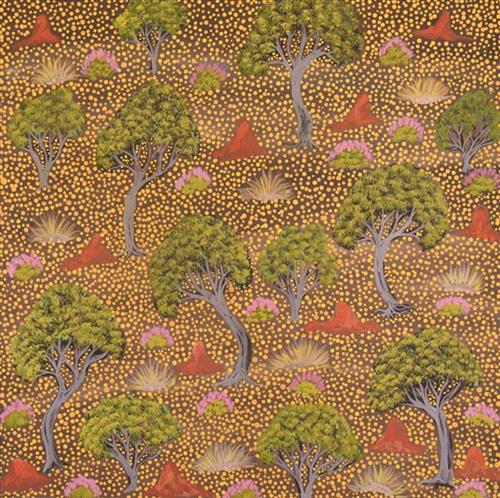
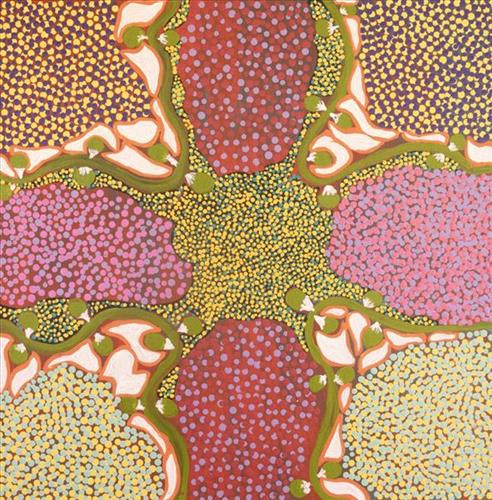
Gunderson Kemarre Lewis – Great Grandmothers Country

I paint my Great Grandmothers country around Canteen Creek. Long time ago she hunted around this soakage in this country. When I paint, I paint that country, the soakage the bushflowers the sandhills and the distant mountains.

I hunt this country now.

115682408490


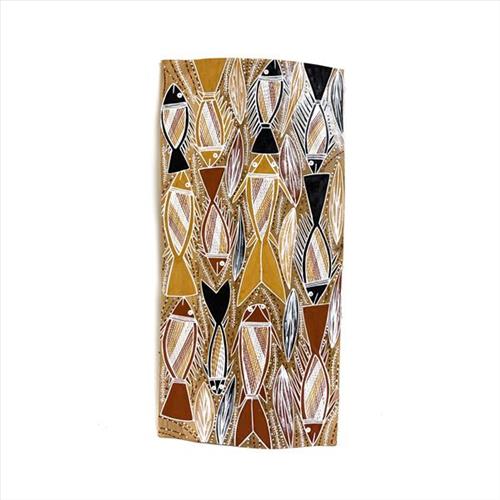
JB Buliya – (Catfish)

JB paints stories from his Dhuwa homeland in northeast Arnhem Land. Stories are passed on either paternally or maternally and JB would have learnt these stories from his ancestors. The cross-hatching style (Rrark) is a traditional painting style of this area and can represent elements such as water, air and wind.

His paintings often feature totemic animals of the fresh waters of North East Arnhem Land.

115682408489


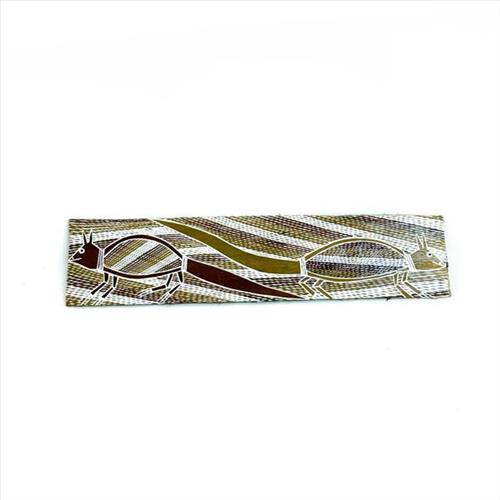
JB Fisher – Narrgi’ṉarrgi (possum- sugar glider)

JB paints stories from his Dhuwa homeland in northeast Arnhem Land. Stories are passed on either paternally or maternally, and JB would have learnt these stories from his ancestors. The cross-hatching style is a traditional painting style of this area and can represent elements such as water, air and wind.

His paintings often feature totemic animals of the fresh waters of north east Arnhem Land.

115682408487


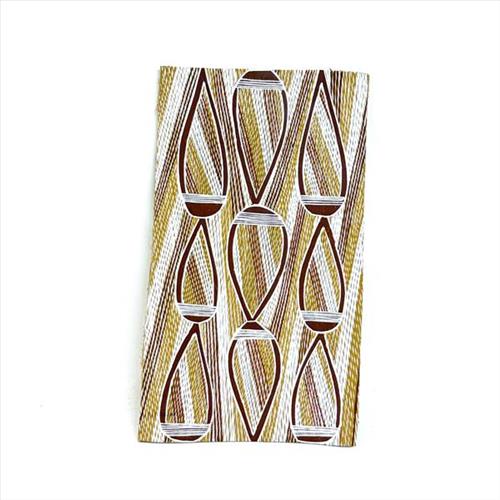
JB Fisher – Wangye (yams)

JB Fisher paints stories from his Dhuwa homeland in north east Arnhem Land. Stories are passed on either paternally or maternally, and JB would have learnt these stories from his ancestors. The cross-hatching style is a traditional painting style of this area and can represent elements such as water, air and wind.

115682408486


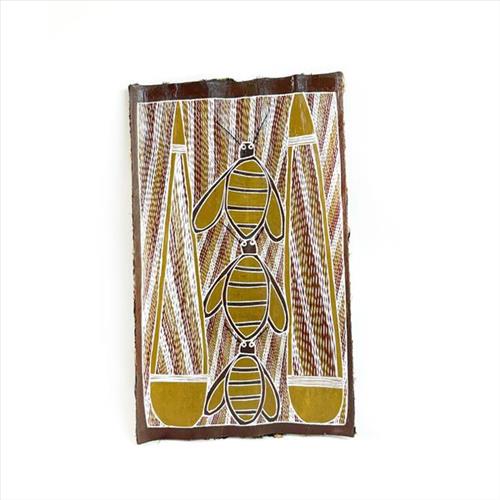
JB Fisher – Sugar bag (honey) Story

JB Fisher often paints subjects related to the Sugar Bag story, a story he has inherited. Sugarbags, or Gulka as it is locally known, are the native honeys found in the bush surrounding Ramingining. 

In this painting, JB paints the spoons made from natural materials that people use to eat scoop up the honey and eat it. 

Sugarbag story is related to the Mewal place, a significant area represented by the special shaped rock, situated in JB Fisher’s Father’s Country, just outside of Ramingining Community in north east Arnhem Land.

220182408477


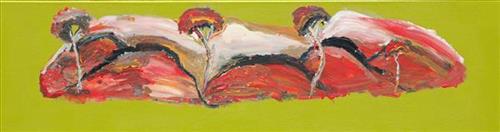
Yalpirakinu

Yalpirakinu is Adrian’s mother’s country. Adrian’s mother is the late Eunice Napangardi, a well known painter herself. His artworks consistently refer to the desert mountains, ridges and trees which are part of Yalpirakinu. Using a restricted colour palette, Adrian’s  brushwork is loaded with energy, drama and memories. He is a deliberate and thoughtful painter; reworking, pushing and pulling the image to completion.

115682408372


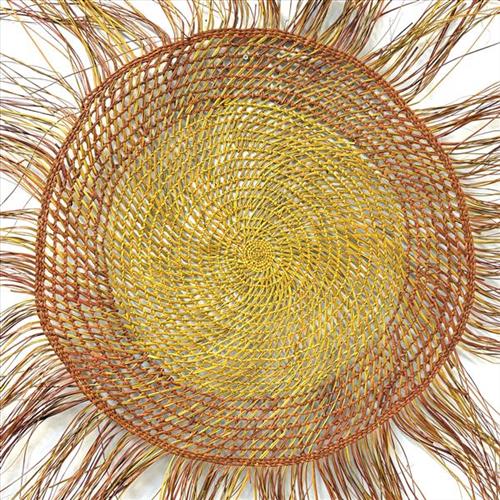
Woven Mat

Yolŋu weavers of Arnhem Land create utilitarian, ceremonial, and decorative pieces using naturally sourced materials. This mat is made from young Pandanus spiralis leaves, harvested with a wooden hook, stripped of prickles, and dried to create strong, resilient fibres. These fibres are then twisted, coiled, or woven using traditional techniques to produce both functional and decorative mats.

Bula’bula weavers exclusively use natural dyes, derived from locally sourced roots, leaves and grasses. These pigments are extracted and infused into pandanus fibres by boiling over an open fire, producing the rich, vibrant colours characteristic of contemporary Yolŋu weavings.

Traditionally, Nganiyal (conical mats) functioned as insect screens when erected and as seating mats when folded, playing an important role in both daily life and ceremonial practices. Today, Yolŋu artists create a variety of shapes, including flat, round, and oblong mats. These non-traditional styles and the use of bright colours became more common after Missionaries began commissioning pieces in this style.
115682408347


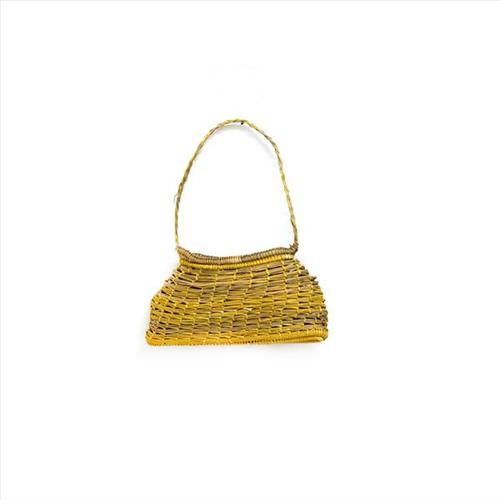
Bathi (Pandanus Basket)

Yolŋu weavers of Arnhem Land create utilitarian, ceremonial, and decorative pieces using naturally sourced materials. This Bathi (Pandanus Basket) is made from young Pandanus spiralis leaves, harvested with a wooden hook, stripped of prickles, and dried to create strong, resilient fibres. These fibres are then twisted, coiled, or woven using various techniques to produce both functional and decorative baskets.

Typically, Bathi are made using a coiling technique which was adapted from techniques used by Indigenous women throughout Southeast Australia. Introduced to Arnhem Land weavers in the 1930’s as Missionaries began commissioning pieces in this style.
Bula’bula weavers exclusively use natural dyes, derived from locally sourced roots, leaves and grasses. These pigments are extracted and infused into pandanus fibres by boiling over an open fire, producing the rich, vibrant colours characteristic of contemporary Yolŋu weavings.