220182388027


Yalpirakinu

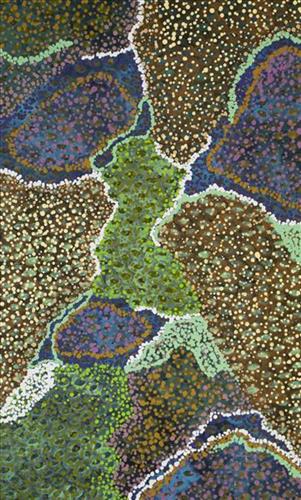
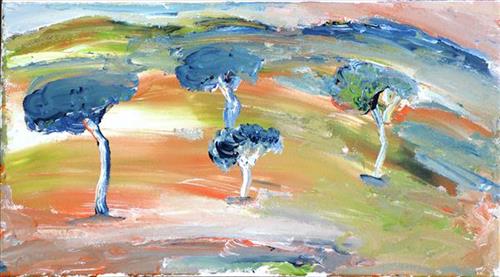
Yalpirakinu is Adrian’s mother’s country. Adrian’s mother is the late Eunice Napangardi, a well known painter herself. His artworks consistently refer to the desert mountains, ridges and trees which are part of Yalpirakinu. Using a restricted colour palette, Adrian’s  brushwork is loaded with energy, drama and memories. He is a deliberate and thoughtful painter; reworking, pushing and pulling the image to completion.

116482393718


Country with Wildflowers

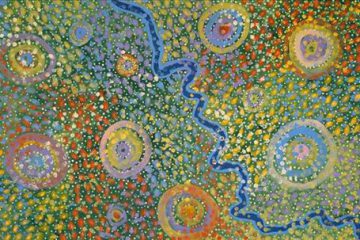
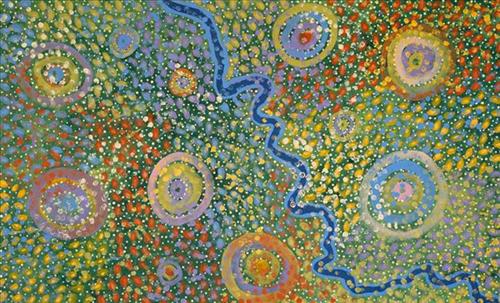
This painting represents the pilbara country with river and wildflowers. After the rain the spinifes and grasses go green with new growth.

115682394648


Warraburnburn (spirit)

Like people, warraburnburn live in family groups. Though they cannot be seen, they can sometimes be heard calling out to one another as they move across the country to hunt. They also have the ability to communicate internally with people, warning them when strangers enter their land. Warraburnburn know the country intimately and can be both protective and dangerous. Some may mislead people, turning the land over to make it confusing and unfamiliar, while others guide people to safety.

377815582394759


Papilija

Papilija is a yinta soak in Kulyakartu;

My grandmother and her sibling’s country.

They used to go there all the time.

Good kapi for drinking and yukarri (green) all around.

Lots of warta (trees).

Plenty bush tucker.

377815582394758


Untitled

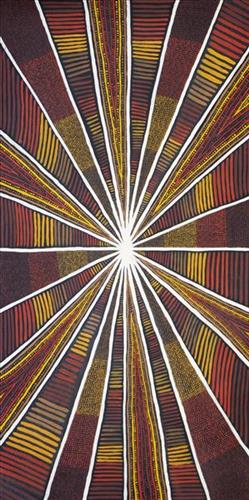
 This artwork showcases the artist’s skillful use of colour, texture, and technique, reflecting a deep connection to their environment and culture. Each detail embodies the unique identity of Bidyadanga Artists, where the original five language groups—Nyangumarta, Mangala, Yulparija, Juwaliny, and Karrajarri—come together to create art that speaks to the heart of Country. Over time, the community and Art Centre has grown to include people from other Kimberley tribes, fostering a space where diverse cultural knowledge and practices come together. Situated where the desert meets the sea, artists draw inspiration from their ancestral Country and personal journeys. The artist captures the vibrant beauty of both desert and coastal landscapes, blending earthy reds, deep blues, and intricate patterns distinctive to their cultural heritage. The themes and composition invite viewers into the artist’s world, offering a glimpse of the rich, intertwined histories and the enduring connection to land and spirit that define the Bidyadanga community.

377815582394731


Kulyakartu

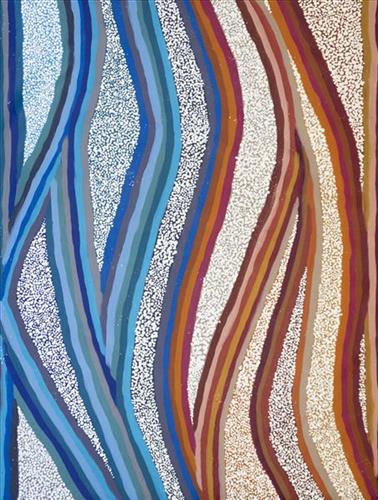
This painting is about all the rocks and kurru (creeks) all around Kulyakartu and Kirriwirri.

We went camping there for to two weeks, we went to Wirnpa first and then to Kirriwirri. We camped in the nice flat ground in the open when we got to Kulyakartu. We visited the waterholes and soaks, cleaned them out, and made sure there were no dead animals. It was typical ranger work—making sure the animals and Country were surviving. We listened to Muuki and my grandfather talk about how they walked around trying to find waterholes, how my grandfather finally came to Bidyadanga, and how he met my grandmother.


I painted these paintings at home in Bidyadanga, near the ocean. The paintings are of Kulyakartu, which is in the Great Sandy Desert. There is a lot of spinifex, sandhills, wildlife, and little flowers like frangipanis—blue, red, and pink flowers just along the road when you’re driving.

When I’m not in the desert, I feel like I want to paint about it, and painting makes me feel like I want to be there. I think about Muuki and his brothers’ wishes for us to see the Country and be there. It’s important to paint about the Country because our Elders looked after the Country long before us.

When you look out of a plane, you can see lots of different colours, but I chose blues and greens because that’s how I want to express how I see the landscape.

When people see my paintings, they might say, “That could be the ocean,” but I say, “No, that’s Kulyakartu, the desert.” Blues and greens make me feel comfortable. For me, I like to keep colours separate and not mix them together.
115682394785


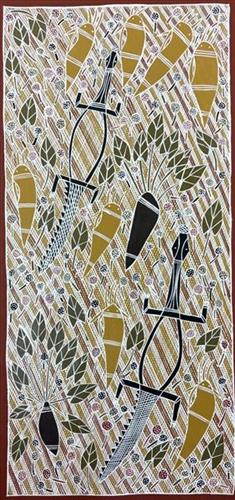
Raypiny Dhawu (Fresh Water Story)

All Aboriginal people originate from a spiritual source, fixed in a particular place in their land or the sea. These ‘spiritual reservoirs’ are often in the form of special waterholes made by Wangarr (creative spirits) that were created long ago close to the beginning of time. These creator beings moved across the countryside, shaping the land and implanting in each tract of country, the spiritual life force for the people who were to own it. These creative spirits took many forms and when they gave the land to each group, they also gave songs, dances, ceremony, the associated laws and language.


The creation story for Ganalbingu people took place near the middle section of the Glyde River where it becomes the Goyder River. Their land, Ngaliyindi, sits astride the Arafura Swamp in Central Arnhem Land. Many Ganalbingu artists paint totemic species significant to their clan. These can include baru (crocodile), banda (long necked turtle), buliya (catfish), yalman (waterlilies), gumang (magpie geese), dakawa (fresh water yabby), ratjuk (barramundi), warrnyu (flying fox) and more.


221382395333


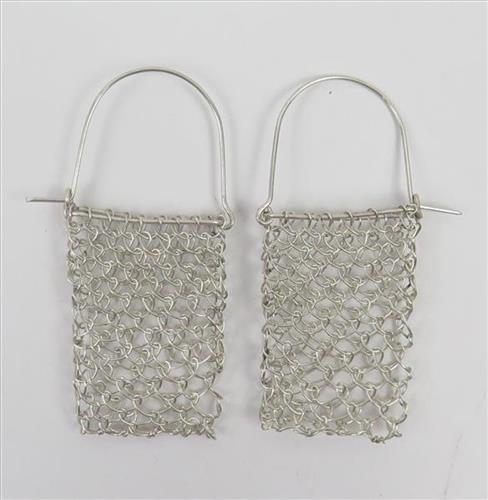
Handwoven Stringbag Earrings, Silver 925

Wagilak Yapa Watj (Wagilak Sisters) range –
exclusive jewellery from Indigenous women of Beswick. Developed in studio workshops with jeweller Kate Sale and weaver Fiona Gavino, traditional fibre artists are translating their skills into a series of fine woven wire earrings and pendants. Hand woven in sliver, gold and copper, traditional forms are transformed as delicate interpretations of string and dilly bags, baskets and mats.

Featuring sterling silver, 9ct gold and copper (all nickel-free work).

221382395204


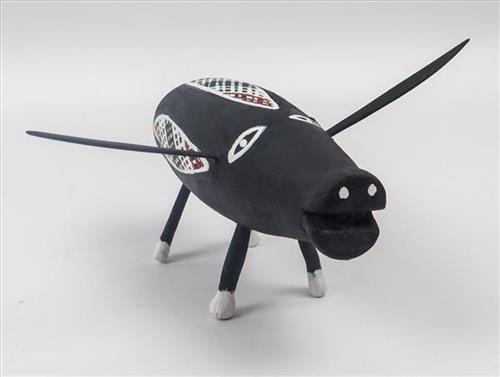
Buffalo Carving

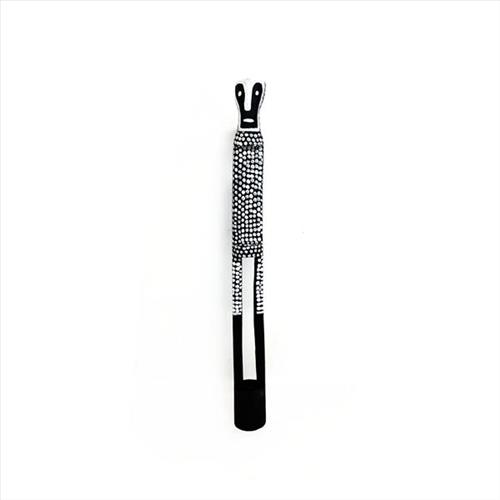
Wood carving has always been part of Aboriginal culture and Djilpin artists continue this tradition. Men carved wood for many purposes – tools for hunting or gathering food, axes and knives for building shelters, spears and clubs for protection of their lives and territory, objects for ceremony and to mark sacred sites.

Hunting implements include the boomerang, woomera and spear. The woomera is a lever which helps to increase the speed and distance the spear travels. Clapsticks are used as percussion instruments by the Songmen to accompany dancing along with the didgeridoo (mago).

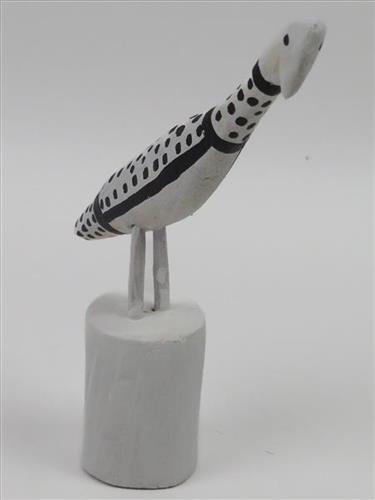
As well as the more functional carvings, artists portray animals and birds in wood, and these carvings are often painted. Ceremonial carvings include spirit creatures including mukuy (devil devils) and mimi.

Some fine mimi figures have been cast in bronze.

221382395197


Carvings

Wood carving has always been part of Aboriginal culture and Djilpin artists continue this tradition. Men carved wood for many purposes – tools for hunting or gathering food, axes and knives for building shelters, spears and clubs for protection of their lives and territory, objects for ceremony and to mark sacred sites.

Hunting implements include the boomerang, woomera and spear. The woomera is a lever which helps to increase the speed and distance the spear travels. Clapsticks are used as percussion instruments by the Songmen to accompany dancing along with the didgeridoo (mago).

As well as the more functional carvings, artists portray animals and birds in wood, and these carvings are often painted. Ceremonial carvings include spirit creatures including mukuy (devil devils) and mimi.

Some fine mimi figures have been cast in bronze.