377815582411525


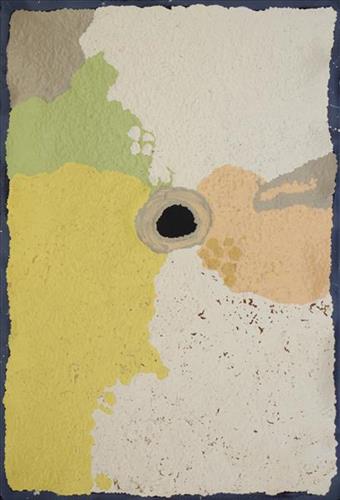
Seasons

“Rain, dry, hot, cold. In the wet season everything goes green. When we were young we would go hunting for goanna and turkey. You go fishing in the river — you can catch barramundi when the river is running from the rain. They call it Warrampa, in Looma side.

Dry season, Lulga season. Hot season. After the water has settled you can go swimming. Catch the same thing. And jarrumpa (cherabin, giant freshwater prawn).

The flowers come out after the rain, between the hot and cold.”
– Rose (Glenys) Butt

This artwork reflects the changing seasons across Country, showing how life shifts with the dry and wet. In Bidyadanga and the surrounding desert and coastal lands, the rhythm of the year guides movement, gathering, hunting, and time spent with family on Country.

As the dry season arrives, the land opens up again — red dunes, salt flats, and long beaches shining in the heat. Winds change, tides get bigger, and rangers burn Country to look after it, clearing grass, making space for new growth, and keeping the land healthy. Bush turkeys, goannas, fish, stingray, turtle, and shellfish are hunted, and families camp, share stories, and travel between desert and coast.

When the wet season return, big clouds roll in, storms build over the sea, and lightning cracks across the land. Country comes alive — water fills the waterholes and claypans, flowers and grasses grow, and birds, bush foods, and animals become abundant.

Through colour, pattern, and rhythm, the artist captures the cycle of seasons and the knowledge passed down — knowing when to gather certain foods, when animals are fat, when storms are coming, and how to care for Country through fire and everyday living. The work celebrates the constant relationship between people, weather, land, and sea, honouring the strength and continuity of cultural life.

377815582411524


Yawinya

“Coastal plains of Anna Plains Station. Desert to the sea. All the green is the saltbush; the colours are the flowers. White represents plain Country. Orange is the desert, and the black is the fire that comes through.”

– Augustine Badal

The overlap area was known as Yawinya and ran inland from the coastline of 80 Mile Beach between Broome and Port Hedland. The Nyangumarta and Karajarri claims were each filed on behalf of differently described people. 

This artwork reflects the artist’s connection to Bidyadanga, a place where the desert meets the sea. Through colour, pattern, and texture, the painting captures important themes that shape the identity of the community and Art Centre.

Bidyadanga sits on Karajarri Country, where desert Country meets saltwater Country. The community is home to Karajarri people and to desert families who travelled from the Great Sandy Desert to La Grange Mission in the 1960s and 70s, during a time when drought and changing conditions dried desert water sources. The first five language groups to build the community together were Nyangumarta, Mangala, Yulparija, Juwaliny and Karajarri. Today, Bidyadanga continues to grow, welcoming families from across the Kimberley, Pilbara and beyond, creating a strong and diverse cultural community.

Artists draw on stories of place, family, movement, and survival — caring for both land and sea, hunting and fishing, and living between two immense environments. Patterns, marks, and flowing forms echo desert dunes, waterholes, tidal flats, reefs, bushfoods, and sea life, honouring the knowledge held across generations.

In this work, the artist celebrates the beauty of Country and community, offering a glimpse into the rich histories, cultural strength, and enduring connection to land, sea, and way of life.

377815582411523


My Ngurra (Country), Jupurr

“My ngurra (home), Juwaliny — my language. My Country Jukurrpa, Yirnpa, Yimiri, Yulpu, Kupankurlu, Lyinjalung, and Lungkarung. Big one warla — that’s the area where the old people belong, ngurra. They been come here and pass away. We come here, Bidyadanga — mummy, daddy, all here. I came from the desert — I sat down in Jigalong, Punmu, Parnngurr, 33 (Kunawarritji), Newman, and I came back here (Bidyadanga).”
 – Yikartu Bumba

This painting shows the artist’s Country in the Percival Lakes region. Yikartu’s daughter, Bali Bumba, was born in this area when they lived a traditional pujiman (desert-born) life. The painting includes lyinji (claypan), jurnu (waterhole), kurru (river), and a big warla (lake).

This artwork depicts Country in and around the Great Sandy Desert — an immense area stretching from the edges of the Kimberley near Bidyadanga and Eighty Mile Beach, east through Walyarta (Mandora Marsh) and Percival Lakes, and down toward Kulyakartu, Kunawarritji (Well 33) and the Canning Stock Route. It is a vast landscape of dunes, claypans, salt lakes and waterholes.

For many families connected to Bidyadanga, this is ancestral land and holds places and significant sites where the old people lived pujiman (traditional desert-dwelling) lives before travelling to the coast.

The Great Sandy Desert is not empty — it is full of life, memory and movement. Soft sandhills rise and fall like waves, spinifex shimmers in the wind, flowers bloom after rain, and jila (living waterholes) lie hidden beneath the surface. People hunted goanna, bush turkey and small animals, dug for water, gathered bush foods, and camped beside claypans. Families walked long distances between soaks, teaching others how to read the land, follow tracks and travel safely.

In painting, the desert becomes a map of belonging — circles showing water and camps, lines following walking tracks and dunes, and soft patterns recalling plants, sand ridges and the glow of sunsets across wide skies. Colours shift between deep reds, ochres, warm sand tones and the greens that come after rain.

225182411509


Kurranji (Cassowary)

Long time ago, the cassowary was a precious food source for our ancestors. They ate the meat and the eggs, used the feathers for ceremonies and weaving, and the skins for blankets.  The Cassowary is a powerful Totem for us because it helps growing many plants that were important for food, medicine and tool making. The Cassowary can walk wide distances and spread the seeds of the fruits he eats everywhere. Plants grow also out of his dung.

I show the cassowary in my art because it is also my partner’s totem. He performs the cassowary dance in public ceremonies. It was bestowed on him by his mother’s sister when he was a young boy. In 1997 he went with the Yalanji Dance Group to Hong Kong to perform the Cassowary dance there.”

225182411508


Janbal (Quandong)

Janbal (Quandong) is good bush tucker. We gather the fruit from August to January when they are sweet and soft. The kernel of the fruit is very pretty and we often use it to make body adornments such as necklaces and earrings.

225182411507


Janbal (Quandong)

Janbal (Quandong) is good bush tucker. We gather the fruit from August to January when they are sweet and soft. The kernel of the fruit is very pretty and we often use it to make body adornments such as necklaces and earrings.

225182411506


Janbal (Quandong)

Janbal (Quandong) is good bush tucker. We gather the fruit from August to January when they are sweet and soft. The kernel of the fruit is very pretty and we often use it to make body adornments such as necklaces and earrings.