Whispers of Lavender
This basket carries a soothing essence of Lavender- Grounding, gentle and calming

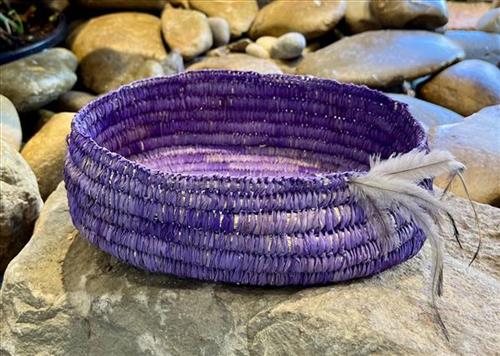
This basket carries a soothing essence of Lavender- Grounding, gentle and calming
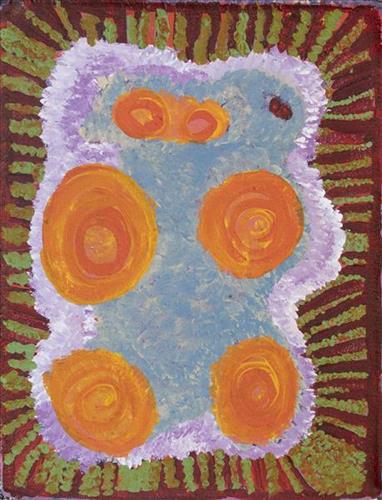
This is Dale’s Country- her ‘ngurra’ (home Country, camp). People identify with their ngurra in terms of specific rights and responsibilities, and the possession of intimate knowledge of the physical and cultural properties of one’s Country. Painting ngurra, and in so doing sharing the Jukurrpa (Dreaming) stories and physical characteristics of that place, has today become an important means of cultural maintenance. Dale’s ngurra encompasses her birthplace, Jigalong, and the Country that her family walked in the pujiman (traditional, desert-dwelling) era, including Puntawarri, Raarki (Canning Stock Route Well 27), Kularti, Kumpupirntily , Mirtikanya, (Kumpupintily, Lake Disappointment), and Mukurtu.
Portrayed in this work are features of Dale’s family’s ngurra, such as the striking salt lakes, dominant permanent red tali (sandhills), warta (trees, vegetation), and the individually named water sources they camped at. Rock holes, waterholes, soaks and springs were all extremely important sites for Martu people during the pujiman period, and are generally depicted with circular forms.
The encyclopaedic knowledge of the location, quality and seasonal availability of the hundreds of water bodies found in one’s Country sustained Martu as they travelled across their Country, hunting and gathering, visiting family, and fulfilling ceremonial obligations. They would traverse very large distances annually, visiting specific areas in the dry and wet season depending on the availability of water and the corresponding cycles of plant and animal life on which hunting and gathering bush tucker was reliant. As they travelled and hunted they would also burn areas of Country, generating a greater diversity of plant and animal life.
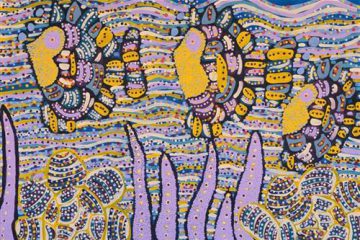
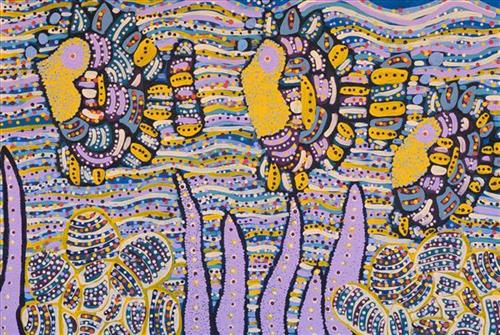
Ever since I was a young girl I loved to go with my family fishing we love going to East harding and Jones creek this fishing spot is where we catch a lot of salmons, barramundi, bream and also mudcrabs. Now that I’m older we take our younger kids out there and learn them the sea side life.
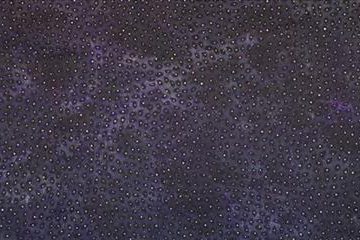
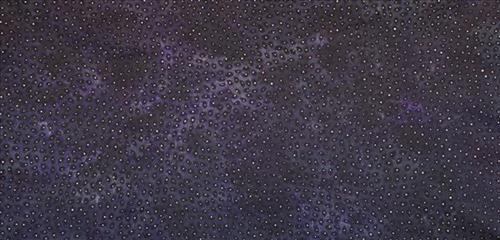
This painting reminds me of when we go camping out bush we always camp out in the flat where we can see the stars shining.
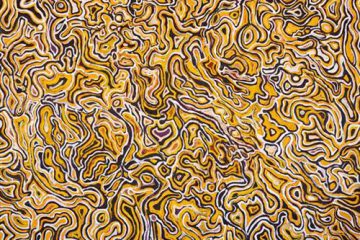
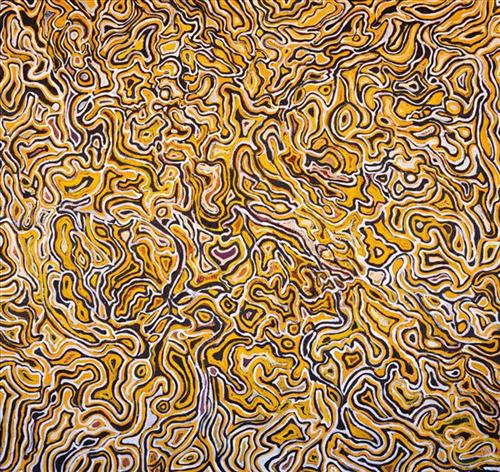
The yellow colour is used for painting during our law ceremony. We also use some black and red ochre.

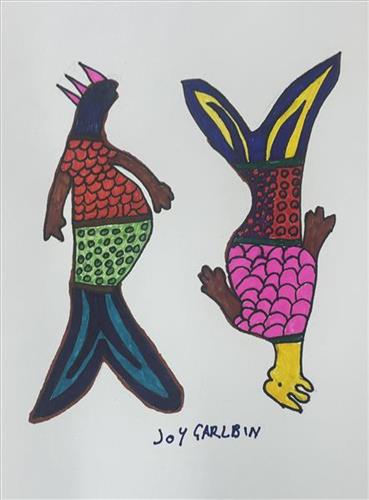
This design depicts the story of the artist’s ancestral dreaming, the Djómi (Fresh Water Spirit).
The Djómi figure is a mermaid-like spirit with fish tail that lives in the freshwater stream that flows out to the sea cliff near Maningrida. Djómi is known to be a very powerful fertility symbol.
“If you go there, you can get pregnant easily. Djómi has babies, and they can give other babies too. The Djómi spirit is so powerful, that women can end up with multiple babies at once, twins or sometimes even more. The Djómi spirits lay eggs near the sacred freshwater stream in Maningrida. Inside the eggs are human babies as well as young Djómi. Men do not go near that swamp, because Djomi is so powerful that men might get pregnant there too. So men are too scared of that Djómi. When we visit the Djómi freshwater spring, we can hear young Djómi crying. They sound like normal babies crying, those Djómi spirits. They are looking for a mother. This Djómi is my dreaming, I got permission from my djungkay (ritual manager) to paint this Djómi design. For me I always ask my djunguy permission to paint, because that is our cultural way. This design also depicts the freshwater lily leaves and seaweed from the base of the sea floor.” Joy Galrbin
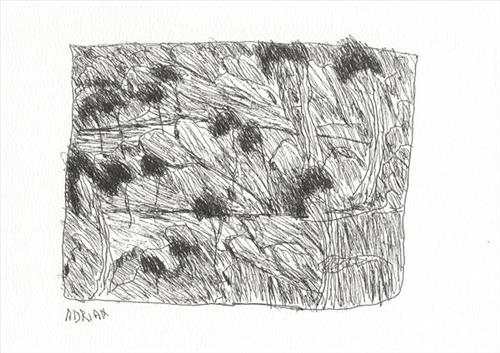
Yalpirakinu is Adrian’s mother’s country. Adrian’s mother is the late Eunice Napangardi, a well known painter herself. His artworks consistently refer to the desert mountains, ridges and trees which are part of Yalpirakinu. Using a restricted colour palette, Adrian’s brushwork is loaded with energy, drama and memories. He is a deliberate and thoughtful painter; reworking, pushing and pulling the image to completion.
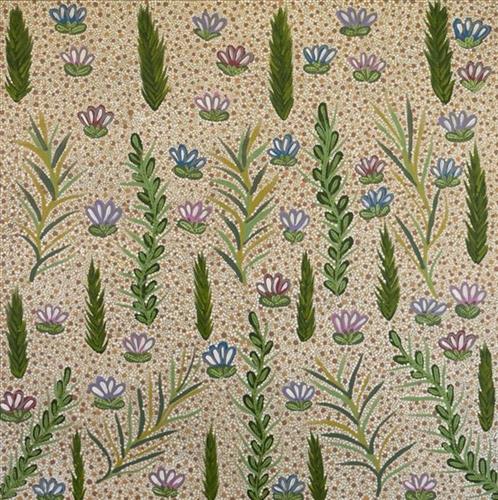
“Bush medicine plants are used for healing on the body and for drinking. We make this by grinding the plants with a rock, we use the juice and the fibre of the plant.
We collect bush medicine plants when we are out hunting. Different kinds of plants grow during different seasons.
There are lots of different medicines, we know what their stories are, we learnt them from our parents and we teach these stories to our children.”
Bush medicine knowledge is still strong in Ampilatwatja, it continues to be passed down to the younger generations and is widely used.
When the women go hunting they often gather bush medicine. The plants depicted here are found in the country around Ampilatwatja, they are used for soothing skin infections and to make a drink to help with colds and coughs.
Painting bush medicine stories is important because it helps to maintain a strong knowledge and culture for the community.
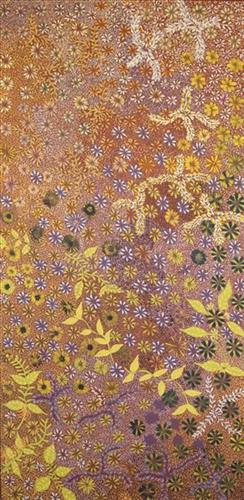
The layers of Colleen’s paintings are as detailed and complex as the stories she paints.
Colleen’s painting represents a ceremony that is performed by the women in the community. It involves dance, singing and painting the body in ochre, to celebrate their country and their understanding of bush medicine.
The use of the bush medicine and the edible seeds that come in an assortment of colours, are depicted in many of Colleen’s paintings.
This painting is about singing to country, singing the bush medicine in to existence, maintaining it and where to find it.
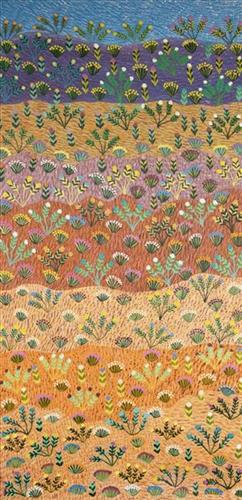
When I go out hunting I always like to see the colour in the trees, the light, the dark and the bush medicine plants growing on the sand hills. The colours change at sunrise and sunset. I like hunting and seeing my country.
I love to paint since childhood. My paintings show my deep love for my country and the beauty I see.
The community of Ampilatwatja made a conscious decision not to paint altyerr (dreaming stories). The artists paint their country where those stories sit.