


377815582418492

Feeding Season
“Bardi people learn to live off the land and the sea. We use certain plants to indicate which animals are good for eating. For example, the wattle flower tells us the mullet are good to eat; their fat and their eggs are best when the wattle is flowering. We need to know which plants create spears and which roots paralyse the fish so we can catch them. We use the land to help us hunt the sea. My paintings are all about how we use the land to hunt the sea. All the colours I use have meaning.”
– Jaymee-Lee Chaquebor
Jaymee-Lee’s paintings are deeply rooted in Bardi culture, storytelling, and the connection between land and sea. Each artwork reflects knowledge passed down by Elders, showing how Bardi people use Country to guide hunting and fishing practices. Her works feature culturally significant animals and bushfoods — moonga (sugar bag), goordaarlga (white currant), goodoo (mud clam), ambarn (manta ray), big mullet (loongoorl, baitfish), jooloo (Spanish flag), budumbud (blue bone), and stingray — representing survival, hunting, and seasonal knowledge. The colour choices carry meaning: black represents the strength of rocks and sea shadows, while gold reflects sunlight on the water. Pink and earthy tones mirror fish flesh, sand, and tidal pool reflections.

377815582418483

Nyangumarta Warrarn (Country)
“This painting represents the rocky outcrop and all the different areas of claypans, and the dark area represents all the jurnga (sands) in the cool time, warri. All the light yellowish colour represents the paru (spinifex).
I like to go out working with the rangers and all the elders. I go out Country with them and they show me all the places, all mapped out with GPS. We mark out all the other places for next time. Sometimes I go out in the ranger’s vehicle and walk around the Country and look around for goanna holes. We try to keep an eye on the animals, look out for all the bilby and skinks and everything with the Nyangumarta Rangers. I go in my spare time because I’m busy you know, I’m busy with my artwork and council meetings.
In the cool dry time, when it’s a little bit warm and cool in the morning, that’s when we do the fire patch burning. When we doing it also depends on the wind, the warngal, which way it’s blowing. We do that because it’s a big part of controlled fires. Wild fires, we don’t want them, they destroy the animals and their living area, destroy the Country. We do it too for the regrowth. When I went back to Country a couple of weeks ago, all the burned up area had a little bit of regrowth after a little bit of rain.”
– Edward Badal
This artwork honours Nyangumarta Country — from the long sweep of Eighty Mile Beach and coastal flats to the rolling sand dunes and salt lakes of the Great Sandy Desert. It holds the movement between saltwater and desert: tides, reefs and mangroves to the west; dunes, claypans and waterholes to the east.
Lines flow like wind across spinifex and waves in the ocean; dots gather where waters sit after rain; colours shift from deep blues to desert reds and whites of saltpan. The painting also reflects the ongoing work of Nyangumarta families and rangers to look after Country — sea and land — guided by community plans and Indigenous Protected Area management.

377815582418465

Kulyakartu
“I paint mainly about Kulyakartu Country and Kirriwirri Country. Both are in the Great Sandy Desert in the Pilbara. These places mean home to me — Ancestors’ homes, my family’s home, my nanna’s home. I paint because we don’t get out on this Country often and painting is a way of having a connection.
Our nanna never told us her life living out in the desert. It’s sandy, they have waterholes and gum trees. I feel at peace when I’m out there. A bit of rocky terrain out there where the waterholes are. Feeling, belonging.
I remember when we were out there and our grandfathers were telling us stories of when they were kids and when they would play around in the trees. Just sitting around the campfire and seeing their faces light up when telling their stories. I felt complete when her brothers shared it.”
– Corina Jadai
This artwork shares the story of Kulyakartu, a vast and peaceful area north-east of the community, on the edge of Nyangumarta and Martu Country. Kulyakartu is a place of wide open skies, long claypans, sandhills and soft grasses that come alive after rain.
Families remember camping there, visiting waterholes, looking for goanna and bush foods, watching birds, and travelling with old people who knew every dune, track and soak. The painting celebrates the beauty and calm of Kulyakartu, often shown through soft lines and dots that follow the movement of water and sand. It honours the knowledge of where to find water, how to move across Country, and the deep belonging felt when returning to ancestral places.
Through this work, the artist invites viewers to feel that stillness and connection — the strength of Country, memory and family.

377815582418464

Bush Medicine
“This is a painting about bush medicine. It’s been boiled up. You boil it up and it turns into a burgundy sort of colour. Smells like eucalyptus. It is used for sores, rash, any skin condition. It’s a white gum tree.”
– Georgina Walbidi
This artwork honours the plants and practices of bush medicine — the healing Country provides, the old-people’s knowledge, and the living connection between land and body.
The artist reflects on the medicines found across Country: bark that soothes, leaves for infusions, roots dug after the rains, plants that grow in shade, and wood burnt down to ash for healing. These works often come from memories of learning and walking with elders — watching, smelling, collecting, and preparing medicine with care.
It reminds us that caring for Country is caring for ourselves. Gathering medicine is a cultural act — a moment of respect, listening, and moving gently on Country. This knowledge has been passed down across generations and must continue to be held, practised, and shared.
The painting invites the viewer into gratitude — for the plants, for the Country, for the knowledge keepers, and for the ongoing practice of looking after all life

377815582418460

Wili (My Grandfather’s Country)
“This painting shows my Grandfather’s Country (Wili), where they used to walk around in circles searching for bush tucker and water from the waterholes. When our ancestors came out from the Canning Stock Route, they used to see big mob of sand dunes and flowers. This painting is about waterholes and the red desert sand. The different colours represent the wildflowers, the brown is the sand dunes and the circles are the waterholes.”
– Bibianna Tumbler
This artwork depicts Country in and around the Great Sandy Desert — an immense area stretching from the edges of the Kimberley near Bidyadanga and Eighty Mile Beach, east through Walyarta (Mandora Marsh) and Percival Lakes, and down toward Kulyakartu, Kunawarritji (Well 33) and the Canning Stock Route. It is a vast landscape of dunes, claypans, salt lakes and waterholes.
For many families connected to Bidyadanga, this is ancestral land and holds places and significant sites where the old people lived pujiman (traditional desert-dwelling) lives before travelling to the coast.
The Great Sandy Desert is not empty — it is full of life, memory and movement. Soft sandhills rise and fall like waves, spinifex shimmers in the wind, flowers bloom after rain, and jila (living waterholes) lie hidden beneath the surface. People hunted goanna, bush turkey and small animals, dug for water, gathered bush foods, and camped beside claypans. Families walked long distances between soaks, teaching others how to read the land, follow tracks and travel safely.
In painting, the desert becomes a map of belonging — circles showing water and camps, lines following walking tracks and dunes, and soft patterns recalling plants, sand ridges and the glow of sunsets across wide skies. Colours shift between deep reds, ochres, warm sand tones and the greens that come after rain.

377815582418458
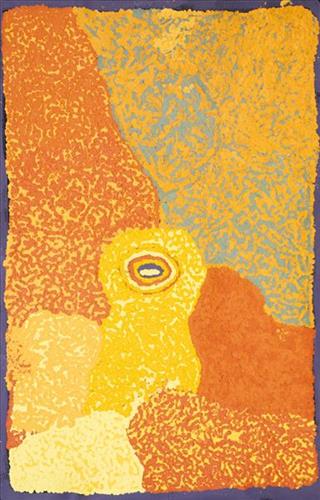
Yulpu
“The story is about Yulpu — old people’s ngurra (home Country, camp). They were walking around together, looking after each other — malpa (keeping each other company). You know, women carrying water on their heads with a piti (bowl) and carrying gigi (children) on their backs. That was pujiman (bushman, desert-born) time — a long time ago.
I was born at Lalyipuka, another water place on the side of Yulpu. Jupurr is a soak — same area, but two different waterholes. A soak is spring water coming from under the earth. Yulpu is Juwaliny and Mangala Country. Mangala, Manyjilyjarra, and Juwaliny were walking around together in pujiman days. They were following all the waterholes, sharing waterholes. They knew when the water was going down, so they moved to the next one. There are a couple of waterholes around Yulpu.”
– Yikartu Bumba, translated by Jenny Butt
This artwork depicts Country in and around the Great Sandy Desert — an immense area stretching from the edges of the Kimberley near Bidyadanga and Eighty Mile Beach, east through Walyarta (Mandora Marsh) and Percival Lakes, and down toward Kulyakartu, Kunawarritji (Well 33) and the Canning Stock Route. It is a vast landscape of dunes, claypans, salt lakes and waterholes.
For many families connected to Bidyadanga, this is ancestral land and holds places and significant sites where the old people lived pujiman (traditional desert-dwelling) lives before travelling to the coast.
The Great Sandy Desert is not empty — it is full of life, memory and movement. Soft sandhills rise and fall like waves, spinifex shimmers in the wind, flowers bloom after rain, and jila (living waterholes) lie hidden beneath the surface. People hunted goanna, bush turkey and small animals, dug for water, gathered bush foods, and camped beside claypans. Families walked long distances between soaks, teaching others how to read the land, follow tracks and travel safely.
In painting, the desert becomes a map of belonging — circles showing water and camps, lines following walking tracks and dunes, and soft patterns recalling plants, sand ridges and the glow of sunsets across wide skies. Colours shift between deep reds, ochres, warm sand tones and the greens that come after rain.

377816082418689
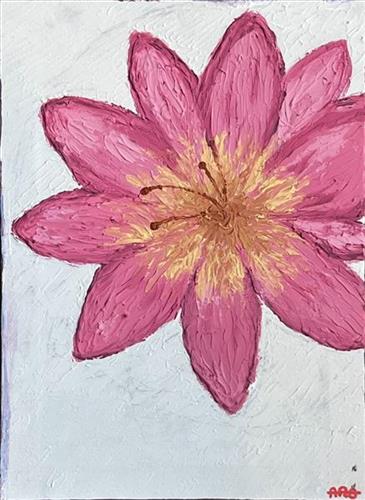
Open Heart

377816082418688
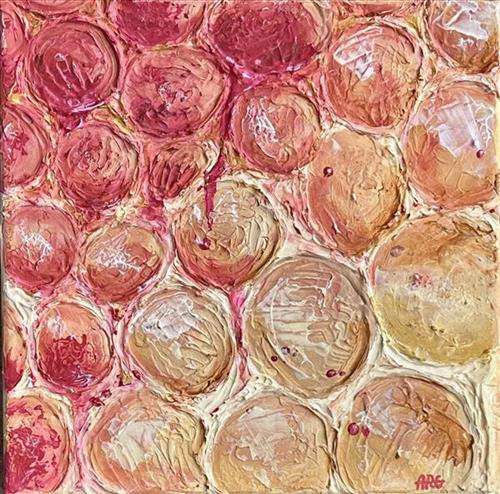
Soft Strength

220982418702

Nancy Pitjara Frank – Artna Alpeyt (Bush Flowers)
I was born in the bush at Ammaroo Station, along the Sandover. I have never seen the ocean or a big city. My mother and father were strong healthy people who taught me and my younger sister Rita the traditional way to hunt for Kangaroo, Goanna and Porcupine.
We know how to gather bush tucker (secrets of the earth) and bush medicine plants. My mother used grinding stones to make seed damper.
When I paint I think about good memories, being a young girl and walking through the land. My mother made paint from two stones and showed us ceremony painting and how to sing and dance for ceremonies. I still sing and dance and collect the bush medicines, I like to make tea from the small purple flowers of Arreth (hill fuchsia).
Painting bush medicine stories is important because it helps to maintain a strong knowledge and culture for the community.