221382416630


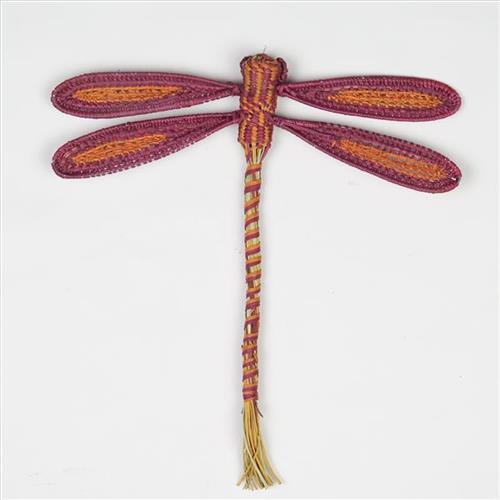
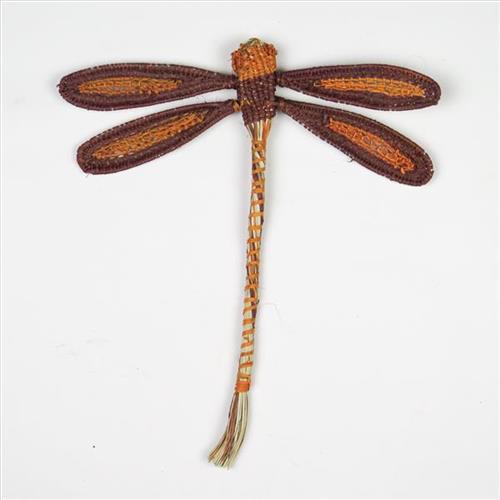
Handwoven Dragonfly

Fibre Art is an ancient Aboriginal women’s craft that is still made today using the same techniques as their ancestors. Making fibre art is labour intensive and much care and fine needlework is required to ensure the finished object is both functional and beautiful. Fibre art from Ghunmarn Culture Centre includes dilly bags, floor mats, bush fans, woven creatures found in the landscape, plants such as yams (bush potato), baskets, place mats, and spirit figures such as mermaids and Mukuys. Natural pandanus fibre (Mukarra), is used to make much of the fibre art produced by the artists of Djilpin Arts. Women collect the pandanus by pulling from the top of the pandanus tree, then stripping and drying the leaves before they are dyed with natural bush colour collected from the Beswick surrounds.
221382416629


Handwoven Dragonfly

Fibre Art is an ancient Aboriginal women’s craft that is still made today using the same techniques as their ancestors. Making fibre art is labour intensive and much care and fine needlework is required to ensure the finished object is both functional and beautiful. Fibre art from Ghunmarn Culture Centre includes dilly bags, floor mats, bush fans, woven creatures found in the landscape, plants such as yams (bush potato), baskets, place mats, and spirit figures such as mermaids and Mukuys. Natural pandanus fibre (Mukarra), is used to make much of the fibre art produced by the artists of Djilpin Arts. Women collect the pandanus by pulling from the top of the pandanus tree, then stripping and drying the leaves before they are dyed with natural bush colour collected from the Beswick surrounds.
221382416628


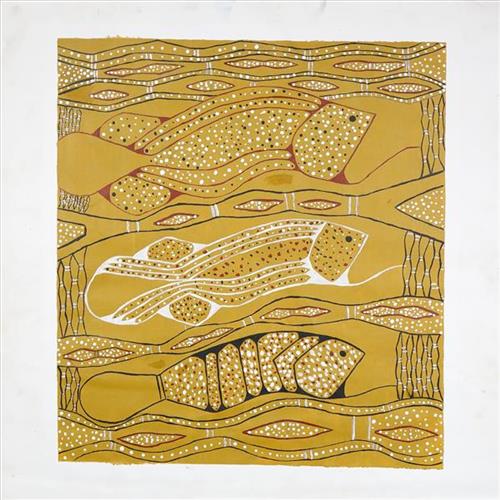
Canoe Story

This painting depicts canoes and leaves flowing to and fro between the freshwater and the saltwater. The red and white fish are barramundi, and the black fish is a black bream. On either side of the fish there are fishing nets ready to catch them. The painting is called Canoe Story.

Djilpin Arts is a not for profit Aboriginal Corporation that promotes the maintenance, development and transmission of traditional cultural knowledge systems.

For two decades, Djilpin Arts has been working on country with kin and culture, across generations. Our activities are rich in spirit, bringing, healing to the community and linking traditional knowledge with modern enterprise. Our Centre features galleries, museum collection and award winning accommodation for visitors.

Meet local people and artists, learn about traditional life and culture, browse and buy artworks, stay with us and experience seasonal cultural events, tours and immersions.

All artworks are made by local artists living in the community. Artwork reflects the traditional songs and stories that have been passed down through the generations with a contemporary edge: from paintings, prints, fibre art, carvings and dijeridu together to contemporary design prducts and fine woven wire jewellery.

377810582416600


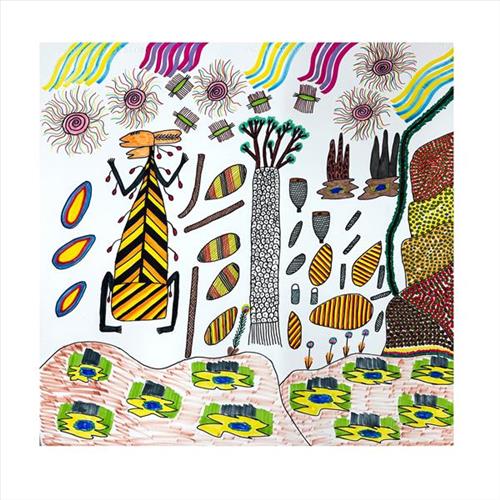
Namorrorddo (Shooting star Spirit) – Work 6

Artist Statement

(And the old lady Ngaldjorlhbo says:) ‘then I made this’

She was carrying her own dillybag and was walking slowly and she kept looking at Country. She made the rocks, the rivers. In the same way she made the fish and she also made the animals and the butterflies. She kept on creating all this while walking.

She made the water spirit mermaids from the sea so she kept on walking while creating all the things. She also made the mimih spirits – the spirit of the rocks. She also created Djarnbokkorn, the  sacred dog. And then she created Ngalng, the yabby. Then she made the Namorrorddo – the shooting star spirit, who lives inside the hill. Then she made the freshwater mermaids and she kept on going and she made Ngalyod (rainbow serpent). Then she named those two humans, Kodjok and Kamanj. So she made all the humans

111982416577


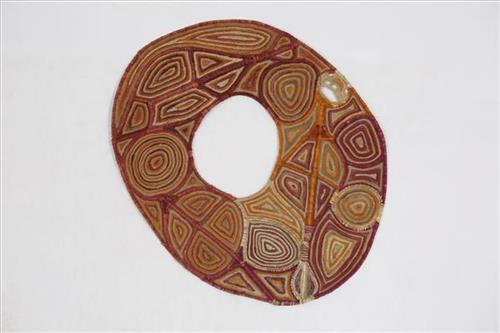
Kubumi

Kubumi is a sacred site on the Mann River. Anniebell Marrngamarrnga is the Djungkay (ritual manager) of this place, her mother’s country.

In the creation time, Ngalyod (the Rainbow Serpent) pierced the rock at a place called Bolerrhlerrh and journeyed downstream from there to Ngalmalanj, where the serpent was blocked. She pushed down into the riverbed, pushed into the earth, sinking down forever. Now she lives under the rocky riverbed.

The camping place Kubumi is downstream from Ngalmalanj. During the dry season, the Mann River shrinks to a chain of deep waterholes, exposing the tunnels through the rocky outcrop that interconnect the pools. At Kubumi live the Ngalkunburriyaymi, mermaid-like water spirits. In the distant past, they camped on the sand and were attracted to the freshwater, swimming there. Ngalyod, the Raibow Serpent, pulled them into the ground, through the rock holes.

Today they live within the river; at times they leave their aquatic homes to walk about on dry land, particularly at night. Sometimes they are called ngalberddjenj, which literally means ‘the woman who has a tail like a fish’. Their long hair is associated with trailing blooms of man-bak (green aglae) found in freshwater streams and rock pools.

Known for her intricately woven Yawkyawk and other figurative ancestral forms, Anniebell expands her practice in this work to encompass Kubumi itself — presenting the sacred site as a living, inhabited landscape shaped by Birlmu (barramundi), Nawarlah (brown river stingray), and the Ngalkunburriyaymi.

220982416557


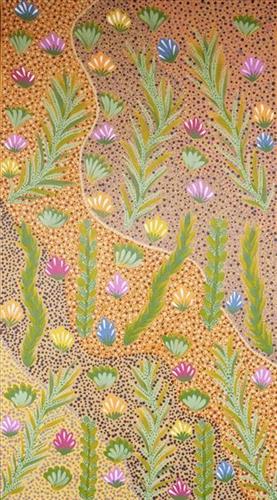
Joyanne Pitjara Morton – Bush Medicine

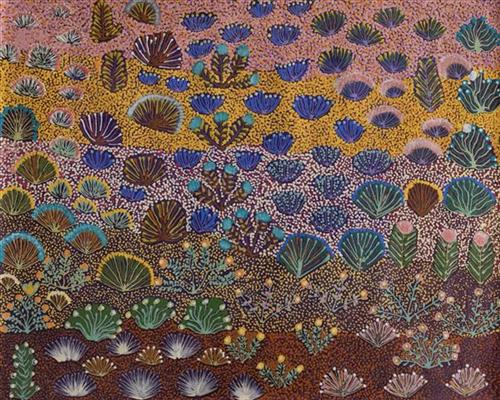
“Bush medicine plants are used for healing on the body and for drinking. We make this by grinding the plants with a rock, we use the juice and the fibre of the plant.

We collect bush medicine plants when we are out hunting. Different kinds of plants grow during different seasons.

There are lots of different medicines, we know what their stories are, we learnt them from our parents and we teach these stories to our children.”

Bush medicine knowledge is still strong in Ampilatwatja, it continues to be passed down to the younger generations and is widely used.


When the women go hunting they often gather bush medicine. The plants depicted here are found in the country around Ampilatwatja, they are used for soothing skin infections and to make a drink to help with colds and coughs.


Painting bush medicine stories is important because it helps to maintain a strong knowledge and culture for the community.

220982416555


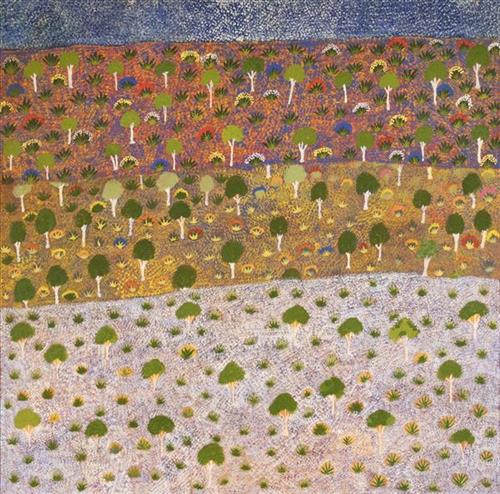
Elizabeth Ngwarraye Bonney – Penh Kwaty (After Rain)

After we have big rain the land is full of flowers and the river is full of water. This makes me happy.

220982416550


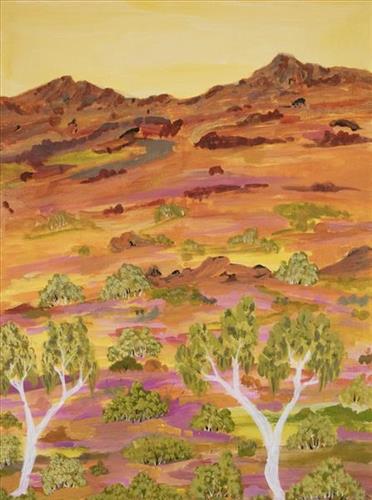
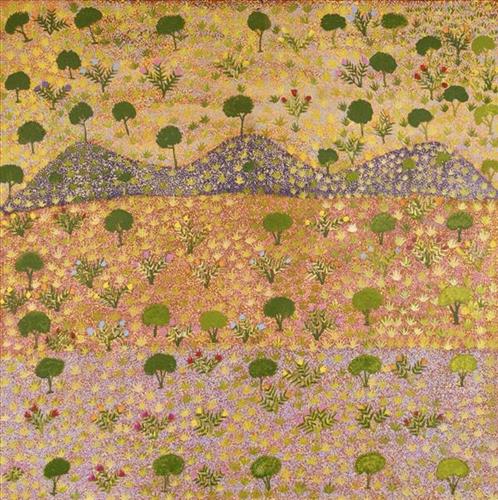
Rita Pitjara Beasley – Apwert Angketyarr (Hill Country)

This place is our hunting place. I always go with my daughters and their children, I show them this place and teach them about the swampy country. We hunt for goannas, bush potato, bush tomato and after the big rain the bush medicine is picked and the roots are dug up to be used.

It is important as my mother taught me this and now I teach my family.”


220982416549


Nancy Pitjara Frank – Artna Areyawarr Kwen Apwert – (Bush Medicine Under Rocks)

When I go looking for bush medicine I look around the ground and under the rocks. That is where I will find it

220982416546


Julieanne Ngwarraye Morton – Alpeyt Alpeyt (Flowers Blooming)

Walking across my land to look for bush flowers and goanna. I bring home to make medicine for my family and cook the goanna for dinner.  Goanna is my favourite to eat.