107582433918


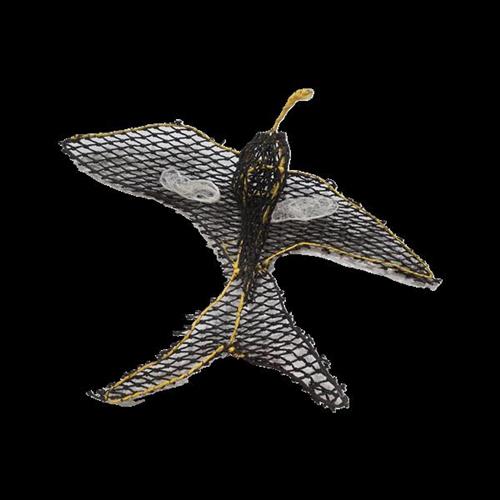
Waumer

Through my artwork, I have learnt to embrace my totems and culture to showcase and share my identity. These pieces represent the various seasons and ever-changing weather patterns. Traditional knowledge passed down through the generations taught us to look at plants and animals to understand the changes in seasons. For instance, seeing a flock of frigate birds flying high in the sky indicates that good weather is coming. While seeing them fly low in the sky signals that bad, windy weather is expected. We work closely with the local children to pass knowledge during school time. Children are taught about gardening, language and cultural identity. In these modern times, we are faced daily with plastic and marine debris in ways we can no longer ignore. We also educate the children about the importance of recycling and reusing these materials, instead of discarding them. (2 Spots, yellow beak)

107582433917


Waumer

Through my artwork, I have learnt to embrace my totems and culture to showcase and share my identity. These pieces represent the various seasons and ever-changing weather patterns. Traditional knowledge passed down through the generations taught us to look at plants and animals to understand the changes in seasons. For instance, seeing a flock of frigate birds flying high in the sky indicates that good weather is coming. While seeing them fly low in the sky signals that bad, windy weather is expected. We work closely with the local children to pass knowledge during school time. Children are taught about gardening, language and cultural identity. In these modern times, we are faced daily with plastic and marine debris in ways we can no longer ignore. We also educate the children about the importance of recycling and reusing these materials, instead of discarding them. (Facing Right)

107582433916


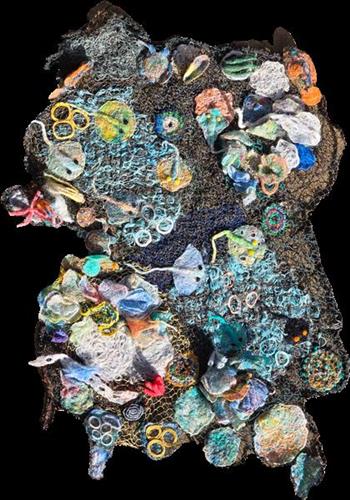
Norrkep (Small Tiny Reef)

This artwork was created from the abandoned nets and ropes that was collected from the sea. My ghost net artwork depicts the beautiful colours and patterns of the reef. The reef is a very sacred and important place to us. It provides for us, it is our library, educator and a living museum. We have battled with so many climate change issues and see first hand how it damages our reefs. Making artwork and telling our stories is our commitment to care for our environment. By doing so, we have an obligation to pass the message and raise awareness to everyone to look after it.

107582434152


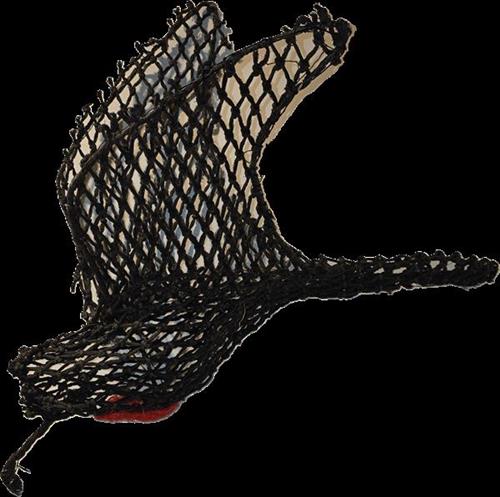
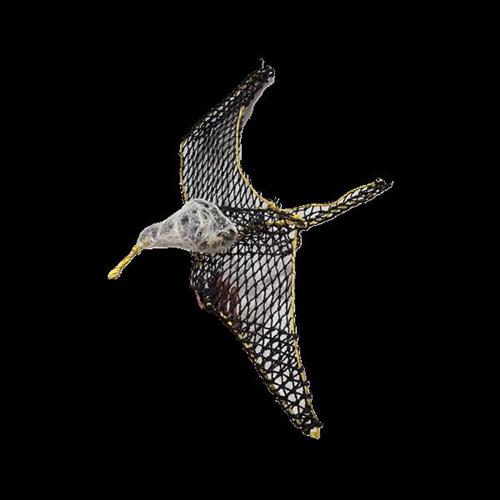
Frigate Bird

Through my artwork, I have learnt to embrace my totems and culture to showcase and share my identity. These pieces represent the various seasons and ever-changing weather patterns. Traditional knowledge passed down through the generations taught us to look at plants and animals to understand the changes in seasons. For instance, seeing a flock of frigate birds flying high in the sky indicates that good weather is coming. While seeing them fly low in the sky signals that bad, windy weather is expected. We work closely with the local children to pass knowledge during school time. Children are taught about gardening, language and cultural identity. In these modern times, we are faced daily with plastic and marine debris in ways we can no longer ignore. We also educate the children about the importance of recycling and reusing these materials, instead of discarding them.

111982434039


Berehl (Stingray)

Throughout the 1990s, artists Lena Yarinkura and her mother Lena Djammarrayku (now deceased) diverged from the more conventional fibre work of their contemporaries, extending traditional weaving techniques and materials to make new ambitious and innovative sculptural forms. Yarinkura applied the dilly bag, fish trap and coil basket weaving techniques to make the body of new forms, such as djamo (dog), yok (bandiboot) and yawkyawk (female water spirit), which she then filled with paperbark and painted with ochre. Yarinkura and her husband Bob Burruwal have also become renowned for their distinctive spirit figures, including wurum and wyarra, which are often displayed as part of large installations. In using her weaving skills to make three-dimensional representations, Yarinkura has adapted a traditional weaving technique to explore new narrative possibilities for expressing important cosmological themes or illustrating stories from her homeland. Yarinkura and Burruwal’s children, grandchildren and extended family, including Yolanda Rostron, Philimena Kelly, Vera Cameron and Gloreen Campion, continue this legacy.

111982434031


Gomarla (Egret bird)

The artist has carved the ‘Gomarla’, which in the Burarra word for Egret. This bird is native to the country of Yilan, which is the coastal region North West of Maningrida Community. 

People use feathers from gomarla to make ceremonial regalia for Yirrichinga. Many Yirrichinga groups own manikay ‘song’ for gomarla.

Gomarla mun-baparrurr Gopungorra. Jin-gubatbatcha jin-banga jiny-yorkiya. Gomarla waykin makukuya mu-guyinda.

The egret belongs to the Gopungorra clan. It always eats grasshoppers. The egret is high in a nest (builds its nest in the tree).

111982434029


Gomarla (Egret bird)

The artist has carved the ‘Gomarla’, which in the Burarra word for Egret. This bird is native to the country of Yilan, which is the coastal region North West of Maningrida Community. 

People use feathers from gomarla to make ceremonial regalia for Yirrichinga. Many Yirrichinga groups own manikay ‘song’ for gomarla.

Gomarla mun-baparrurr Gopungorra. Jin-gubatbatcha jin-banga jiny-yorkiya. Gomarla waykin makukuya mu-guyinda.

The egret belongs to the Gopungorra clan. It always eats grasshoppers. The egret is high in a nest (builds its nest in the tree).

111982434027


Burlupurr – dillybag

Burlupurr, or dilly bag, is usually a large woven collecting basket. These large bags are often made from the vine ‘Malasia scandens’, a strong pliable plant which grows along the floor and into the canopy of monsoon vine thickets. The bags are used to collect any kind of large numbers of heavy foods such as fish caught in conical fish traps or large collections of yams.

They can also be made from Pandanus spiralis, a plant which grows in many areas of Arnhem Land. These dilly bags are a tightly woven collecting basket, very finely made. These dilly bags are often used to collect sugarbag, the native honey. 

Common colours used to dye pandanus used for weaving burlupurr include:

– barra gu-jirra: the soft, white and fleshy end of the pandanus leaf imparts green to the fibre.

–  mun-gumurduk/ gala (Pogonolobus reticulatus): a bright yellow root that is crushed and put in a billycan with the fibre and boiled. It creates yellow when boiled once and deep orange hues when boiled multiple times.

– ngalpur (Haemodorum brevicaule): a bright red root which yields a range of purply red to brown colours.

– Baluk: ashes of certain plants are added to the boiling billycan with the fibre and dye plants to alter the colour that is imparted to the fibre. The fruiting body of gulpiny (Banksia denanta) is burnt and the ashes added to other day plants to make the colour pink. 

As well as being of practical use, dilly bags are also of religious significance to Arnhem Land people. Dilly bags are said to be totemic objects and associated with particular sites in the landscape.

111982434026


Burlupurr – dillybag

Burlupurr, or dilly bag, is usually a large woven collecting basket. These large bags are often made from the vine ‘Malasia scandens’, a strong pliable plant which grows along the floor and into the canopy of monsoon vine thickets. The bags are used to collect any kind of large numbers of heavy foods such as fish caught in conical fish traps or large collections of yams.

They can also be made from Pandanus spiralis, a plant which grows in many areas of Arnhem Land. These dilly bags are a tightly woven collecting basket, very finely made. These dilly bags are often used to collect sugarbag, the native honey. 

Common colours used to dye pandanus used for weaving burlupurr include:

– barra gu-jirra: the soft, white and fleshy end of the pandanus leaf imparts green to the fibre.

–  mun-gumurduk/ gala (Pogonolobus reticulatus): a bright yellow root that is crushed and put in a billycan with the fibre and boiled. It creates yellow when boiled once and deep orange hues when boiled multiple times.

– ngalpur (Haemodorum brevicaule): a bright red root which yields a range of purply red to brown colours.

– Baluk: ashes of certain plants are added to the boiling billycan with the fibre and dye plants to alter the colour that is imparted to the fibre. The fruiting body of gulpiny (Banksia denanta) is burnt and the ashes added to other day plants to make the colour pink. 

As well as being of practical use, dilly bags are also of religious significance to Arnhem Land people. Dilly bags are said to be totemic objects and associated with particular sites in the landscape.

221382434459


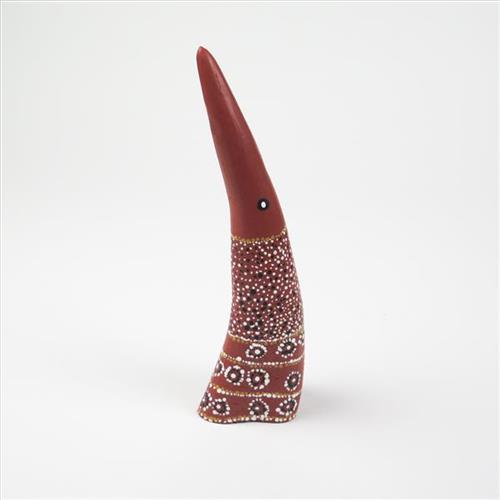
Buligi Horn

Djilpin Arts is a not for profit Aboriginal Corporation that promotes the maintenance, development and transmission of traditional cultural knowledge systems.

For two decades, Djilpin Arts has been working on country with kin and culture, across generations. Our activities are rich in spirit, bringing, healing to the community and linking traditional knowledge with modern enterprise. Our Centre features galleries, museum collection and award winning accommodation for visitors.

Meet local people and artists, learn about traditional life and culture, browse and buy artworks, stay with us and experience seasonal cultural events, tours and immersions.

All artworks are made by local artists living in the community. Artwork reflects the traditional songs and stories that have been passed down through the generations with a contemporary edge: from paintings, prints, fibre art, carvings and dijeridu together to contemporary design prducts and fine woven wire jewellery.