111582432232


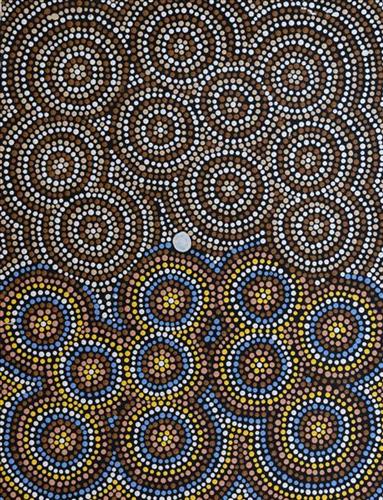
Pitu (Separation Well)

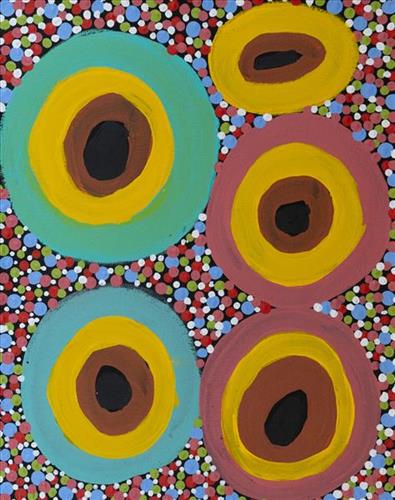
“I paint Pitu because my father come[s] from Pitu and all the rest of the family, they belong to there. Family hear the stories all the time from Jakayu [Biljabu]. It’s their connection to that place. All the old people were walking through that area, aunty Jakayu was born there. It’s a sad story, hers. We [went] there… to see it again. It’s a long, long way from Punmu. All the other family [saw] where their family is from and where they belong to.”


–       Kuru Gladys Bidu


Pitu (Separation Well) forms part of Kuru’s ngurra (home Country, camp) through her father. It is a significant cultural site and large soak located yulparirra (south) of Wuranu (Canning Stock Route Well 29) and Kulilu rockhole and soak. As a site where fresh water was available all year, Pitu was an important camp and a meeting place for Kartujarra and Manyjilyjarra people during the pujiman (traditional, desert dwelling) era. At this time, knowledge of water sources was critical for survival, and today Martu Country is still defined in terms of the location and type of water. Each of the hundreds of claypans, rockholes, waterholes, soaks and springs found in the Martu desert homelands is known by name, location, quality and seasonal availability through real life experience and the recounting of Jukurrpa (Dreaming) narratives. 


Soaks, or soakwaters, derive their name from the manner in which their waters generally seep into the sand from below stores, sometimes as part of an ephemeral river or creek. Soaks were an especially important source of water during the pujiman era, being the most dependable water source in times of drought. Water was obtained from soaks by scooping away the sand with a piti (timber bowls used for carrying food and water) until clear water gathered at the base of the hole, sometimes at a depth of several metres. Pitu is also surrounded by shrubs that need to be cleared to access its waters.
111582432231


Tuu-tuu

Tuu-tuu is one of the many freshwater springs around Punmu community. The most frequently visited yinta (permanent springs) around Punmu include Wirlarra, Rawa, Yilyara, Jila-jila and Tuu-tuu. Punmu Aboriginal community sits on the edge of a large salt lake known as Ngayartakujarra, or Lake Dora. The lake runs south into Karlamilyi River (Rudall River). Surrounding Punmu are numerous fresh water soaks and the red tali (sandhills) typical of the area. 

111582432226


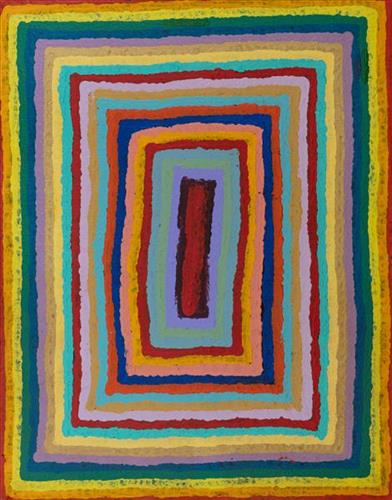
Kanapit

“This my grandmother’s country on my mum’s (Reena Rogers) side. One day I want to visit this place – the Parnngurr rangers will take me there soon”

– Beverley Rogers


Kanapiti hills are located south east of Parnngurr Aboriginal Community, where Reena lives today. This area is Reena’s birthplace, and forms part of her ngurra (home Country, camp). The Western Desert term ‘ngurra’ is hugely versatile in application. Broadly denoting birthplace and belonging, ngurra can refer to a body of water, a camp site, a large area of Country, or even a modern house. People identify with their ngurra in terms of specific rights and responsibilities, and the possession of intimate knowledge of the physical and cultural properties of one’s Country. This knowledge is traditionally passed intergenerationally through family connections. 

Painting ngurra, and in so doing sharing the Jukurrpa (Dreaming) stories and physical characteristics of that place, has today become an important means of cultural maintenance. Physical maintenance of one’s ngurra, like cultural maintenance, ensures a site’s wellbeing, and is a responsibility of the people belonging to that area.

221382432214


Dillybag and Yams

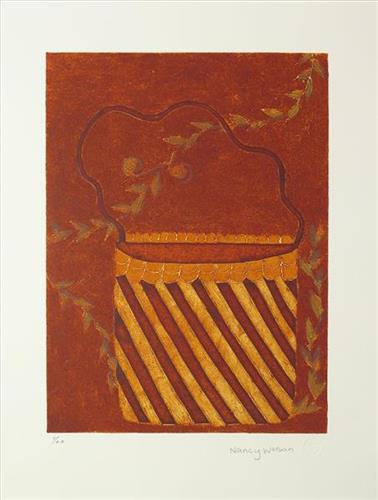
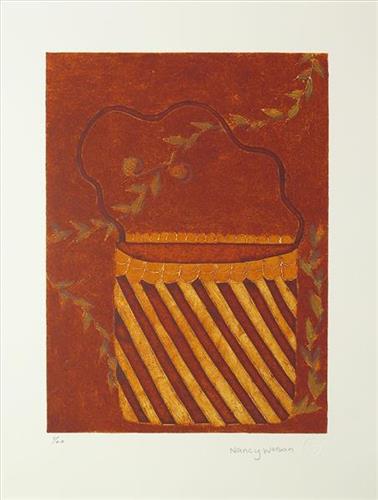
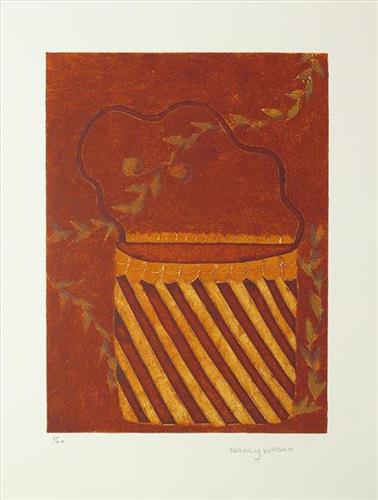
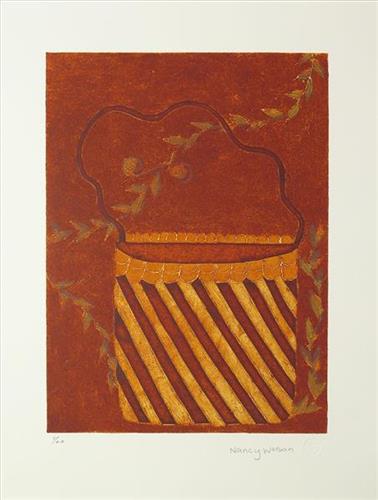
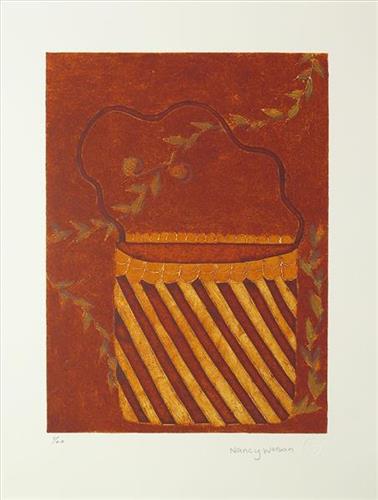
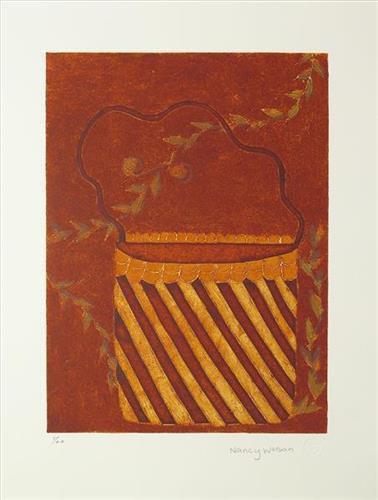
The 2025 Gapu series is the 12th workshop series in Djilpin’s long collaboration with Basil Hall Editions. Djilpin Artists worked, for the first time, with Printmaker Antonia Aitken. Collagraph plates were developed by 15 artists over a week in April at Djilpin Arts Centre in Wugularr (Beswick). For Series XII, artists have depicted traditional string and dilly bags, bathi, exploring the place of these artefacts in culture, ceremony and mythology, as well as the plants and animals in the local environment.

Series XII was launched at Honey Bones Gallery, Melbourne in October 2025 and exhibited at Art Gallery on Darling in Sydney in July 2026.

221382432213


Dillybag and Yams

The 2025 Gapu series is the 12th workshop series in Djilpin’s long collaboration with Basil Hall Editions. Djilpin Artists worked, for the first time, with Printmaker Antonia Aitken. Collagraph plates were developed by 15 artists over a week in April at Djilpin Arts Centre in Wugularr (Beswick). For Series XII, artists have depicted traditional string and dilly bags, bathi, exploring the place of these artefacts in culture, ceremony and mythology, as well as the plants and animals in the local environment.

Series XII was launched at Honey Bones Gallery, Melbourne in October 2025 and exhibited at Art Gallery on Darling in Sydney in July 2026.

221382432212


Dillybag and Yams

The 2025 Gapu series is the 12th workshop series in Djilpin’s long collaboration with Basil Hall Editions. Djilpin Artists worked, for the first time, with Printmaker Antonia Aitken. Collagraph plates were developed by 15 artists over a week in April at Djilpin Arts Centre in Wugularr (Beswick). For Series XII, artists have depicted traditional string and dilly bags, bathi, exploring the place of these artefacts in culture, ceremony and mythology, as well as the plants and animals in the local environment.

Series XII was launched at Honey Bones Gallery, Melbourne in October 2025 and exhibited at Art Gallery on Darling in Sydney in July 2026.

221382432211


Dillybag and Yams

The 2025 Gapu series is the 12th workshop series in Djilpin’s long collaboration with Basil Hall Editions. Djilpin Artists worked, for the first time, with Printmaker Antonia Aitken. Collagraph plates were developed by 15 artists over a week in April at Djilpin Arts Centre in Wugularr (Beswick). For Series XII, artists have depicted traditional string and dilly bags, bathi, exploring the place of these artefacts in culture, ceremony and mythology, as well as the plants and animals in the local environment.

Series XII was launched at Honey Bones Gallery, Melbourne in October 2025 and exhibited at Art Gallery on Darling in Sydney in July 2026.

221382432210


Dillybag and Yams

The 2025 Gapu series is the 12th workshop series in Djilpin’s long collaboration with Basil Hall Editions. Djilpin Artists worked, for the first time, with Printmaker Antonia Aitken. Collagraph plates were developed by 15 artists over a week in April at Djilpin Arts Centre in Wugularr (Beswick). For Series XII, artists have depicted traditional string and dilly bags, bathi, exploring the place of these artefacts in culture, ceremony and mythology, as well as the plants and animals in the local environment.

Series XII was launched at Honey Bones Gallery, Melbourne in October 2025 and exhibited at Art Gallery on Darling in Sydney in July 2026.

221382432209


Dillybag and Yams

The 2025 Gapu series is the 12th workshop series in Djilpin’s long collaboration with Basil Hall Editions. Djilpin Artists worked, for the first time, with Printmaker Antonia Aitken. Collagraph plates were developed by 15 artists over a week in April at Djilpin Arts Centre in Wugularr (Beswick). For Series XII, artists have depicted traditional string and dilly bags, bathi, exploring the place of these artefacts in culture, ceremony and mythology, as well as the plants and animals in the local environment.

Series XII was launched at Honey Bones Gallery, Melbourne in October 2025 and exhibited at Art Gallery on Darling in Sydney in July 2026.

221382432208


Dillybag and Yams

The 2025 Gapu series is the 12th workshop series in Djilpin’s long collaboration with Basil Hall Editions. Djilpin Artists worked, for the first time, with Printmaker Antonia Aitken. Collagraph plates were developed by 15 artists over a week in April at Djilpin Arts Centre in Wugularr (Beswick). For Series XII, artists have depicted traditional string and dilly bags, bathi, exploring the place of these artefacts in culture, ceremony and mythology, as well as the plants and animals in the local environment.

Series XII was launched at Honey Bones Gallery, Melbourne in October 2025 and exhibited at Art Gallery on Darling in Sydney in July 2026.