111582438722


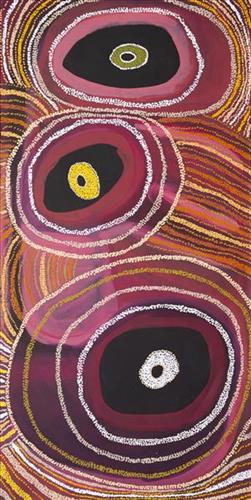
Kaalpa (Kalypa, Canning Stock Route Well 23)

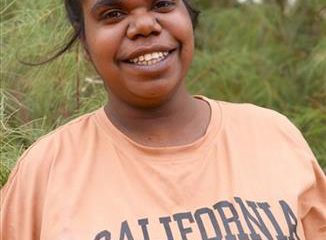
“Kaalpa (Kalypa, Canning Stock Route Well 23) is my grandfather’s Country. There’s a waterhole there, Kaalpa waterhole. It’s my two pops’ Country. They been walking around, hunting around Kaalpa. You can see a yapu (rock), warla (lake), claypans, karru (creek) and tuwa (sandhills) there. It’s on the [Canning] Stock Route, it’s Well 23. One walypala One walypala (whitefella) well, and a real kalyu (water) there, jurnu. The Seven Sisters landed there, Jukurrpa (Dreaming). That man Yurla yapu (hill, stone, rock) there.” [Yurla, who chased the Seven Sisters during the Jukurrpa remains at Kaalpa in the form of a rock]) 

In pujiman (traditional, desert dwelling) days, pujimanpa (desert born people) walking around all this Country. My pops told me about that place, a big flat area, parlkarra (flat country) good for hunting parnajarrpa (goanna), lunki (witchetty grub), lungkurta (blue tongue lizard), wamurla (bush tomato), jinyjiwirrilyi (wild gooseberry). Kaalpa is a busy place for emus getting a drink. 

The old people were telling me “Kaalpa’s your grandfather’s Country, you gotta paint it.” I went [to Kaalpa] for the first time [in 2018] on a Martumili KJ [Kanyirninpa Jukurrpa] trip. We went out there when we were looking for the [Greater] Bilby. They took me and [my sister] Tamisha, they showed us our grandfather’s Country, Well 23. I went out there, had a good look, walked around, and went back to Wantili (Warntili, Canning Stock Route Well 25), Parnngurr, and I started painting it. Now it’s my mind, now I know what Kaalpa looks like. When I went there, I was pukurlpa (happy). It made you open up your spirit, it feels like home.”

 – Corban Clause Williams

Kaalpa is a permanent water source located northeast of Kumpupirntily (Kumpupintily, Lake Disappointment). This site is a place of great cultural significance, and is also known for good hunting. Adjacent to the waterhole is a hill of the same name. The landscape around Kaalpa is parlkarra (flat country), bordered by tali (sandhills) stretching as far as Windy Corner, northeast and towards the border of Western Australia and the Northern Territory. The large and dangerous Jukurrpa (Dreamtime) mosquito and fly beings partially created the landforms in this area and continue to live underground here.

Kaalpa also features in the Minyipuru (Jakulyukulyu, Seven Sisters) Jukurrpa, a central creation narrative for Martu, Ngaanyatjarra, Pitjantjatjara and Yankunytjatjara people that is associated with the seasonal Pleiades star constellation. At Kaalpa the Minyipuru met a group of men; it was the first time either group had seen members of the opposite sex. The men tried to grab the women, but the Minyipuru chased them, hitting them with their digging sticks and leaving them lying there as they continued travelling east.

Relayed in song, dance, stories and paintings, Minyipuru serves as a creation narrative, a source of information relating to the physical properties of the land, and an embodiment of Aboriginal cultural laws. Beginning in Roebourne on the west coast of Western Australia, the story morphs in its movement eastward across the land, following the women as they walk, dance, and even fly from waterhole to waterhole. As they travel the women camp, sing, wash, dance and gather food, leaving markers in the landscape and creating landforms that remain to this day, such as groupings of rocks and trees, grinding stones and seeds. During the entirety of their journey the women are pursued by a lustful old man, Yurla, although interactions with other animals, groups of men, and spirit beings are also chronicled in the narrative.

The intersection of the Canning Stock Route with Kaalpa also made this a site of early contact with Europeans for many Martu then living a pujiman life in the desert. Following the route’s construction, Martu encountered Europeans and other Martu working as cattle drovers as they would travel up and down the Stock Route from water source to water source. Increasingly, pujimanpa followed the route to newly established ration depots, mission and pastoral stations. They were drawn to the route in search of food, by a sense of curiosity, or by loneliness. By the late 1950s and early 1960s, most of the desert family groups had left the desert. Eventually, these factors combined with an extreme and prolonged drought in the 1960s to prompt the few remaining pujimanpa to move in from the desert.

111582438721


Kaalpa (Kalypa, Canning Stock Route Well 23)

“Kaalpa (Kalypa, Canning Stock Route Well 23) is my grandfather’s Country. There’s a waterhole there, Kaalpa waterhole. It’s my two pops’ Country. They been walking around, hunting around Kaalpa. You can see a yapu (rock), warla (lake), claypans, karru (creek) and tuwa (sandhills) there. It’s on the [Canning] Stock Route, it’s Well 23. One walypala One walypala (whitefella) well, and a real kalyu (water) there, jurnu. The Seven Sisters landed there, Jukurrpa (Dreaming). That man Yurla yapu (hill, stone, rock) there.” [Yurla, who chased the Seven Sisters during the Jukurrpa remains at Kaalpa in the form of a rock]) 

In pujiman (traditional, desert dwelling) days, pujimanpa (desert born people) walking around all this Country. My pops told me about that place, a big flat area, parlkarra (flat country) good for hunting parnajarrpa (goanna), lunki (witchetty grub), lungkurta (blue tongue lizard), wamurla (bush tomato), jinyjiwirrilyi (wild gooseberry). Kaalpa is a busy place for emus getting a drink. 

The old people were telling me “Kaalpa’s your grandfather’s Country, you gotta paint it.” I went [to Kaalpa] for the first time [in 2018] on a Martumili KJ [Kanyirninpa Jukurrpa] trip. We went out there when we were looking for the [Greater] Bilby. They took me and [my sister] Tamisha, they showed us our grandfather’s Country, Well 23. I went out there, had a good look, walked around, and went back to Wantili (Warntili, Canning Stock Route Well 25), Parnngurr, and I started painting it. Now it’s my mind, now I know what Kaalpa looks like. When I went there, I was pukurlpa (happy). It made you open up your spirit, it feels like home.”

 – Corban Clause Williams

Kaalpa is a permanent water source located northeast of Kumpupirntily (Kumpupintily, Lake Disappointment). This site is a place of great cultural significance, and is also known for good hunting. Adjacent to the waterhole is a hill of the same name. The landscape around Kaalpa is parlkarra (flat country), bordered by tali (sandhills) stretching as far as Windy Corner, northeast and towards the border of Western Australia and the Northern Territory. The large and dangerous Jukurrpa (Dreamtime) mosquito and fly beings partially created the landforms in this area and continue to live underground here.

Kaalpa also features in the Minyipuru (Jakulyukulyu, Seven Sisters) Jukurrpa, a central creation narrative for Martu, Ngaanyatjarra, Pitjantjatjara and Yankunytjatjara people that is associated with the seasonal Pleiades star constellation. At Kaalpa the Minyipuru met a group of men; it was the first time either group had seen members of the opposite sex. The men tried to grab the women, but the Minyipuru chased them, hitting them with their digging sticks and leaving them lying there as they continued travelling east.

Relayed in song, dance, stories and paintings, Minyipuru serves as a creation narrative, a source of information relating to the physical properties of the land, and an embodiment of Aboriginal cultural laws. Beginning in Roebourne on the west coast of Western Australia, the story morphs in its movement eastward across the land, following the women as they walk, dance, and even fly from waterhole to waterhole. As they travel the women camp, sing, wash, dance and gather food, leaving markers in the landscape and creating landforms that remain to this day, such as groupings of rocks and trees, grinding stones and seeds. During the entirety of their journey the women are pursued by a lustful old man, Yurla, although interactions with other animals, groups of men, and spirit beings are also chronicled in the narrative.

The intersection of the Canning Stock Route with Kaalpa also made this a site of early contact with Europeans for many Martu then living a pujiman life in the desert. Following the route’s construction, Martu encountered Europeans and other Martu working as cattle drovers as they would travel up and down the Stock Route from water source to water source. Increasingly, pujimanpa followed the route to newly established ration depots, mission and pastoral stations. They were drawn to the route in search of food, by a sense of curiosity, or by loneliness. By the late 1950s and early 1960s, most of the desert family groups had left the desert. Eventually, these factors combined with an extreme and prolonged drought in the 1960s to prompt the few remaining pujimanpa to move in from the desert.
221382396538


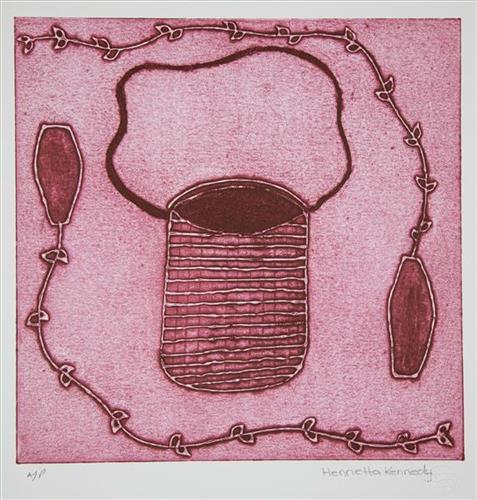
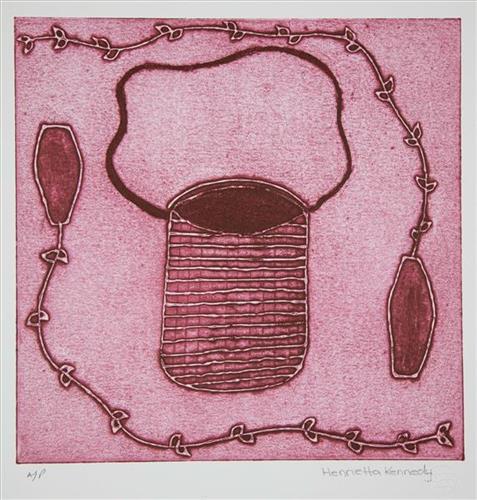
Bush Yam in Basket

The 2025 Gapu series is the 12th workshop series in Djilpin’s long collaboration with Basil Hall Editions. Djilpin Artists worked, for the first time, with Printmaker Antonia Aitken. Collograph plates were developed by 15 artists over a week in April at Djilpin Arts Centre in Wugularr (Beswick). For Series XII, artists have depicted traditional string and dilly bags, bathi, exploring the place of these artefacts in culture, ceremony and mythology.

Evangeline Wilson’s print for Gapu XII was selected for Walyalup Fremantle Arts Centre Print Award (August) with the complete Series launching at Honey Bones Galley, Melbourne (October 2025).


Dimensions: 29.5×29.5cm, 46.5×38.5 (paper)

221382396536


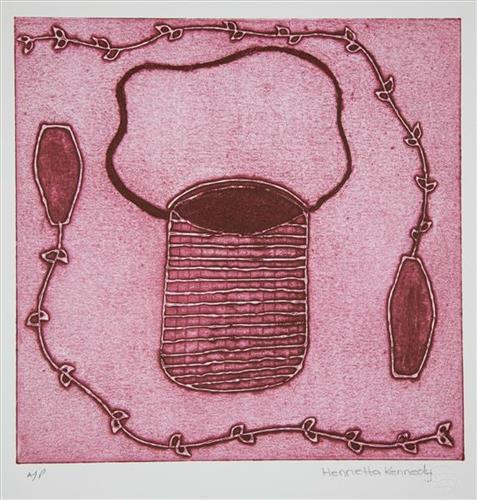
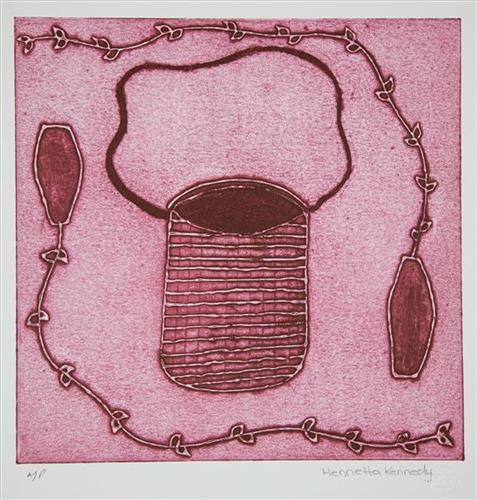
Bush Yam in Basket

The 2025 Gapu series is the 12th workshop series in Djilpin’s long collaboration with Basil Hall Editions. Djilpin Artists worked, for the first time, with Printmaker Antonia Aitken. Collograph plates were developed by 15 artists over a week in April at Djilpin Arts Centre in Wugularr (Beswick). For Series XII, artists have depicted traditional string and dilly bags, bathi, exploring the place of these artefacts in culture, ceremony and mythology.

Evangeline Wilson’s print for Gapu XII was selected for Walyalup Fremantle Arts Centre Print Award (August) with the complete Series launching at Honey Bones Galley, Melbourne (October 2025).


Dimensions: 29.5×29.5cm, 46.5×38.5 (paper)

221382396535


Bush Yam in Basket

The 2025 Gapu series is the 12th workshop series in Djilpin’s long collaboration with Basil Hall Editions. Djilpin Artists worked, for the first time, with Printmaker Antonia Aitken. Collograph plates were developed by 15 artists over a week in April at Djilpin Arts Centre in Wugularr (Beswick). For Series XII, artists have depicted traditional string and dilly bags, bathi, exploring the place of these artefacts in culture, ceremony and mythology.

Evangeline Wilson’s print for Gapu XII was selected for Walyalup Fremantle Arts Centre Print Award (August) with the complete Series launching at Honey Bones Galley, Melbourne (October 2025).


Dimensions: 29.5×29.5cm, 46.5×38.5 (paper)

221382396533


Bush Yam in Basket

The 2025 Gapu series is the 12th workshop series in Djilpin’s long collaboration with Basil Hall Editions. Djilpin Artists worked, for the first time, with Printmaker Antonia Aitken. Collograph plates were developed by 15 artists over a week in April at Djilpin Arts Centre in Wugularr (Beswick). For Series XII, artists have depicted traditional string and dilly bags, bathi, exploring the place of these artefacts in culture, ceremony and mythology.

Evangeline Wilson’s print for Gapu XII was selected for Walyalup Fremantle Arts Centre Print Award (August) with the complete Series launching at Honey Bones Galley, Melbourne (October 2025).


Dimensions: 29.5×29.5cm, 46.5×38.5 (paper)

116482438511


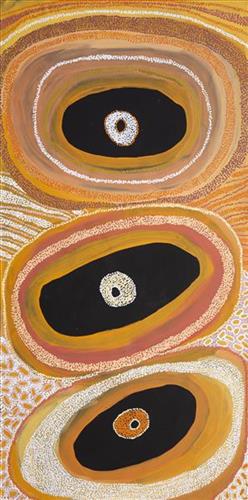
Garduwarra, Gambara (Wildflowers against Waterholes)

When we go back out to Country after a Big rain we see all of our beautiful Wildflowers that have sprang out against our Waterholes.

11154009692


Status: Stock


3 designs

Organize your essentials in style with this beauty case. Keep your products easily accessible and safe from spills and damage. A must-have for any traveller!

116181737381


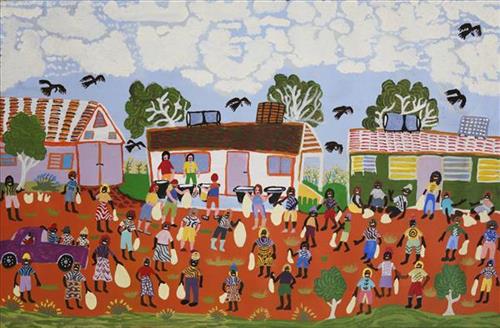
Ration Day, Maryvale Station

This painting depicts the people of Titjikala getting their rations at the old Maryvale Station Store. The ration depot is in the middle – Station Manager used to issue the rations. Everyone is carrying their flour bags to put their rations in. This was when I was younger. I went to get rations With my mum in those days.


Dimensions: 595 x 900 mm Acrylic on Linen