111582440080


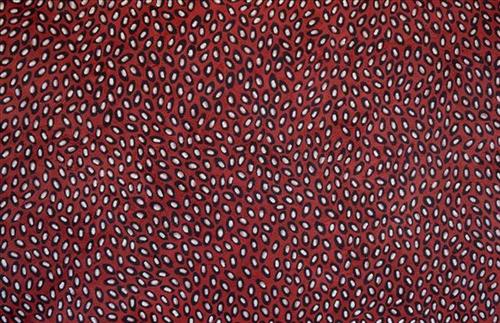
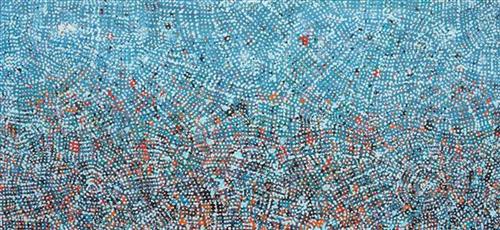
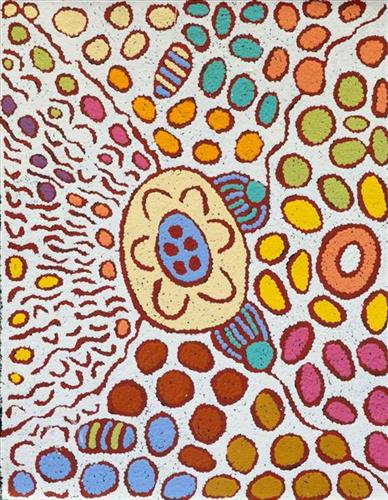
Marapinti (Marrapinti)

“Marapinti, close to Kiwirkurra. That’s my auntie’s ngurra (home Country, camp), her Jukurrpa (Dreaming). Most of that area is sandhill, with a big rock on the side. Very sacred place- no man can go. That’s a woman’s place. The Seven Sisters were there. They still there, they stayed after the Dreamtime. They always dance there, women meeting together. They used to dance like this [motions hands up and down]. There’s a tunnel inside the rocks, and bush tucker [from the Dreamtime] all around there inside, and two women- twins.

Sometimes I go dancing with my daughter there, with the other girls for culture, for learning. The old ladies have to go too- they boss for that Country. Sometimes we go for ranger trips too.”

– Daphne Larry


Marapinti is a rockhole located west of Kiwirrkurra in Western Australia’s Gibson Desert. The site is surrounded by many small rockholes and caves. Marapinti is an important site in the Minyipuru (Kanaputa, Jakulyukulyu, Seven Sisters) Jukurrpa (Dreaming). Minyipuru is a key creation narrative for Martu, Ngaanyatjarra, Pitjantjatjara and Yankunytjatjara people that is associated with the seasonal Pleiades star constellation. Beginning in Roebourne on the west coast of Western Australia, the story morphs in its movement eastward across the land, following a group of women as they walk, dance, and even fly from waterhole to waterhole. As they travel the women camp, sing, wash, dance and gather food, leaving markers in the landscape and creating landforms that remain to this day, such as groupings of rocks and trees, grinding stones and seeds. During the entirety of their journey the women are pursued by a lustful old man, Yurla, although interactions with other animals, groups of men, and spirit beings are also chronicled in the narrative.

Marapinti is the easternmost point visited by the Minyipuru in their journey across Martu Country. As they travelled, singing and dancing towards Pintupi Country, the Minyipuru created waters and landforms. On reaching Marapinti they performed ceremonies and pierced their septum with nose bones, a practice also known as marapinti. Today the Minyipuru can be seen at Marapinti as a group of rocks, sitting up like women.
111582440079


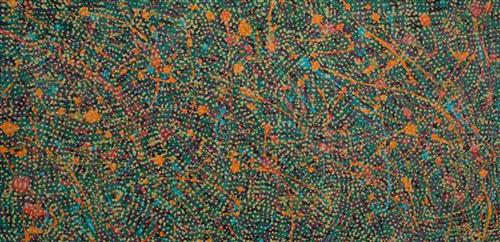
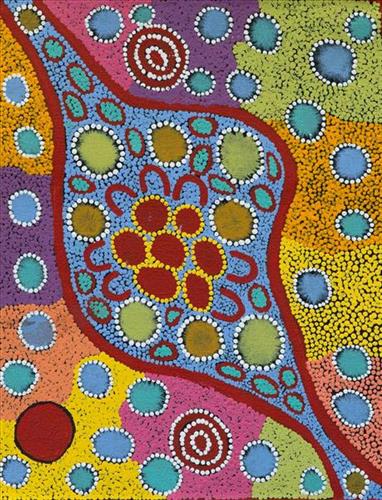
Marapinti (Marrapinti)

“Marapinti, close to Kiwirkurra. That’s my auntie’s ngurra (home Country, camp), her Jukurrpa (Dreaming). Most of that area is sandhill, with a big rock on the side. Very sacred place- no man can go. That’s a woman’s place. The Seven Sisters were there. They still there, they stayed after the Dreamtime. They always dance there, women meeting together. They used to dance like this [motions hands up and down]. There’s a tunnel inside the rocks, and bush tucker [from the Dreamtime] all around there inside, and two women- twins.

Sometimes I go dancing with my daughter there, with the other girls for culture, for learning. The old ladies have to go too- they boss for that Country. Sometimes we go for ranger trips too.”

– Daphne Larry


Marapinti is a rockhole located west of Kiwirrkurra in Western Australia’s Gibson Desert. The site is surrounded by many small rockholes and caves. Marapinti is an important site in the Minyipuru (Kanaputa, Jakulyukulyu, Seven Sisters) Jukurrpa (Dreaming). Minyipuru is a key creation narrative for Martu, Ngaanyatjarra, Pitjantjatjara and Yankunytjatjara people that is associated with the seasonal Pleiades star constellation. Beginning in Roebourne on the west coast of Western Australia, the story morphs in its movement eastward across the land, following a group of women as they walk, dance, and even fly from waterhole to waterhole. As they travel the women camp, sing, wash, dance and gather food, leaving markers in the landscape and creating landforms that remain to this day, such as groupings of rocks and trees, grinding stones and seeds. During the entirety of their journey the women are pursued by a lustful old man, Yurla, although interactions with other animals, groups of men, and spirit beings are also chronicled in the narrative.

Marapinti is the easternmost point visited by the Minyipuru in their journey across Martu Country. As they travelled, singing and dancing towards Pintupi Country, the Minyipuru created waters and landforms. On reaching Marapinti they performed ceremonies and pierced their septum with nose bones, a practice also known as marapinti. Today the Minyipuru can be seen at Marapinti as a group of rocks, sitting up like women.
111582440078


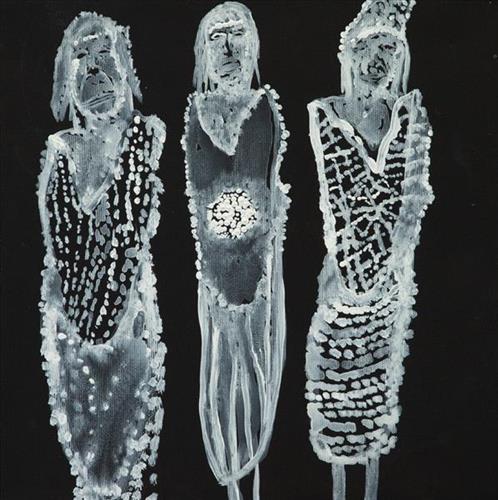
Wanti Yuu (Women, Yeah!)

“Wanti Yuu (Woman Yeah!) is a story of resilience and of women coming together. It is about the strength of the women in our community who put themselves last and take on a lot. She [Wanti Yuu] is someone who looks after her family, putting the grand kids and everyone around her first. The word Matriarch comes to mind. They are the matriarch of the family. The Boss Lady. Always helping everyone else out and leaving herself to the end. She paints, she teaches us her knowledge, like basket weaving and honey ant collecting. She is the top lore woman and her story of Pujiman (traditional, desert dwelling) is so important. She is a leader of the Martu women and a senior artist. That’s all I can say about these women. These women; you give her the bread if you know what I mean. It’s a true story. Anything in my pockets. Because when you look at her, her stance, her energy and her vibe, you can feel it. You don’t muck around with Wanti Yuu.”

-Silvia Wilson

Wanti Yuu celebrates women’s resilience, matriarchal relationships, and Sylvia’s place in this story.

As Sylvia explains, the work is both a depiction of, and attribute to, the women in her life. “I follow my great grandmother’s guidance and direction in life. These women in my life carry so much on their shoulders, as well as the responsibility and future of our culture.”


111582440077


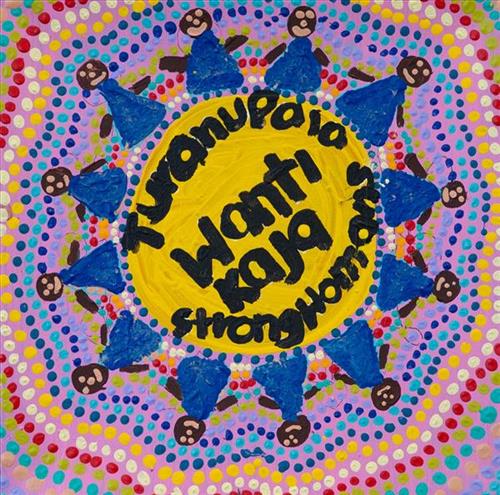
Wanti Kaja

Martumili Artists work with over three hundred artists from remote Martu Aboriginal communities, including Punmu, Parnngurr, Kunawarritji, Jigalong, Irrungadji (Nullagine), and Warralong, as well as from the Parnpajinya (Newman) gallery and studio spaces. Known for their diverse, energetic, and unmediated painting styles, their works reflect the dramatic geography and scale of their homelands. Each artist, however, brings a unique approach to their craft.

Younger Martu artists often start painting alongside their parents, grandparents, and extended family, which fosters an organic learning process. This not only involves mastering painting techniques but also understanding specific locations, family histories, traditional ways of life, bush tucker, and Jukurrpa (Dreaming). Over time, with encouragement from their peers, they develop their own distinct styles and explore unique painting techniques and subject matter. In this work the artist brings a contemporary, evolving perspective to their work.

111582440076


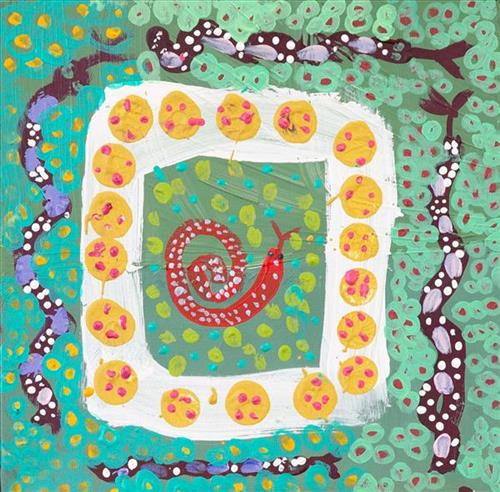
Jila (snake, living water)

The Western Desert term jila is used interchangeably to describe springs considered to be ‘living’ waters and snakes, both of which play a central role in Martu culture and Jukurrpa (Dreaming).

During the pujiman (traditional, desert dwelling) period, knowledge of water sources was critical for survival, and today Martu Country is still defined in terms of the location of water sources. Of the many permanent springs in Martu Country, very few are ‘living waters’; waters inhabited by jila (powerful ancestral beings). Before they became snakes, these beings were men who made rain, formed the land and introduced cultural practices like ceremonies and ritual songs. Some of the men travelled the desert together, visiting one another, but they all ended their journeys at their chosen spring alone, transformed into a snake. These important springs are named after their jila inhabitant, guarding their waters. 

Some of the jila snakes are known by Martu as quiet and benevolent, others as dangerous and ‘cheeky’. Regardless of the nature of the inhabitant snake, jila sites must be entered respectfully; particular rituals are practiced, such as lighting fires, sweeping the ground with branches, approaching in single file, and calling out to the site’s jila to announce one’s arrival and introduce people who are new to the jila. Those who do not follow these guidelines are in danger of becoming sick, or even being killed.

116482440012


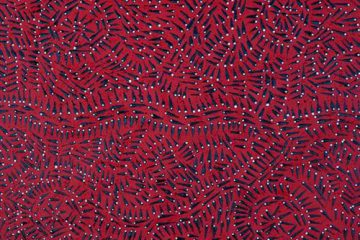
Sturt Pea

The Sturt Pea has a vibrant red flower.It has a succulent sweet juice that can be eaten.

116482440004


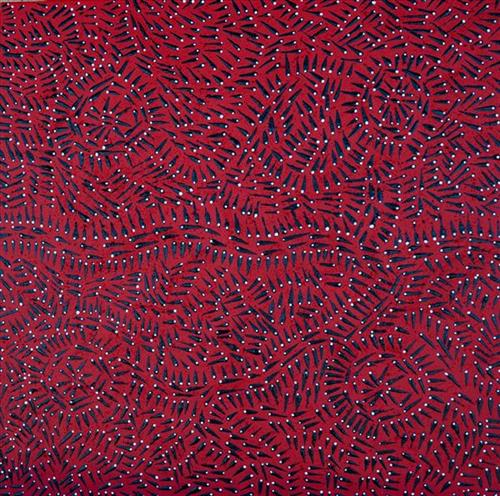
Sturt Pea

The Sturt Pea has a vibrant red flower.It has a succulent sweet juice that can be eaten.

116482439999


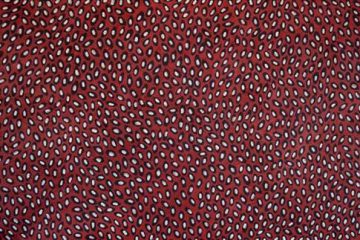
Mulla Mulla Patch

At this time of year there are Mulla Mulla all over Country and the colours are beautiful. As the season changes as do the Mulla Mulla.

116482439986


Spinifex Country

In September, when we are looking for gum from the Blue Gum Tree, we walk through the spinifex country. We pick the gum when it is crystal colour, and we eat it, or put it into hot water to make it like a toffee. We call it sugar lolly.

116482439981


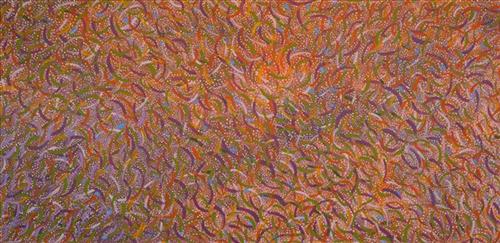
Wildflowers in Full Bloom

In this painting I have used a colour for every wildflower. You can see so many Wildflowers in bloom in September