116182433107


Women Digging for Witchetty

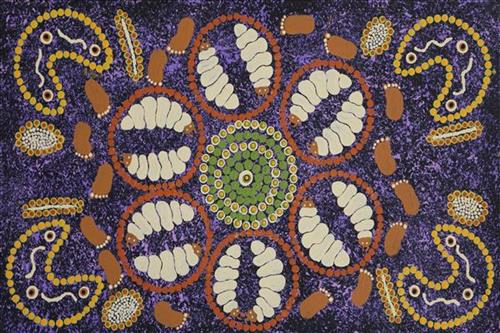
Women planning their dig for Witchetty Grubs. They live in the roots of specific trees, and after it rains, they move up the chambers in which they live, to avoid drowning. Digging can be slow and complex. Women check the base of trees to see if there is any cracking on the upper root bases. The cracking is a way of telling if there might be witchetty living in that root. The process can take hours of very hard work, but the ladies are always completely rewarded when they find those witchetty grubs. 

116182434098


Wardapi Jukurrpa

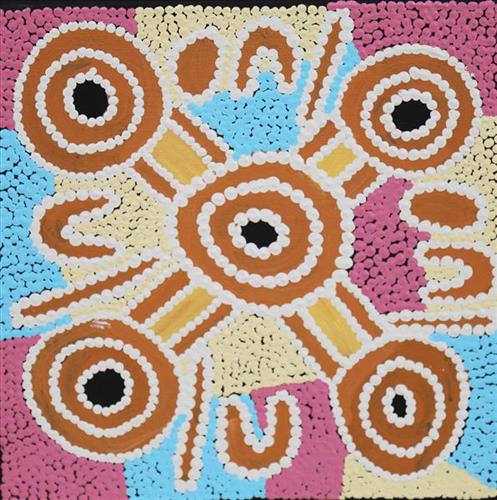
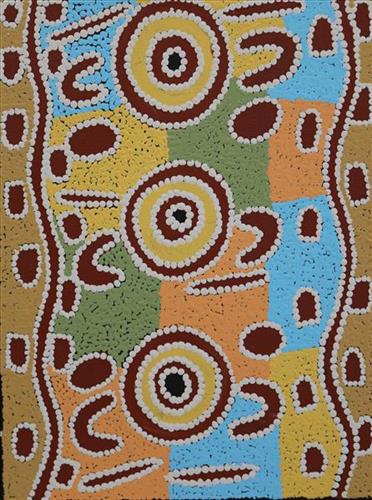
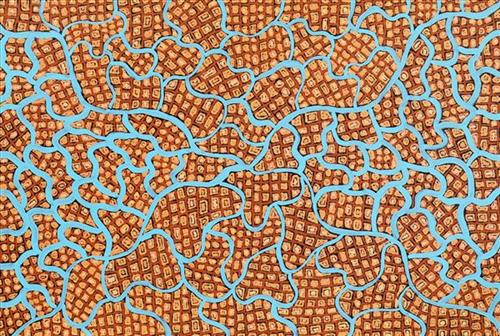
‘This painting is about the way women hunt Wardapi – that sand goanna. He digs holes in the dunes, makes his nest deep inside. Many of the holes all join up. Women hunt Wardapi in the dunes by digging out the holes. Sometimes cover one, and Wardapi runs out other one. Need to hunt him together. Find all the holes. Dig them at the same time. Someone going to get him that way.’

The Wardapi Jukurrpa [Varanus Gouldii Goanna] belongs to the Spencer Sisters. It comes from Yarripilangku [aka Yinyiripalangu], south-west of Yuendumu. A group of Warlpiri Karnta [women] are sitting down in a circle when a Japangardi Wati [man] from Puturlu [Mt Theo], called Wamaru came upon them. He wants to take one of them, named Yurlkurinyi, of Nungarrayi skin, which is the wrong skin for him. He takes the Nungarrayi woman up a hill, where they make love. In response, the earth on top of the hill turns to Ngunjungunju [white ochre], and yellow and red ochre. The yellow is for Karnta and the red for Wati. The ochre is used by Warlpiri people for love magic and ceremonial decoration. The Wati turns all the Karnta and himself into Wardapi, aka Varanus Gouldii goannas. This Jukurrpa belongs to the Napaljarri/Japaljarri and Nungarrayi /Jungarrayi subsections, and the Japanangka/Napanangka, Japangardi/Napangardi subsections of Puturlu. The women are often represented by ‘U’ shapes. Concentric circles may illustrate Wardapi holes, or their droppings left behind them, and Wardapi tracks are usually represented by ‘W’ shapes and wavy lines.

116182434097


Bush Banana

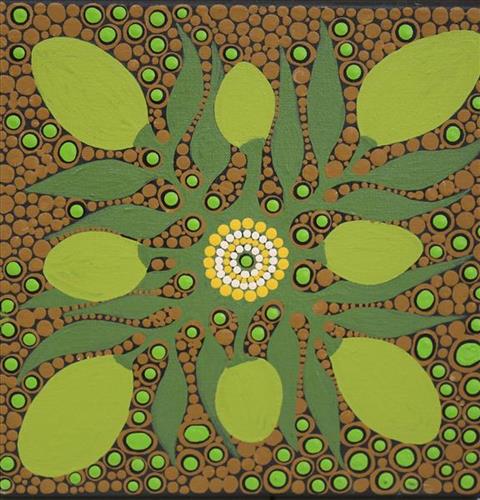
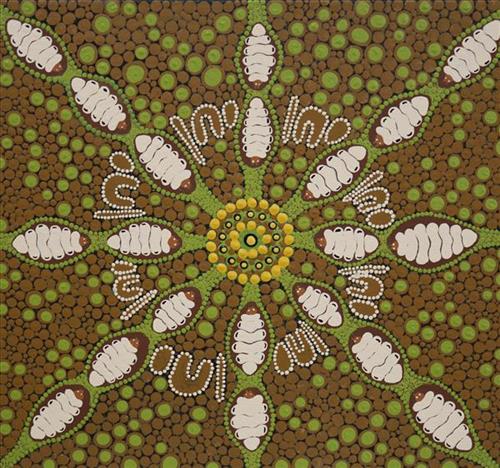
Marsdenia australis has many different names in Aboriginal languages but is commonly known as the bush banana, silky pear or green vine. The flowers hang in clusters and can also be eaten, as can the main part of the plant itself. Bush bananas are cooked in hot earth beside the fire or eaten raw when young (the flavour has been likened to fresh peas). The root of the plant is called Merne Atnetye and can also be eaten raw or cooked. The very white roots are cooked in the hot earth close to the fire. All parts of the bush banana plant are prized and are still eagerly sought out and eaten in the desert. 

Gwen reflects on her time working as a ranger at Kings Canyon, ” I collected a bog mob of bush banana at Watarrka (Kings Canyon) when I was working as a ranger there. I would show all the tourist. I would collect other bush tucker too like bush tomatoes. My Country is Watarrka, from my Grandmother’s side. When we go to stay we go right by the resort there.’ 

116182434094


Women digging for water – Mabel Watson

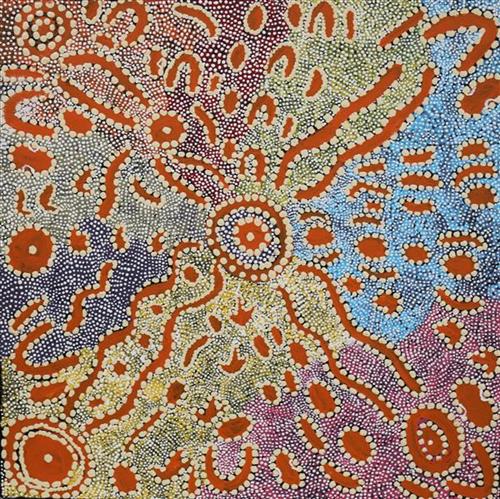
This painting shows women sitting down together, gathering water and digging for honey ants and bush tucker. The scene reflects the way women would come together on Country — yarning, working, and sharing knowledge as they went about their daily tasks.

The story comes from the olden days, a long time ago, out on the artist’s father’s Country, on the other side of Yuendumu. It shows the deep connection between women, the land, and the resources that sustained their families.

116182434087


Women Digging for Witchetty

Women planning their dig for Witchetty Grubs. They live in the roots of specific trees, and after it rains, they move up the chambers in which they live, to avoid drowning. Digging can be slow and complex. Women check the base of trees to see if there is any cracking on the upper root bases. The cracking is a way of telling if there might be witchetty living in that root. The process can take hours of very hard work, but the ladies are always completely rewarded when they find those witchetty grubs. 

116182434669


Wardapi Jukurrpa

‘This painting is about the way women hunt Wardapi – that sand goanna. He digs holes in the dunes, makes his nest deep inside. Many of the holes all join up. Women hunt Wardapi in the dunes by digging out the holes. Sometimes cover one, and Wardapi runs out other one. Need to hunt him together. Find all the holes. Dig them at the same time. Someone going to get him that way.’

The Wardapi Jukurrpa [Varanus Gouldii Goanna] belongs to the Spencer Sisters. It comes from Yarripilangku [aka Yinyiripalangu], south-west of Yuendumu. A group of Warlpiri Karnta [women] are sitting down in a circle when a Japangardi Wati [man] from Puturlu [Mt Theo], called Wamaru came upon them. He wants to take one of them, named Yurlkurinyi, of Nungarrayi skin, which is the wrong skin for him. He takes the Nungarrayi woman up a hill, where they make love. In response, the earth on top of the hill turns to Ngunjungunju [white ochre], and yellow and red ochre. The yellow is for Karnta and the red for Wati. The ochre is used by Warlpiri people for love magic and ceremonial decoration. The Wati turns all the Karnta and himself into Wardapi, aka Varanus Gouldii goannas. This Jukurrpa belongs to the Napaljarri/Japaljarri and Nungarrayi /Jungarrayi subsections, and the Japanangka/Napanangka, Japangardi/Napangardi subsections of Puturlu. The women are often represented by ‘U’ shapes. Concentric circles may illustrate Wardapi holes, or their droppings left behind them, and Wardapi tracks are usually represented by ‘W’ shapes and wavy lines.

116182435034


Two houses in Hermannsburg

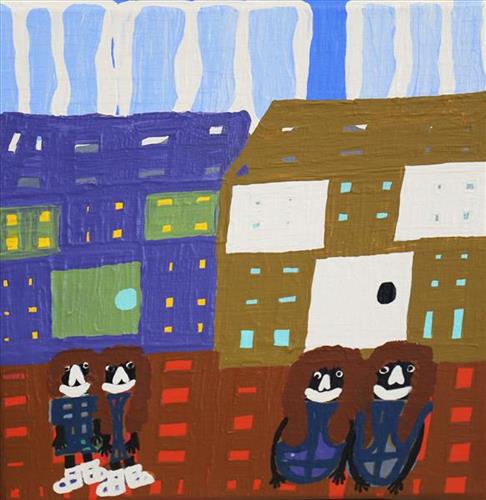
‘Two houses in Hermannsburg, family houses at Sandhill Camp. That’s like our family area at Hermannsburg. The families are sitting down outside watching tourist cars coming to Alice Springs.’

116182435030


Two houses in Hermannsburg

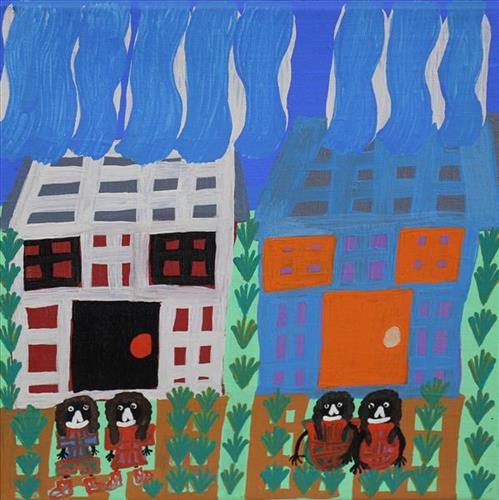
‘Two houses in Hermannsburg, family houses at Sandhill Camp. That’s like our family area at Hermannsburg. The families are sitting down outside watching tourist cars coming to Alice Springs.’

116182435026


Three houses in Hermannsburg

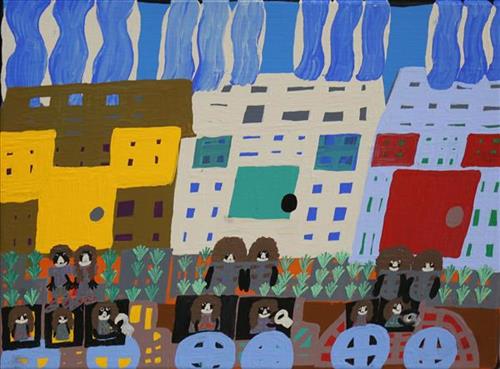
‘Three houses in Hermannsburg, family houses at Sandhill Camp. That’s like our family area at Hermannsburg. The families are sitting down outside watching tourist cars coming to Alice Springs.’

116182435807


Kungka Kutjara, Kaltukatjara

Kungka Kutjara are Two Women. This painting is the story of two women travelling. They were travelling through that Country a long time ago, looking for mai putitja – bush food. They were travelling through Ngayuka Ngura – My Country – Kaltukatjara – Docker River. They were travelling everywhere. This painting is just Kaltukatjara. My grandmother gave me this story. On my mother’s side. My mother and father are gone, they passed away. My mother was Pitjantjatjara. My father was Warlpiri man. This story is from my mother’s family. The little sister was worrying, she wanted to go back home. The big sister said we can’t go home, we have to keep walking.