116482444234


Pilbara Land scape

The Pilbara is a land of many beautiful colours Its beauty blends into the mother earth and against the red,purple hills in the distance.in time and season the yellow wattles,mulla and sturt pea take its toll as the country comes alive with the wild flowers watered by the rain and heavy due during the night.Land and our country also tells a wonderful story about our ancestor’s they walk and lived on the land always gathering food such as fish from the river,hunting kangaroo’s,emu and trcking goanna’s also gathering bush fruits and medicine.

116482444229


Rugged Country

During dry summer months our country looks so dry, but the beauty of the red earth, the spinifex and dry grass make it beautiful.

377815582444169


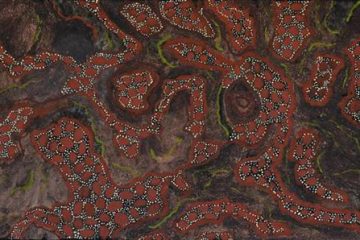
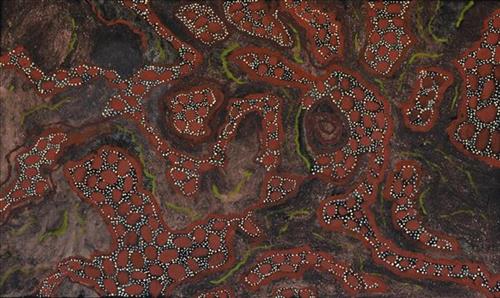
Kulyakartu

“I paint mainly about Kulyakartu Country and Kirriwirri Country. Both are in the Great Sandy Desert in the Pilbara. These places mean home to me — Ancestors’ homes, my family’s home, my nanna’s home. I paint because we don’t get out on this Country often and painting is a way of having a connection.

Our nanna never told us her life living out in the desert. It’s sandy, they have waterholes and gum trees. I feel at peace when I’m out there. A bit of rocky terrain out there where the waterholes are. Feeling, belonging.

I remember when we were out there and our grandfathers were telling us stories of when they were kids and when they would play around in the trees. Just sitting around the campfire and seeing their faces light up when telling their stories. I felt complete when her brothers shared it.”
 – Corina Jadai

This artwork shares the story of Kulyakartu, a vast and peaceful area north-east of the community, on the edge of Nyangumarta and Martu Country. Kulyakartu is a place of wide open skies, long claypans, sandhills and soft grasses that come alive after rain.

Families remember camping there, visiting waterholes, looking for goanna and bush foods, watching birds, and travelling with old people who knew every dune, track and soak. The painting celebrates the beauty and calm of Kulyakartu, often shown through soft lines and dots that follow the movement of water and sand. It honours the knowledge of where to find water, how to move across Country, and the deep belonging felt when returning to ancestral places.

Through this work, the artist invites viewers to feel that stillness and connection — the strength of Country, memory and family.

377815582444165


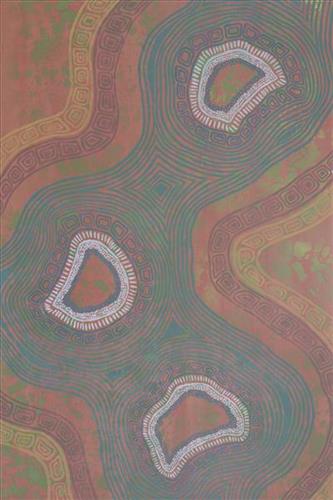
Seeds

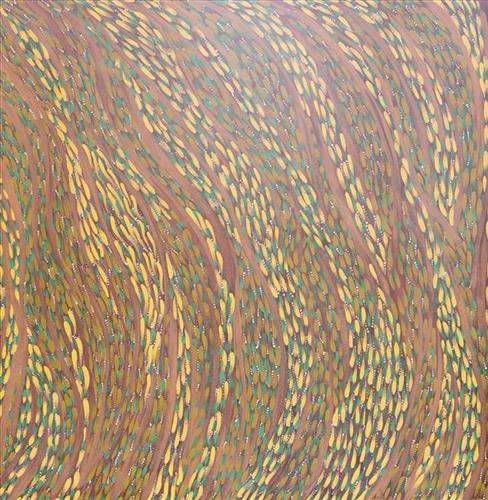
“I paint with seeds because seeds is my thing. Seeds brings new life. Whether it’s from plants, animals or people. A lot of paintings and things were done by men only because back then, women were gathering food and caring for kids. I was inspired by my uncle who is an artist and I really wanted to paint but knew I had boundaries and that’s why I use seeds as my theme, because it’s bringing new life. And I won’t paint Dreamtime stories because I solely don’t own them. They’re to be passed down through families as storytelling. I’ll paint animals and plants that we traditionally eat and my black soil Country in my seeds style though. For example, I’ll do the goanna and paint the seeds around. I’m passing this style onto my daughters and all my children and their children so they can still hold onto the story but rebirth it in a new style, because there are some symbols and things that we are not allowed to paint because we’re women.”
 – Christine Farrer

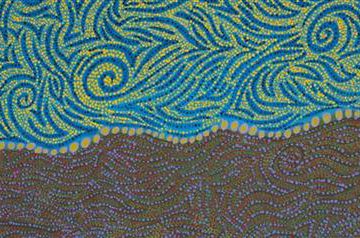
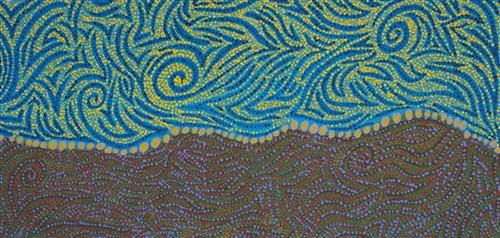
This artwork celebrates Country — not only land, but a living place of spirit, story, memory and identity. Country is saltwater and desert, wind and rain, sandhills and tide, waterholes and mangroves, sky, animals, plants and ancestors. It is where families walk, hunt, fish, gather, camp and teach the next generations.

When the artist paints Country, they are sharing a map of home and belonging. Lines may follow the dunes and tidal creeks, dots may mark water places or bush foods, colours reflect the seasons — the deep blues of the sea, the soft greens after rain, the hot reds and warm sands of dry Country. Every artwork holds a story: places visited, footsteps of old people, language, knowledge and the feeling of being out bush.

The artist invites the viewer to see Country the way they do — alive, powerful and always connected to family, culture and community. Country is not separate from people; it is part of who they are. Painting it keeps that connection strong, honouring the past, carrying knowledge forward, and sharing it with others.
111982444141


Ngalkodjek Yawkyawk

This artwork depicts the Ngalkodjek Yawkyawk of Barrihdjowkkeng country.

“This story is very old. That old man [my father Crusoe Kuningbal] when he was alive, told that story to me, to all of us. He told us about the yawkyawk (mermaid) spirit women called Ngalkodjek who lives in the billabong on my country. He told us how they call out loudly, how they call out as they walk along.

That is what they do, calling out. They walked around eating bush foods like those little bush yams. They would pound the yams into a pulp and eat them. That is their traditional food which they eat.

When they walk down from the bush, they follow a set path that belongs to them and they walk along calling out. That is their path which they take. It is an old traditional route.

They placed a woman’s breast into the country. That rock was not there originally, but it was a woman’s breast. It is the breast of those women.

They put that djang [sacred place] there, and then at the time when non-Aboriginal people arrived in the region, then the breast turned to stone. Now it has turned solid into rock.”

– Owen Yalandja

111982444140


Ngalkodjek Yawkyawk

This artwork depicts the Ngalkodjek Yawkyawk of Barrihdjowkkeng country.

“This story is very old. That old man [my father Crusoe Kuningbal] when he was alive, told that story to me, to all of us. He told us about the yawkyawk (mermaid) spirit women called Ngalkodjek who lives in the billabong on my country. He told us how they call out loudly, how they call out as they walk along.

That is what they do, calling out. They walked around eating bush foods like those little bush yams. They would pound the yams into a pulp and eat them. That is their traditional food which they eat.

When they walk down from the bush, they follow a set path that belongs to them and they walk along calling out. That is their path which they take. It is an old traditional route.

They placed a woman’s breast into the country. That rock was not there originally, but it was a woman’s breast. It is the breast of those women.

They put that djang [sacred place] there, and then at the time when non-Aboriginal people arrived in the region, then the breast turned to stone. Now it has turned solid into rock.”

– Owen Yalandja

111982444139


Ngalkodjek Yawkyawk

This artwork depicts the Ngalkodjek Yawkyawk of Barrihdjowkkeng country.

“This story is very old. That old man [my father Crusoe Kuningbal] when he was alive, told that story to me, to all of us. He told us about the yawkyawk (mermaid) spirit women called Ngalkodjek who lives in the billabong on my country. He told us how they call out loudly, how they call out as they walk along.

That is what they do, calling out. They walked around eating bush foods like those little bush yams. They would pound the yams into a pulp and eat them. That is their traditional food which they eat.

When they walk down from the bush, they follow a set path that belongs to them and they walk along calling out. That is their path which they take. It is an old traditional route.

They placed a woman’s breast into the country. That rock was not there originally, but it was a woman’s breast. It is the breast of those women.

They put that djang [sacred place] there, and then at the time when non-Aboriginal people arrived in the region, then the breast turned to stone. Now it has turned solid into rock.”

– Owen Yalandja

221382444042


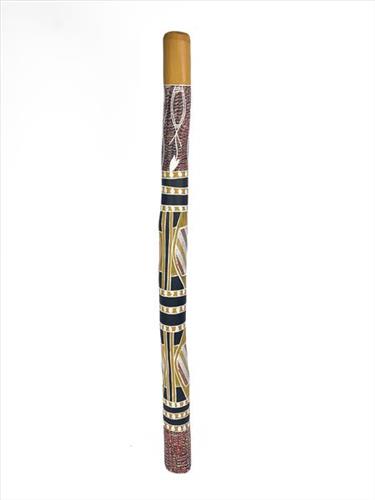
Didjeridu

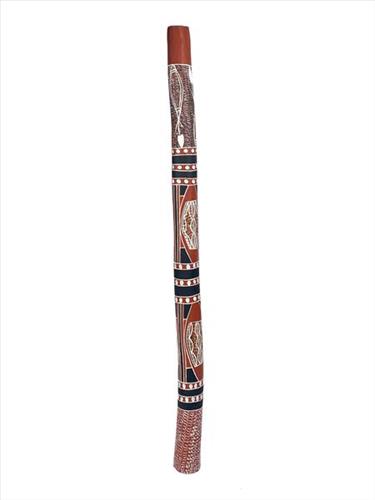
This Didjeridu was cut and carved by Frankie Lane. It was then painted by Brett Bush.

Didjeridus from this region are made in the West Arnhem style. Called Mago, they’re different and special and follow the tradition made famous by Beswick’s Mago Master, elder David Blanasi.

Ghunmarn didjeridus are sourced on country, and hand cut from Woolybutt trees. Artists travel considerable distances on foot to find the right woolybutt tree naturally hollowed out by termites. Good instruments are hand-cut and taken back to camp to be worked, shaped, sanded, tuned and then finally painted.

These are top quality musical instruments, highly regarded worldwide, and still used in ceremony and performance today. Featuring traditional designs handed painted with a Jarlk grass brush.


Most Ghunamrn didjeridus are high pitch D, low pitch D, F, C or G. The longer the dij the lower the pitch, a shorter didj will give a higher sound.

221382444039


Didjeridu

This Didjeridu was cut and carved by Frankie Lane. It was then painted by Brett Bush.

Didjeridus from this region are made in the West Arnhem style. Called Mago, they’re different and special and follow the tradition made famous by Beswick’s Mago Master, elder David Blanasi.

Ghunmarn didjeridus are sourced on country, and hand cut from Woolybutt trees. Artists travel considerable distances on foot to find the right woolybutt tree naturally hollowed out by termites. Good instruments are hand-cut and taken back to camp to be worked, shaped, sanded, tuned and then finally painted.

These are top quality musical instruments, highly regarded worldwide, and still used in ceremony and performance today. Featuring traditional designs handed painted with a Jarlk grass brush.


Most Ghunamrn didjeridus are high pitch D, low pitch D, F, C or G. The longer the dij the lower the pitch, a shorter didj will give a higher sound.

221382444031


Lorrkon

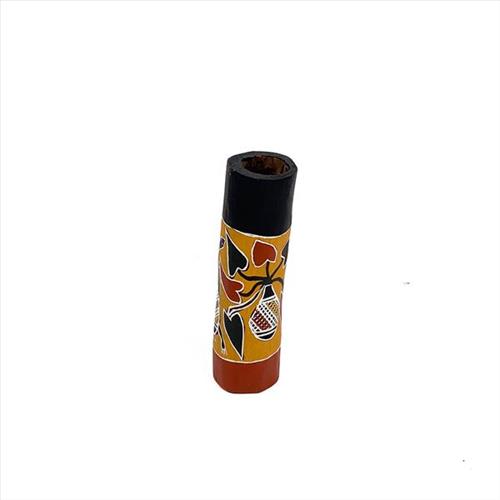
Wood carving has always been part of Aboriginal culture and Djilpin artists continue this tradition. Men carved wood for many purposes – tools for hunting or gathering food, axes and knives for building shelters, spears and clubs for protection of their lives and territory, objects for ceremony and to mark sacred sites.

Hunting implements include the boomerang, woomera and spear. The woomera is a lever which helps to increase the speed and distance the spear travels. Clapsticks are used as percussion instruments by the Songmen to accompany dancing along with the didgeridoo (mago).

As well as the more functional carvings, artists portray animals and birds in wood, and these carvings are often painted. Ceremonial carvings include spirit creatures including mukuy (devil devils) and mimi.

Some fine mimi figures have been cast in bronze.