115682408035

Published by CompNet Systems on


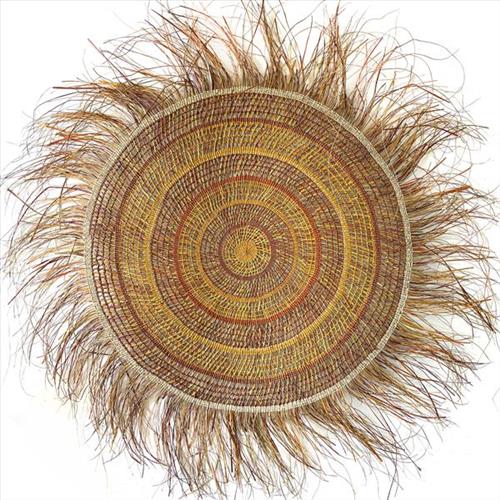
Woven Mat

Yolŋu weavers of Arnhem Land create utilitarian, ceremonial, and decorative pieces using naturally sourced materials. This mat is made from young Pandanus spiralis leaves, harvested with a wooden hook, stripped of prickles, and dried to create strong, resilient fibres. These fibres are then twisted, coiled, or woven using traditional techniques to produce both functional and decorative mats.

Bula’bula weavers exclusively use natural dyes, derived from locally sourced roots, leaves and grasses. These pigments are extracted and infused into pandanus fibres by boiling over an open fire, producing the rich, vibrant colours characteristic of contemporary Yolŋu weavings.

Traditionally, Nganiyal (conical mats) functioned as insect screens when erected and as seating mats when folded, playing an important role in both daily life and ceremonial practices. Today, Yolŋu artists create a variety of shapes, including flat, round, and oblong mats. These non-traditional styles and the use of bright colours became more common after Missionaries began commissioning pieces in this style.
Categories: Bula'bula Arts

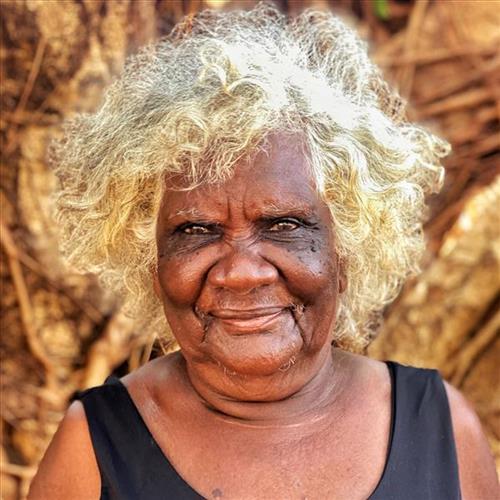
Name: Julie Djulibing Malibirr


Language: Ganalbingu


Community: Ramingining


Biography:

Djulibing was born of a Ganalbingu father and Liyagalawumirri mother at Murrwangi - “no town, just a bush camp, and went to Milingimbi as a baby; then they took me to Darwin because of the war (WWII). -Really just outside at Kulpinya where I went to school”.

After the war she went back to Milingimbi with her parents by boat, the Arriwatha. Here she attended school for a short time - “I can’t remember who taught me, it wasn’t Miss Lowe; then I went to Galiwin'ku and worked in the gardens and cutting lawns  working with a Fijian called Binaya’ and worked at weaving baskets and mats to Sheppy (Harold Shepherdson). Lamatha was a crew (sic) on a boat which brought us food like the barge. The captain was Willi and the boat was the Larrpan. I got married there to Lamatha at Galiwin'ku and had Matjarra and Dayn’kuli  and Rrikili  too. Many’tjurrpuy also and Rorrurruwuy and Marrawuma . These are all girls except for one boy. 

We came back to Milingimbi  - Matjarra was at school; David McLay  was there. I worked in the store, Lamatha in the outstation centre. I still did my weaving. Then we shifted to Langarra and then to here [Ramingining].


© the artist / art centre