111582427096
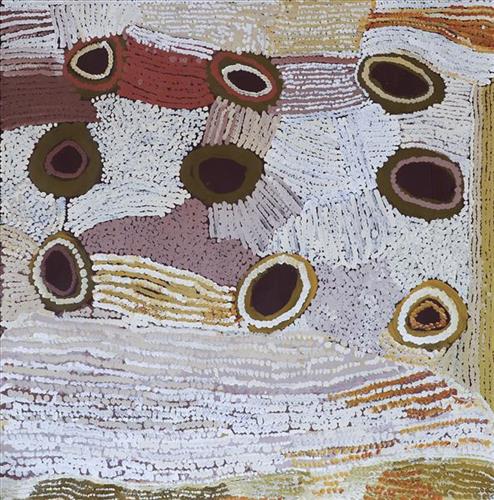
Mukurtu
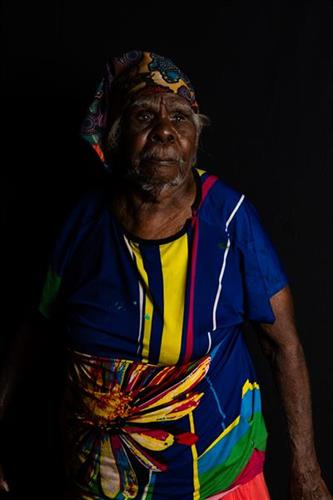
“This one Mukurtu, spring water, yinta (permanent spring). It is good water to drink; it’s bad to drink if you are a big woman, if you are a woman this kapi (water) makes you fat!
Mukurtu nana mili (Mukurtu is my nana’s Country), daddy, sister, brother’s ngurra (home Country, camp). We walked around here long time [ago]. We collected bush tucker here. We collected seeds around here for grinding and making damper. We were walking around here in pujiman (traditional, desert dwelling) days, we were little girls with no clothes. [One time, my sister, Mayiwalku] May got hurt, she was crying for a feed because she was hungry.
This is nice Country, [my husband] Minyawe’s mummy and daddy were around here, and Jakayu [Biljabu’s] and Rosie [Mantararr Williams’s (dec.)] father. It’s old people Country from a long time [ago], lots of families were here in pujiman days. We go to this Country when it’s yalta (cold).”
– Nyanjilpayi (Ngarnjapayi) Nancy Chapman, Mayiwalku’s sister
Mukurtu is a small freshwater spring located just west of Mamunara (Canning Stock Route Well 28), and within Lake George salt lake. This site is surrounded by extensive tali (sandhills). Around the spring grows an abundance of grasses that need to be pulled away in order to access the fresh water. The area is also known as a good hunting site, particularly for rabbits and other small game. This site lies within Mayiwalku’s ngurra, the area which she knew intimately and travelled extensively with her family in her youth. She travelled around this area with her two mummies, her daddy and her sisters, Mulyatingki and Nyanjilpayi.
During the pujiman period, Martu would traverse very large distances annually in small family groups, moving seasonally from water source to water source, and hunting and gathering bush tucker as they went. At this time knowledge of water sources was critical for survival, and today Martu Country is still defined in terms of the location and type of water. Each of the hundreds of claypans, rockholes, waterholes, soaks and springs found in the Martu desert homelands is known by name, location, quality and seasonal availability through real life experience and the recounting of Jukurrpa (Dreaming) narratives.
Mukurtu is also known as an important site in the Martu Jila Kujarra (Two Snakes) Jukurrpa. Though the story belongs to Warnman people, it is shared across the Western Desert with several other language groups. The narrative centres on the travels of two snakes as they are pursued by the Niminjarra, spiritual ancestors of the Warnman people. Before transforming themselves into snakes, the Jila Kujarra were young brothers waiting to be released from ceremony at the boundary of Mukurtu.