111982436882

Published by on


Warlkarrah (Tarpon)

Works in fibre from the Maningrida region are widely recognised as some of the finest in Australia. Artists confidently push the boundaries of fibre craft and cultural expression, adapting traditional techniques and forms to produce strikingly inventive and aesthetically exquisite artworks.

In 2003, Kuninjku artist Marina Murdilnga brought a revolutionary new form of pandanus weaving to Maningrida Arts & Culture: a flat yawkyawk made from knotted pandanus on a jungle-vine frame, painted with natural pigments. She next explored using dyed pandanus and feathers in this way. Murdilnga’s innovation inspired many other weavers, who are producing an array of beautifully resolved flat figurative works (stingray, butterflies, spiderwebs) and spiritual figures and Ancestral beings. Alongside Murdilnga, leading artists of this form of fibre art are Anniebell Marnngamarnnga, Frewa Bardaluna and Rembarrnga artists Vera Cameron and Maisie Cameron. Lulu Larandjbi has woven interpretations of the rock pools at Kobumi where Ngalyod (the Rainbow Serpent) entered and died.

Commonly used fibres include the leaves of pandanus (Pandanus spiralis), and palms (Livistonus), mírlírl (burney or jungle vine, Malaisia scandens), and the inner bark of kurrajong and stringybark eucalyptus trees. Weaving is physically hard work, now done only by women. They colour the pandanus using natural dyes made from the roots, leaves or flowers of plants within the weaver’s clan estate. The same dye bath is often used to dye a number of batches of fibre, with variations in the colours depending on the time spent in the dye bath and the potency of the bath. The women skilfully use salt and wood ash as mordants and colour enhancers.
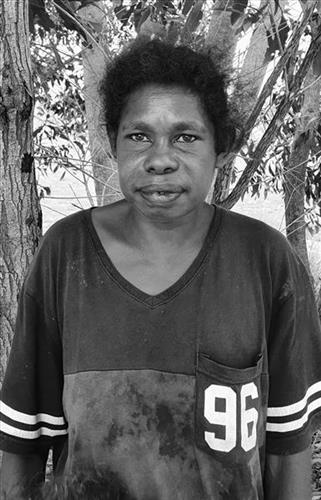
 

Name: Dorothy Bunibuni


Language: Kuninjku


Community: Maningrida


Biography:

Dorothy Bunibuni (born 1981) is a Kuninjku fibre artist from Ji-balbal, an outstation on her father's Country in western Arnhem Land. She is one of a new generation of artists emerging from the celebrated weaving traditions of Maningrida and is the younger sister of renowned fibre artist Anniebell Marrngamarrnga. Working closely alongside her sister, Bunibuni has developed a distinctive artistic practice grounded in the rich weaving traditions of her family and community while expressing an individual aesthetic sensibility of her own.

Dorothy's practice embraces a fluid and expressive approach. She works primarily with locally harvested pandanus and natural bush dyes gathered from around Ji-balbal. Like many Arnhem Land weavers, her practice is deeply connected to Country, with the seasonal collection, preparation and dyeing of fibres forming an integral part of the creative process. Her woven sculptures and spirit figures reflect both cultural knowledge and a close relationship with the landscape from which her materials are sourced.

Dorothy has rapidly gained recognition through her inclusion in important exhibitions across Australia. Her work was featured in Shadow Spirit (2023), the major RISING Melbourne exhibition curated by Kimberley Moulton that transformed Flinders Street Station into a presentation of contemporary First Nations spirit worlds and ancestral presences.

Dorothy's fibre sculptures are represented in the collection of the National Museum of Australia, where her woven yawkyawk spirit figures sit within a broader lineage of Arnhem Land fibre innovation. Through her practice, she continues to build upon the achievements of the senior women artists who came before her while contributing her own voice to one of Australia's most dynamic contemporary fibre traditions.


© the artist / art centre