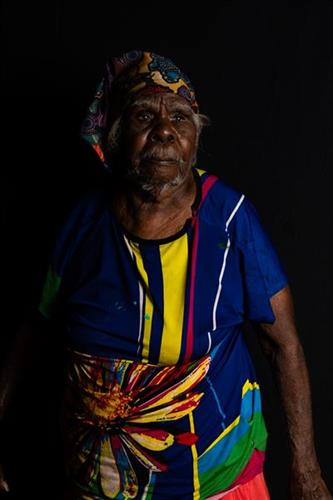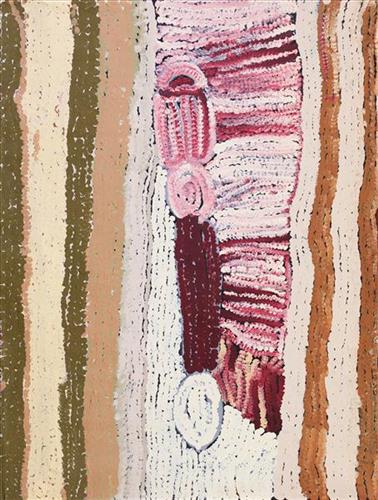
Jarntinti
“This is a linyji (claypan). We find kalaru (seed used for making damper from samphire bush) there that we collect. Too much good tucker!
I been go, everywhere, all over the place, and bush tucker. Get ‘em, collecting them and go back. I been jartu working, find ‘em, digging take em back. Piyarna piyarna piyarna put em in the wika, waru [fire], yamparl [damper].
Kalaru [seed, samphire species], mirrka [making food], damper pirrangka
[talking about making damper at Jarntinti from Kalaru seed in the desert.]
Pirra, pirra country, desert long way. Ngarninya jiliku ngalka. Going hunting pujikatuku, and parnajarrpa, parnaparti, ngula, come back, lungkurta, nyiyari, take em back, cook em, (…) go back, right up, another one.
Pararra pararra, kakarra Tarlpa, Tarlpa water, Jarntinti yaninpa kararra, kararra kararra, Jarntinti, Tarlpa water one, Jutupa long way. Parraja yalinyja Jutupa, Jutupa, yanikirninya palarri yanikirninya yanikirninya kakarra warrarn kakarra warrarn, yanikirninya kuwiyikarti pungkanyikinrinya pujikatu pujikatu, lungkurta everything. Kuwiyilangu yanikirninya malka wanikirninya.
Finished yankula nyarni Jarntinti… gone Jutupa, Jutupakarti.”
– May Chapman Mayiwalku (May Wokka)
[Talks about travelling across a lot of country, collecting seed, yandying, grinding and making damper on the fire.
Making damper from Kalaru seed in the desert at Jarntinti.
Hunting in the desert for cats, sand goannas, thorny devils, blue-tongue lizards.
She talks about travelling from Tarl springs to Jarntinti claypan, walking the country hunting all different bush meats, filling up and carrying the leftovers, travelling further towards Jutupa in the northwest, further away.]
Jarntinti is a large claypan at the Southern end of Nyayartakujarra (Lake Dora), a large salt lake surrounded by tali (sand hills) within the Karlamilyi (Rudall River) region. This area forms part of Mayiwalku’s ngurra (home Country, camp), the region which she traversed extensively as a young girl. Mayiwalku’s sister Nyanjilpayi was born at Jarntinti.
During the pujiman (traditional, desert dwelling) era, Jarntinti was primarily used as a camping site in the wantajarra (wet season), when the claypan filled with kapi (water). Other nearby water sources include Tarl, Kartuny, Wawul, Warnkarr, Jutupa, and Kunalimpi.
Jarntinti is known as a site where kalaru grows in abundance. In the pujiman era, the black kalaru seeds were seasonally harvested from this area. Once collected a labour intensive process began to produce damper, a type of flat bread. The kalaru seeds were first washed several times before being ground with a jiwa (stones used by women for grinding seeds) to make a type of flour, which was then mixed with water to create a dough that was finally cooked in the ashes of a fire.